
Introduction: Discover Banana Farming in Uganda
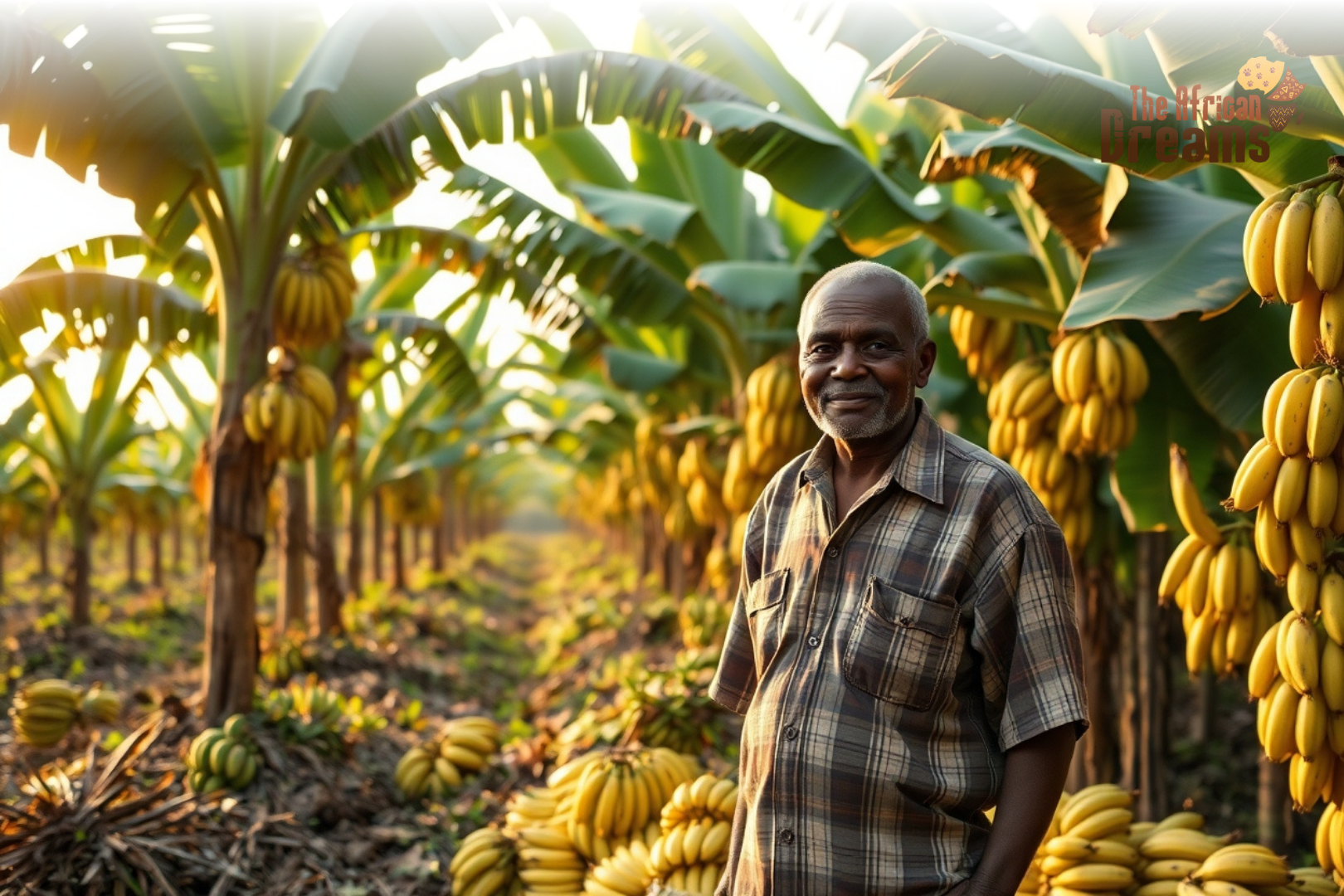
James Bamwesigye started farming bananas in 2012. The 69-year-old farmer from Ntungamo, located on the Mbarara-Kabale highway, owns 52 ha of land but uses only 7 ha to grow bananas. With the help of local agricultural officers, he mastered the art of banana farming in Uganda. James is currently yielding a good amount of crop. Once the struggling farmer now earns enough money to provide for his family and lead a secure life.
Despite many challenges, many farmers are still interested in banana farming in Uganda. They keep producing bananas. In this article, we’ll learn about banana farming in Uganda, the challenges and solutions, and take note of the lessons.
Article Highlights
Banana farming in Uganda is facing top challenges from bacterial diseases and pesticides. Additionally, the dominance of middlemen and lack of infrastructure are capping the potential.
The National Agricultural Research Organization (NARO) is developing smart seeds to ensure more production despite facing several challenges.
Farmers receive a marginal amount from the value chain. Interventions by the intermediary bodies are so strong that suppressing the neck of the smallholder farmers.
Banana Production in Uganda
Uganda is so fertile that you can plant a seed anywhere and it will grow! But food productivity remains low. Banana production still has miles left to reach its yield capacity.
Most of the banana producers, nearly 40%, are doing it for their subsistence. And, 70% of the total production is consumed locally. However, the actual yielding capacity is never attained.
Southwestern and western Uganda dominate banana production. Organizations like UNIDO are working with the farmers there, in Western Uganda. While several initiatives are pushing the limit of production to yield more, it still has miles left to reach its potential.
Like James Bamwesigye, thousands of farmers are benefiting from the training and support of the National Agricultural Research Organization (NARO). As NARO continues to train and improve the seeds, it also collaborates with the Centre for Agriculture and Biosciences International (CABI). Together, these two played a key role in increasing the yield, a whopping 64% in Uganda and Tanzania. Once the production was 10 tons per ha, which is 19 tons per ha now.
Challenges of Banana Farming in Uganda
There are some challenges in farming bananas. James Bamwesigye also affirmed it. He said that pests and diseases are one of the main challenges. But these are curable by improving modified crops. For farmers involved in banana farming in Uganda, what concerns them most is the mismanagement and the middlemen-dominated supply chain.
1. Mismanagement and Poor Infrastructure: Research by UConn highlighted the core challenges in Uganda’s supply chain. Mismanagement and inadequate infrastructure are behind uneven food security. The researchers found no evidence of adulteration in seeds, but a broken supply chain filled with mismanagement.
A truck carries a bag of fertilizers to northern Uganda where the weather is hot and dry. If the truck doesn’t have a refrigeration system, the fertilizer will lose half of the nitrogen. It’s not the problem of handling a fertilizer bag. The concern lies within the non-existent infrastructure.
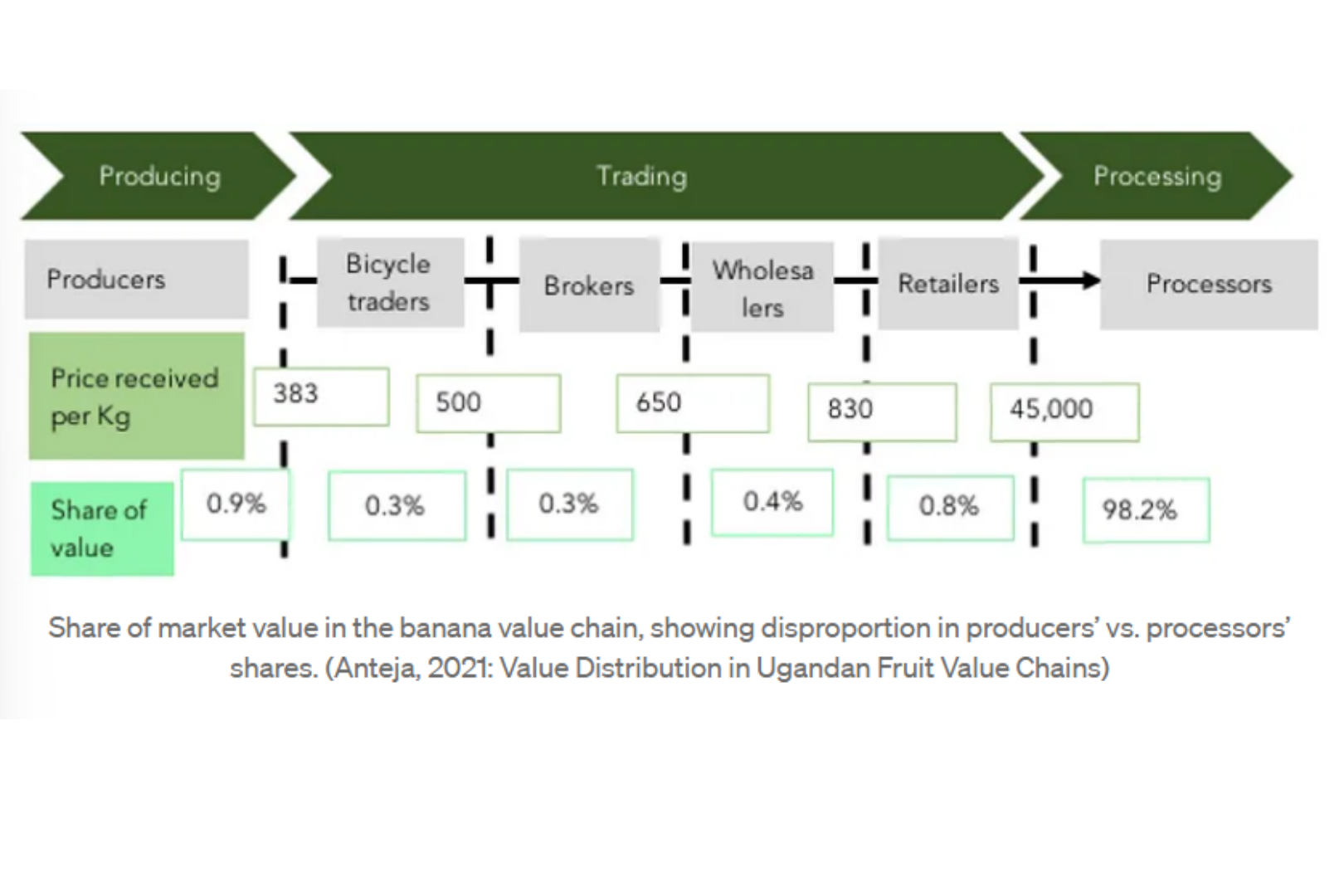
2. Middlemen Dominated the Supply Chain: A strong middlemen syndicate has taken the farmers away from getting a reasonable price. Thus, farmers are turning back from banana farming in Uganda. They are less interested in producing the biggest staple food in Uganda. The concern hits the most during peak seasons. This makes the market unstable and buy crops at a paltry price.
The processing companies earn incomparably more than the farmers. In banana production, the gap is terrible. Banana farmers earn only 0.9 % of the share of market value, while these companies take 98.2 % of the value share.
3. Diseases: Patrick Olobo, a farmer in Ayach Village, Lira District, is producing NARO-improved bananas. The full-time secondary school teacher is also fully into farming different crops. As he gets bumper harvests from his banana production, he also talked about the challenges.
In his words, Fusarium Wilt and Xanthomonas wilt (BXW) are the biggest concerns for banana farming in Uganda. Farmers are shifting away from banana production because of these diseases.
However, other challenges are also present in banana farming in Uganda, which include the rise in population, uneducated locals, transportation, etc. But the days are changing. A positive wind is rising to help farmers secure the best prices and profits.
Banana Farming in Uganda: A Promising Future
The National Agricultural Research Organization has already completed several research projects on genetically modified bananas. It will improve the species to make them more drought-tolerant. Besides, the improved versions will be resistant to bacterial diseases, specifically the bacterial banana disease Xanthomonas wilt (BXW).
Uganda’s government is playing a good role here. It is encouraging farmers to take a shift from subsistence farming to commercial farming. As a way of fighting household poverty, successful farmers like James Bamwesigye will be role models to others. As the sector continues to grow, Banana Farming in Uganda will get a distinct place in the world export market.
The Four-acre Model
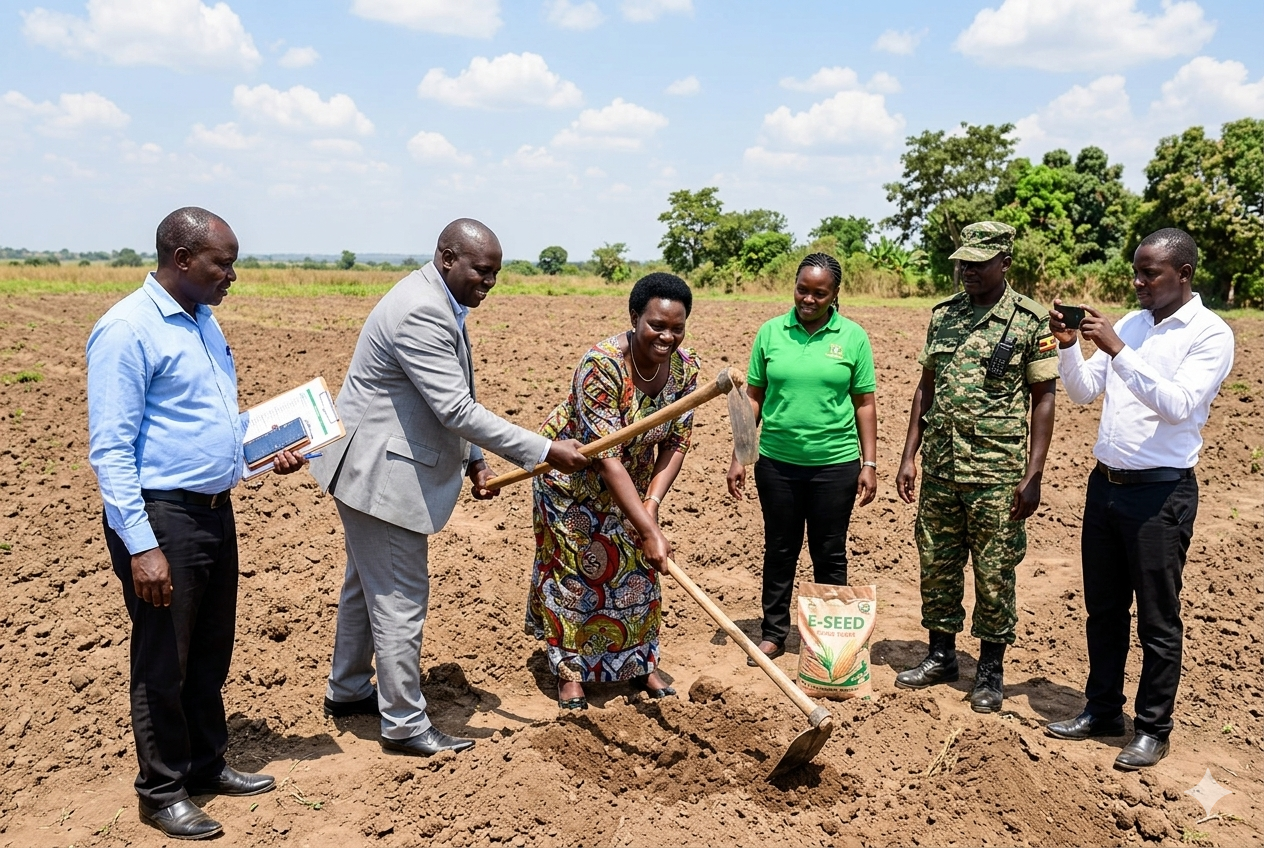
President Museveni took the initiative in 2019 to promote diversification in farming. Instead of relying on one income-generating activity, it aims to bring up to 100 million shillings for each farmer on their model farm. Senior presidential advisor Rose Kabangeni propelled the program at Gulu, a city in Northern Uganda.
Banana Farming in Uganda: Lessons to Learn & Recommendations
Uganda can learn the lessons of banana production from David Lukungu, a farmer in Gulu District. He’s grown an interest in banana farming recently, in 2020. After getting hands-on experience from his father, the 53-year-old started producing commercially. Training from the National Agricultural Research Organisation (NARO) made him sharper.
However, the farmer expressed a few things about banana farming in Uganda and its business. Any investor or farmer should consider the lessons from David. These recommendations reflect most of the banana farmers’ words.
- Finding good seeds is the most important. High-yielding and tolerant seeds not only catch buyers’ attention but also generate a good amount.
- The use of manure is an important factor. It retains rainwater for a long period of 2-3 weeks. It works as a fertilizer, keeps the soil cool in dry spells, suppresses weeds, etc. Sometimes, unwanted banana seedlings also grow alongside the main plant. Keeping the surroundings clean is another concern to consider.
- The role of NARO is undeniable. Farmers should use tolerant and modified seeds. The government should take more responsibility for implementing the programs. Proper monitoring and training should be provided more often to improve banana farming in Uganda.
- Sourcing international importers is a crucial factor for the farmers. They can find third-party suppliers inside the country and directly sell their products. A direct collaboration of these two counterparts of the value chain will benefit both.
- The banana value chain is probably the longest in comparison with other products. Instead of selling at the gate of their farm, farmers can sell their products in groups. There will be communication among the small community, helping each other to grow. So the small farmers will also receive a lot of benefits to enter into banana farming.
- Communication between producers and consumers, and government monitoring, are important to remove intermediaries from the market. Besides, commercialization must be adopted to ensure massive production. No suppliers would like to handpick a thousand farmers. Rather, the approach will be towards those with bigger farms.
Food security is a major challenge in Africa. In these tough times, the trouble is more with the effects of climate change. Another factor is the expected doubling of the population by 2050. But to fight these challenges back, there are ways.
Final Words
Banana Farming in Uganda has the potential to become the main enterprise for a desirable future. Along the path to development, as with any other industry, there are challenges to address. The middlemen-dominated supply chain and other problems are impeding the country’s banana production. However, banana farming in Uganda can help bring food security, economic and social benefits, and environmental values.
With lessons from the banana market and the farmers engaged, a better future is being built for the country. Investors can help Ugandans do business, ensure farmers earn their desired profits, and contribute to the economy.
To learn more about sectors in Uganda to invest in, you can check Top 5 Sectors to Invest in Uganda.



0 Comments