
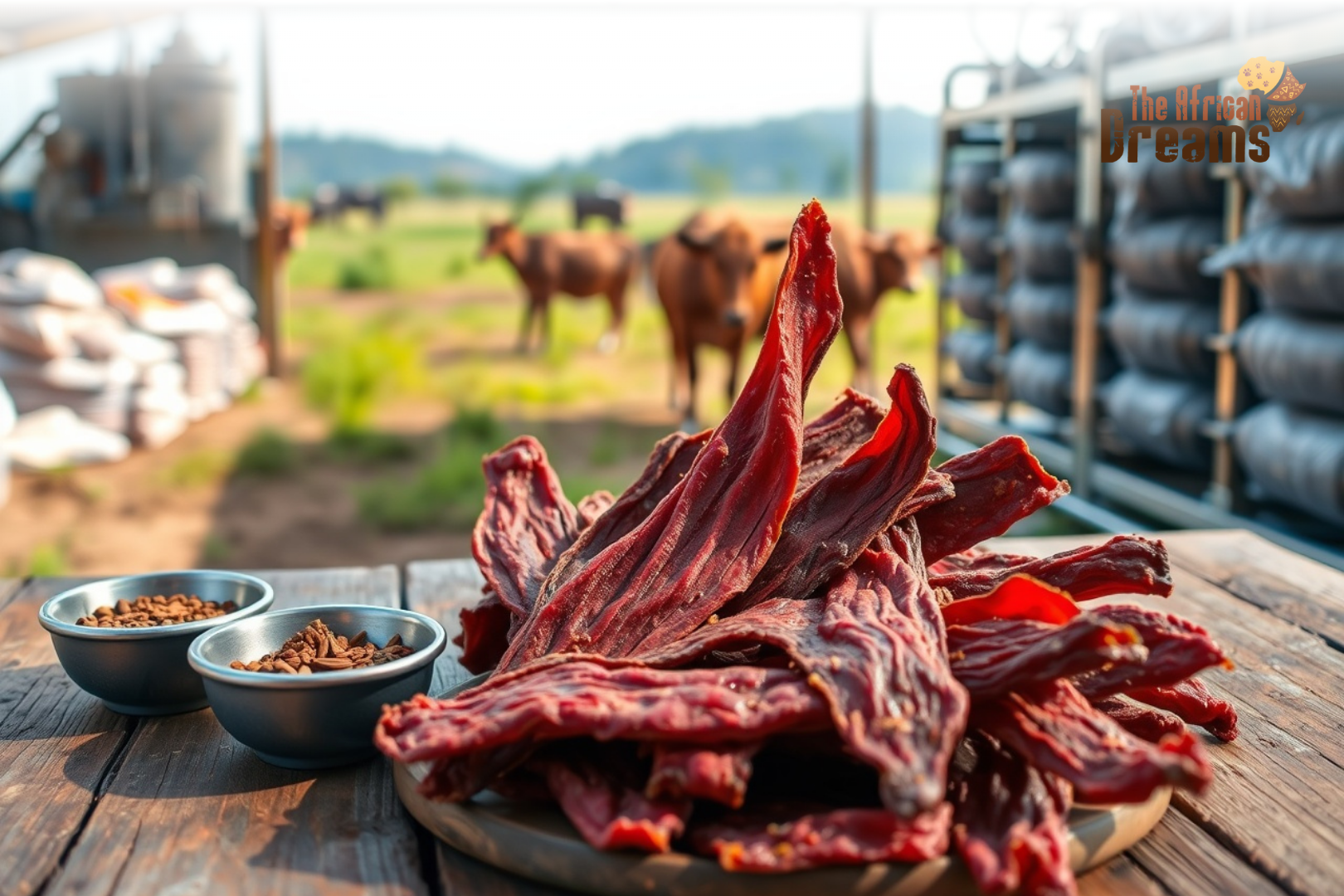
Introduction: African Halal Jerky
The African halal jerky opportunity is easier to understand when it is viewed as a food-category development question rather than as an already established market with a neat revenue figure. Publicly available data does not provide a reliable, standalone market size or CAGR for African halal jerky, and there is no strong evidence that allows the African halal jerky segment to be separated cleanly from the broader halal meat or snack markets. That distinction matters for anyone evaluating the halal beef jerky market.
Cameroon is an especially interesting case. The country has a sizable Muslim population, with Muslims particularly concentrated in the North, Far North and Adamawa regions, while Muslim communities are also present elsewhere. At the same time, Cameroon has an established livestock sector and a long tradition of processed and dried meat products. These conditions do not prove that a large African halal jerky market already exists. They do, however, create several of the basic conditions from which a commercial category could develop.
For investors, food manufacturers and distributors, the more useful question is therefore not whether African halal jerky has already become a mass-market category. It is whether Cameroon has enough consumer demand, livestock supply, processing capability, distribution infrastructure, and halal assurance to support a premium product positioned between traditional dried meat and imported packaged snacks.
What is African Halal Jerky?
African halal jerky refers broadly to dried meat products prepared using halal-compliant ingredients, processing practices, and, where applicable, slaughter and certification procedures. Halal status is not created simply by putting a halal label on a conventional jerky recipe. The meat source, slaughter process, ingredients, processing environment, storage and traceability can all matter.
The Codex Alimentarius Commission’s guidelines on the use of the term “halal” cover halal claims on food labels and address requirements relating to permitted animals, slaughtering and food ingredients. OIC/SMIIC standards go further by covering halal food production across the food chain, including processing, machinery, storage, transportation, hygiene, traceability, packaging and labeling.
Cameroon has its own national halal standard. The country’s standards body, ANOR, lists NC 6174:2024 , based on MS 1500:2009, as a national guideline covering halal food production, preparation, handling and storage. That provides a particularly relevant reference point for companies considering African halal jerky production in Cameroon.
For a premium halal beef jerky product, this means designing halal integrity into the entire production system rather than treating it as a marketing claim added at the end. This is particularly important for African halal jerky, where trust, traceability, and product consistency could become central competitive advantages.
Understanding the Halal Beef Jerky Market
The halal beef jerky market should not be confused with the broader halal meat industry. Halal beef may be sold fresh, frozen, minced, or processed without ever becoming jerky. Likewise, dried meat consumption does not automatically translate into demand for commercially packaged jerky.
This distinction is particularly important when assessing African halal jerky. A large halal food population provides a potential customer base, but it does not establish the size of the jerky category itself.
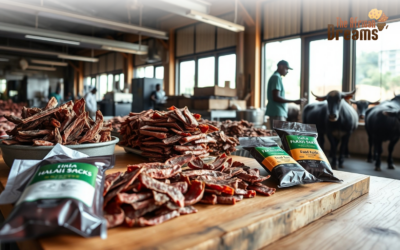
Jerky’s appeal comes from a different combination of characteristics: portability, concentrated flavor, relatively long shelf life, and convenience. Premium versions can also compete on product quality, packaging, ingredient transparency and consistency. These characteristics potentially position African halal beef jerky as a modern meat snack rather than simply another form of processed beef.
The African context also has an important advantage that should not be overlooked: dried meat is not culturally unfamiliar. Kilishi, a traditional Sahelian meat product, is made from dried, seasoned, and roasted meat and has been studied extensively in food-science research. Academic literature describes kilishi as a traditional African meat product with a long shelf life and high consumer acceptability.
That creates an interesting product-development question for African halal jerky. Instead of attempting to introduce an entirely foreign eating habit, manufacturers could potentially build on an existing familiarity with dried and seasoned meat while changing the format, processing controls, packaging, and positioning.
Cameroon’s Halal Food and Meat Market
Cameroon offers a more specific commercial setting for African halal jerky because halal demand is geographically concentrated rather than evenly distributed across the country.
The U.S. Department of State’s 2023 religious-freedom report cites the CIA World Factbook estimate that Muslims represented 24.4% of Cameroon’s population in 2018, while also noting that the most recent national census figures available to the report put the Muslim share at 20.9%. The difference illustrates why demographic figures should be dated and attributed rather than presented as a single unquestionable number.
Muslim communities are particularly significant in the North, Far North and Adamawa regions. The Mbororo community, which is predominantly Muslim, is found primarily across those northern regions as well as parts of the Northwest and East. The Bamoun population in the West Region is also predominantly Muslim.
For African halal jerky, this geographic concentration has practical implications . Northern Cameroon may provide stronger initial relevance for halal-focused products, while major urban centers can offer access to more diverse consumers and modern retail channels. The commercial model therefore does not need to assume that the entire national population is equally likely to purchase premium halal meat snacks.
The urban opportunity is also worth considering. World Bank data indicates that approximately 55% of Cameroon’s population was urban in 2024. Urban consumers are not automatically jerky consumers, but concentration in cities can make packaged-food distribution, retail testing, and direct-to-consumer sales more practical.
Why Cameroon Could Matter for African Halal Jerky
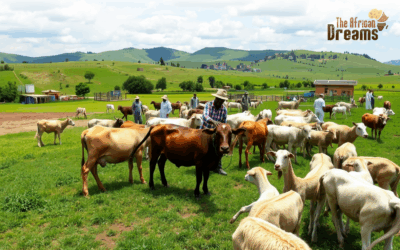
Cameroon’s potential role in African halal jerky is tied partly to its livestock base. MINEPIA, Cameroon’s Ministry of Livestock, Fisheries and Animal Industries, maintains production and import statistics for the livestock and animal-industries subsector. The ministry also operates a program specifically aimed at developing animal production and industries, including improving productivity and production in the cattle meat and dairy value chain.
That does not mean Cameroon currently has a large commercial jerky industry. It means the country has an agricultural and livestock foundation from which further meat processing could potentially be developed.
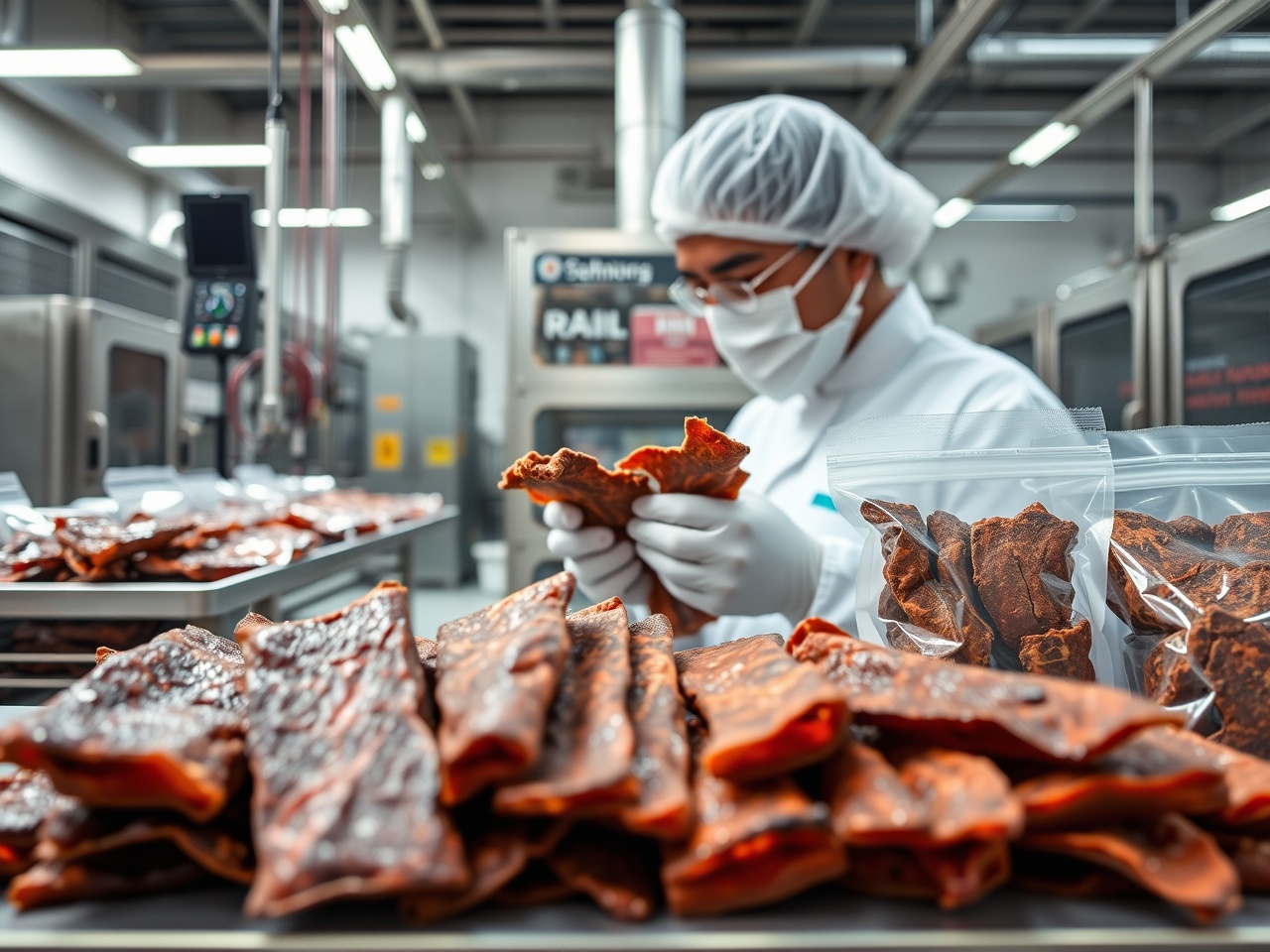
This distinction is critical. Turning cattle into premium shelf-stable snacks requires much more than access to beef. A commercial African halal jerky operation would need reliable slaughtering, meat inspection, trimming, slicing, marination, controlled drying, food-safety procedures, packaging, storage, and distribution.
Cameroon therefore has an interesting supply-side proposition, but investors would still need to validate the economics at plant level. The availability of livestock does not automatically guarantee suitable cuts, consistent quality or commercially competitive input prices. For African halal jerky, the real supply-side question is therefore not simply whether cattle are available. It is whether manufacturers can secure consistent-quality beef at a cost that allows the finished product to compete with traditional dried meat, imported snacks and other packaged foods.
Key Trends Shaping the Halal Beef Jerky Market
Several trends could support the development of the halal beef jerky Market, although they should be treated as category-level signals rather than proof of an established African market.
Convenience and shelf stability
Dried meat offers a practical format for consumers seeking portable food. Research on kilishi shows that drying is central to the product’s preservation characteristics, while more recent research continues to examine its physicochemical, sensory, and storage properties.
For African halal jerky, this creates a product proposition based on convenience without requiring consumers to abandon familiar meat flavors.
Better-controlled processing
Traditional meat snacks can face food-safety challenges when production occurs under uncontrolled conditions. A recent review of traditional West African meat products highlights concerns involving hygiene, water quality, sanitation, manual processing and packaging, and points to good manufacturing practices and HACCP as important tools for improving safety.
A premium African halal jerky product could therefore differentiate itself through controlled processing, traceability, and consistent packaging rather than relying only on the word “halal.”
Formal halal assurance
Halal standards are increasingly structured around more than slaughter alone. OIC/SMIIC standards cover food production, processing, hygiene, traceability, storage, and certification infrastructure. Cameroon’s national halal standard provides an additional local reference.
For the halal beef jerky Market, this creates an opportunity for businesses that can demonstrate the chain of custody clearly. For African halal jerky, credible halal assurance could become part of the product’s quality proposition rather than simply a compliance requirement.
Consumer Demand for Premium Halal Meat Snacks
The strongest consumer case for African halal jerky may not come from a single demographic. A premium product could potentially appeal to several overlapping groups.
Muslim consumers are the most obvious audience because halal status directly addresses their dietary requirements. But a halal product can also be positioned as a high-quality meat snack for consumers who simply value its ingredients, preparation, and convenience.
Potential segments include:
- Muslim consumers seeking verified halal packaged snacks
- Urban professionals looking for portable protein-rich foods
- Travelers and commuters
- Consumers interested in premium local meat products
- Outdoor and adventure consumers
- Hospitality customers
- Specialty-food buyers and gift purchasers
The important commercial question is willingness to pay. A premium African halal jerky product will generally have to justify its price through something beyond certification. Better meat cuts, distinctive seasoning, reliable texture, attractive packaging, food-safety controls and consistent quality can all contribute to that proposition.
Consumer research would therefore be essential before investing heavily. Small-scale product testing could examine flavor preferences, pack sizes, acceptable price points, repeat purchase, and whether customers understand the distinction between traditional dried meat and modern packaged jerky.
For African halal jerky, these tests would be more valuable than simply extrapolating demand from Muslim population statistics. Population size is not purchasing behavior, despite humanity’s enduring habit of treating demographic spreadsheets as crystal balls.
Retail, E-Commerce and Distribution Opportunities
Distribution will probably determine whether African halal jerky remains a niche product or becomes a repeat-purchase category.
Modern retail can provide visibility, but premium products do not necessarily need nationwide supermarket penetration at launch. A more controlled rollout could focus on selected supermarkets, specialist food stores, halal-oriented outlets, convenience locations and hospitality businesses.
E-commerce offers another route. World Bank research has noted that Cameroon’s e-commerce environment has historically faced difficulties, while also identifying growth in food-delivery services in major cities. This suggests that digital distribution is possible, but businesses should not assume that online sales alone can solve the country’s logistics challenges.
For African halal jerky, a hybrid model may be more realistic: physical retail for discovery and trust, supported by digital ordering for repeat purchases.
Packaging would also matter. Jerky is visually suited to compact, portable packaging, but the pack needs to communicate halal status, ingredients, net weight, dates, storage instructions, and other required information clearly. Traceability can become a competitive advantage where consumers are concerned about meat sourcing.
A strong African halal jerky brand would therefore need packaging that communicates three things quickly: what the product is, why it is trustworthy, and why it is worth its price.
Local Production vs. Imported Halal Jerky
For investors considering African halal jerky, the decision between local manufacturing and importing finished products involves different risks.
Imported products can provide faster access to established recipes, packaging formats, and production systems. They may also make it easier to test consumer demand before building a local facility. However, import costs, logistics, foreign exchange exposure, shelf-life requirements, and retail pricing can make premium imported jerky difficult to position.
Local production offers the opposite advantages. It can potentially shorten the connection between livestock supply and finished product, create local employment, and allow flavors to be adapted to Cameroonian preferences. It may also make it easier to develop a product based on local meat-snacking traditions.
The more interesting model could eventually be a locally manufactured product using internationally benchmarked food-safety and halal systems. That would allow African halal jerky to be positioned as a modern packaged-food category while retaining a strong connection to local raw materials and regional tastes.
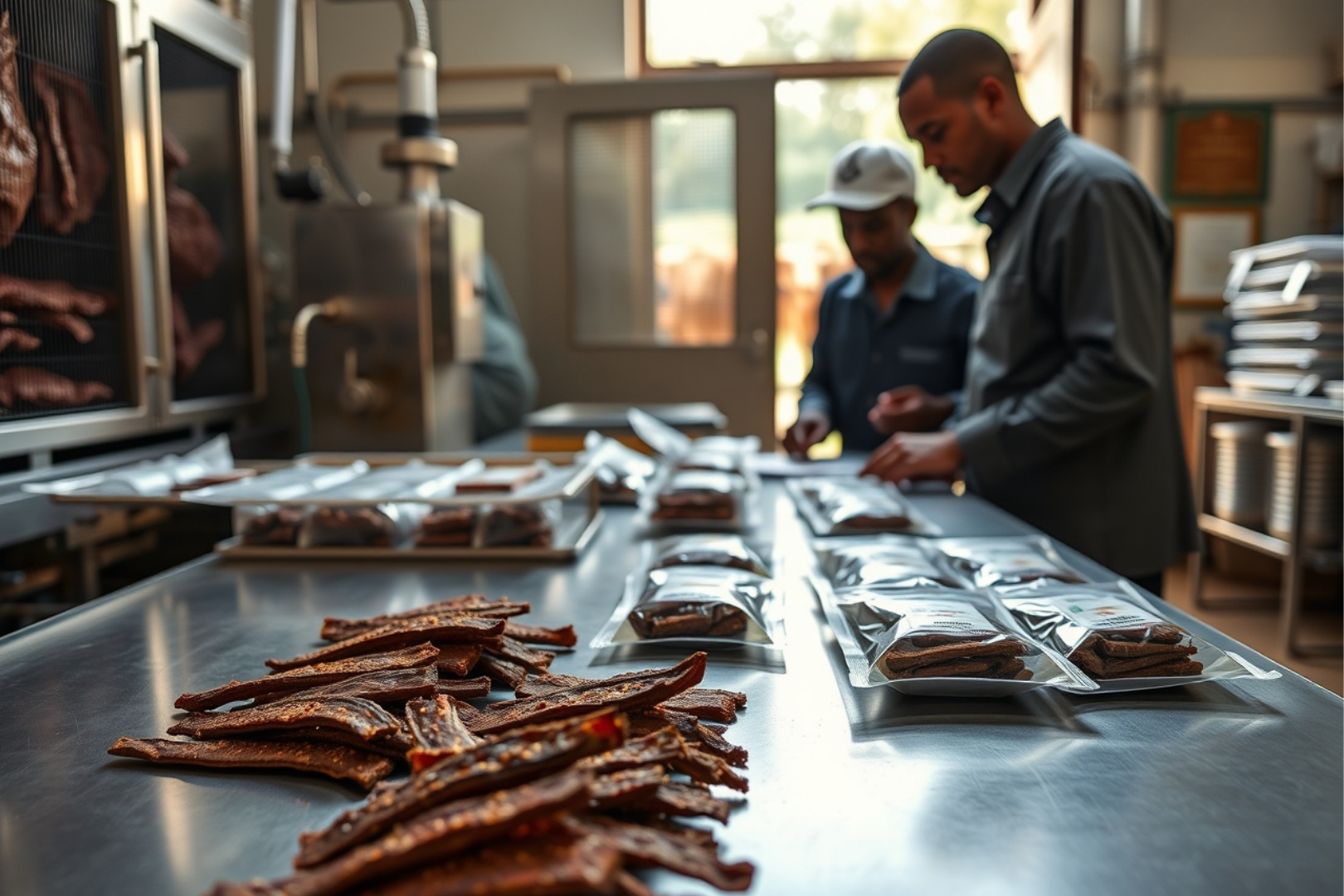
But local production should not be romanticized. Drying technology, energy reliability, food testing, packaging materials, cold-chain requirements before processing, and skilled labor all affect the cost structure. A feasibility study would need to establish whether local manufacturing can compete with imported products at the intended retail price.
Competitive Landscape and Traditional Meat Snacks
Competition in the halal beef jerky Market will not necessarily come from other jerky brands.
In Cameroon and the wider region, consumers may compare premium African halal jerky with traditional dried meat, kilishi, smoked meat, fresh meat products, and other seasoned meat snacks.
Kilishi is particularly important because it demonstrates that dried beef is already part of the broader Sahelian food tradition. Research describes it as a sun-dried, seasoned, and roasted meat product, while recent work has examined its storage, sensory quality, salt composition, and other characteristics.
The competitive advantage of commercial jerky therefore cannot simply be “dried beef.” Traditional products already occupy that territory.
Instead, African halal jerky would need to compete on consistency and convenience: predictable texture, professionally controlled processing, hygienic production, attractive packaging, clear labeling, standardized flavors, and easy portability.
The opportunity is not to replace traditional products. It is potentially to create a more formal packaged category alongside them. In that sense, African halal jerky can be viewed as a product-format opportunity built on an existing consumer familiarity with dried meat.
Investment Opportunities and Market Challenges
The investment case for African halal jerky is best approached as a staged validation exercise rather than a bet on an already proven mass market.
Potential opportunities include:
- Small-batch premium production
- Contract manufacturing
- Halal-certified local meat processing
- Retail-ready private-label products
- Hospitality and tourism supply
- E-commerce and direct-to-consumer sales
- Regional export after domestic validation
- Product lines based on local spices and meat traditions
A particularly interesting route could be to begin with a relatively narrow African halal jerky product portfolio. One or two core beef products could be tested before introducing multiple flavors, pack sizes, or meat types.
The principal risks are equally important. Reliable market-size data for African halal jerky is limited. Consumer willingness to pay for premium packaged meat needs validation. Food safety must be controlled rigorously. Halal certification and traceability need to be credible. Supply-chain costs can undermine margins. And traditional meat products already provide competition on familiarity and price.
There is also a strategic risk in assuming that a large Muslim population automatically creates a large jerky market. It does not. The evidence supports the existence of a substantial potential halal consumer base in Cameroon, but the conversion of that base into recurring packaged-jerky purchases remains a commercial hypothesis.
For investors, African halal jerky should therefore be treated as a hypothesis to validate through actual consumer behavior rather than as a market whose size can be inferred from broad halal-food statistics.
Future Outlook for African Halal Jerky
The future of African halal jerky is therefore more likely to depend on execution than on a headline market forecast.
Cameroon has several relevant foundations: an established Muslim consumer base, a livestock sector, traditional dried-meat consumption, formal halal standards and a substantial urban population. These factors make the country worth investigating as an early market for premium halal meat snacks.
At the same time, the available evidence does not justify claiming that Cameroon already has a large or rapidly growing African halal jerky industry. There is no sufficiently reliable public dataset establishing the category’s current revenue, volume, or CAGR.
The most defensible outlook is consequently one of potential category development. A business that can combine halal assurance, food safety, competitive pricing, appealing flavor profiles, and dependable distribution could have room to build a differentiated product.
For African halal jerky, Cameroon may be less interesting as a market with a proven jerky boom and more interesting as a market where existing food traditions and supply-side capabilities could be adapted into a modern packaged-food format.
That makes African halal jerky particularly relevant to food manufacturers willing to invest in category education, product testing, and controlled distribution rather than simply assuming that demand already exists.
Final Words: Growing Market of African Halal Jerky
The African halal jerky story in Cameroon should not be built around an invented market-size number. The available evidence does not support that level of precision. What it does support is a more grounded commercial argument.
Cameroon has a sizeable Muslim population, a significant livestock economy, established traditions around dried meat, and a formal national standard for halal food. Its urban population also provides a practical setting for testing premium packaged foods.
Those conditions make the halal beef jerky market a plausible emerging category, but not yet a sufficiently documented mass market. The strongest opportunity may lie in connecting familiar meat traditions such as kilishi with modern processing, packaging, halal assurance, and distribution.
That is where African halal jerky could become commercially meaningful: not by pretending the market is already mature, but by solving the practical problems required to create a trustworthy, repeat-purchase category.
For investors, the next step is not another speculative CAGR. It is validation: consumer testing, price research, retailer discussions, raw-material costing, processing trials, halal certification planning, and a rigorous assessment of food-safety requirements. If those fundamentals work, the African halal jerky opportunity becomes considerably more interesting.
If those fundamentals work, the African halal jerky opportunity becomes considerably more interesting. The commercial proposition is ultimately straightforward: take an established familiarity with dried and seasoned meat, combine it with credible halal assurance and modern food processing, and determine whether consumers will repeatedly pay for the resulting product.
That is a much stronger investment thesis for African halal jerky than manufacturing a suspiciously precise market-size number out of thin air.

0 Comments