
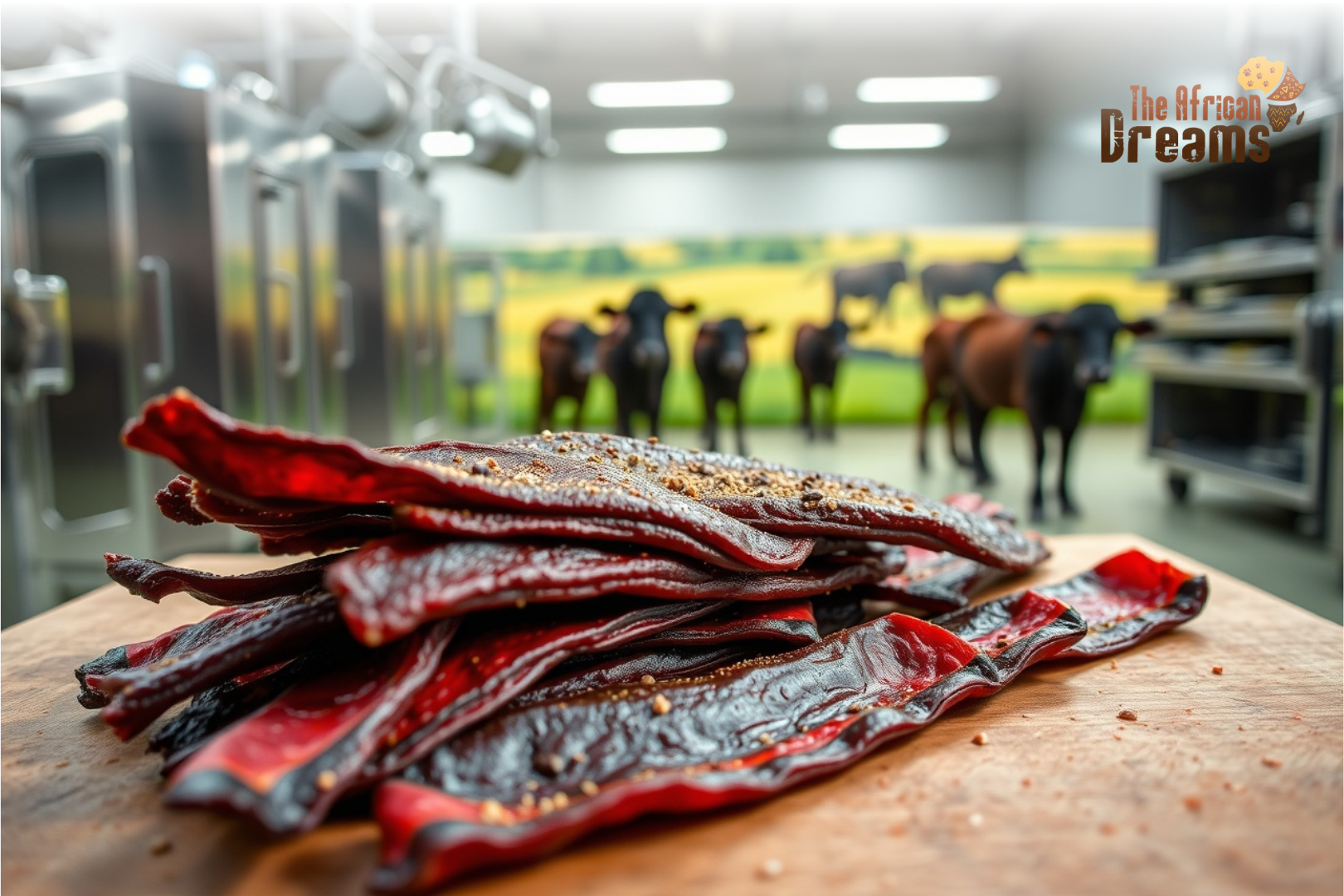
Introduction: African Beef Jerky
African beef jerky sits at the crossroads of several trends that are reshaping the way people buy meat: premium products, halal convenience foods, traceable sourcing, and the growing appetite for shelf-stable protein. On paper, that makes the opportunity look promising. In practice, though, the story is more complicated. There is still no reliable public dataset that measures the global African beef jerky market specifically, so broader halal-food or beef-market figures cannot simply be used to manufacture a market size that does not exist.
What we do know is more interesting. Africa is home to a wide range of cattle-production systems, long-established meat traditions, and countries with experience supplying regulated international meat markets. That gives African beef jerky a potentially strong starting point. But having access to African beef is only the first step. Premium buyers expect consistency, the halal process needs credible oversight, and the finished product has to meet strict food-safety and import requirements in whichever market it enters.
This is where the real opportunity begins. African beef jerky could move beyond the idea of inexpensive dried meat and become a premium halal snack built around something consumers can actually understand and value: where the beef comes from, how it was produced, how it was certified and, ultimately, how it tastes. The challenge is turning that story into a product that can deliver the same quality from one batch to the next. For businesses looking at the category, that may be the real test of whether African beef jerky can make the jump from an interesting regional product to a credible global contender.
The Untapped Potential of African Beef
Africa should not be treated as one cattle market. Livestock systems range from pastoral and agropastoral production to mixed smallholder farming, ranching, and commercial operations. These systems produce different animals, different levels of consistency, and very different opportunities for processors. FAO research has long documented this diversity across African livestock systems.
That diversity is both an advantage and a problem for African beef jerky.
The advantage is the range of production environments and livestock traditions. Certain producers may be able to build a differentiated story around extensive production, regional breeds, local feed systems, or specific geographic origins. Namibia, for example, operates the Farm Assured Namibian Meat scheme, which links export meat with farm assurance, traceability, and quality controls.
The problem is consistency. Premium food buyers cannot build a dependable international product around vague claims such as “African beef.” They need specifications covering animal sourcing, carcass quality, fat levels, microbiological safety, processing conditions and batch traceability.
For African beef jerky, therefore, origin should be the beginning of the value proposition, not the entire value proposition.
A premium brand might eventually communicate:
- country or region of origin;
- cattle-production system;
- slaughter and halal certification;
- processing location;
- ingredient and spice profile;
- batch traceability;
- food-safety controls.
That is much stronger than simply putting an African map on a packet.
Why African Beef Jerky Fits the Premium Halal Market
The broader halal-food economy provides a credible commercial context for African beef jerky, although it does not prove demand for jerky specifically. The 2025/26 State of the Global Islamic Economy report estimates Muslim consumer spending on food reached about US$1.5 trillion in 2024 and projects approximately US$2.1 trillion by 2029.
That market is not simply about religious compliance. Convenience, provenance, product quality, and transparent certification increasingly influence food purchasing. For a meat-snack brand, that creates room for products that combine halal assurance with premium positioning.
African beef jerky also has a practical product characteristic: dehydration significantly reduces the weight and moisture content of meat, allowing properly processed jerky to be stored without refrigeration under appropriate conditions. USDA guidance identifies jerky as a shelf-stable dried meat product, while stressing that safe processing is essential.
That matters commercially because a shelf-stable product can potentially reach specialty retailers, online consumers, travel markets and diaspora communities without depending on the same cold-chain requirements as fresh beef.
But premium pricing needs more than halal certification. African beef jerky would have to compete on taste, texture, ingredients, packaging, food safety and brand credibility.
The opportunity is therefore closer to premium packaged food than commodity meat.
From Livestock to Premium African Beef Jerky
Turning African beef into African beef jerky is not a simple matter of slicing meat and drying it. The processing chain determines much of the finished product’s commercial value.
The first requirement is a reliable supply of suitable beef. Processors need specifications for the cuts used, fat content, muscle structure, age, or other quality characteristics relevant to their formulation. A premium jerky line cannot constantly change texture because suppliers change animals or cuts from one batch to another.
The second requirement is controlled processing. USDA guidance recommends heating meat to 160°F (71.1°C) before dehydration for jerky preparation and maintaining appropriate drying conditions afterward. The purpose is to control pathogens before moisture removal makes surviving bacteria more resistant to heat.
For commercial African beef jerky, the principle is broader than simply reaching a temperature. Manufacturers need validated processes, sanitation controls, appropriate drying parameters, packaging systems, and shelf-life verification.
There is also a major difference between traditional dried meat and export-grade premium jerky. Africa has longstanding dried-meat traditions, including biltong, but a commercial jerky manufacturer selling internationally must operate under the food-safety and labelling rules of its target market. USDA, for example, distinguishes commercially inspected jerky from home-dried products and treats commercially packaged jerky as a shelf-stable food when properly processed.
For African beef jerky, this creates several possible product directions:
- traditional African-inspired spice blends;
- lean, high-protein premium strips;
- regional flavor collections;
- low-sugar or clean-label formulations;
- gift and specialty-food formats;
- travel-friendly halal meat snacks.
The strongest products would combine African culinary identity with manufacturing discipline.
Halal Certification, Quality and Traceability
Halal compliance needs to remain central to African beef jerky, not treated as a marketing sticker added near the end of production.
Codex guidelines state that halal claims are subject to the requirements and interpretations of relevant authorities, including those in importing countries. The guidelines also address slaughter and require halal food to be prepared, processed, packaged, transported and stored in accordance with applicable halal and food-hygiene requirements.
That has direct implications for African beef jerky exporters.
A processor needs to understand the requirements of its intended destination rather than assume that one certificate automatically satisfies every market. Certification, slaughter supervision, ingredient control, segregation and documentation may all matter.
Traceability is equally important. Namibia’s Farm Assured Namibian Meat system provides a useful regional example: its standards describe traceability from the abattoir to the farm of origin alongside food-safety and quality assurances.
For premium African beef jerky, traceability can become part of the product itself. A QR code could potentially connect a batch to information about its production origin, certification, and processing, provided the underlying data is genuine and independently controlled.
The important distinction is simple:
Halal establishes compliance. Traceability establishes confidence. Quality establishes the premium.
Building a Global Premium Position
The strongest African beef jerky brands would probably avoid competing primarily on price. Commodity positioning would expose producers to the disadvantages of fragmented supply chains, processing costs, and international freight.
Premium positioning offers a different route.
A brand could build its identity around African provenance, halal integrity and a specific culinary story. That might mean a Namibian beef product with a clearly documented production system, a West African-inspired seasoning profile, or a product built around a particular regional food tradition.
However, African beef jerky should not make unsupported claims about being naturally superior because of geography. “Grass-fed,” “free-range,” “hormone-free,” “organic,” “antibiotic-free,” and similar claims require evidence and, depending on the market, formal verification.
Namibia demonstrates why documented production characteristics can matter. Its FAN Meat scheme describes meat produced under specified assurance conditions, including traceability and animal-welfare requirements.
For African beef jerky, the brand proposition could therefore be built around three layers:
- Origin: where and how the beef was produced.
- Integrity: halal certification, food safety and traceability.
- Experience: taste, texture, packaging and convenience.
That is a much more defensible premium proposition than simply calling the product “African.”
Export and Commercial Opportunities
The most realistic export strategy for African beef jerky would probably begin with carefully selected markets rather than attempting global distribution immediately.
Potential destinations include Muslim-majority markets in the Gulf and Southeast Asia, Muslim consumer markets in Europe and North America, and African diaspora markets where consumers may already have cultural familiarity with African flavors.
The broader halal-food trade is substantial. The 2024/25 SGIE data reported that OIC members imported hundreds of billions of dollars in halal-related food products in 2023, illustrating the scale of the wider trading environment. That figure should not be interpreted as a jerky opportunity by itself.
For African beef jerky, the commercial logic is more specific: the product is lightweight relative to fresh meat, potentially shelf-stable, differentiated by origin and suitable for direct-to-consumer or specialty retail models.
Export compliance remains the gatekeeper. Namibia’s meat-export procedures, for example, require veterinary documentation, approved establishments, and permits, while export rules can require meat to be processed and stored at designated facilities.
That means an entrepreneur should identify the destination market before designing the factory, not build a factory first and then discover that the target country has different import requirements. Humanity has apparently decided this is an excellent way to spend money.
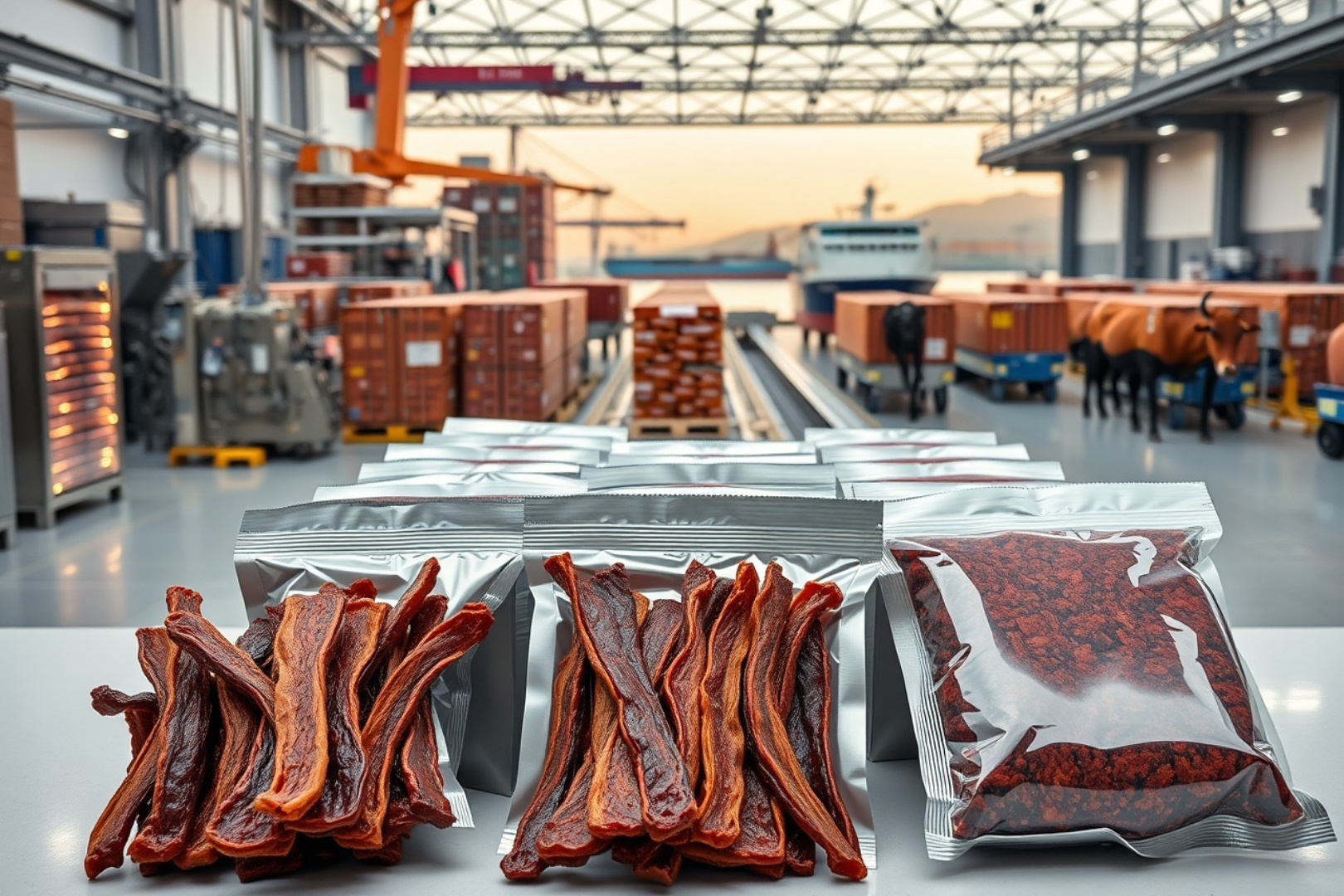
Challenges Holding African Beef Jerky Back
The biggest challenge for African beef jerky is unlikely to be whether Africa has cattle. It is whether producers can convert livestock into consistent, export-ready food products.
FAO documentation identifies substantial variation in African livestock production systems and historically limited productivity and market integration in many areas.
Infrastructure can also become a bottleneck. Processing requires reliable slaughter facilities, hygienic cutting areas, controlled drying, packaging, testing and storage. Export logistics then add documentation, border controls, and transportation requirements.
The main risks for African beef jerky include:
- inconsistent raw-material specifications;
- weak traceability between farms and processors;
- limited modern meat-processing capacity;
- unreliable electricity or temperature control in some production locations;
- insufficient laboratory and shelf-life testing;
- fragmented halal-certification requirements;
- high freight and compliance costs;
- inadequate international distribution networks;
- difficulty maintaining identical product quality at scale.
These constraints do not eliminate the opportunity. They define the investment required to capture it.
What Investors and Food Businesses Should Consider
For investors considering African beef jerky, the attractive part of the opportunity is not simply access to cattle. It is the possibility of capturing value further down the chain through processing, branding, and distribution.
A sensible commercial model would begin with a defined supply base and a small number of high-value SKUs. The business should validate raw-material consistency, processing yields, food safety, shelf life, and customer acceptance before committing to large-scale export capacity.
For African beef jerky, the most important due diligence questions are practical:
- Can the supplier provide consistent beef to a defined specification?
- Is the slaughter facility approved for the intended market?
- Can halal compliance be independently verified?
- Is the entire production line segregated and documented appropriately?
- Has the drying process been validated?
- Has shelf life been demonstrated through testing rather than estimated?
- What import rules apply to the finished product?
- What is the landed cost per retail unit?
- Can the product command a premium after freight, certification, and distributor margins?
- Can supply remain consistent as sales grow?
The strongest opportunity may therefore be vertically integrated or closely coordinated businesses connecting farmers, approved abattoirs, processors and export distributors.
That is less glamorous than putting “premium African” on a pouch. It is also considerably more likely to survive its second shipment.
Global Outlook for African Beef Jerky
The case for African beef jerky is credible, but the claim that it will become a global leader should be treated as a commercial hypothesis rather than a forecast.
The wider halal food economy is expanding, and consumer demand is increasingly compatible with products that combine certification, convenience and differentiated provenance.
At the same time, established global meat exporters already possess sophisticated processing, certification and distribution infrastructure. African beef jerky would therefore have to compete against businesses that already understand international food logistics.
Its strongest route may be differentiation rather than scale.
A successful African beef jerky brand could own a distinctive space around African origin, halal assurance, premium beef, regional flavors and transparent sourcing. That is a narrower ambition than becoming the world’s largest jerky supplier, but potentially a more realistic one.
Africa also has the advantage of multiple production models rather than a single standardized livestock system. If processors can identify the systems that reliably deliver suitable beef and connect them to modern food manufacturing, the continent could build premium products without needing every African country to participate.
Final Thoughts: Growing Market of African Beef Jerky
African beef jerky has a plausible path into the global premium halal meat-snack category, but the opportunity depends on execution rather than geography.
Africa’s livestock diversity provides raw-material possibilities. Existing examples such as Namibia show that African producers can build traceability and export-assurance systems. Halal standards provide a framework for compliant slaughter and processing, while modern dehydration and packaging can turn beef into a lightweight, shelf-stable product.
The harder part is everything between those points.
To succeed, African beef jerky needs reliable sourcing, consistent beef specifications, validated processing, credible halal certification, strong traceability, compliant packaging, and access to distributors that understand premium halal consumers.
The commercial opportunity is therefore real but conditional. African beef jerky will not become premium merely because it is African, halal, or made from beef. It becomes premium when those attributes are supported by measurable quality, a compelling product experience, and a supply chain capable of delivering the same promise in every batch. That is the difference between an interesting African food product and a globally competitive one.

0 Comments