
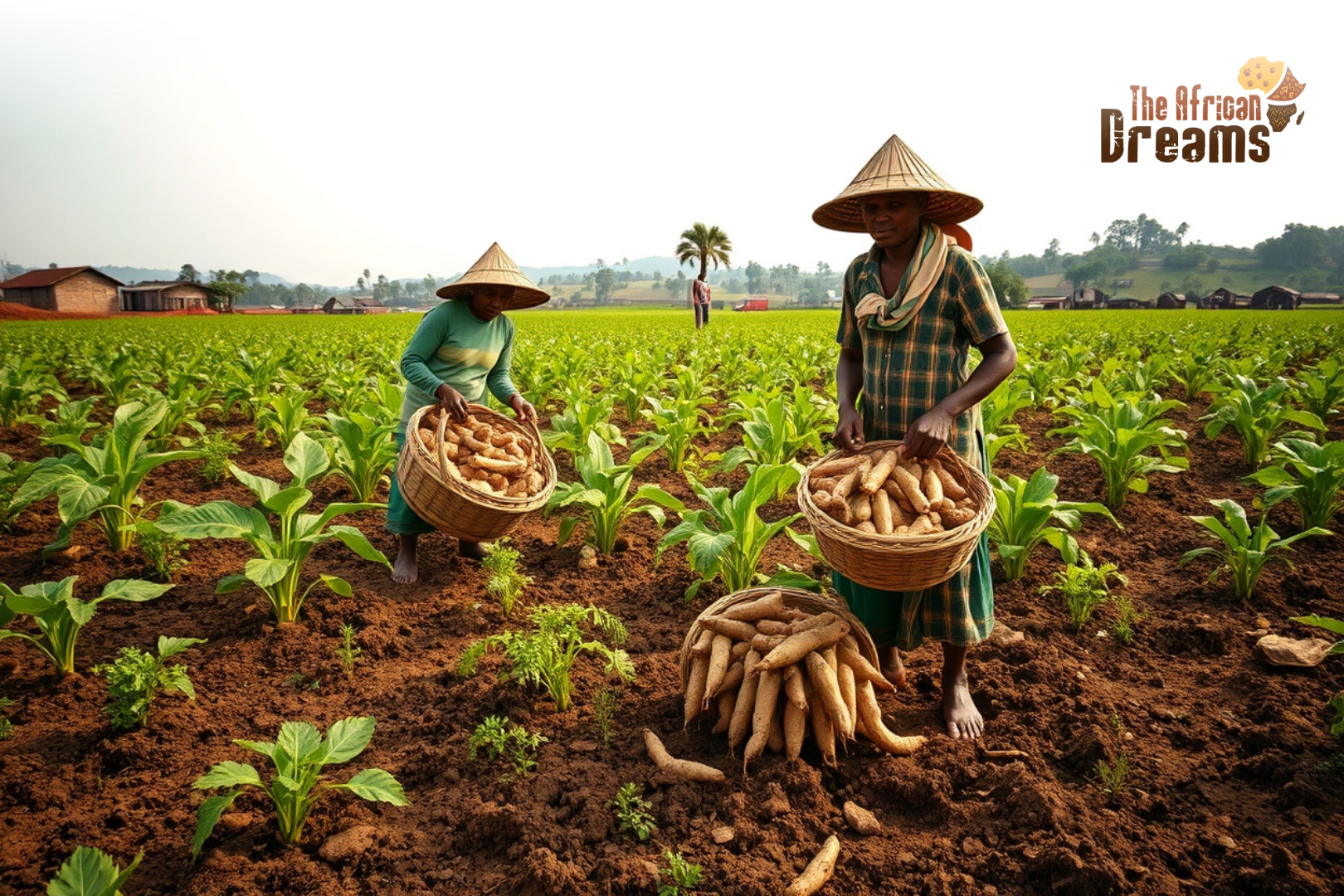
From its original home in South America, the humble root crop of cassava has gained a foothold in Congolese life. Introduced to Africa centuries ago, cassava had taken root throughout the various landscapes of the Congo and grown into one of the most vital crops for the people. Cassava has gradually stopped being just mere food. Instead, it became vital to the nutrition and subsistence of millions of Congolese people. It grew from the earth to feed and sustain so many. This blog discusses the cassava industry of Congo.
Cassava & the Agricultural Sector in Congo
Agriculture is the backbone of the economy in Congo, on which more than 60 percent of its population depends for their livelihood. This country has vast, fertile land with great potential for farming. The crops grown in this country are many, but among them, cassava is an important one. More than 80 percent of the population consumes cassava daily, thereby putting it on the front lines in the fight against hunger and malnutrition.
Cassava is not only a food crop but can also play a significant role in accelerating economic development. If well developed, it can be transformed into flour, starch, bioethanol, and animal feed, among other products, potentially opening new markets and creating jobs. Despite its importance, the cassava industry in Congo does face some challenges that hinder its market development.
The Challenges
1. Low productivity
Some of the major problems dealing with the cassava industry in Congo are the low yields. The average yields of cassava are way below where they should be since most farmers still rely on outdated farming methods.
Besides, cassava is very prone to diseases, which include cassava mosaic virus and brown streak virus, that can completely destroy an entire field of the plant. These are challenges that have made farmers not give their utmost, and the country is not producing enough cassava as it ought to.
2. Post-harvest losses
Another serious problem is the post-harvest loss of cassava. Cassava roots are of a highly perishable nature and need to be processed as quickly as possible, usually within two days of being harvested. However, most areas lack processing facilities, while poor conditions of storage result in considerable losses. It is also estimated that up to 40% of all cassava ever harvested in Congo never reaches Tshikapa, let alone Kinshasa, to be eaten or sold—a huge waste of food and potential income.
3. Limited Value Addition
In Congo, most cassava is consumed in the simplest forms, like being boiled or pounded into flour for making “fufu,” a traditional dish. While this will suffice for the basic nutritional requirements of many people, it does not exploit cassava’s full economic potential. Very little will go into any more value-added products, such as cassava flour, starch, or ethanol, at a higher selling price.
4. Access to Marketing
Another challenge that cassava farmers face is access to markets. Most of them live very far from markets and are usually on local roads, thus having limited access to markets. As a result, they are often forced to sell their cassava at throwaway prices to middlemen who can take it to market. This limitation will limit their income from this hard work.
5. Infrastructure
The lack of infrastructure remains one of the greatest barriers that the cassava industry faces. Indeed, poor roads increase the cost of transportation of cassava, while a lack of processing plants and storage facilities leads to high post-harvest losses. Without such essential facilities, the addition of value to cassava and vigorous exploitation of its full potential quite falters.
6. Financial constraints
Another important component that takes away from Congo’s smallholder farmers’ production capacity is financial constraint. Most smallholder farmers in Congo do not have access to credit, rendering better seeds, fertilisers, and various improved tools unaffordable options for them. The inability to invest productively keeps productivity low and makes it hard for farmers to improve their livelihoods.
The Solutions
1. Improvement in Farming Practices
The following initiatives have been taken to improve farmers’ practices, address challenges facing the cassava industry, and enhance the crop. It is critical to note that introducing a disease-resistant cassava variety into the system serves as one of the main solutions. This variety withstood normal pests and diseases that usually affect cassava crops and often yielded much more reliable harvests.
Training programs are also arranged for farmers on modern farming techniques; these programs should focus on improved pest control methods, judicious use of fertilisers, and the introduction of simple machinery to reduce the labour intensity of farming. Farmers will be able to grow more cassava by adopting these new practices and minimising current losses.
2. Developing the Cassava Value Chain
Value chain development is very important in realising the full economic value of cassava. This means not only growing cassava but also processing it into flour, starch, and bioethanol products that have higher market values. In developing cassava processing, Congo can further create jobs and increase farmer incomes.
Another critical step is the embedding of closer links among farmers, processors, and markets. This coordination in the different components of the industry would ensure the timely and quality supply of cassava and ensure market access. Farmers’ prices for the crop will improve, and the entire value chain will become profitable.
3. Infrastructure
Infrastructure investments hold the key to decreasing post-harvest losses and increasing market access. The construction of proper roads, processing plants, and storage facilities will ease losses during transportation, processing, and storage, increasing their value.
4. Investment in Finance
Access to finance is important for enabling farmers to invest in their businesses, too. Programs that offer microloans or engage with banks and development organisations can give farmers the wherewithal to buy the best seeds, fertilisers, and equipment. Such investment is key to improving productivity and making the cassava industry viable.
Conclusion
While cassava in the Congo is much more than just a food crop, serving as a virtual lifeline for millions and an anchor of food security, the cassava industry faces significant challenges. These include low productivity, post-harvest losses, and limited value addition. Congo can unlock the full potential of the cassava industry by improving its farming practices, developing the value chain, and making infrastructural and financial investments. It has great potential to be further realised in Congo through increased investment in research and development, improved access to global markets, and enhanced sustainable farming.
Ultimately, this industry will be successful depending fully on strong collaboration among the government, private sector, and international partners. The journey of cassava in Congo is far from over. With the right investments and strategies put in place, this humble root crop has the potential to be one of the most important economic growth drivers—continuing to improve the lives of many and contributing to the development of the entire country.

0 Comments