
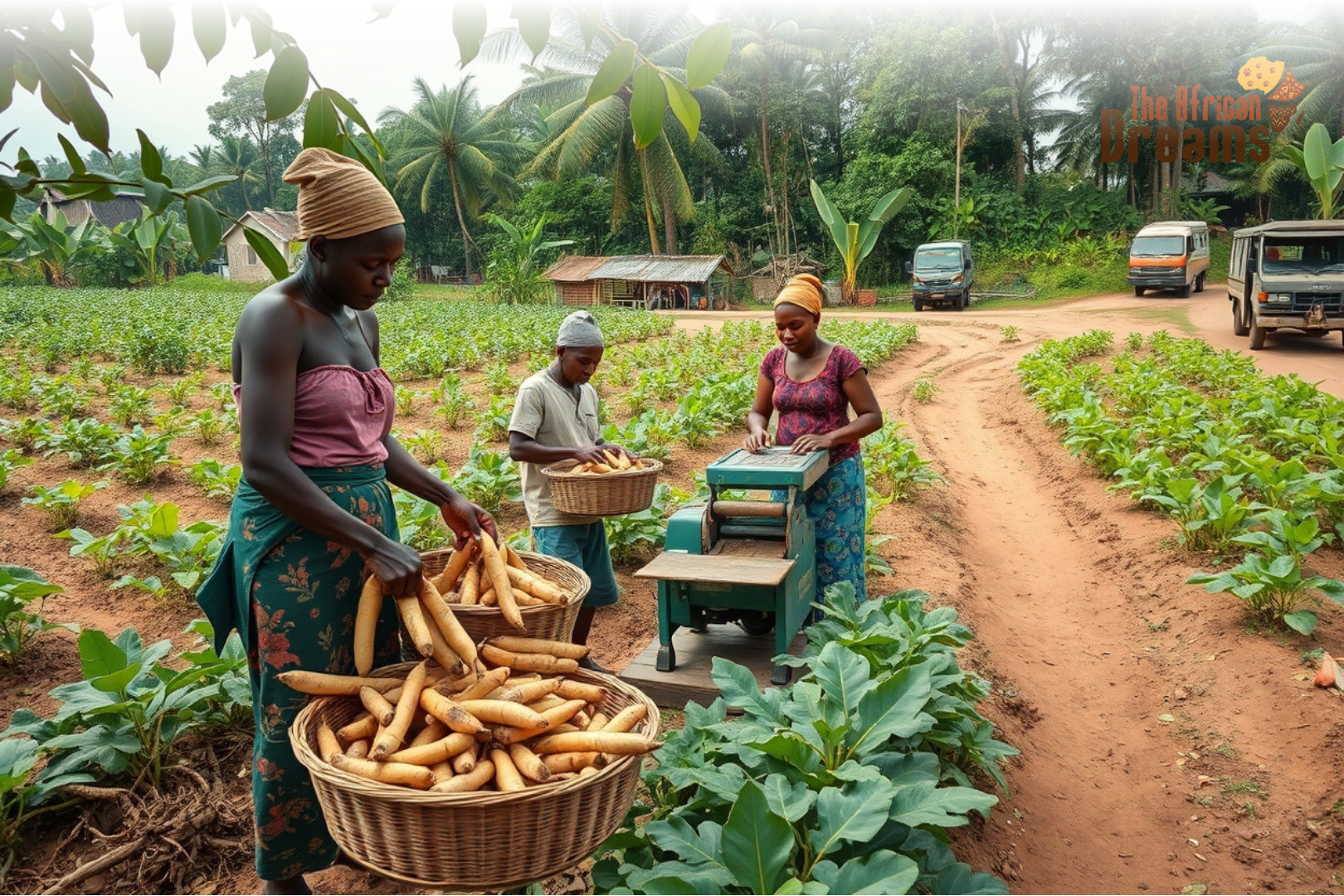
Investing in Africa is a smart move! Why, you may ask. Because much of Africa has immense potential, and most of it is still unexplored. One such country with investment potential is Liberia. Liberia is a country in West Africa. Africa’s first and oldest modern republic. Agriculture plays a crucial role in Liberia’s economy, serving as the primary source of livelihood for 70% of the population. This sector feeds the nation and provides employment and income for millions of people. Within this vast agricultural landscape, cassava stands out as one of the most important crops. Cassava is Liberia’s second most important food crop after rice.
Cassava, a root vegetable similar to yam, is widely grown across the country and is a key staple food for Liberians. Cassava’s significance goes beyond its role in food security. It is deeply embedded in the daily lives of Liberians, serving as a primary food source after rice. This case study explores how Liberia can unlock opportunities within the cassava industry. Turning this staple crop into a driver of economic growth and investment.
Article Highlights
Upon reading this article, you will be able to,
Understand the importance of cassava as a staple crop and economic driver in Liberia.
Recognize the challenges facing Liberia’s cassava industry, including traditional farming methods, poor infrastructure, and limited value addition.
Learn about practical solutions being implemented, such as promoting modern farming practices, improving processing capacity, and developing infrastructure.
Discover key projects and initiatives, like the Welthungerhilfe GPS mapping and motorized graters, the National Cassava Sector Coordinating Committee’s large-scale farming efforts, and the Cassava Transformation Project’s focus on climate-smart agriculture.
Appreciate the investment opportunities cassava offers in Liberia’s agricultural sector and how these can contribute to food security, job creation, and economic growth.
Cassava as a Staple Crop in Liberia
The crop’s versatility and resilience make it a reliable option for farmers, especially in rural areas. With its ability to thrive in poor soil conditions and withstand drought, cassava is an essential crop that helps ensure food availability even in challenging times. However, cassava is more than just a food crop. It holds significant economic potential that, if fully harnessed, could transform Liberia’s economy.
The Challenges
Despite its importance, Liberia’s cassava industry faces several significant challenges.
- One of the primary issues is the reliance on traditional farming practices. Most cassava farmers in Liberia use manual labor and basic tools, which limits their productivity. These traditional methods make cassava farming labor-intensive and inefficient. This leads to lower yields and reduced farmer income.
- Another major challenge is the difficulty in accessing markets. Many cassava farmers are located in remote areas with poor infrastructure. Inadequate roads and transportation systems make it hard for farmers to get their produce to market. This lack of access limits their ability to sell cassava and reduces their bargaining power, often forcing them to accept lower prices.
- Additionally, the cassava industry needs to add more value. In Liberia, cassava is mostly consumed in its raw form or minimally processed, such as being made into simple products like gari or fufu. This minimal processing limits the economic potential of cassava, as value-added products like cassava flour, starch, and ethanol could generate higher incomes and create more jobs.
Plausible Solutions
Various solutions have been implemented to address the challenges facing Liberia’s cassava industry.
- Promoting Good Agricultural Practices (GAP): One key approach has been promoting Good Agricultural Practices (GAP) among cassava farmers. Farmers are being introduced to modern farming techniques. That can significantly increase their productivity through training programs and extension services. These practices include improved cassava varieties, better crop spacing, timely application of fertilizers, and effective pest management. By adopting these practices, farmers can achieve higher yields and better-quality crops.
- Improving Processing Capacity: This is another critical aspect of the solution. The government and international partners have focused on establishing small to medium-scale processing facilities. These will be done across all cassava growing regions. These facilities allow for the production of value-added products like cassava flour, starch, and ethanol. These products have higher market value. Farmers can increase their income by processing cassava locally and reducing losses. Additionally, these processing centers create employment opportunities. Opportunities, particularly for women, who are often involved in cassava processing.
- Infrastructure development: Infrastructure development has also been prioritized to strengthen the cassava supply chain. Investments in road construction and the development of storage facilities have been made. These are helping to reduce transportation costs. These improvements enable farmers to access markets more efficiently. This ensures that their produce reaches consumers in good condition and at better prices.
Implementations
Liberia’s Welthungerhilfe (WHH) project uses GPS technology to help cassava farmers improve their crop yields. Cassava is a critical food crop in Liberia, with 60% of the farmers cultivating it. The project trains Farmer Field Assistants to use GPS devices to map out the exact size of cassava farms. This helps farmers understand their land better and optimize planting for higher yields. Additionally, WHH provides motorized cassava graters to help farmers process their harvest more efficiently. This helps in reducing waste and increasing income. Farmers like Jusu M. Sambola have significantly increased their cassava yields and income through modern planting techniques and technology.
To enhance cassava production, the National Cassava Sector Coordinating Committee (NCSCC) partnered with the Ministry of Agriculture (MOA) and smallholder farmers to develop 1,000 acres of cassava in four counties using modern machinery. This five-year project aims to create jobs, improve food security, and increase farmers’ incomes. It aims to do so by providing high-yield, disease-resistant cassava varieties and support services. The project is set to start in June, with each participating farm family owning and benefiting from a portion of the land.
The Cassava Transformation Project (CASTRAP) is working to support smallholder farmers. Promoting good agronomic practices such as climate-smart site selection, the use of improved cassava varieties. They also aim to improve land preparation methods like flatbed, mound, and ridge planting. These practices aim to increase yields, improve income for farmers, and reduce the environmental impact of cassava farming. The project also encourages farmers to move away from less effective methods, like the “God-Bless-You” planting method. And it has established demonstration sites to showcase the benefits of these improved techniques.
Conclusion
Cassava presents a unique opportunity to drive economic growth in Liberia. As a crucial staple crop, it provides food security and livelihoods for millions. By improving production, processing, and market access, Liberia can fully harness the economic power of cassava. With government initiatives and investments, the cassava industry can reach new heights. This allows investors to play a pivotal role in Liberia’s agricultural history. Investing in cassava supports the growth of Liberia’s economy and offers the potential for meaningful returns. Invest now and become a part of Liberia’s promising future!

0 Comments