
Introduction: Burundi’s Fishing, a Source of Economic Activity
A 2009 report from the Food and Agriculture Organization (FAO) stated that the average fish consumption in Africa was 9.4 kg. But in Burundi, the heart of Africa, it was estimated at about 2.2 kg per person. The absence of water bodies and access to the sea has crippled the country, while agriculture remains its main source of economic activity.
However, fishing in Burundi can change the rural economy. It can play a critical role in addressing challenges related to food security, employment, and many other issues.
Though fishing has a marginal contribution to Burundi’s economy, the sector has much potential to earn investment benefits. This article will explore Burundi’s fishing industry and analyze its role in the economy.
Article Highlights
Burundi’s fishing industry provides a marginal contribution to the economy.
Fisheries and aquaculture account for about 1% of the total GDP.
Investment in the sector can scale up the catch and also boost production to drive more benefits. It will also open regional export opportunities.
Lake Tanganyika, the Heart of Burundi’s Fishing Industry
Burundi has little water, 90% of it is dominated by Lake Tanganyika. It has about 2,300 square kilometers of surface water.
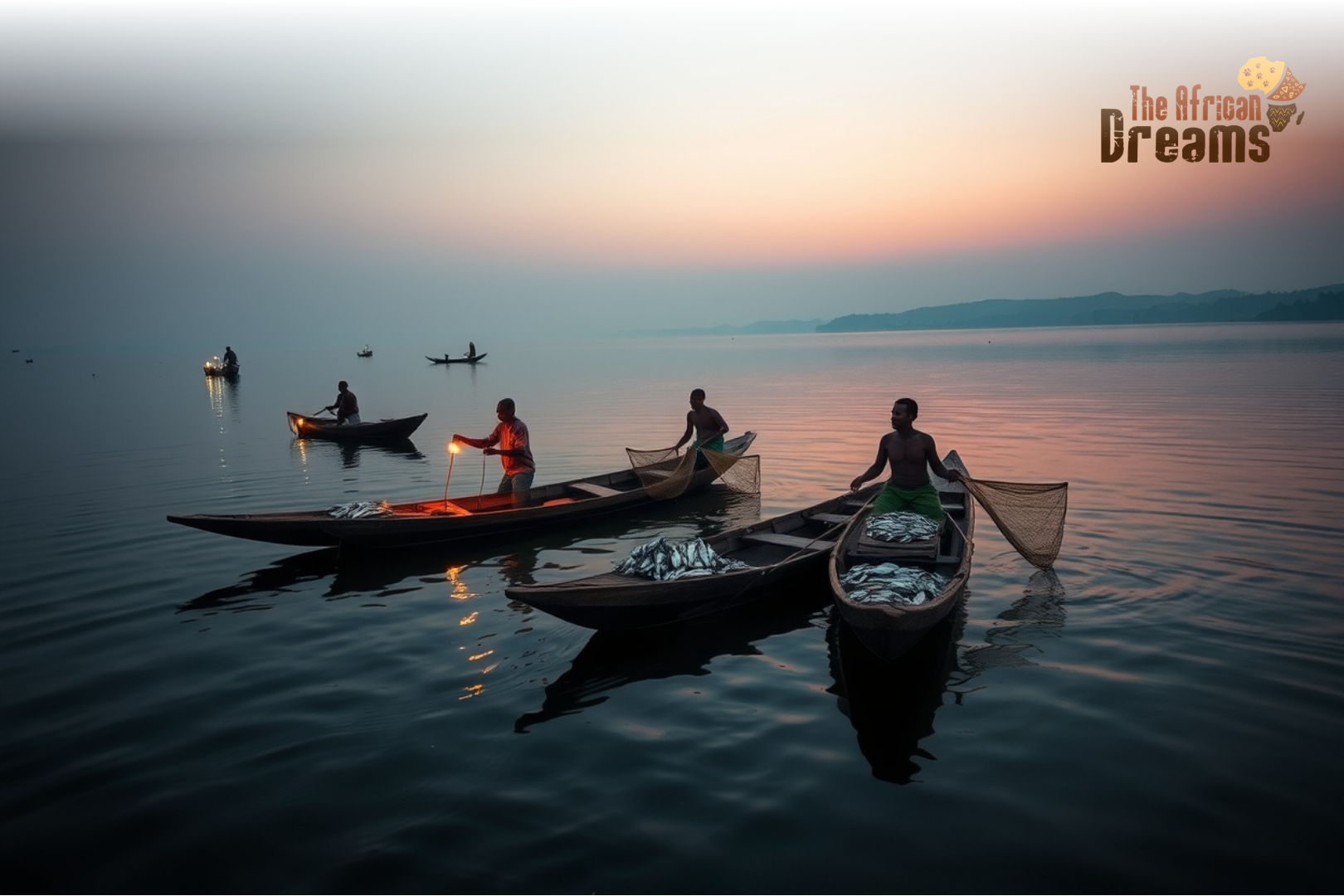
Lake Tanganyika, the heart of Burundi’s fishing industry, never sleeps. The second-largest lake on planet Earth remains busy at night.
You could easily see a group of about 5 men head out to deep water on wooden canoes, hoping to grab a better catch than they had on the last voyage. These men trust each other and keep their boats together. These boats hang a net between them and have a bright, battery-powered light directed at the water to attract the fish. After laying these nets, they sleep, waking up in the morning to haul up their catch from the waters.
The Strategic Location of Burundi as a Fishing Hub
Burundi is an East African country located in the south of the Equator. The landlocked country is about 1,400 kilometers from the Indian Ocean. The country has a total area of 27,834 square kilometers. It has Rwanda to the north, Tanzania to the east and south, and Zaire to the west.
Burundi doesn’t have any seaports, and most of its exports depend on neighboring countries. Though it is landlocked, it shares almost 2000 square kilometers of territorial waters in Lake Tanganyika, the second-largest freshwater lake by volume and depth. All the fishing activities in Burundi revolve around this Great Lake.
The economy is dominated by agriculture, contributing over one-third of the GDP. Burundi’s fishing industry makes a small contribution to the overall economy but can have a significant impact by providing a range of income-generating opportunities.
Burundi is not in a position to become a regional or global fishing hub as it has limited fishing resources and water areas. But the country can bring about a massive sum from the sector by utilizing what it has currently.
As a small country facing several challenges, Burundi’s fishing and fisheries industry can be a pillar of the country’s economic prosperity.
Overview of Burundi’s Fishing Industry
Burundi’s fishing is an important part of its economic activity. Apart from providing economic support, it also provides a decent source of daily diet.
Burundi has about 2,300 square kilometers of surface water. Most of it is a part of Lake Tanganyika, contributing 90% of the national fish production. Other important fishing activities are dependent on Lake Cohoha, Lake Rweru, and some other rivers.
Burundi shares Lake Tanganyika with the Democratic Republic of Congo, Tanzania, and Zambia. There are six major species found in the lake, but the catch includes over 2000 species of different fisheries. L. stappersii and S. tanganicae are the most abundant pelagic fishes found in the offshore zone, marking 90% of the regular catches.
Besides, Tilapia spp is another species with economic value. The total fisheries production in Burundi was about 20,475.000 Metric tons in 2022, a slight increase from 2021. The highest Burundi managed to produce was recorded decades ago, in 1992.
Fresh fish is a lucrative item in Burundi. Dried ndagala is consumed in most parts of the country. Poor families consume fish as a staple food, though the average consumption has declined since 1972. Fish demand is high during the harvest seasons, and fishing activities decrease, but the price increases.
Fishermen in Burundi
There are two types of fishermen in Burundi:
- Artisanal fishers and
- Semi-industrial fishers.
The former operates in the inshore areas while the latter is bound to offshore fishing. Artisanal fishers target juvenile Limnothrissa miodon. On the other hand, semi-industrial fishers mainly catch Clupeid and Lates species groups.
Fishers use small fishing crafts propelled by sail and paddle. Their fishing gear mostly includes gillnets, long lines, and hooks and lines. Semi-industrial fishers, however, use motor boats with lift nets.
There are two types of semi-industrial fishers:
- The ‘classical’ catamaran
- The ‘Apollo’ unit
The ‘Apollo’ unit is equipped with Apollo nets, a refined and effective version of the traditional lift-net. Thus, they can catch more fish and are highly profitable.
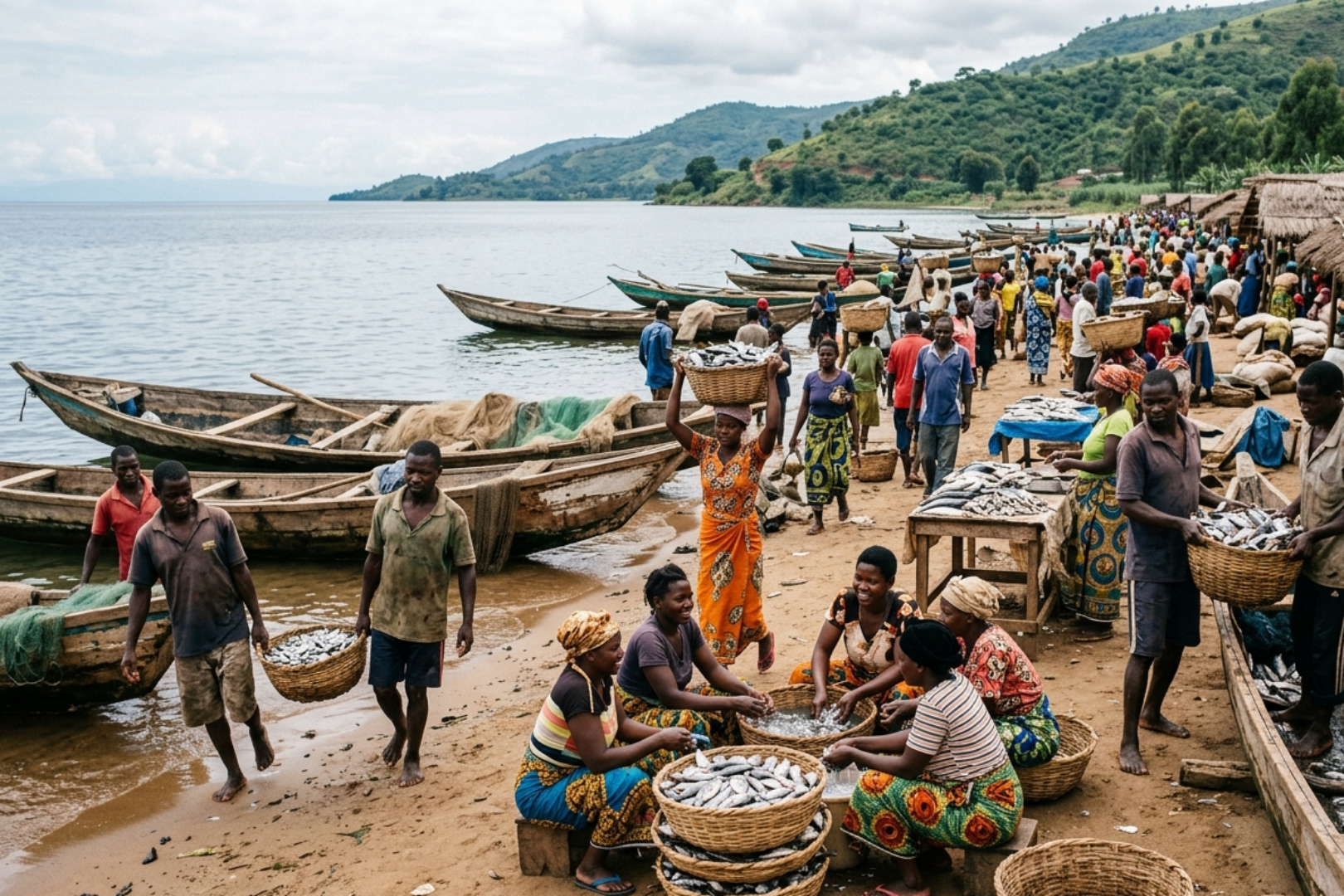
Lake Tanganyika has over 93,000 fishers, according to a report in 2011 by LTA. Among these, 8,200 were Burundian fishers (8.8% of the total), operating 1,515 fishing vessels (all types). There were about 40 operational fish landing sites, maintaining the distribution of fish items in the overall Burundi.
Economic and Social Importance of Burundi’s Fishing
Burundi’s fishing is not confined to providing a source of income. It means more to the people. It is a source of livelihood for many and provides direct benefits to thousands of people.
Burundi’s fishing sector employs many fishermen and fish traders and creates jobs for processing and transportation. Fish play an important role in providing protein for people. As part of the diet, it also ensures a bit of food security.
The importance of fishery and aquaculture as a combined industry has little contribution to the economic output in Burundi. FAO (2005-2015) reported that the sector contributes nearly 1% of the GDP.
Burundi doesn’t have much to export from this sector, with 0.4% of food and agriculture imports in 2012. The overall foreign market share was 0.3%, and trade is primarily confined to neighboring countries.
Despite such a marginal contribution, Burundi needs to utilize each contributing sector that it can find to secure a better future. Fishing can be a potential sector in achieving the aim. Though the potential will be capped in some time, the amount will, undoubtedly, not going to be a small one.
In terms of social importance, Burundi’s fishing sector makes a great contribution to employment creation. Fisheries provide livelihoods to nearly 300,000 people, i.e., about 4% of the total population.
Challenges in Burundi’s Fishing
The fishing industry in Burundi is small, so it has several challenges in terms of land, water, and additional support. Besides, the absence of infrastructure, processing facilities, etc., is also a key barrier for Burundi’s fishing sector to bloom.
1. Overfishing: Lake Tanganyika is suffering from the burden of overfishing. The limited resources within the lake provide a lifeline for around 10 million people from four countries. Continuous fishing in the same lake has endangered the species, and it is now suffering a lack in quantity.
2. Equipment: There is no exclusive or even adequate equipment for the fishermen in Burundi. Most of them only rely on traditional boats and fishing methods. The use of modern technology is still not streamlined. This creates a cap on receiving fish.
3. Processing: Burundi has little processing ability, and it is creating a major burden for the industry in performing at full potential. Lack of processing reduces the chance of getting featured before the overseas market and also causes a price decline.
4. Infrastructure: This is the most common problem in Burundi for all the agricultural sectors. Infrastructure problems in this country hamper transportation, sorting, and exporting.
Though the industry suffers several problems, these can be seen as a positive side as well. These challenges can be used as a potential sector for investment to turn them into profitable ones. These areas are yet to be explored, and investors can take the chance.
Opportunities for Burundi’s Fishing Industry
Burundi needs to work on policy, institutional, and legal frameworks to govern and scale up the fishery sector. The country currently doesn’t have any national policies on fisheries. Burundi has many opportunities in the fisheries sector. The National Agricultural Investment Plan (NAIP), 2012-2017, provides guidance on how the sector can be revived. It aims to develop a plan that will ensure the rational management of the fishery and aquaculture sector.
The proposed institutional framework has set up a fisheries administration at the core of the policies. The Department of Water, Fisheries, and Aquaculture (DWFA) in the Ministry of Agriculture and Livestock is in charge of overseeing the fishery sector.
On the other hand, the Centre National de Développement de l’Aquaculture et de la Pêche Artisanale (CNDAPA) regulates the aquaculture sector. On the private and community level, the Federation of Fishermen and Fish Suppliers of Burundi (FPFPB) is in charge of management.
1. Sustainability: Fish farming can be a sustainable sector for some, as Lake Tanganyika will hopefully continue to deliver fish. Besides, new initiatives and community-based ponds will teach the practical methods of fish farming.
2. Aquaculture development: While the main source of fish in Lake Tanganyika, Burundi can develop other sources of fish farming to ensure a constant supply. Apart from relying on nature, the country can develop its fisheries and find export markets.
3. Tourism Potential: Apart from fishing, Burundi can introduce the sector as a tourist destination and provide adventure rides on Lake Tanganyika, along with fishing expeditions.
4. Job Creation: As Burundi starts to take over these opportunities, it will need more personnel. Thus, there will be an increase in employment. The sector will create more jobs, facilitating economic growth.
These are the core areas where Burundi will benefit. There are other opportunities associated with these sectors. For example, value-added services will get a boost, and infrastructure will be developed.
Case Studies
There are initiatives to commercialize Burundi’s fishing and fish farming.
ELAGA: One such example is the ELAGA company with its “Our Modern Fish Farm” project. It started working in Burundi in 2012 in the fish farming and agro-industrial sector. ELAGA aimed to develop the key sectors, including agriculture, livestock, and aquaculture.
The company has established 75 community fish ponds in 5 provinces. It also worked on the establishment of a system for effectively collecting, transporting, processing, preserving, and marketing fish.
It also ensured effective management at each stage to prevent wastage. During the project, more than 7’000 rural households directly received benefits from it. Apart from farming and the sale of fish, it also emphasized providing technical and administrative skills to the farmers.
Samaki Centre: Another successful project to boost Burundi’s fishing industry is the Samaki Centre from SPARK. Financially backed by the Dutch Ministry of Foreign Affairs, SPARK built the Samaki Center in Rumonge.
The facility provides cleaning, drying, smoking, and freezing excess catch. Besides, it produces up to 264 kg of ice per day and uses solar panels to create electricity. As only 3% people of Burundi have access to electricity, this is a one-of-a-kind facility in the country.
Apart from the establishment of the Samaki Center, SPARK is also in control of the National Fish Federation and the Fish Suppliers in Burundi (FPFPB) to coach and monitor the progress of the center. It teaches how to boost revenue by using the facility.
Investment Potential in Burundi’s Fishing Sector
Investment in Burundi’s fishing industry can certainly bring good news for the people and profitable returns for investors. Though the country’s fisheries industry doesn’t have much to boast about, investment can make quite an impact on the local and regional economy.
The potential investment initiatives in Burundi can be the following.
1. Compound Foods: One of the possible investment sectors can be the production of fish compound foods. There is none in Burundi. Lake fishing doesn’t use any compound food, and the need for fish food by private individuals is low, but it can bring a decent amount of income for small-scale investors.
2. Aquaculture Development: Investment in fish farming can reduce the burden on Lake Tanganyika. It will create long-term benefits for the industry and also ensure the supply of fish to the local and regional markets. So, an investment opportunity will be created in Burundi.
3. Processing and Export: Burundi lacks fish processing units. Like the Samaki Center, investment can be directed to the processing and export areas so that the products get more value and drive foreign exchange. It will provide a significant revenue opportunity.
4. Tourism: Though not directly connected to the fishing sector, fishing in Lake Tanganyika is a great thing to see and enjoy. Fishing expeditions and accommodation in Lake-based lodges can be a great option to choose from. This will be an add-on to the mainstream investments in Burundi’s fishing industry.
Final Words: Investment in Burundi’s Fishing Industry
Burundi’s fishing industry includes fish farming, catching, processing, sorting, and other subsectors. Lake Tanganyika, being the heart of the industry, is highly valued in the economy. Most of the fishermen are from rural areas and are poor. With investment and improvement in Burundi’s fishing industry, fishermen will be able to improve their livelihoods and generate significant revenue as demand for fish continues to rise.
Despite many challenges, Burundi’s fishing industry has a lot of potential to grow as a sole contributor. Despite having a small impact, the industry can be one of the most useful sectors.
Investment in Burundi’s fishing industry will not only accelerate the growth, but it will also make the overall size bigger and better. The impact of fishing on Burundi’s rural economy will be massive. Therefore, it is high time to invest in Burundi’s fishing industry and contribute to the economy as well as generate profits.



0 Comments