
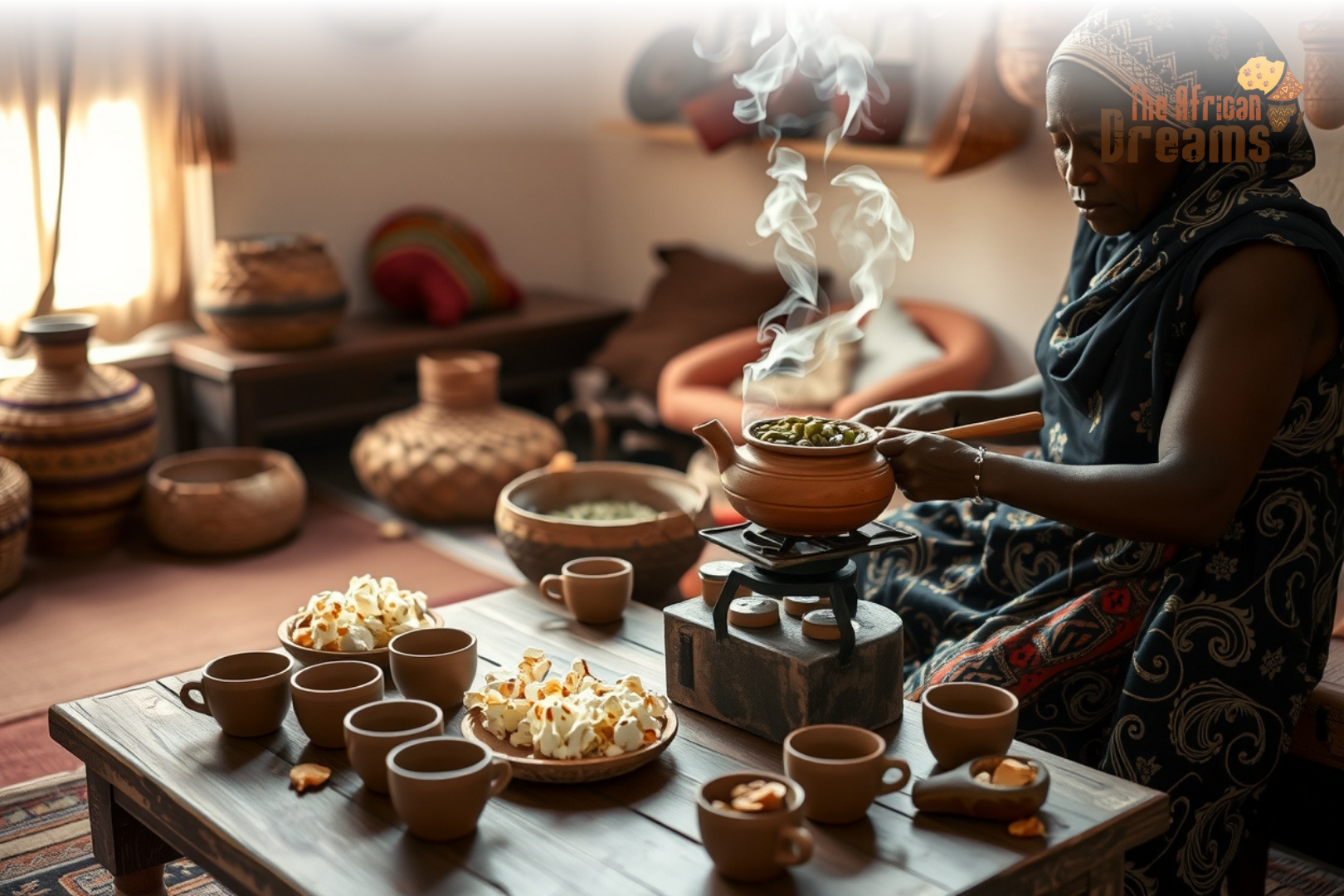
Coffee is an extremely revered cultural and historical component of Eritrea. It is not merely a beverage but a reflection of hospitality, unity, and tradition. The smell of freshly ground Eritrean coffee permeates homes, markets, and social gatherings with its aroma, a testament to the nation’s heritage. But aside from its cultural significance, Eritrea’s coffee industry has to contend with a plethora of issues, ranging from climate change to economic considerations. This article delves into the roots of Eritrean coffee culture, traditional brewing practices, and issues confronting the industry. Eritrea cultivates coffee, though in small amounts. It has yielded $178 of coffee in 2022 and was at position 194 among the world’s coffee exporters.
Article Highlights:
The Eritrean coffee ceremony is a strongly established cultural heritage that focuses on hospitality and community.
Eritrea has an active coffee culture but imports a majority of the coffee since production is negligible.
From climate change, financial constraint, to infrastructural deficiencies, circumstances work against the development of the coffee sector in Eritrea.
Communal farming, state intervention, and cooperation with foreign donors are some of the interventions being tested to redevelop coffee farming.
Eritrean diaspora communities continue to practice the coffee ceremony, promoting cultural continuity and social unity.
The Origins and Historical Significance of Coffee in Eritrea
Eritrea, located in the Horn of Africa, has a long history of producing coffee that dates back many decades. Physical location near Ethiopia, where coffee allegedly was first found, has had an influence on Eritrean coffee culture. Coffee entered Eritrean households by way of migration and trade, as history testifies. Eritrean people came to embrace the drink over time and incorporated it into life and culture.
Coffee has been at the very heart of Eritrean life for centuries. Coffee is a part of social life, religious practice, and economic activity. During colonial domination by the Italians, coffee consumption among the Eritreans was also brought under European influence to such a degree that there was a unique African-Mediterranean synthesis in the preparation and consumption of coffee.
Traditional Eritrean Coffee Ceremony
The Eritrean coffee ceremony is a traditional and respectful one that enhances respect, patience, and togetherness. The ceremony, as in the case of the Ethiopian coffee ceremony, is conducted in residential homes, festivities, and social gatherings.There are several steps of the Eritrean Coffee Ceremony.
Preparation of Green Beans – Green coffee beans are washed and purified before they are roasted on an open fire.
Roasting – The beans are placed in a shallow pan and fired until they turn dark brown with a fragrant smelling scent, which signals the start of the ceremony.
Grinding – The roasted beans are then ground using a mortar and pestle or an electric grinder.
Brewing – The coffee grounds are then boiled in a clay pot called a jebena and left to steep.
Serving – The coffee is served in small, handleless cups (finjal) and poured, typically over local snacks of popcorn or himbasha (sweet bread).
Serving is gradual and intentional, provoking conversation and camaraderie. Individuals tend to sit over several rounds of coffee discussing family, politics, and the overall state of affairs of life, reinforcing social relationships.
Coffee Cultivation in Eritrea
Even though the coffee culture in Eritrea is quite developed, the country does not engage in large-scale commercial coffee production. While in Ethiopia there is large-scale coffee production, Eritrea exports most of the coffee beans. However, there is small-scale production, and this is mainly done in the highlands because the climate that produces coffee is suitable for the highlands.
Factors Affecting Coffee Farming in Eritrea
Climate and Geography – Eritrea’s highlands are favorable to coffee growth but lowland dryness limits large-scale farming.
Water Shortage – There is a shortage of water which is a limitation to irrigation and thereby farm output.
Economic Limitations – Due to economic sanctions and lack of investment in agriculture, it has not been possible to establish large-scale coffee operations in Eritrea.
Restrictions on Trade – Economic as well as political factors have kept Eritrea away from world coffee trade.
The Role of Coffee in Social Life in Eritrea
Coffee is not only a drink in Eritrean society but a part of everyday life interactions. Coffee in the morning is a routine in the majority of households, and the visitor is usually welcomed with a cup of freshly brewed coffee. The coffee ceremony is also employed as a location for bringing up serious matters amongst families and societies.
Coffee houses, also called Bunna Bets, are common in urban areas where one drinks coffee, shares news, and carries on social discourse. Coffee houses are part of urban Eritrean culture and play an instrumental role in bringing a sense of identity and membership.
Difficulties Facing the Coffee Industry of Eritrea
There are numerous difficulties that face Eritrea’s coffee industry even as it retains the importance it holds in cultural values:
- Inadequate Local Production – Eritrea doesn’t produce a sufficient amount of coffee to meet its needs and therefore imports coffee.
- Prohibition of Importation Price – Coffee imported is expensive and therefore not so affordable for poor societies.
- Infrastructural Constraints – The country’s low level of infrastructure discourages business and agricultural development.
- Climate Change – Global warming and unstable rain patterns affect potential coffee production in Eritrea.
- Economic Sanctions – Foreign sanctions have been paralyzing the country from engaging in foreign trade of coffee.
Attempts towards Revitalizing Coffee Production in Eritrea
Due to the cultural and economic significance of coffee, attempts at reviving national production are being made:
- Government Initiatives – Work towards expanding irrigation and farming practices is being done.
- Community Agriculture – Small-scale coffee agriculture businesses are being encouraged to curb imports.
- International Alliances – Eritrea aims to make partnerships with other countries that export coffee so sustainable agricultural methods will be implemented. Domestic Promotional Campaigns – Domestic promotional campaigns to promote local domestic coffee cultivation among local Eritrean farmers have been initiated.
The Future of Eritrean Coffee Culture
Although the Eritrean coffee culture remains, its future is uncertain as it is beset by economic and environmental issues. With wise investments and sustainability, Eritrea can have a thriving coffee industry that not only preserves its heritage but also stimulates economic growth.
With the institution of domestic trade and agriculture policies, Eritrea will be independent in coffee production, and decades later will continue to relish the taste of Eritrean coffee. On the side of importation, Eritrea imported coffee worth about $13,300 in 2022, with the biggest source being the United Arab Emirates from which it imported coffee worth $12,600. Ethiopia also provided some of Eritrea’s coffee imports, from which it imported coffee worth $592 in 2022.
Historically, the coffee industry of Eritrea has been unstable. For instance, in 2003, the country exported tea, mate, spices, and coffee valued at approximately $80,040. Minimal coffee exports have been experienced in recent years, pointing to the challenges of the sector. These statistics indicate the small volume of coffee production and trade that Eritrea has, which creates the need for interventions to develop the industry and reduce import dependency.
Conclusion
Eritrean coffee is part and parcel of Eritrea’s heritage, culture, and way of life. The coffee ceremony is a growing tradition that brings people closer and says much about Eritrea’s hospitality. Even with the hitches that have faced production of coffee, concerted efforts towards restarting local production paint a bright future into the picture. Provided that the people of Eritrea are still warm with their coffee, their vibrant heritage lives on in every cup.
Eritrean coffee culture is deeply rooted in social life and tradition. Coffee ceremony is among the most enduring cultural ceremonies that strengthen social bonds. In recent decades, Eritrean diaspora communities also adopted the coffee ceremony as a means of keeping heritage alive and forging community links. Ethiopian and Eritrean migrants in Moorefield, West Virginia, for instance, brought the ancient coffee ceremonies along with the vibrant cultural heritage to the host population. In addition to the focus on the traditional coffee ceremony, the activities also provide discussion forums on the formation of multicultural relationships and social harmony.
FAQs:
What does the coffee ceremony symbolize in Eritrean culture?
Eritrean coffee ceremony is a significant tradition that symbolizes hospitality, sociality, and respect. It is a place where family members and friends gather, chat, and solidify social relations.
How is the old Eritrean coffee ceremony done?
It consists of roasting green coffee beans over a fire, grinding them, and brewing the coffee in a clay coffee pot, a jebena. It is a gradual, communal affair, which might be followed by snacks and incense.
What are the obstacles to Eritrea’s coffee industry?
The coffee industry of Eritrea is confronted by low domestic production, costly importation, lack of infrastructure, impacts of climate change, and economic sanctions discouraging international commerce.
Are efforts being made to revive Eritrea’s coffee industry?
Yes, efforts such as the government’s plan to improve farming practices, encouragement of small-scale cultivation of coffee, foreign collaboration in sustainability, and local campaigns promoting local coffee cultivation.
How is Eritrean coffee culture different from that of neighboring Ethiopia?
Even though both Eritrea and Ethiopia share the tradition of the formalized coffee ceremony, Eritrean coffee culture differs due to its multi-ethnic nature and history.
0 Comments