
Introduction
Saffron, called “red gold,” is the world’s most expensive spice. It’s highly valued because of its unique flavor, rich aroma, and deep color. Prices may vary between $5,000 and $10,000 a kilogram, depending on quality, while the global market is booming with its usage in food, cosmetics, and pharmaceuticals. Despite its high production from countries such as Iran, India, and Spain, this plant has still opened up the opportunity for new regions to cultivate saffron. This includes the Republic of Congo, which has a good climate and increased demand for high-value crops. This blog provides an overview of the opportunities and challenges facing the saffron industry of Congo.
The Challenges
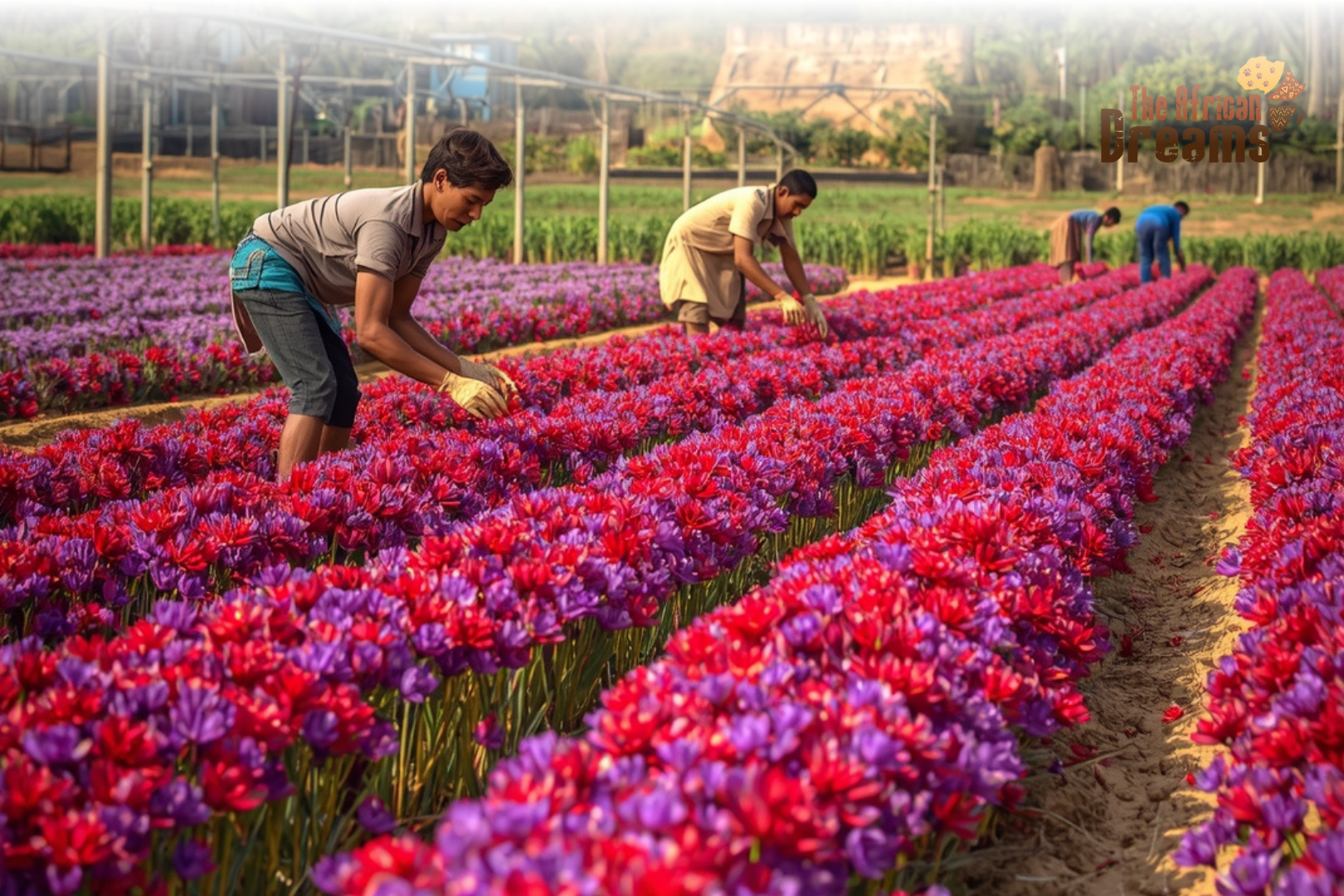
1. Except for rare occasions, one of the major problems with saffron production is its extremely labor-intensive cultivation. Saffron is extracted from the stigmas of the crocus flower, and the collection of these requires hand-picked, delicate flowers in the short period they bloom. It is said that about 150,000 flowers result in only one kilogram of saffron; this procedure is very time-consuming and laborious.
2. Besides, the technological process of saffron production is highly vulnerable to environmental influences. Crocus flowers prefer well-drained, loamy soil, and the crop requires a hot and dry summer followed by a cool autumn. While Congo’s climate thus presents certain opportunities, ensuring just the right conditions to get consistent yields may well mean investing in sophisticated irrigation systems and managing the soils with great care.
3. The other challenge is the competition in the market. Currently, Iran produces 90% of the saffron produced in the world. While this comes with some competition, it offers an opportunity for Congo to fill in the possible supply gap that, in particular, concerns over sustainability and climate change are likely to bring on traditional regions producing this spice.
The Solutions
Despite the challenges, Congolese saffron has much potential based on its appropriate growth conditions and a general interest in high-value plants. Investment in modern farming technologies such as CEA may enable the Congo to overcome some of the main traditional limitations of saffron farming, optimize the best conditions, and produce it all year. These technologies enable more than one harvest per year and increase yields; this also consistently controls quality.
The value addition of saffron into its various forms can also insulate Congolese products from market competition that generally maximizes profitability. Because saffron is applied both as a spice and in pharmaceuticals and cosmetics, there are further opportunities for Congolese producers to make headway into the market for saffron-based supplements and beauty products, which did show very high growth.
It will also be important to develop cooperatives and create partnerships with international buyers. Cooperatives will enable small-scale farmers to lower the cost of production and enhance their access to international markets. Dealing with established saffron buyers and distributors will enable Congo to tap into the ever-growing demand for organically and sustainably produced saffron.
The Implementation
Initial investments in infrastructure and training programs for farmers will be required to implement saffron cultivation in Congo. Irrigation systems, soil preparation, and post-harvest processing facilities will greatly assist in raising yields and the quality of saffron. Government initiatives and foreign investment can go a long way in providing farms with resources that would see them enter this lucrative market.
Training programs in the technical aspects of saffron cultivation will also be helpful. From planting to harvesting and processing, these programs will certainly enable farmers to achieve the highest level of productivity. Again, collaborations with international agricultural research institutions can expose Congolese farmers to advanced technologies and best practices.
On the issue of market entry, Congo’s investment in organic certification would greatly increase the value addition of saffron in international markets. E-commerce platforms and partnerships with gourmet food distributors help local producers access quality markets in Europe, the Middle East, and North America.
The Results
This investment in saffron production means that the Congo is all set to explore an economic perspective in the global saffron market. It is bound to reach $770 million by 2030 while growing at a CAGR of 7.1%. This industry can provide significant income for smallholder farmers while contributing to the country’s export revenues.
Entry into the saffron market can further diversify Congo’s agricultural economy and provide rural communities with a sustainable source of income. Due to the increasing demand for this spice from the food, cosmetic, and health sectors, Congo is in a very good position to join the global trade in saffron.
Conclusion
This investment in the saffron industry opens new perspectives for Congo’s economic growth, countryside development, and integration into the global market. By sharing innovative experiences and challenges, Congo will meet labor needs and climatic conditions to secure a place in the high-value saffron market. With the demand for this “red gold” rising in world markets, Congo can focus on and grow the industry. It is capable of positioning itself in key markets around the world associated with saffron.

0 Comments