
Interested in investing in Agriculture? The perfect destination for you would be The Republic of Cameroon, a country in the center of sub-saharan Africa. In Cameroon agriculture drives the economy. And agriculture flourishes due to the hard working women in the rural communities. Let’s uncover how these women bring about the yields in this field and look at how empowering them can change the agro dynamic.

In Cameroon, agriculture is both a cornerstone of the economy and a cultural foundation. Agriculture is the mainstay of the economy accounting for an estimated 80 percent of the primary sector’s contribution to the country’s GDP. It employs around 70% of the workforce. And you would be glad to know women farmers stand at the forefront. Despite facing numerous challenges, these women are providing for their communities. They engage in various agricultural activities that sustain their families and the nation. Here we will tell you about the integral role of women in Cameroon’s agriculture.
Without further ado let’s dive in!
Article Highlights
- Uncovering Women’s contribution to Cameroon’s Agriculture.
- Analyzing Gaps in Empowering Women Farmers.
- Analyzing Why Investing in Cameroon’s Agriculture is profitable.
The Backbone of Cameroon’s Agriculture: Women’s Unseen Labor
Women are responsible for about 90% of Cameroon’s food crop production. But represent only 3% of the industrial agricultural sector. In 2020, statistics from the Ministry of Agriculture and Rural Development showed that more than 70% of the rural workforce are women.

Agriculture in Cameroon relies heavily on the hard work and dedication of women. This includes subsistence farming, where they grow crops for their families and local communities. Their contribution extends beyond food crops to cash crops. Yet, their involvement here often remains under-recognized and undervalued in national statistics. There have been efforts by the government to reduce gender equality but women continue to face discrimination.
Women are heavily involved in farming and selling crops. However, In Cameroon, many farm projects planned between 2010 and 2020 didn’t consider women’s constraints. According to the Ministry of Agriculture and Rural Development over half of these projects overlooked the social challenges of women.
Cultivating Crops: Women’s Agricultural Engagement
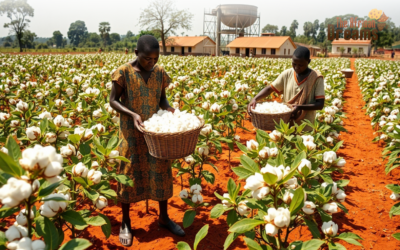
Women in Cameroon cultivate food crops which are crucial for their household food security. These include maize, cassava, and vegetables. They also take part in the production of cash crops like cocoa and coffee, albeit to a lesser extent than men. They help men in a range of activities from land preparation and planting to harvesting and marketing the produce.
Women also raise poultry and livestock. In all regions of Cameroon, the family farms raise small livestock (goats, sheep, pigs, and/or chickens), which are tended to by women and children. The typical day for a Cameroonian woman in agriculture is demanding. During the peak agricultural seasons, they spend six to eight hours daily on farms. They do this along with the responsibility of managing household duties. This dual burden underscores the resilience and perseverance of women in managing both the farms and their homes effectively.
Innovations and Support: Empowerming Women in Agriculture
To address the challenges faced by these hardworking women, various organizations have introduced innovative practices. This includes introducing labor-saving technologies and climate-resilient agricultural practices. These are increasingly important as climate variability impacts agricultural productivity.

On February 13, 2018, in Yaounde, Cameroon, UN Women and the Ministry of Agriculture and Rural Development signed a partnership. The partnership aima to involve women more fully in the agricultural sector.
This agreement supports the Women Economic Empowerment Flagship program. The program focuses on helping rural women improve their agricultural production and earnings. The initiative addresses the challenges that women face in farming.
These challenges include limited access to resources, poor storage facilities, and a lack of innovative farming skills. The project aims to make farming less burdensome and more profitable for women.
It aims to do so by upskilling women and providing them with better equipment. Hence, it promotes gender equality in Cameroon’s agricultural sector. This project, funded by the African Development Bank, was set to run from January 2018 to December 2020.
Structural Challenges and Policy Directions
Despite these advancements, women still face significant barriers. These include limited access to land, often not owned by them but by male relatives. Women also have limited access to credit and agricultural inputs like seeds and fertilizers. Policies need to be gender-sensitive and ensure that women’s specific needs in agriculture are addressed. This will ensure their full participation and benefit agricultural value chains.
Another prime deficiency is in women’s education. In 2020, it was found that only 68% of rural girls completed their primary education, compared to 76% of boys. This was reported by the National Institute of Statistics in Cameroon. This gap is due to cultural norms that expect girls to prioritize domestic work over school. Improving and ensuring education for these girls will empower them to pursue their potential and break social stereotypes. Doing so will also enable them to tap into their professional opportunities.

The Ministry of Agriculture and Rural Development should focus more on developing projects that specifically support women in agriculture. This would not only help in reducing poverty but also in addressing the persistent gender inequalities in rural areas. They should provide rural women access to modern agricultural techniques. Women should also be involved more in project planning and implementation. These initiatives could ensure that women are better adapted to current social and economic trends. This is essential for making agricultural development more inclusive and equitable.
The government should focus more on supporting rural agricultural projects run by women to help develop rural areas. It’s also suggested to speed up the process that allows local communities resources to build schools, hospitals. This would help these communities improve their infrastructure. Furthermore, it’s recommended that rural women form cooperatives. These groups can help women access important resources. Resources such as loans, training, and market opportunities which can improve their knowledge about agriculture.
Investment: The Perfect Opportunity for Investors
Cameroon has arable land and plenty of natural resources. You can invest in this country with huge untapped potential and gain substantially. It has a growing market full of potential. And presently estimated at more than 500 million consumers. Cameroon’s agribusiness is growing and there is a booming urban market.

Investing in this sector could lead to substantial results, if the existing gaps are eliminated. It also leads to food security in Cameroon. Agriculture employs more than half the workforce in Cameroon. Your investment in empowering women can help build a larger workforce and obtain more yields. The gaps such as lack of land, education, resources and modern agricultural techniques can be eliminated. This helps improve the agriculture sector of Cameroon and also promises high return for investors. The country imports large quantities of food as commercial farming is not up to par. It has great potential to meet its food needs and improve rural living conditions.
Conclusion
Cameroon has the perfect land for agriculture and is driven by agriculture. Women in Cameroon are the backbone of its agriculture. Despite their pivotal role, they face systemic barriers that limit their potential. By investing in women’s agricultural initiatives you can validate their invaluable contribution and improve economic growth and social equity in Cameroon. Empowering women in agriculture translates to improved productivity, and sustainability.



0 Comments