
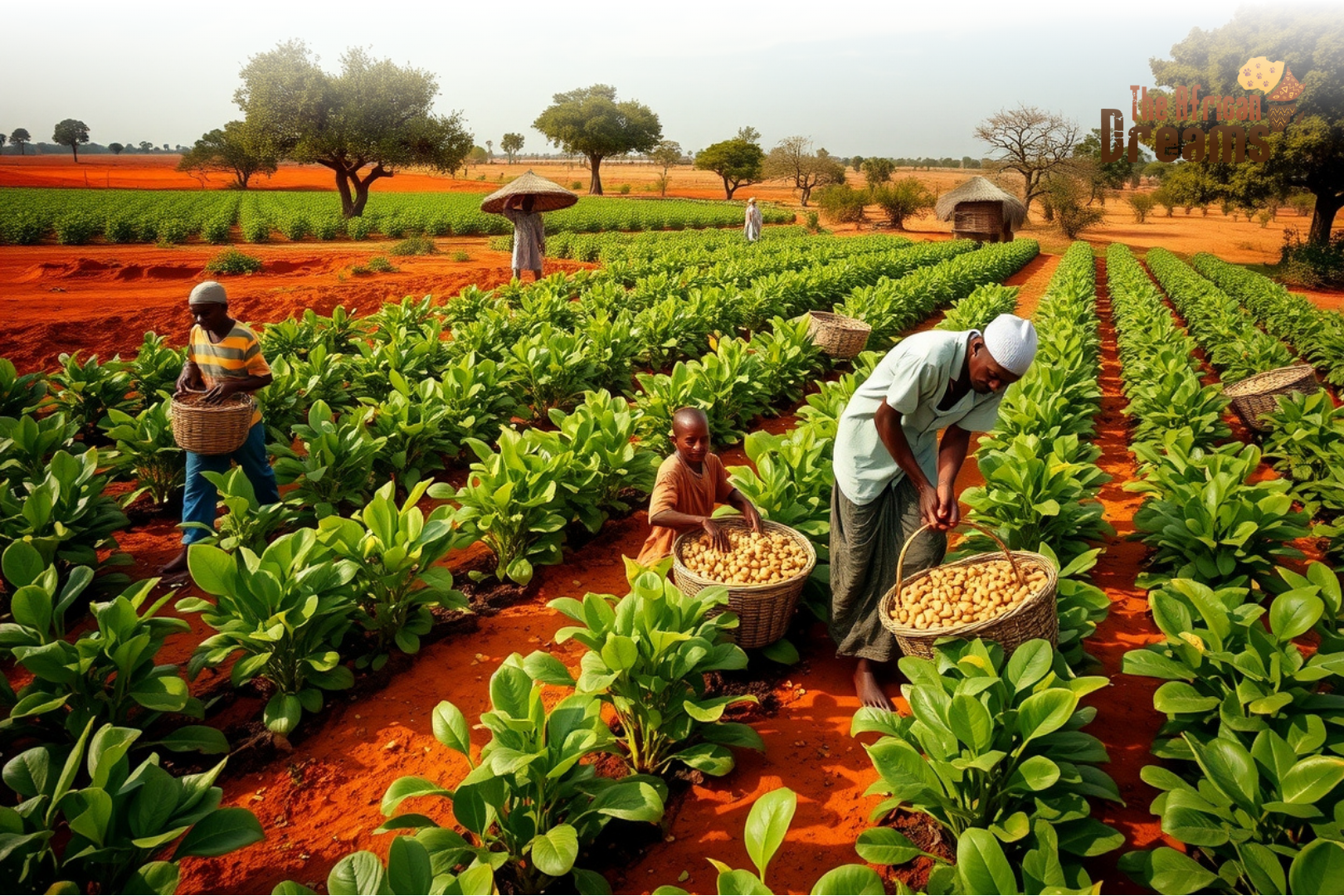
Peanut farming is an important product of Chad’s agricultural sector. It is both a staple food and a cash crop. Agriculture remains the backbone of the country’s economy. About 80% of the population in Chad is engaged in farming, livestock, or fishing.
Peanuts are mainly grown in the southern part of the country because the climate there is suitable for growing the crop. Chad is one of the largest producers of peanuts globally. The country ranked eighth in production volume, with 969,580 metric tons in 2021. The production is anticipated to grow to over 1,063,800 metric tons in 2026.
The local market for peanuts is well established due to the local consumption and export market. In the domestic market, peanut consumption is expected to increase to 950,780 metric tons by 2026, from 910,000 metric tons in 2021, at an average annual growth rate of 0.7%.
There is an increasing global demand for peanuts. The environment for peanut production in Chad is also really good. The country offers good prospects for both the production and processing stages. However, the development of the necessary infrastructure remains a problem.
Challenges
- The main problem in peanut farming in Chad is the lack of proper infrastructure. For example, smallholding, poor quality of roads, and lack of proper post-harvest infrastructure. That leads to high post-harvest losses, hence restricting markets, both regional and international. This infrastructure deficit raises the cost of transport. Day by day, it is hampering the ability to maintain the quality of peanuts. Thus making them relatively expensive in the international market.
- They also face the issues of climate variability. Most peanuts produced in Chad are rain-grown. This makes the crop very sensitive to weather conditions, including droughts and floods. The 2024 season, for example, has already experienced devastating floods. That is likely to affect peanut production and also affect the small-scale farmers.
- Last but not least, poor access to new technologies in farming is also a problem. Many farmers still rely on traditional methods. It restricts their ability to increase yields and improve peanut quality.
While less severe than the infrastructural and climate issues, this challenge remains critical in keeping Chad’s peanut sector from realizing its full potential.
Investment Opportunity
-
Improving Farming Practices
The development of modern technology is a way of investment in Chad. If Chad farmers received better seeds, better fertilizers, and efficient irrigation systems, then the overall yields of peanuts could greatly improve. The farming practices that are currently in use depend on rain-fed agriculture. Therefore, the farming sector is sensitive to climate change. The risks mentioned above can be reduced by the adoption of irrigation technologies. Mechanized farming can increase productivity and returns.
Mechanized farming can increase productivity and returns.
-
Processing and Value Addition
Chad’s peanut industry is currently experiencing a major problem. There is no local facility where peanuts can be processed. However, Chad is a big producer of peanuts, a major portion of this produce is consumed locally as well as exported. A very limited number of processing facilities are available for oil, butter, and roasted peanuts. Such facilities would equally be of great economic value to the crop. It also creates employment and boosts the economy with peanut farming.
Current investors also have the chance to unlock this underutilized area of the peanut value chain. Establishing new processing plants could significantly open up an export market in Chad. Also, creating the capacity to process will help Chad keep more of the value the peanut sector creates.
-
Market Expansion and Export Opportunities
In light of this, expansion in the domestic market or exports must be seen as a new opportunity.
Chad is situated in the middle of Nigeria, Cameroon, and Sudan. These countries are the major consumers of peanuts in Africa. Chad can develop transport and export infrastructure to become a major producer and exporter of peanuts and peanut products in the region.
In addition, export markets, especially in Europe and Asia, are other potential growth areas. The Economic and Monetary Community of Central Africa (CEMAC) helps the country gain easy access to these markets.
Recent Development
In 2023, the IDH Sustainable Trade Initiative’s value chain analysis reassured that peanuts, sesame, and shea are among the most promising crops in southern Chad for market development. This project already has positive impacts, especially for women. It has increased peanut production with more investment.
Promising Potential:
- Market Development Opportunity:
Among the Nut and legume crops, peanuts, sesame, and shea were found to have the greatest economic potential. The IDH Sustainable Trade Initiative’s focus on peanuts. If the production is well developed and supported through investment, it will be easy to open up the market and support the local economy.
- Women’s Empowerment:
In most rural economies, women play a crucial role in food production. However, they are rarely provided with opportunities to access productive resources or make decisions. The project, therefore, enhances the status of women in the economic and social spheres.
- Yield Improvement:
Targeted investments in farming practices and infrastructure have already shown positive results. In yield development, the importance of support in high-potential regions is visible.
Conclusion
The future of peanut farming in Chad is bright, as there are ongoing efforts to address the main issues. Improvements in processing facilities, infrastructure development, and investments are gradually improving market access. Further, the IDH Sustainable Trade Initiative is supporting farmers in adopting the latest practices. The country is developing the peanut sector, which is improving its ability to cope with climate-related disasters. It is enhancing its competitiveness in the global market. However, some challenges remain to be overcome. The achievements made so far are impressive.
The Chadian government and foreign investors should support the peanut industry. The industry has the growing potential to boost the incomes of many people and export returns. With the increase in peanut consumption worldwide, Chad stands a good chance of dominating the global market if infrastructure, climate, and farming techniques improve. The rights investment will lead to Chad’s growth and development as a leading producer and exporter of peanuts in Africa. Soon, the people of Chad’s standard of living will improve with the help of Peanut.
0 Comments