
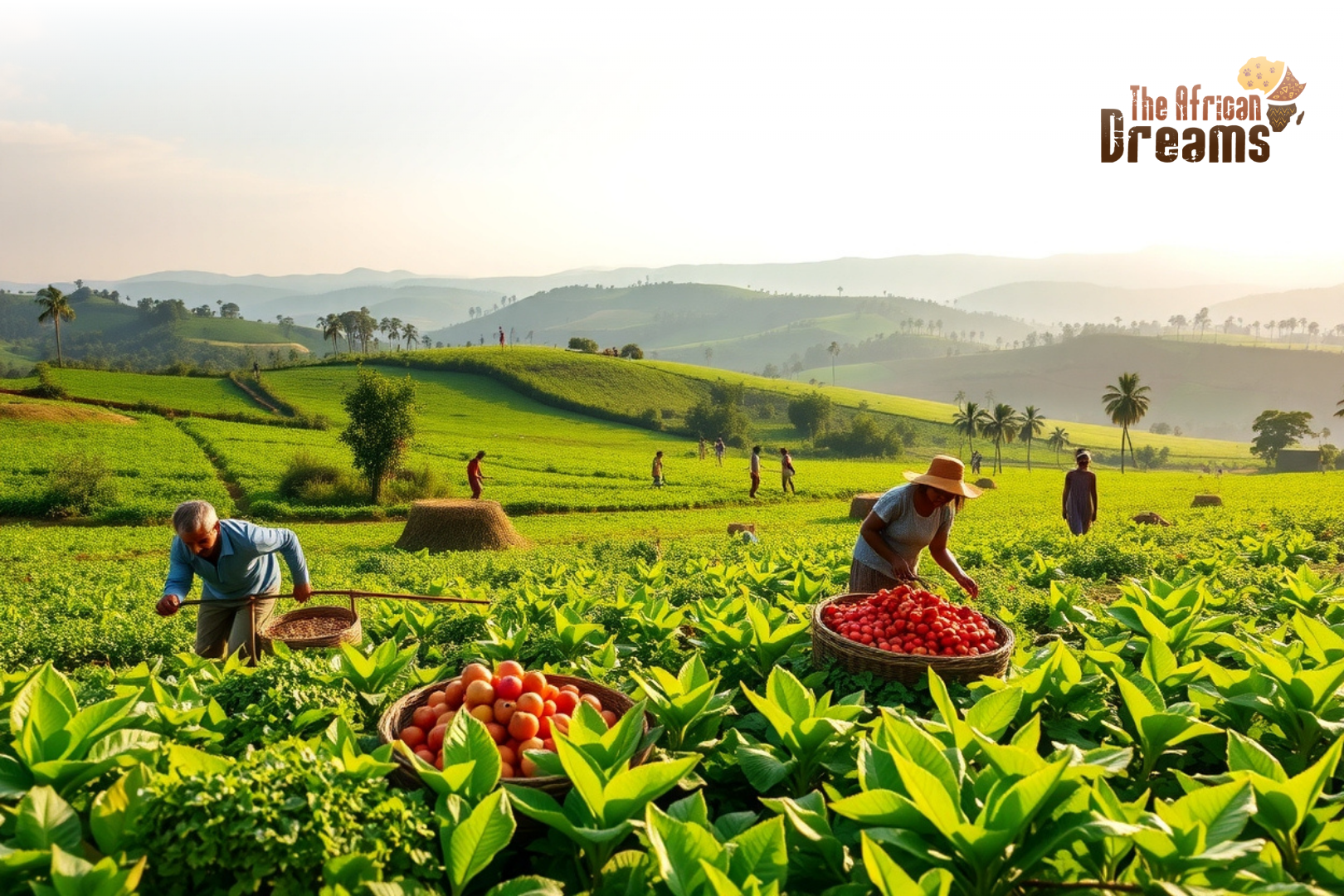
Uganda has many natural gifts. Among them, farming is the lifeblood of this nation. The nation feeds millions of citizens through farming. The country has a favorable climate for Agriculture, and it is resourceful. The productive land soils have placed it among the foremost producers in Africa.
Recently, people have become more conscious of their health and the environment. Hence preferring to use products that are organically produced. In an attempt to respond to this trend, Uganda has come out boldly to market. The country is making a name as an organic farming nation. Although it is still in the developmental stage. They identified the organic agriculture industry as one of its key segments.
Therefore, organic farming in Uganda is not just limited to a small market. They present an innovative, environmentally friendly way of doing things. It also pays farmers better while providing health-conscious consumers with healthy food. Therefore, in this case study, we will look at the ways and means of organic agriculture in Uganda. Can they continue exploring the potential of this organic farming? Let’s learn!
The Challenges
While coming up as an opportunity for growth in Uganda’s organic farming sector, the sector also has its weaknesses.
1. The biggest challenge, however, that the candidates experienced was that certification was expensive. Export of fresh fruits and vegetables requires certification. Hence, most of the farmers are not certified because certification is very costly. For many small-scale farmers, the fees are unaffordable. That’s why they avoid their exports.
2. The next big problem is the need for more storage facilities. Smallholder farmers, especially those involved in organic farming in Uganda, need help handling and storing their products. These problems can result, to some extent, in significant losses. Especially if fresh organic products are more perishable than normal goods.
3. Also, weak transport facilities prevent the farmers from transporting their products. This creates limited market access.
4. Finally, there is a lack of knowledge among farmers and consumers who are part of the system. Some farmers, especially those who engage in organic farming. Many of them may not have enough knowledge on how to go firm correctly since it is a complex process. This lack of knowledge acts as a constraint to the sector’s development. And local demand decreases because not enough products are available.
The Solution
The government, NGOs, and the private sector have initiated several solutions to address the challenges affecting organic farming in Uganda. Many government policies have supported organic agriculture.
1. To increase the sector’s contribution to the country’s economy, the National Organic Agriculture Policy (NOAP) was formulated. This policy provides strong backing for certification and research, as well as market development, making it easier for farmers to adopt organic farming techniques.
2. The factors also depend on the partnerships between the public and private sectors. This was to remove obstacles to certification and market access. Some of the examples include the National Organic Agricultural Movement of Uganda (NOGAMU). This has encouraged the accreditation of group certification schemes. In order to cut a large amount of cost from the side of the smallholder farmers. These partnerships have also helped link farmers to buyers and market organic products through trade fairs and exhibitions.
3. Other measures include training and development to increase farmers’ understanding of organic standards. These programs, funded by international agencies and NGOs. Their aim is to impart knowledge on sustainable agriculture practices. So that farmers can produce high-quality organic produce for the international market.
Implementation:
The government needs to address the challenges affecting organic farming in Uganda. Therefore, it takes many important steps. These efforts can be seen in several key actions:
-
Certification and Market Access:
Group Certification Schemes: To eliminate these challenges, NOGAMU developed group certification schemes. So that smallholder farmers could form a group and afford certification. This approach also entailed a concerted strategy for the farmers. In global markets, their bargaining power improved.
For example, group certification involving farmers in Kayunga district, in partnership with Balimisa Uganda. They have proved helpful in helping farmers achieve the required standard. Hence, export their organic dried fruits to South Sudan and Somalia.
-
Infrastructure and Supply Chain Improvements:
Improvements in storage structures and packaging have been attempted to ensure post-harvest handling. These improvements help minimize decay and ensure that organic products reach markets in the right condition.
For instance, different cooperatives in Uganda have adopted solar-powered cool storage. This has greatly helped reduce post-harvest losses. Especially in perishable products such as fruits and vegetables.
-
Training and Capacity Building:
Training programs to educate farmers on organic farming practices. Nonconventional agricultural organizations and international agencies have initiated certification and requirements. In some cases, the programs implemented are conducted in local languages. This helps to communicate with the target groups.
For instance, S. R. Organic provides training to farmers. That helped farmers produce high-quality organic inputs, such as fertilizers. These are in demand in local and regional markets.
-
Public Awareness Campaigns:
Awareness is created through public awareness campaigns. Trade fairs have also been held to raise consumer awareness. That increases the uptake of all organic products. These occasions are not only beneficial for promoting domestic consumption but also for attracting global customers.
An example in this case is the annual organic food fair in Kampala. Where a large variety of organic foods is exhibited, and farmers can market their crops to clients.
Among the above-listed specific initiatives, Uganda’s organic farming industry is undergoing some transformation. Generally, farmers have been able to access markets easily. They are adopting better farming methods and increasing their incomes. At the same time, the agricultural system has become sustainable.
Results
Thus, applying the above solutions in Uganda’s organic farming sector has produced positive effects. For instance, the export of organic products, such as fruits and vegetables, has increased. Today, Uganda has become one of the largest exporters of organic coffee, with its market in Europe, especially in America. Export earnings have boosted farmers’ earnings. Consequently, farmers who have engaged in organic farming have testified to improved incomes. As high as 30% more income than the farmers who adopt conventional farming methods. This is because their products attract premium prices in the international market.
Also, the adoption of improved post-harvest handling practices has reduced losses by about 20 percent. Hence, enabling more fruits to reach the market in good condition. Environmentally, it has reduced the use of synthetic pesticides. There is an improvement in soil quality and the environment in general. This has also been helpful to public health. Consumers today can access less chemical- and pesticide-ridden foods.
In light of these findings, focusing more effort on the activities mentioned by organic farmers in Uganda would yield immense benefits. Because demand for organic products is increasing worldwide day by day.
Conclusion
Currently, Uganda has a relatively developed organic farming industry. On account of sound policies, strategies, partnerships, and market opportunities. Analyzing these factors, it is clear that export growth improves farmers’ incomes, suggesting the sector’s future potential.
Nonetheless, to sustain growth and strengthen the capacity to export goods, more investment is needed in infrastructure, education, and market development. Prospects for Uganda’s organic farming sector seem bright, as it has the potential to expand operations and contribute to the sustainability of global markets in the future. It was noted earlier that with continued support from the global market, Uganda has the potential to become the globe’s heir to organic farming.
0 Comments