
Introduction
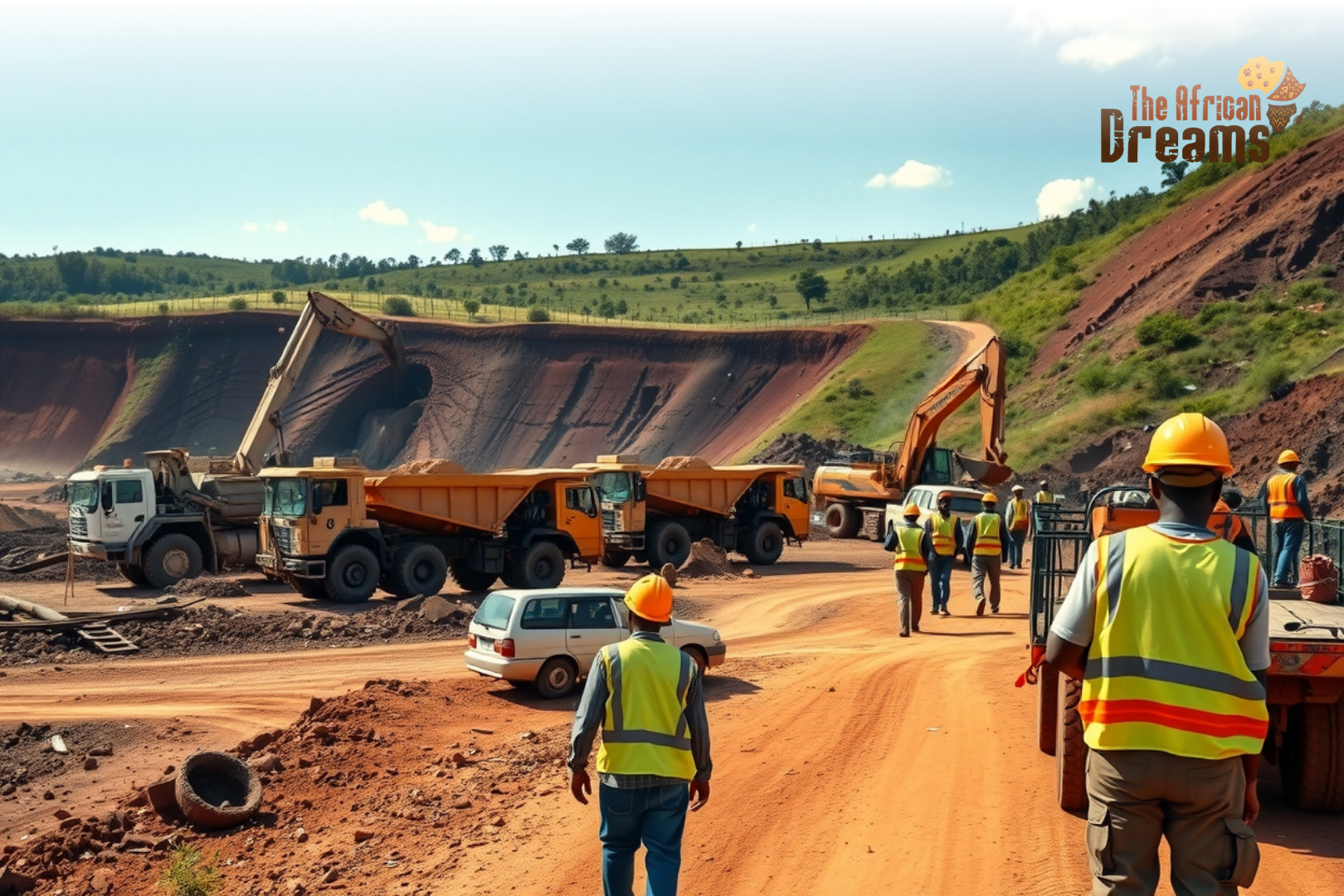
Uganda is slowly getting ready for something big. It is not loud or rushed, but steady and focused. For a long time, mining in Uganda did not get much attention. People knew the country for its beautiful nature, rich culture, and coffee farms—not for gold or copper. But that’s changing now.
Nowadays, mining is an essential factor for the development of Uganda’s future. The minerals have been in existence in the ground waiting to be discovered. What is new is how the country is planning to use them. Leaders are now viewing mining as not only the mechanical act of excavation, but also they see it as a way to create jobs, earn money, and grow the economy.
The government is working hard to build a better system. New mining laws have been made. These laws are quite clear and transparent, which makes it easier for the companies to invest. At the same time, Uganda is improving the standard and the means of transport, such as roads. This is because it facilitates the transportation of minerals from remote areas to cities and ports.
For many years now, people in these small towns have been digging with just rudimentary tools. Some of them did not even have proper training. Now, that is also changing. There are programs that educate the small miners on the right way to mine as well as maximize their returns.
Uganda is not just talking. It is taking action. This is a turning point. The country is opening a new chapter where mining will enable families have more income and provide the country with a solid foundation for its development.
If you are considering where to invest or where new opportunities are emerging, then Uganda is one of the countries you should not lose sight of. It is full of resources, and it is prepared.
Article Highlights
Understand Uganda’s Mining Revival: Discover how Uganda is transforming its dormant mining sector through updated policies, infrastructure upgrades, and education for small-scale miners.
Explore Key Mineral Resources: Learn about Uganda’s rich deposits of gold, copper, cobalt, phosphate, iron ore, and rare earth elements—and how they are being tapped for local and global markets.
Discover Legal and Structural Reforms: See how the Mining and Minerals Act, 2022, and new licensing systems are making Uganda’s mining sector more transparent, investor-friendly, and community-focused.
Learn About Investment Incentives: Understand the incentives for foreign investors, including tax holidays, full ownership rights, and support for value addition within Uganda.
See the Potential for Growth and Sustainability: Gain insight into how Uganda aims to grow mining’s GDP contribution from 2.2% to 5% by 2030 through local processing, clean energy minerals, and global partnerships.
Historical Context
Now, put ourselves back in history for a moment. At one time, the mining industry in Uganda was very active. This was in the 1950s and 60s. At that time, mining was one of the greatest contributing factors to the country’s revenue. Copper and cobalt, amongst other minerals, were being extracted from the ground and then transported across the globe. The Kilembe Mines, which are situated in the mountains of Kasese district, were alive. Workers had steady jobs. Trains carried loads of copper. People had hope.
Kilembe wasn’t just a mine. It was a whole town. It had schools, hospitals, houses, and all that any working community could require. It supplied employment to several families that lived in the vicinity of the mine. It provided revenue for the country and helped Uganda to enter the sphere of the regional economy. Things were looking good. But it didn’t last.
Uganda’s political period in the 1970s and 1980s was characterized by many hardships. Political unrest, war, and poor leadership shook the country. Big investors left. The infrastructure was damaged. And without the right policies to support the mining sector, everything slowed down. The machines in Kilembe stopped. The town went quiet.
By the early 2000s, mining had almost disappeared from Uganda’s economy. Many of the once-thriving mining areas were abandoned. The sector’s share of national income dropped to almost nothing. But the story didn’t end there.
Uganda held onto its mineral wealth. The resources were still there, waiting. All the country needed was a fresh plan, stable leadership, and the right investment to bring mining back to life. Today, that comeback is slowly happening. And it’s happening with more care, better laws, and a new mindset—one that values both the minerals and the people who bring them out of the ground.
Uganda’s Mining Geography: Regions and Resources
Uganda has natural resources in the form of hills, lakes, and fertile land for agriculture. However, what they fail to notice at first glance is what is hidden under the surface of the ground. From the east, north, south, to the west of the country, there are various minerals that are yet to be exploited. It may be regarded, to a certain extent, as each geographical area has its own history to narrate.
Starting in the east, in Tororo District, the situation is less bright: It is also an area of interest for tourists due to the Osukuru hills. There are also very rich deposits of phosphate in these hills. These are used to prepare fertilizers that assist farmers in increasing their yield. The area also has limestone and rare earth minerals. That’s why a large industrial complex was built here—to turn raw minerals into useful products for farming and industry.
Now go west, to the green and hilly lands of Kasese. This is where the famous Kilembe copper mines are found. The mines were once full of activity and are now being prepared for a new start. Alongside copper, there’s cobalt, which is important for making batteries. Nearby districts like Buhweju and Ibanda are known for their gold. Small miners have worked there for years.
Up in the north, there’s Karamoja. It’s one of the least developed parts of Uganda, but it holds huge promise. The land is rich in marble, limestone, and rare earth elements. These are minerals that the world needs more and more, especially for clean energy technology.
And finally, in central Uganda, places like Mubende and Kassanda are buzzing with gold mining. These towns have drawn many small-scale miners who work in groups or individually.
All together, Uganda is not just rich in land. It’s rich in minerals, too. And now, the country is learning to use those resources more effectively and in a more organized way.
Mineral Wealth: Uganda’s Key Resources
Uganda’s land is not just green and fertile—it also holds real value deep underground. The country has many minerals that are important for modern industries, and slowly, it’s learning how to use them the right way. Let’s go through the most important ones.
1. Gold
Gold is now Uganda’s biggest mineral export. In 2023, the country earned around $2.3 billion, compared to only $201 million in 2022. This big jump came from new gold processing plants, like the one run by Wagagai Mining Ltd in eastern Uganda.
The government also removed export taxes and made the process easier. Gold is mined in several areas, like Busia, Mubende, and Buhweju, and both small and large miners are part of this growing sector.
2. Copper and Cobalt
In the west, the Kilembe Mines in Kasese once supplied large amounts of copper and cobalt. These minerals are still in demand worldwide—copper is used for wiring and cobalt for batteries. Though the mine closed years ago, there are strong efforts to reopen it. If successful, Uganda could play a bigger role in the global supply chain.
3. Phosphates and Rare Earths
In Tororo District, the Osukuru Industrial Complex is leading phosphate mining. The phosphate is used to make fertilizers for farming. The area also has rare earth minerals, which are important for electronics and renewable energy tools.
4. Iron Ore
Uganda has high-quality iron ore in Kabale and Kisoro. In 2021/22, its value jumped from UGX 4 billion to UGX 72 billion, showing strong local demand and future export potential.
5. Tin, Tungsten, and Tantalum
These minerals are mainly found in Ntungamo in the southwest. Uganda’s first tin refinery, run by Woodcross Resources, can process up to 10,000 tonnes each year.
6. Limestone and Pozzolana
Limestone, needed for cement, is common in Hima and Tororo. Pozzolana, used in construction, is found in Kapchorwa and Kabarole. In 2021/22, limestone production was worth UGX 93 billion, and pozzolana UGX 17.7 billion.
7. Vermiculite and Marble
Vermiculite, used for farming and insulation, is mined in Mbale and Tororo. Marble, used in buildings and decoration, comes from Moroto and Moyo.
Export Potential
Uganda mostly exports minerals to nearby countries like DR Congo, South Sudan, Kenya, Tanzania, and Rwanda. As Uganda adds more value locally and reduces smuggling, mineral exports are expected to grow even.
Legal Framework and Reforms: Mining and Minerals Act, 2022
Uganda’s New Mining Law Is a Fresh Beginning
Uganda passed the Mining and Minerals Act, 2022, to make the mining sector stronger and fairer. For years, the system was slow, confusing, and hard to trust. This new law changes all that. It’s not just an update—it’s a fresh start that brings order, opportunity, and clear rules to everyone involved.
Solving the Old Problems
In the past, getting a mining license could take forever. Many rules were unclear. Investors were unsure if they should even get involved. On top of that, many local people were left out of decisions about projects happening in their own areas. There was also a lot of smuggling because tracking minerals was weak.
Clear Rules and Honest Practices
The new law contributes to the improvement of the transparency and credibility of the mining activity. This is a proper procedure that has to be followed these days in case of any company. They should be able to explain the origin of the minerals and how the mining of the same is done. This aids in preventing and curbing the vice of illegal mining that has led to the destruction of the land and water sources. It will also increase people’s confidence in the system.
Faster Licensing With Online Tools
This is because Uganda recently adopted the use of an online system to process mining licenses. This implies that firms do not have to wait for months for their results. They can apply through the internet, obtain quicker responses, and get to work earlier. It also saves time and creates circumstances for additional investment.
Uganda’s Share in the Wealth
There is one new development that has emerged, and that is the Uganda National Mining Company (UNMC). It is another way through which the government now holds 15% for every large mining project. That means more of the profit is retained in Uganda to fund roads, schools, and other necessities.
This law is the basis for a better future in mining for the workers, for the companies, for the industry, and for the country.
Artisanal and Small-Scale Mining (ASM)
Across Uganda, many people make a living through small-scale mining. However, the population of people working in this type of job is between 400,000 to 600,000 in Uganda. Many of them work in rural areas where there are almost no opportunities to find employment. It is not a profession for some families; it is a necessity that enables them to live their lives.
However, for many years, this kind of mining was done in an unregulated manner. People worked without licenses. They were not equipped with proper equipment and protective wear. This was due to the fact that many did not know how to mine in a manner that is environmentally friendly. Most used mercury to separate gold, which is harmful to both health and nature.
Now, that’s starting to change.
The planetGOLD Uganda project is helping make small-scale mining safer and more organized. The goal is to reduce mercury use by 15 tonnes over five years and support about 4,500 miners in 11 different areas. The program trains miners to use safer tools, helps them join savings groups, and connects them to formal markets.
One inspiring story comes from Gulu District, where Comfort Okello runs the Atim Ki Kuma Quarry Mine. Her site now follows safety rules and gives jobs to local women. It shows how small mines can grow into safe and successful businesses.
With the right support, Uganda’s small-scale mining sector is turning into something better—safer for people, better for the environment, and stronger for the economy.
Investment Climate: Open Doors for Global Investors
A Business-Friendly Place to Start
Investing in Uganda is becoming easier and more attractive for investors to come in and work. This is why the government is aware that mining is a long-term game and therefore provides wise incentives.
For instance, mining companies receive a corporate tax incentive: they are exempt from paying corporate tax for the first 10 years of operation. That gives them time to set up, operate, and reinvest.
On top of that, there’s no import duty on mining machinery. So bringing in equipment costs less. And maybe most importantly, foreign companies can own 100% of their operations in Uganda—no need for a local partner unless they want one.
Partnering for Growth
Uganda is not trying to do everything alone. It is open for partnerships with international firms that can bring in money, talent, and technology. A good example is the Guangzhou Dongsong Energy Group, which is undertaking the Osukuru Industrial Complex in eastern Uganda. That project is contributing to the process of transforming such materials as phosphate into fertilizer and adding value to it locally.
Building the Roads That Lead to Mines
You can’t run a mine without proper roads, railways, and power. Uganda is working on this, too. Projects like the East Africa Crude Oil Pipeline (EACOP) and improvements in national transport help link remote mining areas to ports and cities. This kind of infrastructure doesn’t just help oil—it helps mining too.
With the right support and planning already in place, Uganda is becoming one of East Africa’s most promising destinations for mining investment.
Conclusion
Mining in Uganda is not only limited to digging and selling of the minerals as it was in the past. It is turning into a reality of real growth. The country is now focused on the future and how mining can sustain employment, the economy, and the public in the future.
Currently, the mining sector contributes approximately 2.2% to Uganda’s economy. If that is relative, it may not sound like much. However, the government’s plan is to increase the number to 5% by 2030. This implies employment for the locals, increased income for households, and more revenues for the development of infrastructure such as roads, schools, and hospitals.
One of these is value addition, as it is a big part of the change process. Instead of sending raw minerals out of the country, Uganda wants to process them at home. Gold can be turned into jewelry. Iron can be used to make steel. Phosphate can be used for fertilizer. When minerals are processed locally, more money stays in the country—and more jobs are created.
Uganda is also moving into the future of international mining. The following are some of the clean energy minerals that the world needs for its manufacturing processes. These minerals are used in batteries, electric vehicles, and windmills. Uganda has them; if well planned on how to produce them, it can be one of the most reliable sources.
The current situation is much more than mining only. It’s a full reset. This way, Uganda is creating a more just and resilient sector through enhancing the laws, policies, and regulations, besides making wise decisions. But if the progress is to be extended and enhanced, the mining industry can play a great role in the development of Uganda’s future.
Frequently Asked Questions (FAQ)
1. What minerals are most valuable in Uganda today?
Gold is currently Uganda’s top mineral export, followed by copper, cobalt, phosphate, and iron ore. Rare earth elements and limestone are also gaining importance due to global demand.
2. Is Uganda a good place for foreign investors in mining?
Yes. Uganda offers a 10-year corporate tax holiday, 100% foreign ownership of mining operations, no import duty on equipment, and a streamlined licensing system via online platforms.
3. What legal reforms have improved Uganda’s mining sector?
The Mining and Minerals Act, 2022, introduced clear rules, environmental safeguards, faster licensing, and mandatory local benefit sharing through the Uganda National Mining Company’s 15% stake in large projects.
4. How is small-scale mining being supported in Uganda?
Projects like planetGOLD Uganda are training miners on safer methods, helping reduce mercury use, improve incomes, and connect miners to formal markets with better prices and protections.

0 Comments