
Introduction
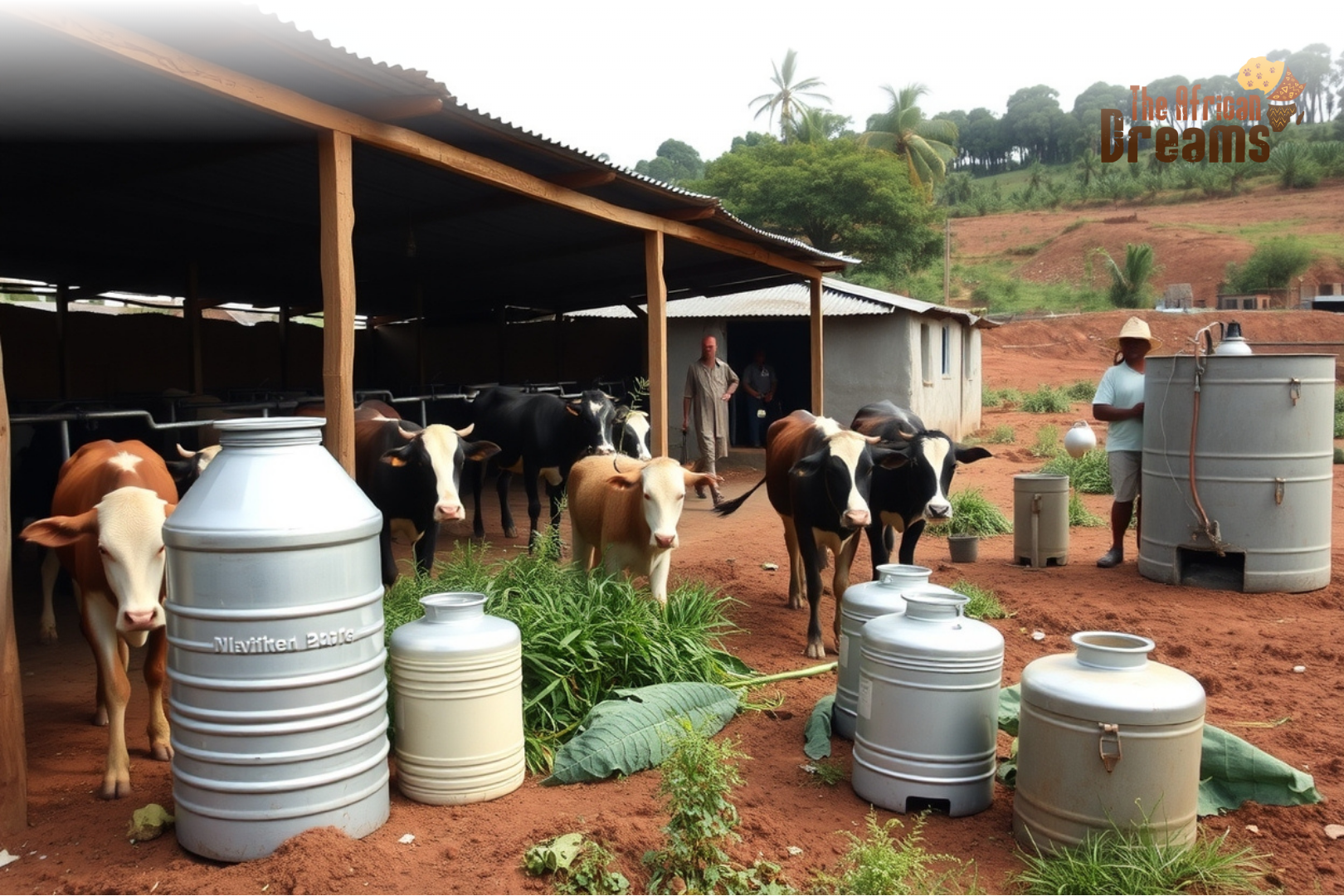
In the Republic of Congo, the dairy industry is still in its early stages but has strong potential due to rising local demand for milk products and untapped market opportunities. Despite major challenges such as poor infrastructure and low production levels, interest in investing in milk production is growing. The article highlights both the opportunities for investment and the challenges the country faces in developing its dairy sector into an important part of Africa’s dairy industry while also improving food security.
The Challenges
The main challenges facing Congo’s dairy industry include its low milk production. For example, in 2022, the country produced only about 4.54 million kilograms of milk, which makes up a very small share of global production. Several factors cause this low output, such as
- Limited access to modern dairy farming technology,
- Poor veterinary services, and
- a shortage of good-quality dairy cattle breeds.
- There are also infrastructure problems, including a lack of cold storage, poor transportation systems, and few milk processing facilities. These issues make it difficult to produce, store, and distribute fresh milk properly, often leading to large losses.
- Another major problem is market access. Although there is strong demand for milk and dairy products in Congo, local production cannot meet it, so most dairy products are imported. This heavy dependence on imports often drives up prices, making milk more expensive for consumers.
The Solutions
There are many programs that could transform the dairy industry in Congo.
- Modern farming methods are necessary to increase milk production; therefore, introducing better breeds of dairy animals, providing better feeding for them, and offering veterinary care are also important.
- Public-private partnerships may establish dairy farming cooperatives, offering shared resources and training to smallholder farmers, allowing those farmers to improve their yields and quality.
- Other significant improvements involved the local establishment of processing facilities. In addition to milk pasteurization, the storage facilities would reduce the importation of such products, as Congo will focus on rearing and processing milk. This aspect will ensure better food security and employment, and people will receive a steady supply of milk and its products throughout the year. It also means that market linkages have to be improved to assist dairy farmers at the local level in reaching retailers and consumers.
- Digital platforms and cooperatives can significantly contribute to achieving this goal by providing direct access to markets, enabling farmers to obtain better prices for their milk, and reducing their dependence on middlemen.
The Implementation
Improving Congo’s dairy sector is a work in progress. Dairy cooperatives have previously proved to be ideal models in other African countries, such as Nigeria and Tanzania, where related projects increased milk yields and raised production efficiency.
The Global Africa Network is an approach that may benefit them by pooling resources and sharing experience with other Congolese dairy farmers.
Moreover, scaling up such initiatives could also be facilitated through foreign investment and government support. International companies and far-flung investors seeking to capitalise on the growing demand for dairy products across the continent are paying increased attention to the African dairy sector.
This can be replicated in the Congo through investment in cold chain infrastructure, paired with modern dairy farms, to meet local and regional demand.
The Results
The dairy industry in Congo has massive potential. Investments in modernizing the production and processing of the dairy line could yield significant economic benefits in the sector, with a projected market growth rate of 6.2% from 2024 to 2029.
Any of these challenges to infrastructure and production would significantly decrease Congo’s need to import milk or dairy products, thereby enhancing local price stability and increasing food security.
Additionally, the dairy industry has significant scope for expansion, creating thousands of jobs, from farm to processing, and then to distribution and retailing. This would also promote rural development, ensure consistent income generation in farming, and contribute to the overall growth of the agricultural sector.
Final Comments
Investing in Congo’s dairy industry is a very promising avenue of growth and development. Modernising production techniques, improving infrastructure, and increasing market access could allow Congo to reduce its reliance on imported dairy products and place itself as a major player in the African market. This sector could also meet local needs and create new export opportunities within the regional market, hence contributing to economic growth and food security, provided there is sufficient investment and support.


0 Comments