
Introduction
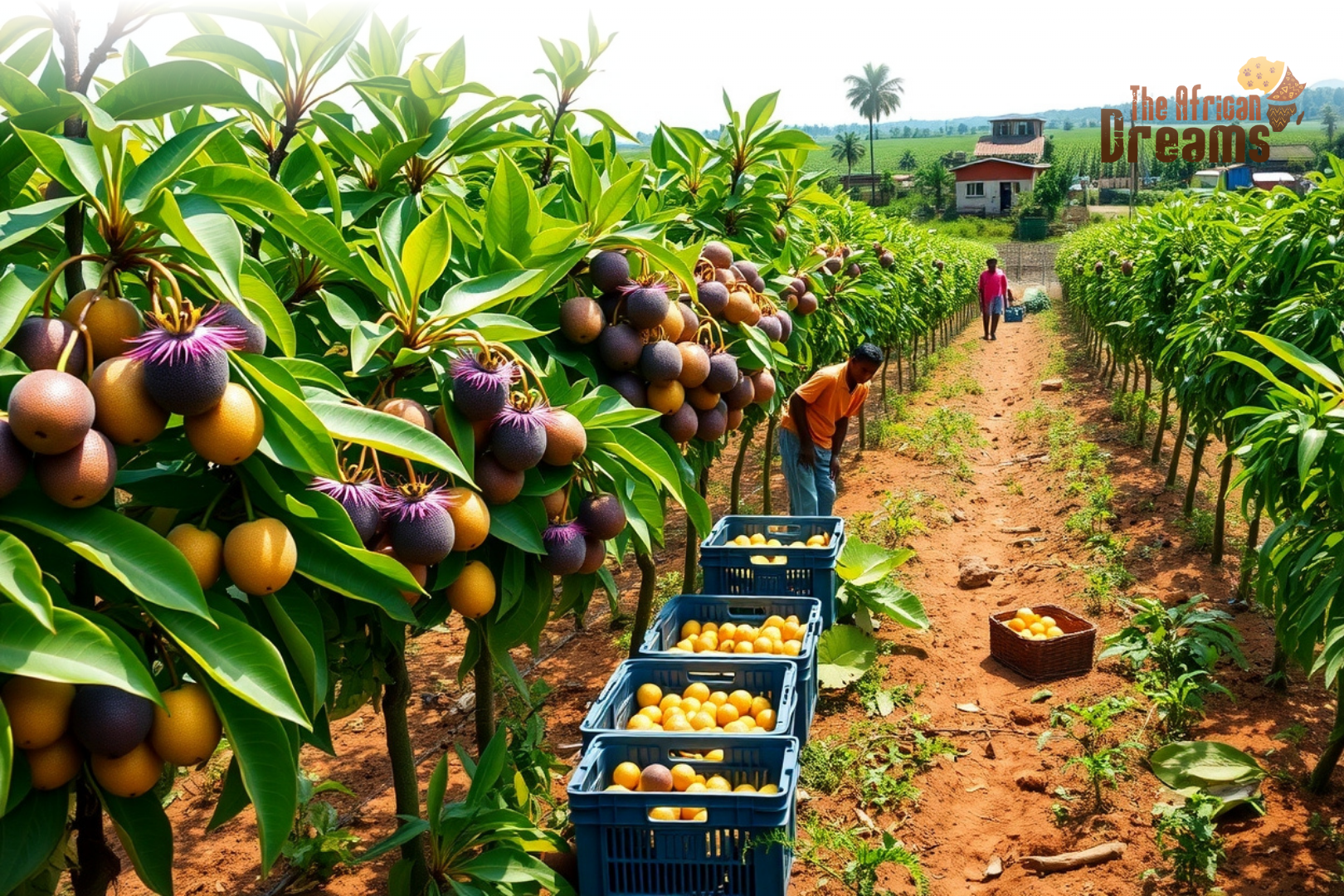
Farming of passion fruit is gaining momentum in the Democratic Republic of Congo owing to its lucrative nature and rising demand across the world. With its strong flavor and multi-use value, this fruit is turning out to be one of the most exported fruits across boundaries. This case study probes into attempts at passion fruit cultivation by Congo for export, discussing challenges, strategic solutions, and some potential market opportunities for the local farmer.
The Challenges
To date, the Congolese agricultural sector has focused on staple crops, while smaller fruits like passion fruit remain unexploited. Besides, farmers face multiple challenges, like a lack of awareness of the right farming practices, poor seed quality. Infrastructure remains underdeveloped as well.
In addition to this, passion fruit is a non-durable crop, so viable management and good supply chain practices would be required to avoid spoilage.
Other critical issues involve susceptibility to pests and diseases that affect yields and fruit quality. Farmers, on account of a lack of access to varieties resistant to these and proper training in crop management, cannot get the best out of this crop. Additionally, due to a lack of organized market channels and quality certification, smallholder farmers are unable to exploit more lucrative export markets.
The Solutions
Notably, the government is conscious of these challenges and has embarked on selective programs. The programs aim to promote passion fruit farming hand in hand with international agencies. They focus on agriculture and private investment. The major measures include
- Introduction of Improved Varieties of Seeds: The agricultural agencies have begun distribution of high-yielding varieties, resistant to pests, of purple passion fruit in high demand by European markets for flavor and aroma. These seeds are more resistant to the diverse climatic zones of Congo.
- Training Programs for Farmers: Many activities are being focused on training small-scale farmers on optimal farming practices, pest control, and post-harvest care. These training programs generally come from national trade bodies and agribusinesses with the intention of enhancing crop quality to meet export standards. In all this, the aim is to improve the output and returns among smallholder producers.
- Investment in Infrastructure and Market Linkages: In this outlook, overcoming logistical challenges concentrates on the development of cold storage facilities and transportation network improvements through the government to maintain fruit quality during transits. It also includes strengthening ties with European buyers and regional markets in Africa to make sure there are sustainable export channels.
Implementation
Implementation involves a multi-pronged approach wherein several strategies are put in place:
- Pilot Projects and Best Model Farms: Partnership agencies have initiated Pilot Projects and Best Model Farms within the most active agricultural areas of Cuvette and Bas-Congo. In those particular areas, the most ideal conditions for the growth of purple passion fruits and yellow passion fruits are encountered. Demonstration farms help farmers see and replicate some of the best farming practices.
- Export-Oriented Production: Organic farming is being developed using the fertile soil and suitable climate of Congo. Organic farming not only gives higher yields but also adds value to the export products, considering that health-conscious markets are a demand for healthy organic products. Congo will be positioning itself to take this advantage, with European consumers progressively moving towards ethically sourced produce.
- Building Farmer Cooperatives: Smallholders are being organized into cooperatives. This helps them to get better access to markets or get better prices for their produce. Moreover, the cost of overhead has been minimized due to bulk purchases of inputs or shared transportation facilities. The idea is thus to make the farmer capable of participating in the export value chain.
Results and Economic Impact
Early results from these pilots are auspicious. Farmers who adopted the new varieties and practices report yield increases as high as 25 tons per hectare in the second year of production. Increased yields translate to increased incomes for farmers, many of whom had been cultivating low-value crops. The growing success of cooperatives is also helping stabilize prices and improve market access.
Besides, the high profitability of passion fruit has made the fruit an attractive venture for youth and smallholders, hence promoting job creation in rural areas. The versatile uses of fruit in juices, desserts, and cosmetics have opened up opportunities for value-addition processes, thereby improving the profitability of the sector in general.
In the international arena, Congo is an emerging exporter of passion fruit to European and Asian markets. Fresh export contracts have seen Congolese products arrive in recent times in Germany, France, and the Netherlands, among others. As demand increases for organic and ethically sourced produce, the passion fruit industry in Congo will expand its reach internationally.
Sustainable Future and Expansion Plans
It will attempt, in the future, to duplicate the success stories of the pilot projects by expanding passion fruit farming into other diverse areas. Various investments in research and development are underway to introduce more resilient varieties and further enhance the measures of pest control. Besides this, it goes on with cultivation certification programs in order to meet the standards given for organic produce by foreign markets.
Final Remarks
Passion fruit farming is a representative business diversification into high-value crops to enhance the standard of living in different urban and rural settlements in Congo through higher agricultural exports. By investing in high-value crops, such as passion fruits, Congo gains a foothold in the lucrative international market. Ongoing investment in infrastructure, farmer training programs, and verification schemes would sustain this trend. Through this approach, the passion fruit industry in Congo will definitely continue to prosper and advance in its exportation, hence enhancing economic development in the country.
0 Comments