
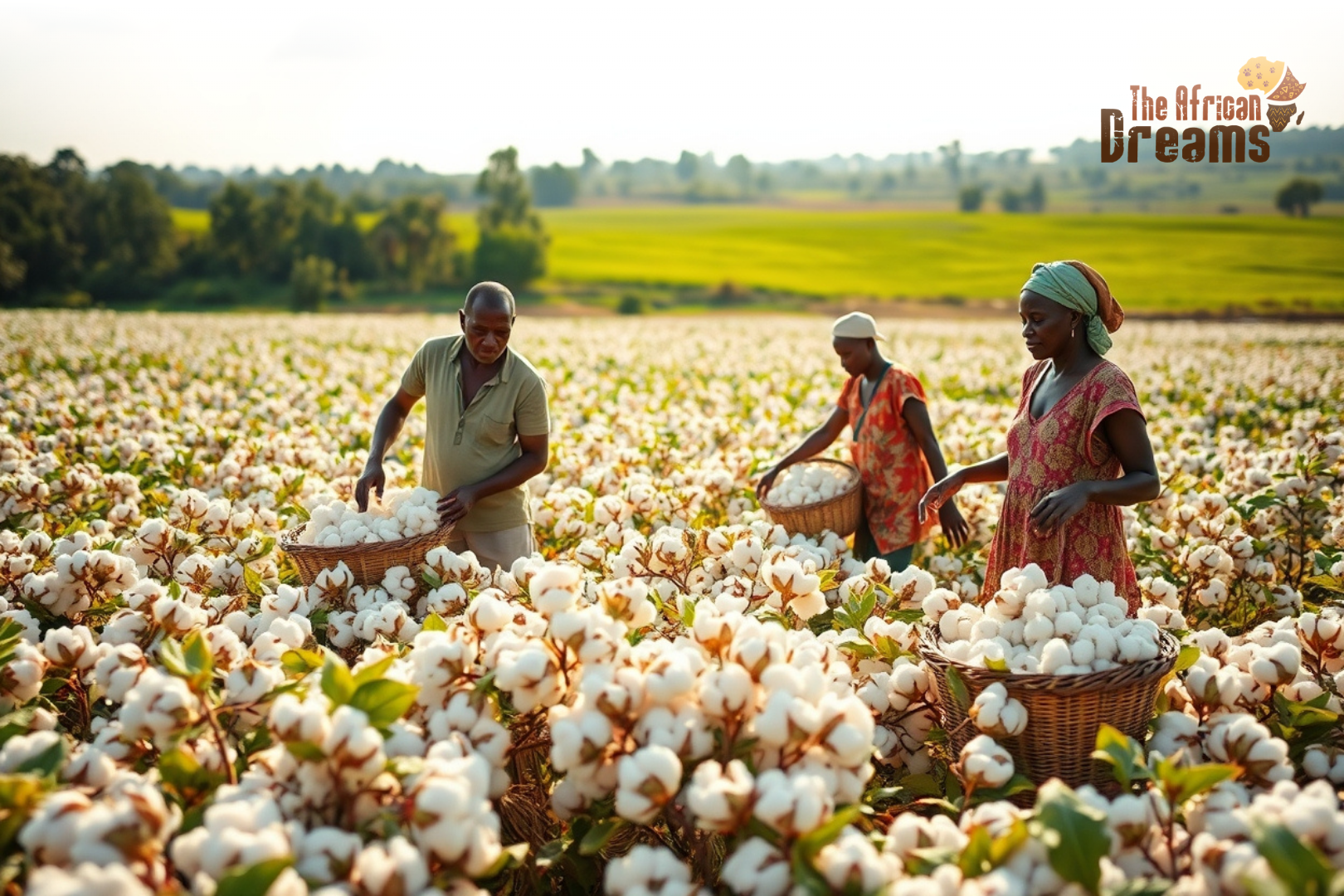
Introduction: Explore Cotton Farming in Uganda
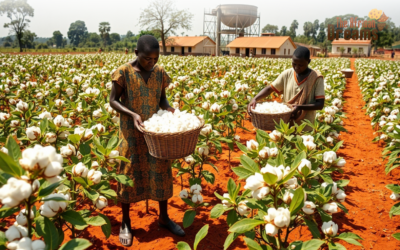
Do you know that cotton is accountable for almost 40% of clothing manufacturing? More interestingly, it has been cultivated for over 8,000 years! From soft towels to fresh cotton sheets on your bed, clothes to shoes, cotton marks its presence everywhere. Cotton Farming in Uganda is making a slow but steady comeback after decades of decline, thanks to better seeds, farmer training, and renewed interest in local processing.In this article, we’ll tal
k about cotton farming in Uganda. Let’s explore the cotton sector in the Pearl of Africa and see if the production of cotton is profitable.
Article Highlights
Cotton farming in Uganda has the potential to have a massive impact on Uganda’s economy
The government and NGOs are providing training and facilities, and overseeing the cotton farming in Uganda.
90% of the produced cotton in Uganda is exported, and the smallholders are the ones behind the production
Uganda’s Cotton Industry: Market Size and Capacity
Africa’s cotton market size is estimated to hit USD 6.06 billion in 2024. It will rise close to another USD 2 billion by the end of 2029. Cotton farming in Uganda gained attention after 1903. Now, the market is booming, thanks to the high potential and demand for cotton and cotton-based products.
The cotton market is highly competitive, with players such as the US, China, and India dominating the field. But Uganda’s cotton stands out for its quality. The smallholders are the ones behind the production of cotton. Every year, Uganda produces nearly 68,913 bales of cotton. And 90% of the produced cotton is exported.
In 2021, the total export of cotton generated almost USD 22.83 million. The price per kilogram of cotton, depending on quality, ranges from $0.64 to $1.15.
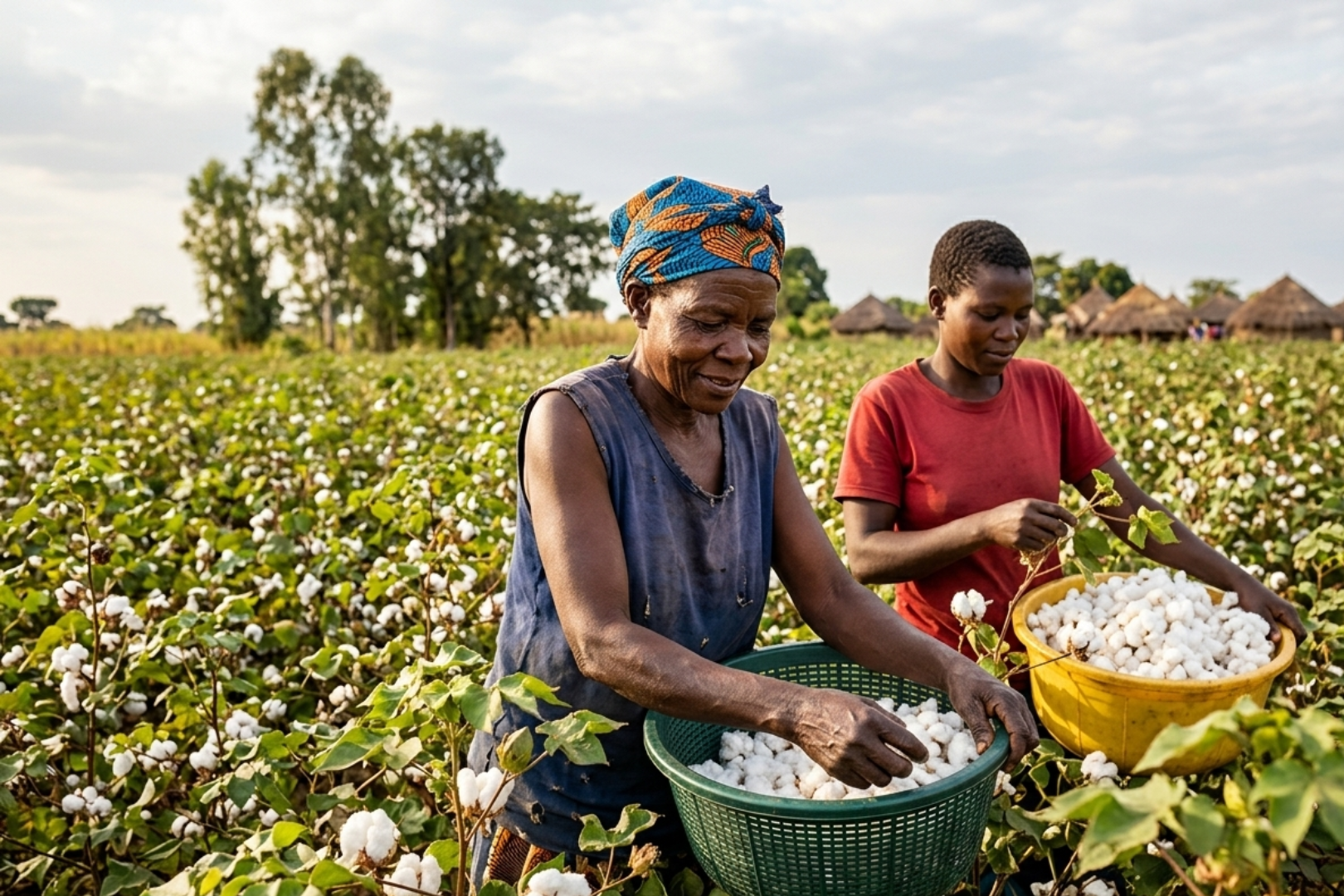
Opportunities of Cotton as a Product in Uganda
Apart from market size and growth rate, there are several other factors that help explain the potential of cotton farming as an industry in Uganda.
1. The fertile land and weather in Uganda are highly favorable for cotton farming.
2. Uganda has one of the best climates in Africa. Moderate rainfall, tropical rainforests, and water bodies have made the country an undisputed contender for agricultural activities.
3. Uganda has reached microeconomic stability, and the country is now striving toward a more stable economy.
Thus, the need to utilize every possibility is higher than ever. Cotton is a prominent sector that drives export money and creates job opportunities. The metrics and data from past cultivation years, along with the forecasted future trajectory, hint that the product can be a “dark horse” in Uganda’s economy.
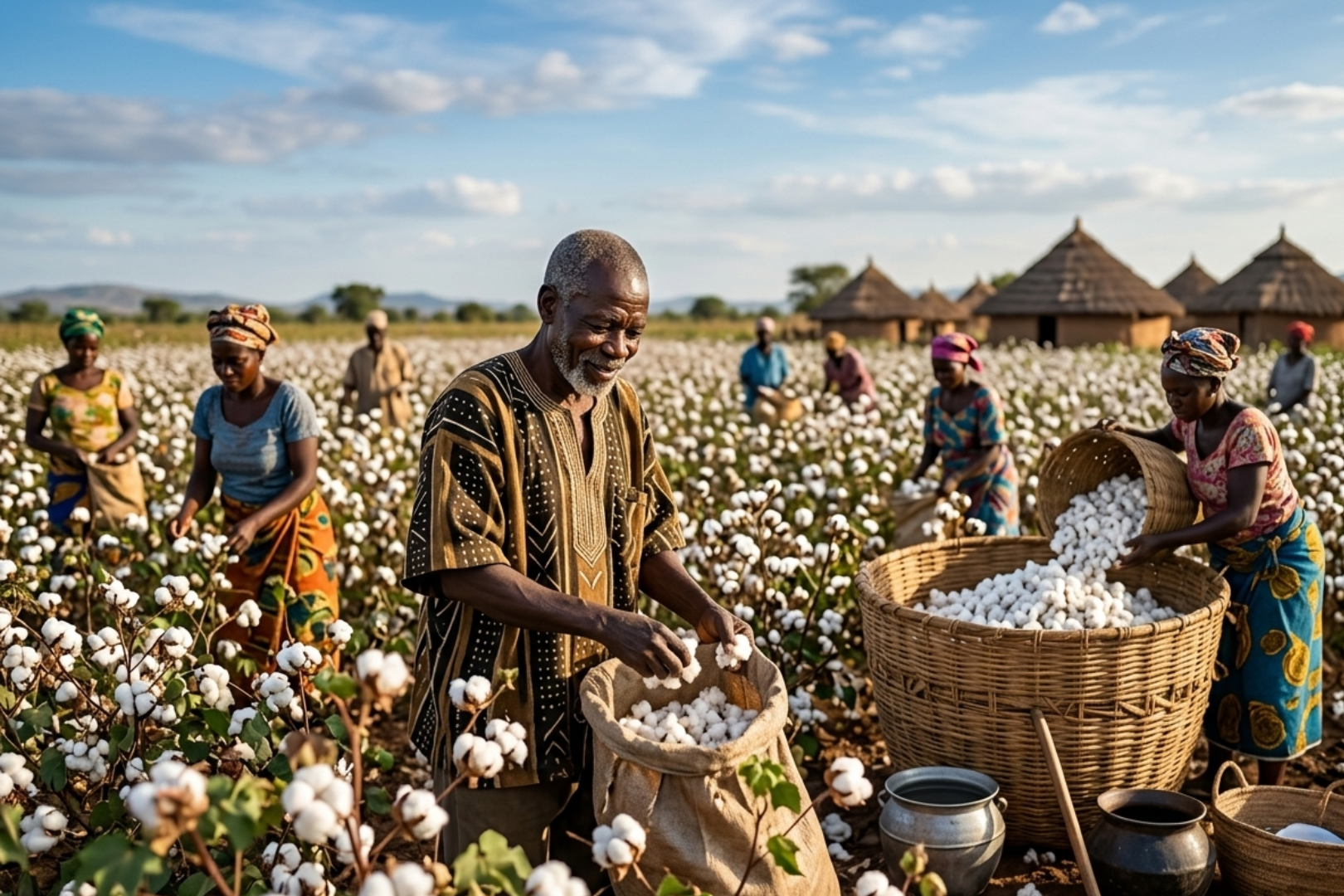
Why is Cotton Farming in Uganda Profitable?
Uganda has vast areas ready to grow crops, but they remain unused. Limited capacity in transportation, land management, investment, etc., is the reason behind the country’s limited activity in the sector. However, the current trend is creating a positive perspective for everyone who’s already engaged in cotton farming in Uganda and also for others interested in stepping in. We’ll see the reasons behind the future potential of cotton.
1. Vast Arable Land
Vast arable areas are available throughout Northern, Western, Eastern, and Central Uganda for farming. The suitable areas feature favorable conditions for cotton production. Besides, these lands have organic resources and fertilizers that help to grow premium crops without using hybrid seeds making cotton farming in Uganda easier.
2. Cheap Labor
Uganda’s labor sector is cheap and easily trainable. Almost 70% of its population is connected to agriculture, and smallholders share the majority. Besides, a large portion of the population is living below the poverty line.
A report from 2019-20 shows that the number is almost 12.3 million people (30.1% of the population). Thus, people often search for work opportunities, making the labor market a lot cheaper.
3. Training Initiatives
A portion of the workers in Uganda share skills, knowledge, and training. More than 15 universities and several vocational and technical institutes are providing support to workers and training skilled technicians in the cotton sector.
The Cotton Development Organisation (CDO) is in charge of overseeing the cotton sector in Uganda. It launched several government-backed initiatives to support the farmers.
Besides, training programs from both the government and NGOs ensure the best farming practices and the highest yields. Moreover, research and development are getting major revamps to promote cotton farming in Uganda.
4. Export Potential
Uganda’s cotton has significant export potential because of its quality and premiumness. The global market value of cotton is estimated to hit almost USD 44 billion in 2024. While the textile industry will reach approximately USD 1.412 trillion by 2028, the value of the cotton market will reach USD 50.22 billion.
This is a significant chance for cotton producers in Uganda to grab. As the country already exports 90% of its produced cotton, the value can be much bigger.
Success Stories: Aleje Modesta
In Bukedea District, Aleje Modesta wasn’t much of a heard name until she fully engaged in the cotton business with Lukonge Cotton Company Limited. Modesta used to grow cassava, cotton, and rice, but couldn’t change her life. Lack of knowledge, too much influence of the middlemen, low prices, and low quality hold her profits back.
After Lukonge Cotton Company Limited entered the scene, she received advances and raw materials, such as seeds. The Uganda Development Bank also supported her by backing her with monetary assistance. Now, she smiles as a proud owner of 10 acres of land in Bukedea District.
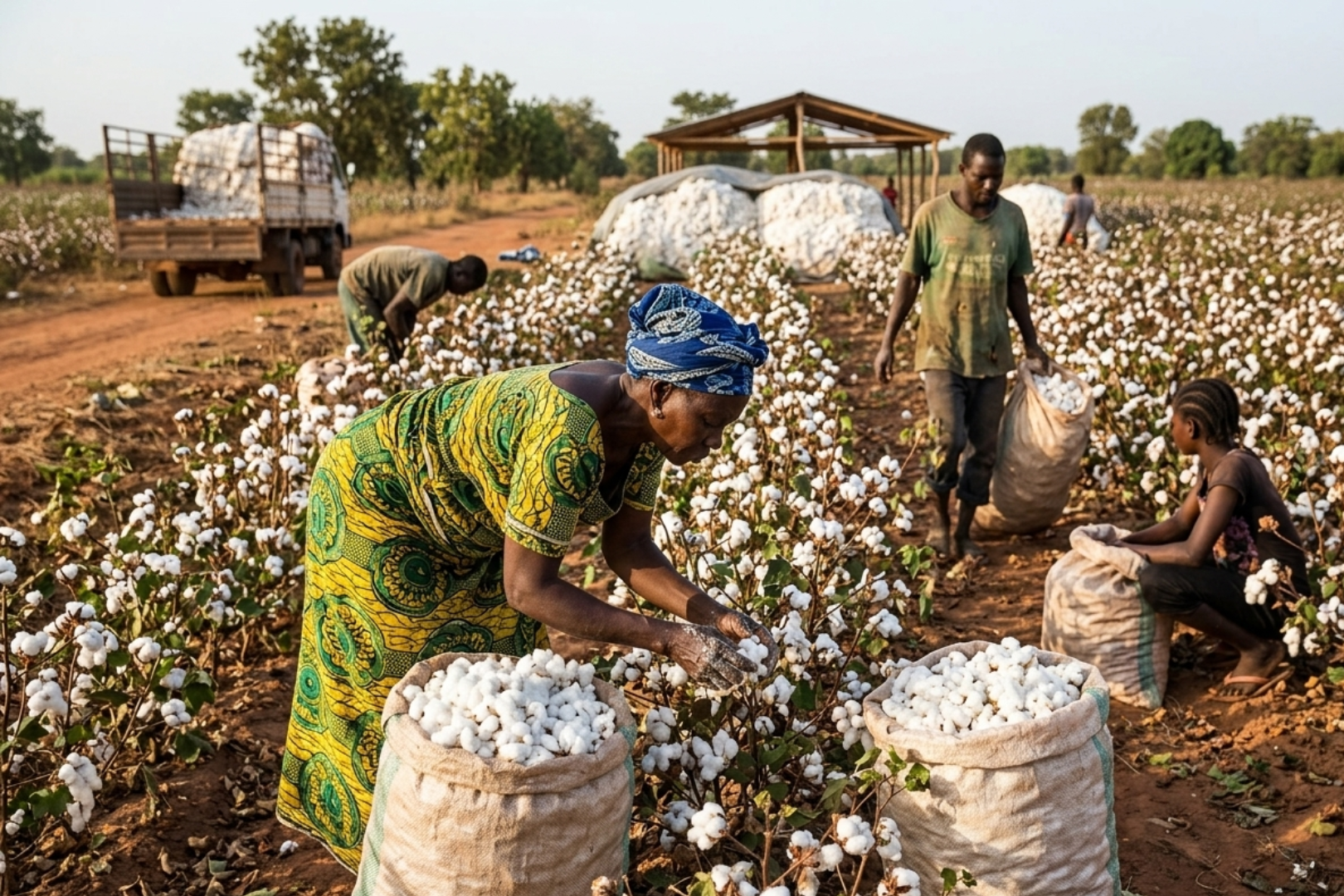
Why Invest in Cotton Farming in Uganda?
As the factors show, cotton farming in Uganda can bring a good return to the investors. Cotton-growing areas like Gulu, Masindi, Nebbi, and Arua are prime locations where land lease rates are also low.
The government initiated favorable incentives for investors, such as providing support, logistics, and export. The role of the Uganda Investment Authority (UIA) is also crucial here. It can allocate lands in Gulu Industrial Park to build facilities for your next investment.
The organization is also expanding its authority to the Arua Municipality, where land can also be allocated to investors. These locations are also connected to the national electric power grid and national road network. Besides, UIA also encourages investors to build facilities that suit the investment.
Final Words: Invest in Cotton Farming in Uganda
Uganda, as the next destination of investment in the cotton sector, will not only limit its boundary to cotton products. A wide range of activities centered on cotton is possible there. Cotton ginning, Animal Feed, Cotton Wool, Yarn Spinning, etc., can be a few sectors that can be undertaken in the investment. Therefore, cotton Farming in Uganda is a great sector for business now.
So, if you’re looking to invest your money in a profitable sector, cotton farming in Uganda is a field you should definitely consider. To know more, you can check our blog, The Industry of Cotton in Uganda.

0 Comments