
Introduction
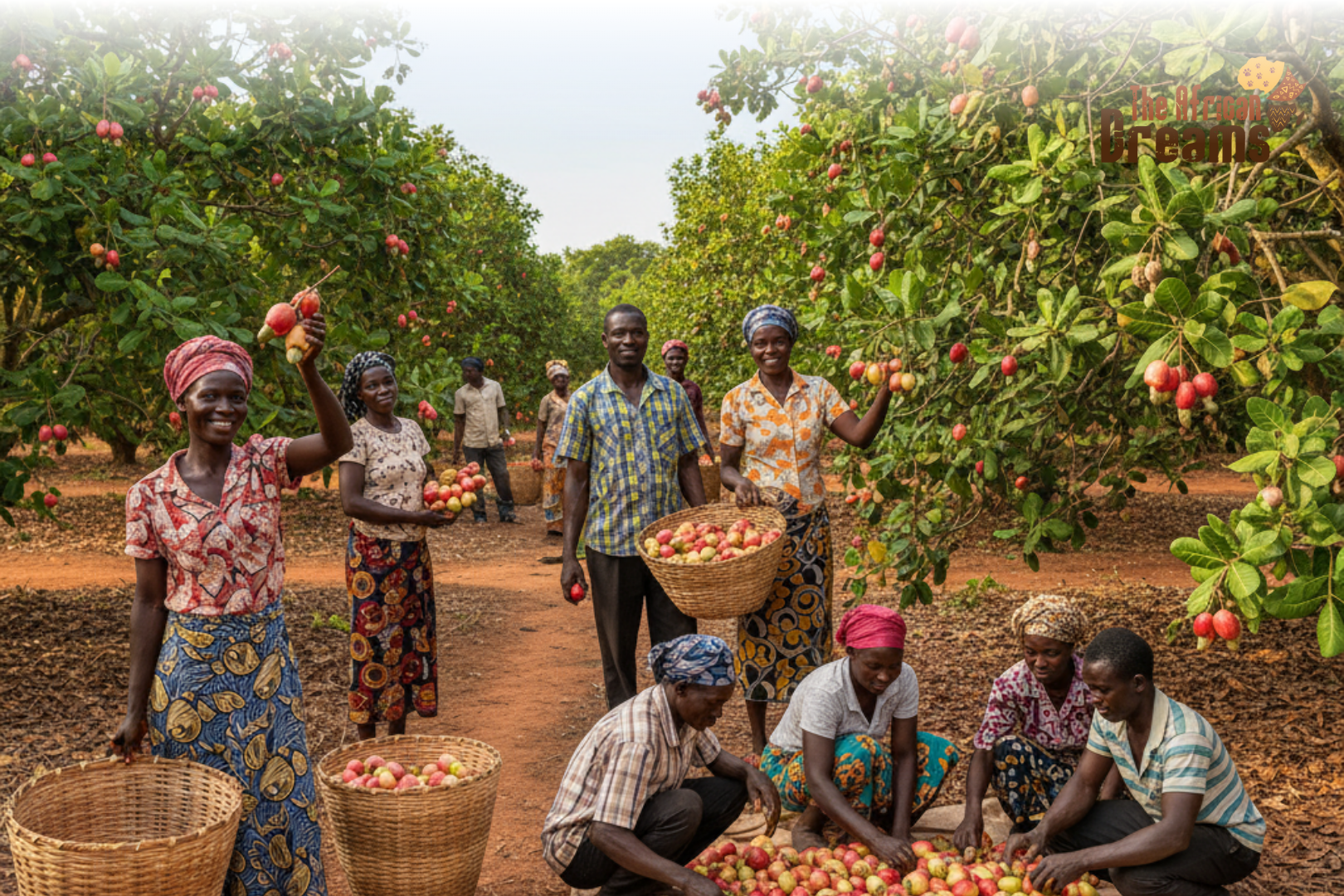
Cashew is one of the most lucrative crops in the world, as it has great demand for foodstuffs, snacks, and cosmetics. The cashew global market is going lukewarm, and Africa is supplying a vast amount of the world’s total RCN, especially West and Central Africa. The Republic of Congo has all it takes to be one of the top makers of cashews due to its favorable tropical climate. However, this agricultural potential remains unexploited, with massive room for prospective investment and further expansion. The article discusses the challenges, opportunities, and prospects of Congo’s cashew industry as an investment opportunity with high potential.
The Challenges
Despite such exciting potential, the cashew industry in Congo faces many challenges.
1. One major factor is the country’s lack of processing facilities. Most cashew nuts harvested in Congo are exported as raw nuts, largely to Asia. There, they are processed into finished products, such as roasted and salted cashews. The result of having to export raw materials means Congolese farmers and exporters retain only a meager percentage of the final retail value. For example, whereas Congo and other African countries grow about 60% of the world’s raw cashew nuts, they process less than 15% locally.
2. In addition, the country’s infrastructure is not well-developed enough to accommodate good transportation networks and cold storage facilities. These challenges not only impact cashew production but also hinder the country’s ability to expand into value-added processing, which would give better margins and create more jobs within the industry.
3. Another crucial issue is smallholder farmers’ access to finance. Most lack the capital needed to scale up production, buy modern farming gadgets, and grow different and improved plants. Without sufficient financial means, they cannot realize the full yield from their plots.
The Solutions
The cashew industry in the Congo faces many challenges due to the lack of appropriate processing infrastructure and logistics systems; therefore, it urgently needs significant investments. More value could be retained within the Congolese economic system with local cashew processing facilities.
If cashews are processed into kernels, roasted nuts, or even cashew butter locally in the Congo, more than threefold economic returns are achieved compared to exporting raw nuts. This strategy would also create jobs in processing and related industries, leading to broader economic development.
This can only be a reality through public-private partnerships and the indulgence or support of the government of Congo. The government has already shown interest in agricultural development, of which the cashew sector is a part, through offering tax exemptions on imported agricultural equipment and machinery. Developing the said partnership will help the country encourage foreign investors to increase the cashew industry development rate.
Besides infrastructure, the cashew industry in Congo also needs organic certification. Given the glowing market prospects for organic and sustainably sourced products from both Europe and North America, such a certification would enable Congolese cashew producers to tap into premium markets commanding higher prices.
The Implementation
Success within an investment strategy that would move the cashew nut industry forward would call for expansion in the production lines to meet local and international demand.
1. This can be done by giving smallholder farmers access to improved seeds, modern agricultural implements, and training on good farming practices. These measures would, therefore, escalate productivity, improve the quality of raw nuts, and bring down post-harvest losses.
2. Besides, processing plants would allow the processing of cashew nuts in Congo instead of exporting them raw. This will have a positive impact on revenues. Processing cashew nuts within Congo itself could enable it to add value to the nuts by roasting, salting, and packaging them, earning better margins. This move could also result in gaining some employment opportunities and improving livelihoods in the rural areas.
3. The government can also improve access to markets. Through cooperative arrangements and strengthening supply chains, farmers can negotiate prices with buyers and ensure better prices for their crops.
4. An export partnership with international markets could help a company expand Congo’s presence in the global cashew trade.
The Results
With the right investment and policy support, Congo’s cashew industry can witness phenomenal growth in production and export value within a very short period. With increased plant-based diets and their use in vegan and gluten-free products, the demand for cashew nuts will continue to soar globally.
This means that more cashew production and processing at the local level would relieve poverty even more. Since smallholder farmers are the backbone of Congo’s agricultural sector, they will benefit from better market access, higher crop yields, and the ability to process cashews for a higher value.
Congo is well-positioned to drive such growth, with the global cashew market projected to reach $7.57 billion by 2025.
With greater emphasis on sustainable farming practices, more processing capacity, and increased market access, the country could reap substantially higher returns from this lucrative market and, importantly, ensure local economic growth.
Conclusion
The cashew industry offers investors in Congo all the possibilities. While demand is increasing globally, Congo’s good growing conditions, along with strategic investments in infrastructure and processing, could also see it emerge as a leader in the African cashew market. Value addition through processing, enhanced logistics, and an enlarged production may turn the cashew industry into the mainstay of Congo’s economy.
As the Congo develops its cashew production capabilities, it will also be competitive in the international market, together with employment and a reduction in poverty. This successful case of the cashew industry may serve as an example to show other agricultural industries in the Congo how investment and innovation can unlock their full agricultural potential.

0 Comments