
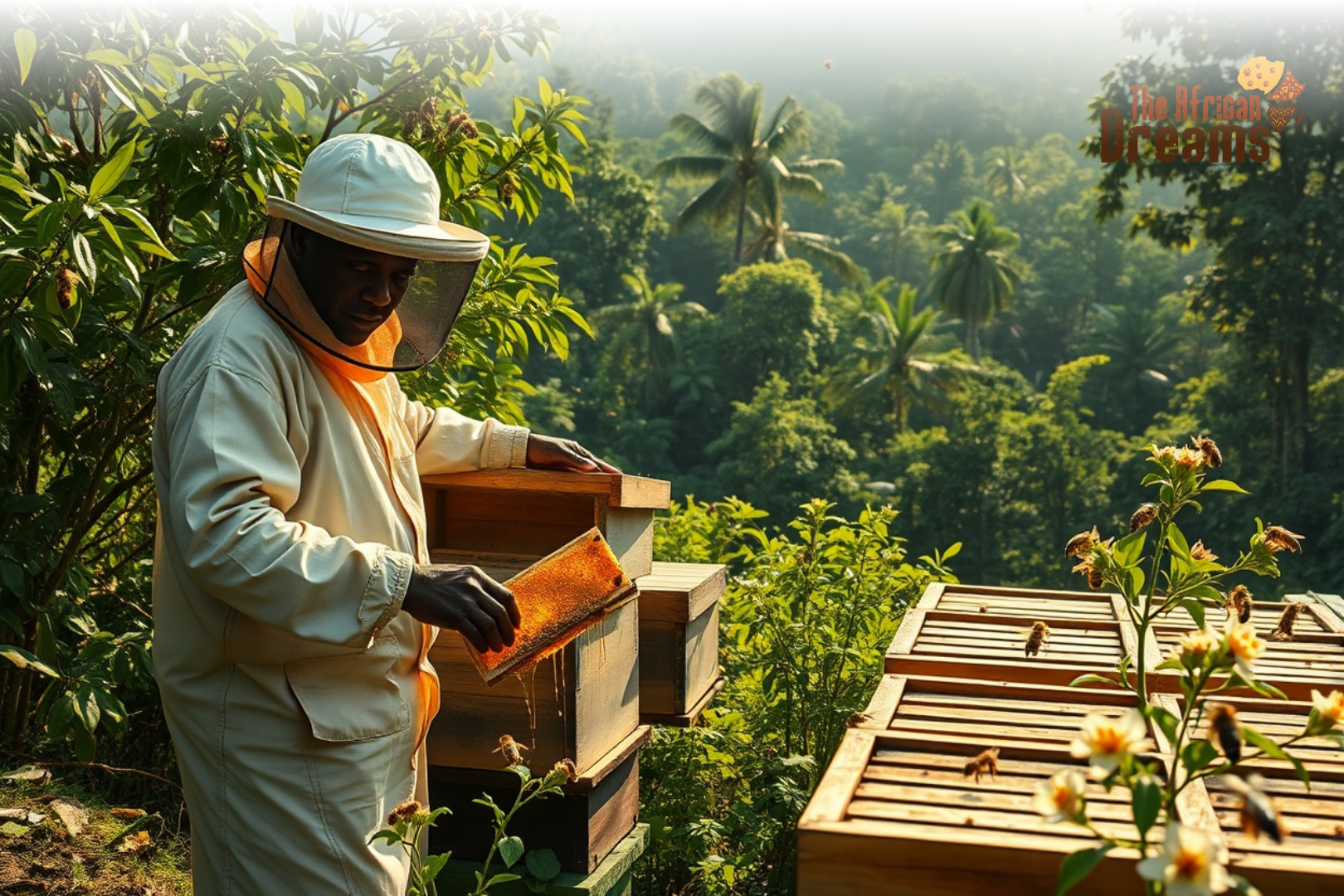
Introduction: Congo’s Beekeeping and Honey Production
Congo’s beekeeping and honey production offer a niche to reinforce agriculture, enhance local economies, and conserve biodiversity. Bees are essential vectors in the pollination process of a raft of crops and, hence, very relevant to food security and environmental health. Honey production, apart from being an income source, also serves as an alternative to traditional forest exploitation, which generally results in deforestation. This case study examines the potential of Congo’s beekeeping and honey production, the current challenges, and the benefits this industry can bring to the Congolese economy and ecosystem.
The Challenges in Congo’s Beekeeping
Some of the many challenges facing the agricultural sector in Congo include
1. Deforestation: Traditionally, Congo’s beekeeping and honey harvesting have been done through destructive means. They involve felling trees or burning hives to extract honey. This is harmful not only to the population of these bees but also to the environment.
2. Degradation of Environment: In addition, deforestation, usually driven by logging and agriculture, threatens bees’ natural habitats and reduces their populations, thus affecting biodiversity.
3. Low-income Generation within Rural Communities: Economic limitations also constrain the development of Congo’s beekeeping and honey production. Most Congolese beekeepers are in dire need of modern equipment for sustainable honey production.
Due to a lack of appropriate tools and even training on how to organize effectively, it is difficult for them to effectively produce honey and sell it at a good market price. This, therefore, limits honey from being a lucrative and sustainable farming product that should augur well with the local communities.
The Solution
Efforts to meet these challenges include changing Congo’s beekeeping and honey production. Sustainable beekeeping, which introduces modern hives and non-destructive harvesting methods, is being promoted across sub-regions and supported by various organizations, including the World Conservation Society and the Tanganyika Conflict Mitigation and Reconciliation project. Such organizations train beekeepers in hive management, honey harvesting, and processing, hence improving the quality and quantity of honey production.
For instance, in the northern village of Makao, WCS initially supported local households in constructing hives and establishing bee colonies. The program, which began in 2015 with just nine hives managed by a few families, has grown today into over 123 hives managed by 54 households. These are able to earn a family upwards of $431 annually from selling honey at the local market. Through honey production, this community reduces dependence on forest products, hence diversifying sources of income to help preserve the forests.
Besides, cooperatives established in the Congo’s beekeeping industry strengthen the sector. The TCMR project, for example, has facilitated the creation of at least one cooperative in Tanganyika Province, comprising individual beekeepers- most of whom are victims of conflict with the objective of producing honey in an environmentally non-destructive way.
Members are able to pool resources and share equipment in order to scale up production, enhance quality, and increase market access. Cooperatives like these contribute to social cohesion, reduce the cost of production, and give a structured approach to marketing honey products.
Implementation
The approach to sustainable honey production in Congo has multiple reasons:
1. Training and Capacity Building: The training programs impart the skills required for modern, sustainable beekeeping practices in which the beekeepers engage. For example, members of the cooperatives in Tanganyika received training in hive construction, honey harvesting without harming the bees, and value addition, like mead and beeswax, to make these products marketable. Such training programs promote best practices that improve productivity and lessen environmental degradation.
2. Introduction of Appropriate Equipment: Modern beekeeping applies modern equipment like top bar hives, smokers, and protective gear that upgrade the quality of honey and safety for beekeepers. In a Pygmy community that has established itself through a Bee Collective in Lotumbe, new tools and new bee hives have increased yields of honey while lessening impacts on local forests. Modern methods avoid tree cutting and preserve the forests and bees.
3. Value Addition and Access Products Development: Increasing honey production beyond raw honey into other products like candles, royal jelly, and beeswax adds value and diversifies sources of income. These are products the villagers are developing for sale to tourists visiting Nouabalé-Ndoki National Park and further integrating honey production into the local economy.
4. Environmental Conservation and Apiculture Pollination Services: Apiculture reinforces agriculture through improved pollination. Bees pollinate one-third of all crops worldwide and are hence vital in guaranteeing food security.
In Congo, the service helps attain yield increases with crops like cassava, coffee, and mango, thus ensuring food for the people. An investment in Congo’s beekeeping would add to its strategy by enhancing food security while causing lower levels of environmental degradation than other forms of agriculture.
The Results
Deep ecology thus enlightens us on the impacts of sustainable beekeeping in Congo. Honey production became a reliable source of income for communities that formerly used hunting or logging. A family can realize 30 liters of honey a year at Makao from ten hives, grossing some $431 annually at local market rates. This money is a natural addition to the families in underdeveloped communities, which enables low-income families to increase their expenditure on education and health.
Equally relevant are the environmental benefits: bees are crucial for pollination and broader biodiversity. By supporting the practice of Congo’s beekeeping, Congo is also investing in forest conservation, as sustainable honey production reduces the need to exploit forest resources.
Protection of the bees’ habitats and the adoption of forest-friendly practices contribute to the health of the overall Congo Basin, which is one of the most vital ecological regions of the world.
Besides, cooperative beekeeping brings social cohesion. The beekeeping cooperatives have united Tanganyika members of previously conflicting communities by a common economic purpose and improved relations among the local ethnic groups.
Final Remarks: Growing Congo’s Beekeeping
Congo’s beekeeping holds enormous promise for economic and ecological development. As a sustainable, low-input agriculture practice, honey production fits well into broader goals of the Government of Congo related to poverty reduction and environmental protection.
Continuing investment in training, cooperative structures, and sustainable practices also allows Congo to capture the full potential of honey production to support rural livelihoods, enhance food security, and protect biodiversity.
A focused effort on Congo’s beekeeping can give Congo not only that ‘sweetness’ but also ensure sustainable development: preserve forests, support communities, and bring in more economic resilience in the long run.

0 Comments