
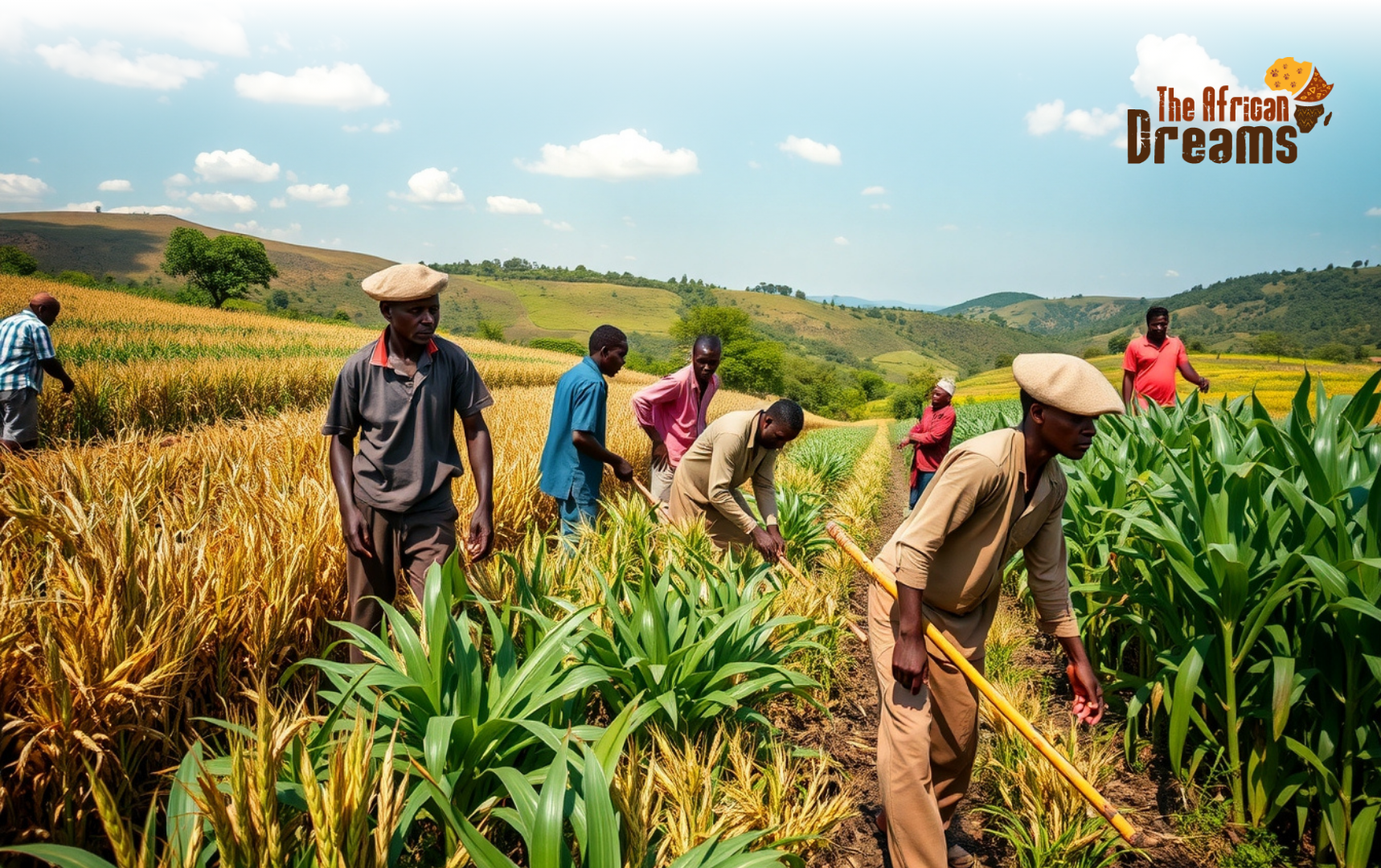
When you think of Zimbabwe, the magical Victoria Falls definitely comes to mind. In the heart of Africa, Zimbabwe is home to many natural wonders. Among them, Victoria Falls is known worldwide as one of the Seven Natural Wonders of the World. Here, the water catches everyone’s eye and heart, creating a beautiful view for tourists. Due to the country’s suitable climate and rich soil, agriculture plays a crucial role in Zimbabwe’s economy. The agricultural sector is creating jobs, ensuring food security, and bringing in foreign income. However, like many other countries, Zimbabwe’s agricultural sector faces many challenges, including climate change, unpredictable weather patterns, and weak infrastructure. Addressing these challenges is important for the country’s economic growth. This article discusses the benefits of investing in Zimbabwe’s agricultural sector, the challenges it faces, and solutions, including new projects.
Article Highlights
This blog discusses
Reasons to invest in the agricultural sector of Zimbabwe.
Challenges facing the agricultural sector include climate change, poor infrastructure, and the lack of support for farmers, among others.
Solutions to overcome these challenges.
Recent investments highlighting opportunities in agriculture.
Why Invest in Zimbabwe's Agriculture?
Several factors make Zimbabwe’s agricultural sector an attractive destination for investment:
- Zimbabwe has about 40% of its land suitable for farming. Thus, it offers great potential for large-scale agricultural ventures.
- The agribusiness sector in Zimbabwe offers many opportunities, including irrigation, agro-processing, livestock farming, and crop production, with a focus on crops such as tobacco, maize, and horticulture.
- The ZIDA Act provides tax exemptions and capital expenditure deductions to encourage investment, particularly in agriculture, which has the government’s support.
- Zimbabwe is improving its agricultural production by adding new sectors like horticulture, organic farming, and dairy, with traditional crops like tobacco and maize.
- Due to trade agreements like SADC and COMESA, Zimbabwe can export goods to member countries without paying extra fees. This also benefits from special trade deals for access to global markets.
- With a growing population and rising incomes, demand for food products in Zimbabwe is increasing. This is creating opportunities for expansion in the agricultural and food processing sectors.
As the world focuses more on sustainability and innovation, Zimbabwe’s agriculture sector is a good space for investment in areas like water-efficient farming and renewable energy.
Challenges Facing Zimbabwe’s Agricultural Sector
Despite its great potential, Zimbabwe’s agricultural sector faces several challenges. Investors must plan ahead before investing in Zimbabwe’s agricultural sector.
- Zimbabwe is highly vulnerable to the impacts of climate change, including unpredictable rainfall, droughts, and rising temperatures. These challenges are tough on crops, livestock, and even water sources. That’s why climate-resilient farming isn’t just a good idea—it’s an essential.
- The land reform program in the early 2000s allocated land to new owners but was unable to provide sufficient support or funding, resulting in challenges to farming productivity.
- Smallholder farmers struggle to access financing for essential farming tools, such as seeds, fertilisers, and machinery, which limits their ability to grow and improve productivity.
- Poor infrastructure, including inadequate roads, irrigation systems, and energy supply, makes it difficult to maintain smooth farming operations.
- Soil erosion, poor land management, and chemical overuse have degraded the soil, reducing fertility and worsening food security issues in Zimbabwe.
- Many smallholder farmers lack access to modern technologies like irrigation, machinery, and better seeds.
- Political instability and changing economic policies have created uncertainty.
- Pests and diseases, such as the fall armyworm and maize streak virus, hamper crop production and reduce agricultural output.
- Farmers struggle to access both local and international markets due to poor value chains, insufficient storage, and processing facilities.
Solutions to Overcome Agricultural Challenges
Despite the challenges, several solutions have been proposed. The initiatives below are effective in addressing the challenges of Zimbabwe’s agricultural sector:
- The government promotes climate-smart agriculture by encouraging the use of drought-resistant crops, efficient irrigation practices, and soil conservation measures.
- The Zimbabwe Agriculture Recovery Plan (ZARP) supports smallholder farmers, improves irrigation, and strengthens market connections.
- Through the Command Agriculture program, the government helps farmers with seeds, fertilisers, and equipment, especially for growing maize, to increase food production.
- Land reform programs have redistributed land to smallholder farmers and provided training and support.
- Smart irrigation systems, such as solar-powered and drip irrigation, help farmers use water more efficiently, particularly in dry areas.
- Zimbabwe is improving its agricultural value chains by focusing on better storage, processing, and market access.
- Programs like microfinance loans and input credit schemes make it easier for smallholder farmers to access the financing needed for farming inputs and equipment.
- Pest and disease control programs have been strengthened to help farmers deal with threats like fall armyworms and maize streak virus.
- The government is collaborating with the private sector to enhance agricultural productivity through partnerships. They are focused on improving infrastructure, input supply, and market access for exports.
Recent Investments in Zimbabwe’s Agricultural Sector
Recent investments in Zimbabwe’s agriculture show the growing confidence in the sector. Some of these investments include:
- Tongaat Hulett Group, a South African company, has made great investments in Zimbabwe’s sugar industry. It has expanded sugarcane and ethanol production in the Triangle and Hippo Valley estates. This has created jobs and increased export income.
- Seed Co. Limited, a major seed producer, has invested in developing drought-resistant seeds. This helps farmers adapt to Zimbabwe’s changing climate and grow better crops.
Final Words
Zimbabwe’s agricultural sector offers great potential for both local and global investors for business. However, there are many challenges like climate change, lack of funding, and poor roads. Despite its challenges, the country is working for the growth of its agricultural sector. The government, public-private partnerships and other parties are working together to solve the challenges. With proper assistance, strategy, new ideas, and investment, Zimbabwe’s agriculture will continue to grow. As the agricultural sector contributes significantly to the country’s development and economy, it’s important to address the challenges it’s facing with caution and prepare the nation. Investors can look into this sector, collaborating with the government, and participate to be a major part of the country’s success. For investors, now is the perfect time to be part of this amazing opportunity and help Zimbabwe’s agriculture grow! So, don’t miss out on this great chance!

0 Comments