
Introduction
Malawi, a small but growing country in southeastern Africa, is slowly becoming a place where businesses can thrive. One of the most active sectors in the country is the wholesale and retail trade. This sector includes businesses that buy products in large amounts (wholesale) and those that sell them directly to customers (retail). From small shops in villages to larger stores in cities, this area of business touches the lives of almost everyone in Malawi.
As the country’s population grows and more people move into cities, the demand for goods is increasing. This change brings many new chances for investment in both wholesale and retail trade. In this article, we’ll look at how this sector works in Malawi, what opportunities are available, and what someone needs to know before starting a business in this area.
Article Highlights
How Wholesale and Retail Trade Work in Malawi
Why Wholesale and Retail Trade are Important in Malawi
Investment Opportunities in Malawi’s Wholesale and Retail Trade
Why Malawi is a Good Place to Invest
Things to Know Before You Invest in Malawi’s Wholesale and Retail Trade
Challenges Facing the Wholesale and Retail Sector
Real-Life Business Successes in Malawi
Government Support and Regulations
How Wholesale and Retail Trade Work in Malawi
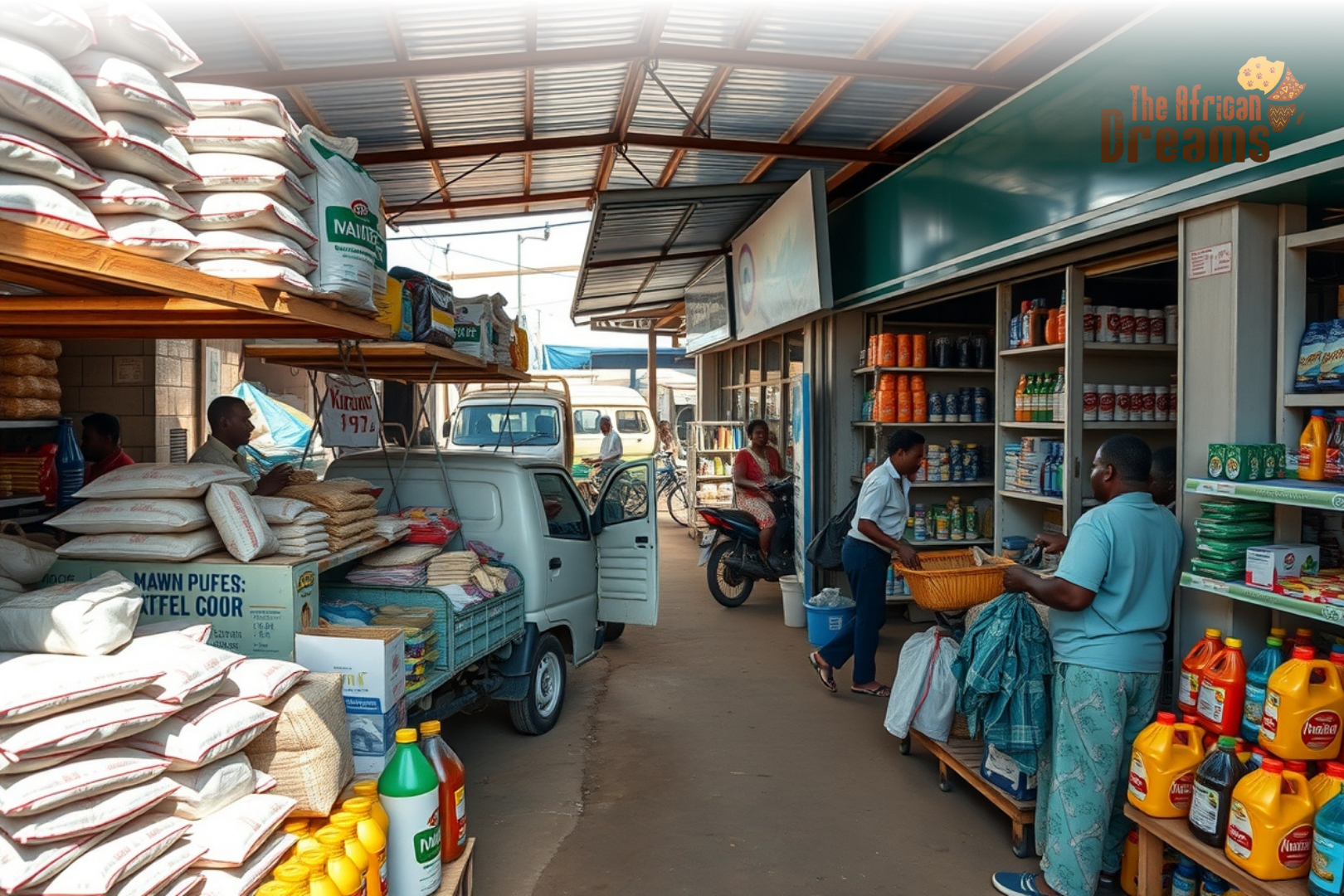
In Malawi, wholesale and retail trade are an important part of the economy and daily life. These businesses help move goods from one place to another and make sure people can buy what they need, whether they live in cities or villages. Many people earn a living by working in or running shops, market stalls, or supply businesses.
Wholesale Businesses: These businesses buy goods in large amounts. Wholesalers are mostly found in cities and big towns, where transport and storage are easier.
Retail businesses: These businesses sell goods directly to customers. These are the small shops, supermarkets, market stalls, and roadside sellers that people visit to buy food, clothes, soap, airtime, and other daily items. Some are big and organized, while others are very small and run by individuals or families. They are found everywhere, even in rural areas where bigger stores may not exist.
There are two types of businesses in this sector: formal and informal.
Formal businesses are registered with the government and pay taxes. Informal businesses are not registered, but they still play a huge role. Most people in Malawi depend on informal traders for their daily needs, especially in rural communities.
The wholesale and retail system helps connect rural and urban areas. Goods move from cities to villages through wholesalers and retailers, while products like farm produce move from rural areas to towns. This back-and-forth supports local economies and creates jobs.
Even with challenges like poor roads or limited storage, the sector continues to grow. It shows the hard work and creativity of Malawians who keep the country’s trade moving every day.
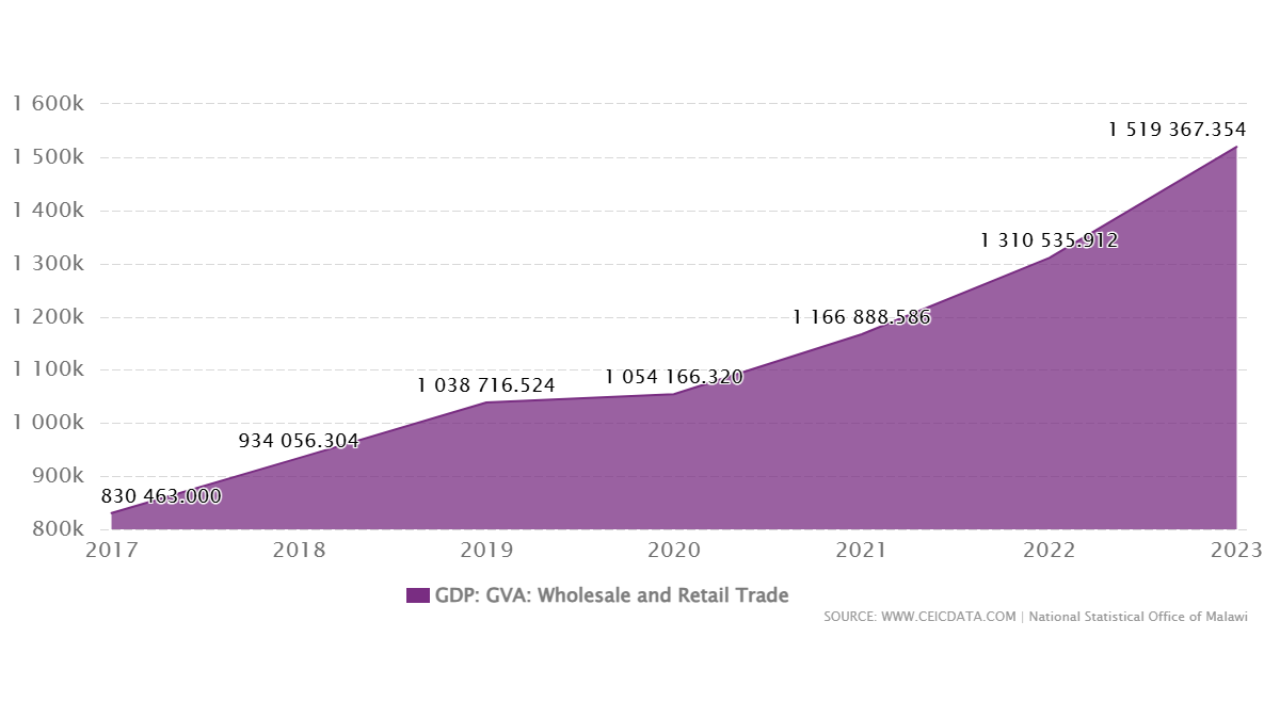
Figure: Malawi GDP: GVA: Wholesale and Retail Trade | Economic Indicators
Why Wholesale and Retail Trade are Important in Malawi
The wholesale and retail sector plays a vital role in Malawi’s economy and everyday life. It connects people, creates job opportunities, and ensures that essential goods are available across the country. Let’s take a closer look at why this sector is so important.
1. Creating Jobs for Many
Wholesale and retail businesses provide significant employment opportunities across Malawi. Many people work in shops, markets, or as street vendors. From selling food to clothes, phone accessories to household items, the sector provides jobs for thousands of Malawians. These jobs help families cover their daily needs like food, education, and housing, making this sector an important foundation for many people’s livelihoods.
2. Getting Goods to Everyone
The wholesale and retail system makes sure that goods reach people everywhere, whether they live in busy cities or remote villages. Wholesalers bring in large quantities of products and then distribute them to smaller shops and markets. This system ensures that everyone, even those in rural areas, can access things like food, clothing, and basic household items. Without it, it would be much harder for people in less accessible areas to get what they need.
3. Supporting Local Entrepreneurs
The wholesale and retail sector also opens doors for local entrepreneurship. Many people, especially those without much formal education, have the chance to start their own small businesses. Whether it’s running a small stall at the market or selling items from a roadside shop, small businesses allow people to be their own bosses and support their families. Over time, these businesses can grow, providing even more opportunities for employment and income.
4. Bringing Rural and Urban Communities Together
The wholesale and retail trade connects rural areas with cities, creating a flow of goods between them. For example, farmers in rural areas send crops to the city, where they are sold in markets and stores. Similarly, goods like clothes, electronics, and imported items flow from cities to rural areas. This back-and-forth trade ensures that both urban and rural communities have access to the products they need to live well.
5. Helping Malawi’s Economy Grow
As Malawi’s population grows and more people move into towns, the need for a well-organized wholesale and retail system is becoming even more important. A growing population means more demand for goods and services, both in cities and in rural areas. The more efficient this system becomes, the better it will be for the country’s economy, creating jobs and opportunities for everyone involved.
6. Improving the Supply Chain
Despite its importance, there are still challenges in Malawi’s wholesale and retail system. Poor roads, limited storage facilities, and other infrastructure issues can make it difficult for goods to move efficiently across the country. By investing in better transport systems, storage spaces, and market facilities, the sector can become more organized and help reduce costs. This will not only make goods cheaper for consumers but also allow businesses to grow and thrive.
Investment Opportunities in Malawi’s Wholesale and Retail Trade
Malawi has many opportunities for investment, especially in the wholesale and retail sectors. There is a growing need for better access to goods and services, and investors can play an important role in meeting these needs. Here are some areas where investment could make a big difference:
1. Supermarkets and Grocery Stores
One of the biggest needs in Malawi is better access to food and household items. Many towns, especially those that are growing, do not have enough supermarkets that offer a wide variety of products. Most people rely on small shops, which often have only a limited selection. Investors can build modern grocery stores in these areas, providing a wider choice of products at reasonable prices.
There are also opportunities to focus on selling local food products like Malawian rice, maize flour, and vegetables. Many people prefer to buy local foods, and by supporting local farmers, investors can help the economy grow even more.
2. Wholesale Supply Businesses
Retail shops in Malawi need wholesalers to supply them with products. However, there are still problems with how goods are delivered. Some shop owners have to travel long distances to buy stock, which makes prices higher and can be time-consuming.
Investors could open wholesale businesses in smaller towns where these services are limited. By offering better and more reliable supply services to local shops, this kind of business could grow quickly and help reduce costs for retailers.
3. Mobile and Digital Retailing
With more people using mobile phones in Malawi, there is an opportunity to create new businesses that make shopping easier. People can already buy goods using their phones in some cities, but many areas, especially rural regions, do not have this option yet.
Investors can invest in online shops or phone-based ordering systems for people living in remote areas. This would allow people to shop more quickly and easily, saving time and making it more convenient for everyone.
4. Clothing and Household Goods
Clothing, shoes, kitchen items, and small electronics are always in demand. Right now, much of what is sold in Malawi comes from secondhand markets or is imported from other countries. There is an opportunity for investors to bring in new, good-quality items or even produce some locally to meet the needs of the population.
Businesses that provide high-quality products at reasonable prices are more likely to succeed. There is also a chance for local production of items like school uniforms, cooking pots, or soap, which would help reduce the cost of goods and lower reliance on imports.
5. Local Markets and Support Services
Some of the best opportunities in Malawi are not about starting a store but about improving the way trade happens. Here are some examples:
-
Building storage spaces or warehouses to keep goods safe.
-
Creating clean and safe market buildings for vendors and customers.
-
Providing transport services for shop owners and wholesalers to help them move goods more easily.
These kinds of services help make the entire retail system more organized and efficient. They are not only helpful to shop owners, but they also make shopping easier for customers and improve the local economy.
Why Malawi is a Good Place to Invest
- Growing population: Malawi has a young and increasing population, with more people needing goods and services.
- Urbanization: More people are moving to cities, creating bigger markets in towns and urban areas.
- Stable demand: People will always need food, clothes, and household items. So the demand is stable and easy for businesses and investors to participate in.
- Support for business: The government is trying to improve the business environment and has set up programs to support small and medium-sized businesses.
Of course, there are also challenges, such as limited access to loans, poor road networks in rural areas, and issues with electricity. But these are slowly improving, and they also offer space for smart solutions.
Things to Know Before You Invest
- Start small and learn the market: Begin with one shop or one town before expanding.
- Get local partners: Working with people who know the local culture and market can help avoid mistakes.
- Understand customer needs: People in different areas have different spending habits. Know what your customers want.
- Focus on quality and trust: Even in low-income areas, people value honest service and quality goods.
- Be patient: Growth may be slow at first, but with the right approach, it will come.
Challenges to Keep in Mind
No business is without its difficulties. Some of the common challenges in Malawi include:
- Electricity cuts: These can affect businesses that need fridges, lights, or computers.
- Poor roads: In rural areas, bad roads make transport expensive and slow.
- Currency issues: The Malawian Kwacha can lose value quickly, which affects importers.
- Low buying power: In some areas, people may have very little to spend, so prices need to stay low.
Understanding and preparing for these problems will help investors stay strong even when things get tough.
Real-Life Business Successes in Malawi
In Malawi, many small businesses began with just a few products and grew slowly over time.
One example comes from Mzuzu, where a family started by selling cooking oil and sugar in large amounts. Later on, they started selling more items such as flour, beans, and rice. As more people came to buy from them, their shop grew. Today, it has become a supermarket, and they also help supply goods to smaller shops in nearby villages.
Another story is about a woman in Lilongwe. She started by selling secondhand clothes at a local market. With the money she made, she opened a small shop. Now, she brings in new clothes from South Africa and gives jobs to several young people in her area.
These examples show that even small investments in this sector can lead to long-term success.
Government Support and Regulations
Malawi’s government has a few programs and rules that support wholesale and retail trade:
- Business registration: It’s fairly simple and low-cost to register a small business.
- Trade policies: There are plans to improve trade centers, make cross-border trade easier, and reduce unnecessary regulations.
- Access to markets: Through its partnerships with other African countries, Malawi is part of trade zones that allow easy movement of goods.
However, it’s still important to do proper research and understand any rules or taxes before starting.
Conclusion
Malawi’s Wholesale and Retail Trade has many chances for growth. As the country develops, people’s needs are also changing. There is space for more supermarkets, small shops, wholesalers, online stores, and other types of businesses. With careful planning and a clear understanding of how things work, both Malawians and people from other countries can do well in this area.
This is not just about making money. When done right, investment in this sector also helps communities, creates jobs, and brings better services to people who need them most.
Malawi’s Wholesale and Retail Trade sector may be small, but its potential is big.





0 Comments