
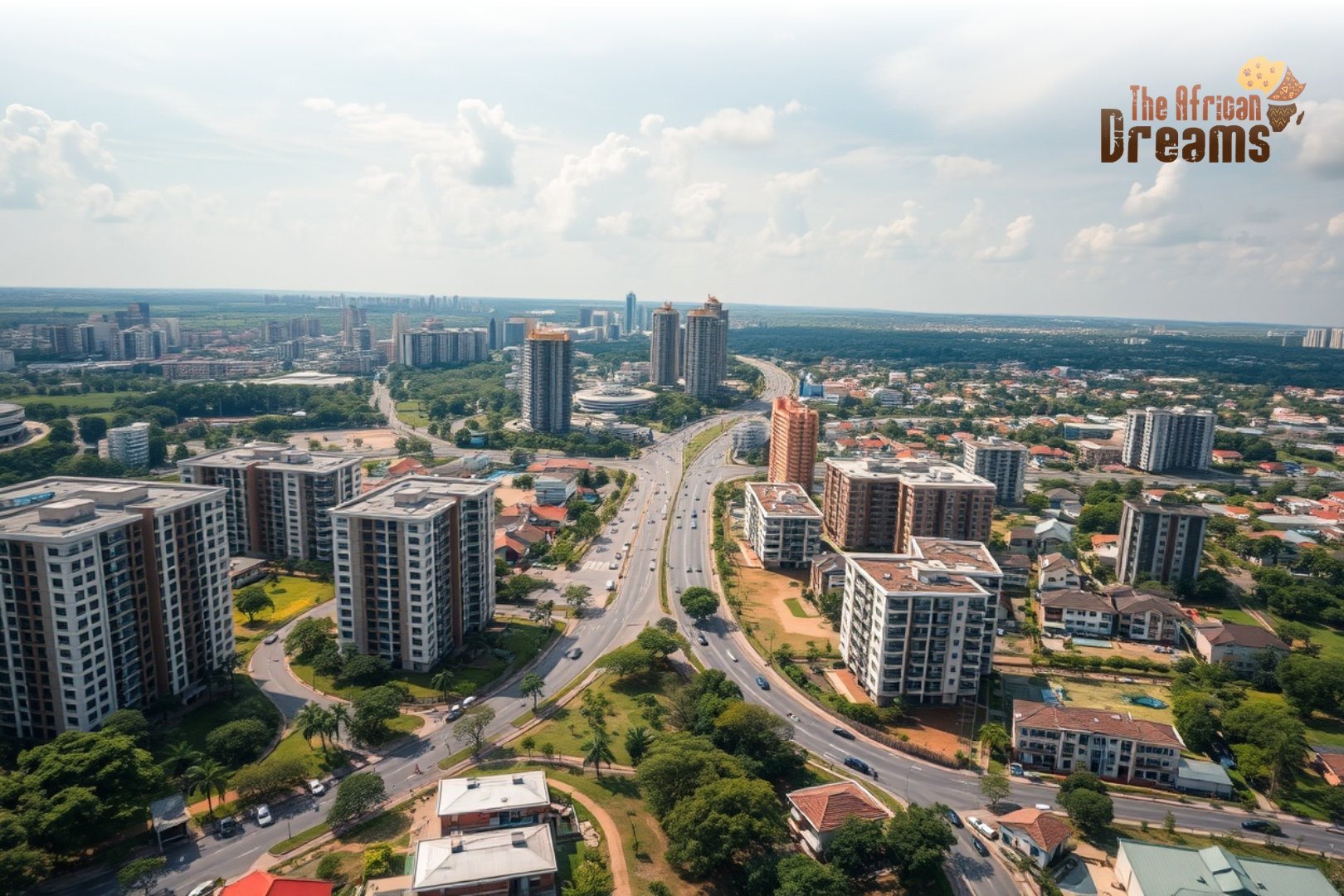
Introduction: Uganda’s Real Estate Business
Uganda’s real estate business is rapidly growing, with investors getting lucrative returns. In Kampala, rental yields can range from 8-10% per year. This proves the potential for those seeking stable and scalable investments.
With the current trend of urbanization and evolving lifestyle, the demand for houses and accommodations is rising. So, this has created an ample opportunity for real estate investors to generate revenue. In his blog, we will share a detailed overview of the sector and how it can bring so much. We will also explore the investment opportunities in Uganda’s real estate business.
Article Highlights
Uganda’s real estate business can be the next dark horse for investors seeking opportunities to do business overseas.
Residential properties dominate the billion-dollar industry. Urbanization is behind the migration to cities.
There are tons of ways to make money by investing in Uganda’s real estate business. This article will share some of the most promising ones.
Current Market in Uganda’s Real Estate Business
Real estate has a huge market in Uganda. With an annual rate of 7.07% from 2024 to 2029, the value will cross US$510.60bn. Urbanization in the country is pushing people to move and reside in big urban areas. The top destinations are major cities such as Kampala, Mbarara, Gulu, and Lira.
Now, the projection of future value is great. It will rise by nearly 15% each year. The current trends forecast the bright side of investment. People will also choose smaller units because of the price.
As major cities offer more benefits and quality of life, prices are higher. For example, properties in Kampala have an average rental yield of 8-10%. Overall, the current market of Uganda’s real estate business is booming and will continue to do so for a long time.
How to Invest in Uganda’s Real Estate Business
As the sector has proven itself to be one of the most promising drivers of the economy, the investment aspect is crucial to understand. And there are some efficient ways to invest in Uganda’s real estate business.
1. Residential Properties: Residential properties are a great way to generate revenue in Uganda’s real estate business. Buying a home can provide monthly returns and a secure source of income. Urbanization in Uganda prompted the real estate business. People are now moving to towns and looking for shelters to stay in.
The rising demand for housing units made Uganda’s real estate business unbeatable and secure. Besides, property prices in Uganda are rapidly rising. Buying properties and selling them later at a higher price can be a great investment sector.
2. Commercial Investment: Offices, warehouses, and other businesses need spaces to operate. So, the demand for commercial properties in Uganda’s real estate business is increasing. It’s a good source of income, and the market cap is unlimited. Exploring this side of the market will be a great choice, indeed.
There are hundreds of organizations and companies looking to expand their business footprint in Uganda. Major cities like Kampala, Entebbe, and Jinja are the centers of business attractions. So, starting a real estate endeavor can kick off from these cities. Commercial real estate has a high return compared to other sub-sectors.
3. Real Estate Developer: Owning land in Uganda for an indefinite period isn’t possible. So, entering into partnerships with local companies to join as a real estate developer can be an efficient option. It will decrease the risk as well as guarantee a smooth, profitable journey.
4. Income Real Estate Investment Trust Scheme (I-RET): Joining real estate as a developer has a smaller version called the Income Real Estate Investment Trust Scheme (I-RET). The operation is more or less the same as that of a developer. But those who cannot go for such a big scale can join the Real Estate Investment Trusts.
These trusts will gather investment to buy, develop, or manage real estate assets. Almost 90% of the total earnings are spent on the investors. This makes it a proven field to invest in.
5. Rentals and Airbnb: Uganda is a top tourist destination in Africa. So, people often visit the country and its scenic places for a short time. And, they need accommodation for a short time. Short-term rentals like Airbnb will be a more lucrative business than rentals. It has an 8% return rate according to the Knight Frank Uganda Market Update for H1 2023. The recent surge in businesses like this makes quick rentals an unbeatable option to consider in Uganda’s real estate business.
6. Improving the Quality of Property: Buying properties at lower prices and developing them to extend their lifespan and enhance quality is another promising option to consider. Known as property flipping, this requires expertise, such as identifying good properties at a decent value. Later, improving it to increase the selling value and listing the properties in marketplaces to receive good returns.
Things to Consider Before Investing in Uganda’s Real Estate Business
There should be a lot of strategic moves and thinking before investing. Especially in big investments like the real estate business, where risk factors are crucial to measure. But investing in Uganda’s real estate business carries minimal risk. Here’s a quick list of things to consider before investing.
1. Location plays a critical role in the real estate business. Choosing it carefully will boost earnings; otherwise, the money spent will go down. For example, businesses in far towns without a proper communication system will severely decrease the benefits. Similarly, choosing places in prime locations can significantly enhance ROI!
2. Taxes and ownership policies are crucial factors to know before putting your money into a business. Consult with a legal firm if the investment is overseas, and get the basic know-how at least.
3. Property management is very crucial. For example, hiring someone to manage the property will increase the cost. But it will be worth taking the bet if the person or agency is good enough to provide the needed.
4. Land ownership is complicated in Uganda. A foreigner can do business, invest, and carry out commercial activities, but cannot own land for an indefinite period. The ownership is based on a leasehold system for up to 99 years.
5. Political conditions have some influence on Uganda’s real estate business. Besides, budget issues, policy changes, etc., bear similar importance and weight in real estate.
The government of Uganda is trying to minimize all the risks and provide support for the investors at the same time. This is a perfect opportunity for any investor looking to put some money into the business. A proven way of getting success never fails.
Final Thoughts: Future of Real Estate in Uganda
Uganda’s real estate business projects a unfathomed rise which worth exploring for the investors. The money put into this sector will increase within a short time because of its growth and potential. Real estate offers a more stable and high return on investment than any other sector in Uganda.
Uganda’s real estate business sector is future-proof and its demand will only rise. Where the demand increases, the potential goes up. So, a high return rate and sustainable income will shape the investors. Soon it will become a hotspot for investors. And, now is the high time to consider investing in Uganda’s real estate business.






0 Comments