
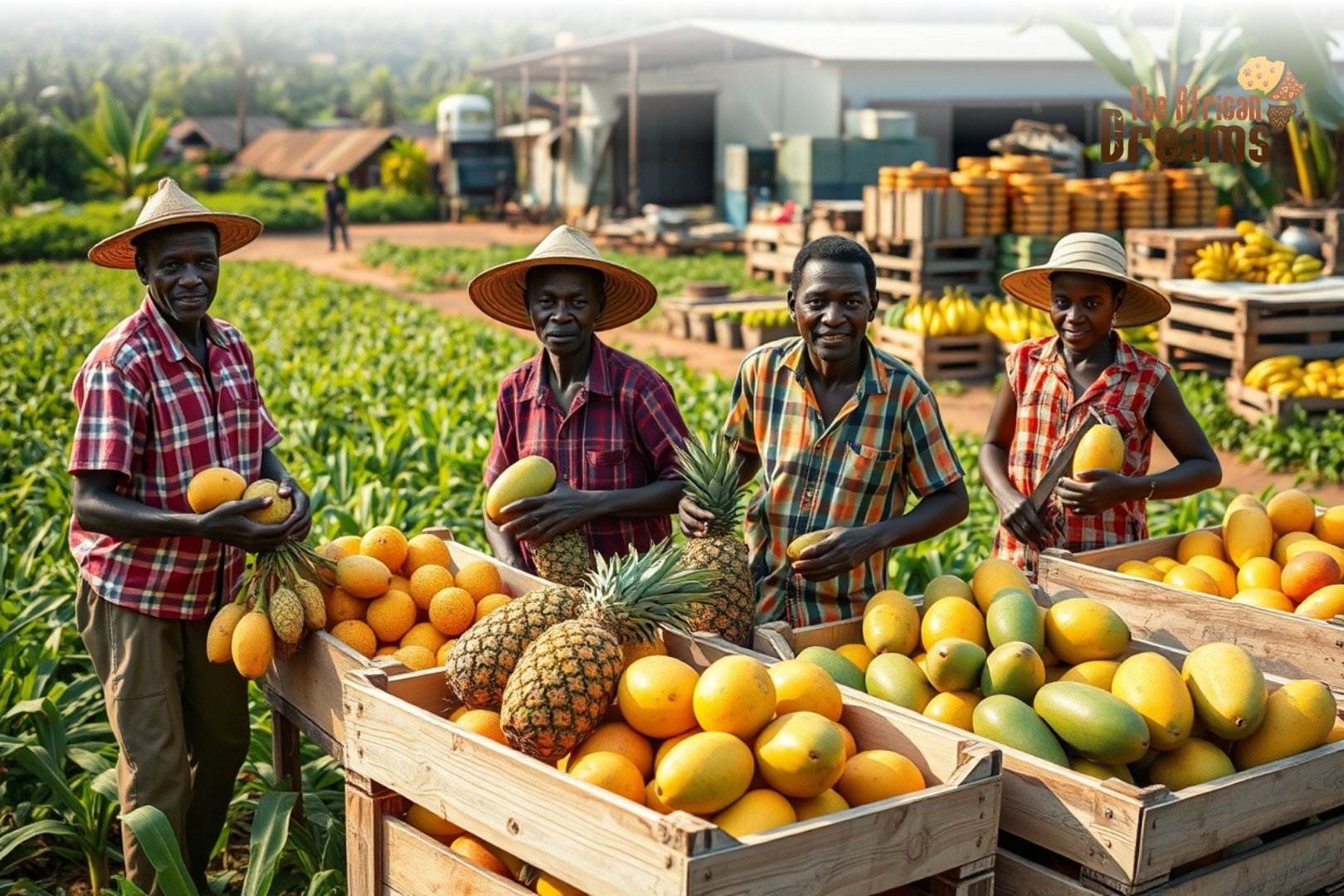
Introduction: Uganda's Fruit Market
Ssaava Ssebunya had a chance to travel the world. After returning to Uganda in 2014, he took his brother and started passion fruit farming on 2 acres. The founder of the Seena Brothers Agro Farm has now become a successful passion fruit farmer. The business is fully grown, and he has managed another 7 acres of land, earning millions of shillings by supplying to Uganda’s fruit market.
Farmers in Uganda are only engaged in producing traditional foods. Mainstream foods such as coffee, cassava, and matooke dominated the market. These productions used to be in small-scale subsistence farming. But some pioneers and risk-takers have come forward and are now driving a dramatic shift. The full-scale farming business is now growing with market leaders in fruit production. In this article, we will talk about Uganda’s fruit market and its success stories, and the foundation.
Article Highlights
Uganda is the highest producer of fruit in Africa and the second biggest in export value.
Julian Omalla (Delight Uganda Limited) and Zahra Food Industries are the founding companies in Uganda’s fruit market sector, elevating the export market overseas.
Despite facing several challenges, the country can dominate global fruit markets, especially in Europe. However, it needs to rethink and implement a few policies.
Uganda's Fruit Market: A Brief History
Uganda is the number one fruit-producing country in Africa. Its abundant resources and fertile soil are behind the massive fruit production. Uganda’s fruit market and its farming don’t need much effort unless you’re a newbie to the sector. A little knowledge is enough to produce more fruits and vegetables.
Commercial farming in the fruit sector began in the 1960s. The government undertook some schemes in a few districts. The project saw several ups and downs throughout the journey. Now, Uganda’s fruit market is a dominant power in the fruit sector in Africa.
Uganda’s Fruit Market Success Stories
When talking about the market leaders in Uganda’s fruit production, you cannot think without Julian Omalla. The owner of Delight Uganda Ltd., the largest juice-processing factory in Uganda, started out as her brother’s employee. In 1996, she started her business by processing fresh juice from locally grown fruits.
She fell off the track at first as her partner ran off with all her funds. However, her determination took her up again. She now owns diverse sectors of business. The pioneer in Uganda’s fruit sector was awarded Commonwealth Entrepreneur of the Year 2014.
Zahra Food Industries Ltd. is another leading food processing company in Uganda. It is the only ISO Food Safety Management System (FSMS 22000:2018) certified company in Uganda, and it uses state-of-the-art technology in business. Founded by Quresh Fidahusein, the company boosted the local economy. It closely works with smallholders, supporting them in transforming their livelihood conditions.
These companies are taking Uganda to a new level. The world of the export fruit market is big, and Uganda can be the most dominant exporter. The roads are there, and so are the open opportunities. Uganda just needs to implement an effective policy to stay on track.
The Challenges
1. One challenge in intra-African trade is diplomacy. The Uganda-Rwanda border was closed for about three years due to disagreements between the presidents of these two states. Political instability is often a hurdle for countries to cross, affecting smallholders.
2. Another challenge in the sector is the post-harvest handling. The value chain in Uganda is dominated and builds up syndicates. Most of the value is taken away from the farmers. But there’s more. Almost 40% of the produced goods are wasted due to poor post-harvest handling.
3. The market demand is huge in Europe. However, there are challenges in shipping the produced goods there. The first one is meeting stringent quality and safety standards. The European market demands a strict standard of quality. Due to this, Uganda fails to enter the high-end markets.
4. Julian Omalla faced challenges as well. She had financial setbacks expanding her business. Market instability was also a major concern. Nowadays, challenges are new. The main problems are market infrastructures, high production costs, and poor agronomic practices.
Solutions
Turning challenges into opportunities is the most viable option.
1. The sector will improve by fixing the value chain of Uganda. The waste will be minimized by reducing post-harvesting handling.
2. Investment from local and global organizations will also help improve Uganda’s fruit market sector.
3. Improving market infrastructures and lowering production costs will also be beneficial.
4. Adopting technological advancements, including agronomic practices, helps farmers achieve maximum outputs.
5. Support from the Uganda government, public-private organizations, NGOs, and other institutes can also help improve Uganda’s fruit market sector.
Opportunities in Uganda’s Fruit Market
The current demand is moderate and high for the fruit market. Organic and value-added products are in demand. However, most companies associated with fruit processing and export business run on little investment. Sometimes they lack the capital to scale up production.
The market demand is high and will remain so. Europe is the primary market for Uganda’s fruits. But some of the produced fruits are also shipped to the COMESA region. 15 companies are operating in the country to export fruits to the overseas market. As mentioned earlier, all of them are small in size. Investment in these companies can elevate the handling and level up the export.
Final Thoughts: Growing Uganda's Fruit Market
Uganda’s fruit market is growing. It currently produces 11 million tonnes of fruit per year. The value of its export market is over 35 million a year. But the country can elevate the amount. It has the resources and potential. There are a few gaps in the road that can be bypassed.
The dried fruit market in Uganda is also promising. They earned over a quarter of a million from dried fruit exports in 2022. However, as the sector depends on organic fruit production, the first needs to be made a primary concern.
So, there are opportunities in Uganda’s fruit market for fruit production and business. The export market from overseas countries is calling for more. It is clear that the future of Uganda’s fruit market looks more promising. It will need proper guidance and development.






0 Comments