
Introduction: Guinea-Bissau’s Energy
In this modern era, everyone is talking about AI, technology, and how technology will replace many things, and wondering how we are advancing into the technological era. But you will be surprised to know that many nations do not have proper internet access. Many countries have less than 50 percent access to the internet. There are countries like Guinea-Bissau that lack sufficient electricity and cover less than 50 percent of the country. Despite that, Guinea-Bissau’s energy sector possesses significant natural energy resources, particularly solar, biomass, and small-hydro power.
Guinea-Bissau is among the nations with about 33% of its population having access to electricity. Because of that, a focus on improving this sector, and investors are also interested in investing in Guinea-Bissau’s energy sector. This article will discuss Guinea-Bissau’s energy sector, including its challenges, opportunities, and investment pathways.
Article Highlights:
Guinea-Bissau has access to only approximately 33% of electricity, and rural areas are substantially underserved.
Although it has enormous solar, biomass, and hydropower potential, development has progressed slowly due to inadequate infrastructure and weak financial capability.
Solar projects, backed by the World Bank and Sinohydro, aggressively drive access to affordable electricity.
The Guinea-Bissau Sustainable Energy Investment Plan (SEIP) aims to provide universal access to sustainable energy by 2030, and approximately $700 million will be required to implement it.
Hydropower schemes like the Saltinho (19 MW) and grid interconnections are being developed to enhance regional energy security.
Offshore oil and gas exploration is underway, and Russia has been contracted to explore 11 offshore blocks.
Current Resources of Guinea-Bissau’s Energy
In simple terms, energy is the supply needed to complete work. To generate or purchase energy in a country, there are many different energy sectors, such as solar energy, wind energy, hydropower, biomass/bioenergy, oil and gas, battery storage/energy storage, etc.
Guinea-Bissau’s energy sector possesses significant natural energy resources, particularly solar, biomass, and small-hydro power. Exploitation has nonetheless been limited by inadequate infrastructure, finance, and technical capability. In 2024, about 33% of Guinea-Bissau’s population had access to electricity, with about 58% coverage in the capital, Bissau. This is a summary of the potential in each of the energy fields and their position:
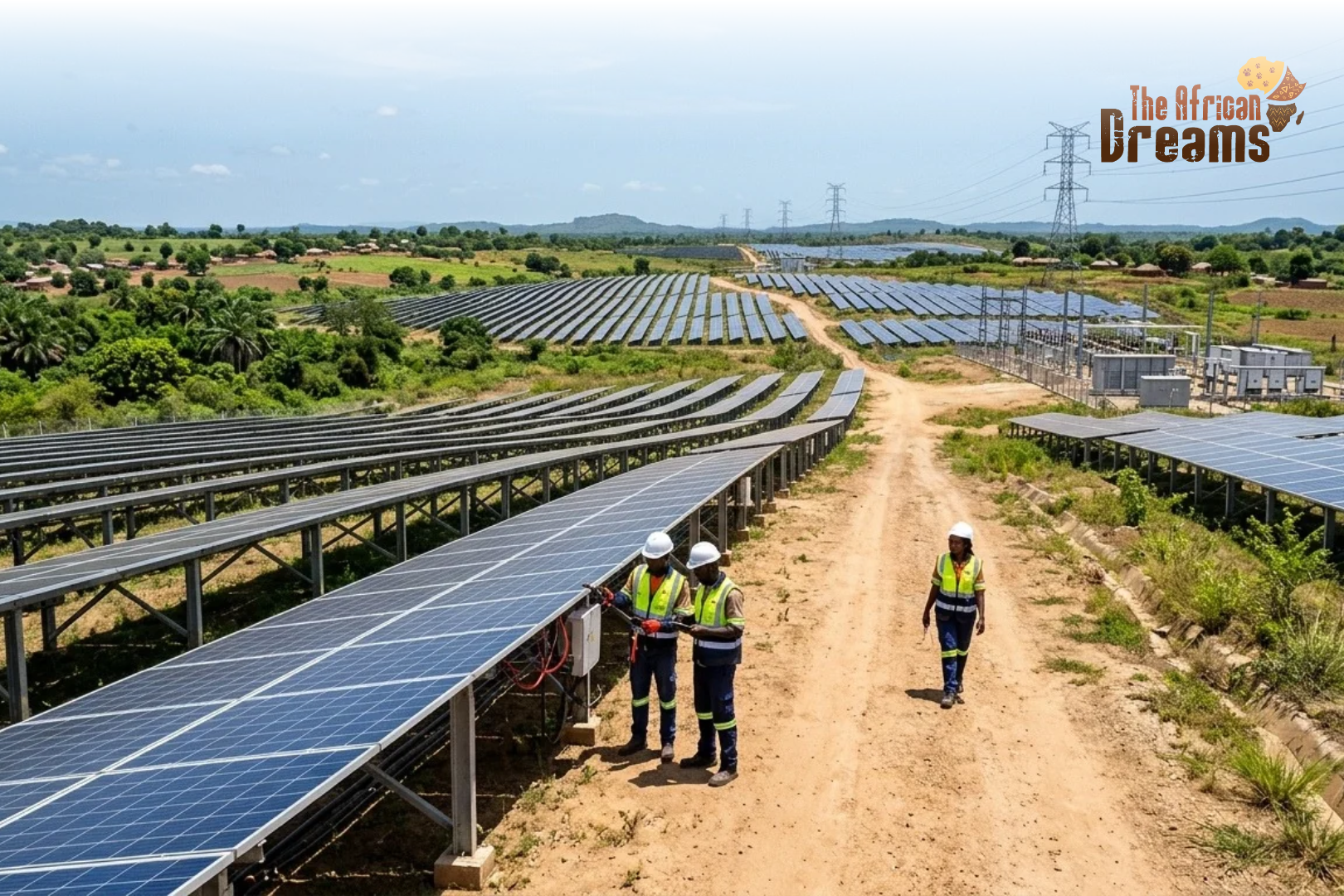
Solar Energy: High-potential, Growing Investment. Guinea-Bissau has high solar irradiation, thus making it most appropriate for solar photovoltaic (PV) systems. One of them is a 30 MWp solar power plant in the Bissau area, financed by the International Development Association (IDA) of the World Bank. The project will reduce the cost of electricity and increase access. Bambadinca runs a hybrid solar-diesel microgrid providing reliable electricity to around 6,500 villagers, demonstrating the sustainability of solar technology in rural areas.
Hydropower: This is a Moderate Potential situation. The Saltinho hydropower plant, with a 19 MW capacity, is being constructed in Guinea-Bissau, where river resources are available for small-scale hydropower generation. Grid interconnection to the West African Power Pool enables hydroelectric power exports from Guinea to Guinea-Bissau, as well as to Senegal and The Gambia.
Electricity Distribution: This sector has some infrastructure issues that lead to low access. Electricity is accessible to about 33% of the population, and rural areas are underserved. Today’s grid is high-loss, and the losses amount to nearly 47%, due to old infrastructure and inefficiency. Electricity generation depends heavily on imported diesel and is thus both costly and environmentally unsustainable. The country has about 29 MW of installed electricity generation capacity, of which just 2 MW is from renewable sources.
Battery Storage/ Energy Storage: Battery storage systems are being integrated into solar projects to enhance reliability and address supply variability. As renewable energy projects grow, the demand for energy storage solutions will increase, presenting investment opportunities.
Biomass/ Bioenergy: This sector is considered a Sustained High Use, Concealed Opportunities sector. Biomass in the form of wood and charcoal accounts for over 95% of Guinea-Bissau’s energy consumption. Enormous volumes of agricultural residues, such as cashew shells, can be utilized to generate bioenergy.
Oil and Gas: Guinea-Bissau’s energy sector is in the Exploration Stage. Guinea-Bissau is already reliant on imported petroleum products for transportation and electricity generation. Frequent offshore exploration activity exists, but no significant production has begun yet.
Challenges in Guinea-Bissau's Energy Sector Development
The majority of Guinea-Bissau’s energy sector is not in the high-potential stage. There are many reasons these sectors face challenges and can’t improve the current condition, such as –
1. Poor Basic Infrastructure: The electricity network is old and tiny. Most of the country’s electricity network serves only the capital city of Bissau and a few surrounding towns. Electricity loss through transmission is high due to old age and ruptured lines. The transmission facilities in the rural areas are in small towns far from the capital city, which lack the facilities to get power.
2. Limited Financial Resources: Guinea-Bissau’s government budget is minimal. International aid goes mainly towards financing large-scale projects. Guinea-Bissau’s private banks are weak, so they cannot extend big loans for energy development. Energy projects (like hydropower plants or solar farms) need millions of dollars of up-front investment.
3. Lack of Trained Labor: Trained engineers, technicians, or electricians are scarce in the country. Projects must import foreign personnel (expensive) or train nationals from scratch. Rural areas especially lack the technical knowledge to maintain solar or hydro systems.
4. Other Challenges: Bureaucratic and regulatory barriers and political instability increase the range of issues.
Despite all these challenges, many investors still didn’t hesitate to invest. Many investments are ongoing, and many statistics forecast the future for Guinea-Bissau. In addition, many private and multinational investments are improving and will continue to improve the current status of Guinea-Bissau’s energy sector.
Ongoing Investments in Guinea-Bissau’s Energy Sector
International and Public-Sector Initiatives in Guinea-Bissau’s Energy Sector
World Bank Solar Investment: In 2024, the World Bank endorsed a massive $35 million grant pledged to raise Guinea-Bissau’s solar energy production to a new level. The project aims to develop the nation’s power infrastructure by implementing new solar power production programs. The primary concerns are gaining more access to electricity, especially in rural communities, and reducing the high reliance on imported diesel. The project is key in constructing a national platform for clean, green power systems.
Sustainable Energy Investment Plan (SEIP): In addition to individual projects, Guinea-Bissau has formulated an overall Sustainable Energy Investment Plan to achieve universal access to sustainable energy by 2030. The plan approximates the total investment needed at around $700 million. It is designed to build medium-scale grid-connected solar photovoltaic (PV) power plants, solar PV hybrid mini-grids, and bioelectricity power plants for rural regions. Its focus is on energy solution development for agriculture and fisheries, two of the country’s key economic sectors.
Private Investment and Corporate Initiatives in Guinea-Bissau’s Energy Sector
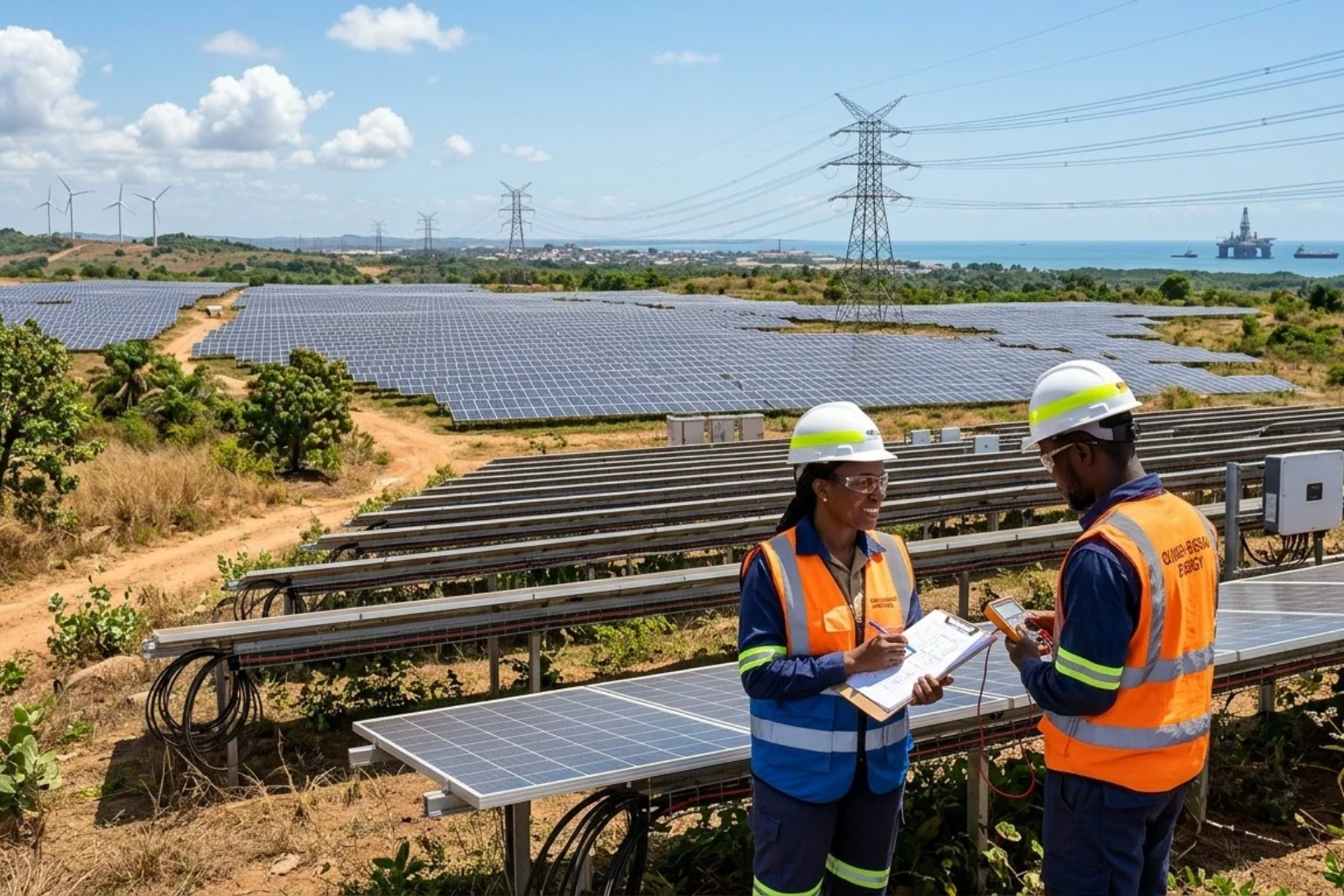
Sinohydro Collaboration: Following public initiatives, private international firms also play an active part in Guinea-Bissau’s energy transition. Sinohydro, China’s largest engineering and construction firm globally, has agreed to construct a 20 MW solar power plant near the capital, Bissau. Two additional 1 MW hybrid solar mini-grid systems will be installed in Gabu and Cachungo. These installations will directly impact thousands of homes through secure, renewable energy and economic opportunities in the area.
Oil and Gas Exploration Activities: Guinea-Bissau has also concentrated on the evolution of its offshore oil and gas industry. The government has permitted international companies to search for hydrocarbons in 11 offshore blocks. Geological and preliminary research studies point to the presence of a working hydrocarbon system, indicating optimism that commercial oil drilling may be attainable in future years.
International Cooperation Within the Oil Industry: Guinea-Bissau has also extended its relations with Russia to enhance its role in the international energy market. In May 2024, Guinea-Bissau and Russia entered into official agreements to commence joint geological endeavors to discover and locate possible oil and gas reserves. The cooperation is likely to introduce advanced technical know-how and financing. This could result in the exploration of viable energy reserves that would revolutionize the nation’s economy.
Do New Investors Have a Chance in Guinea-Bissau’s Energy Sector?
New investors can play a role in Guinea-Bissau’s energy Sector. But questions can arise, as in this sector, where they need abundant investment money. So the answer is that there are alternatives as well.
Strategic Market Entry Approach: If an investor has to enter Guinea-Bissau’s energy sector, he has to approach the market strategically to minimize risks and maximize chances of success. Firstly, multilateral institution coordination with institutions like the World Bank, African Development Bank (AfDB), or United Nations Industrial Development Organization (UNIDO) is imperative. They already possess structure, skills, and influence in Guinea-Bissau that de-risk political and operational risks. Joint investment with them provides protection and access to global best practices in project management.
Starting with Small-Scale Projects: Secondly, investors can start with mini-projects and not overinvest. Solar mini-grids to supply power to rural villages or low-cost home solar kits, such as the Kenya case of M-KOPA, can be both practical and effective. They minimize initial investment risk while addressing genuine energy requirements in poor communities.
Another step is prioritizing renewable energy sources like solar and biomass schemes. Given Guinea-Bissau’s high solar irradiation and ample farm waste, these are low-cost, low-risk alternatives to oil and large-scale hydropower schemes, which are capital-intensive and highly vulnerable to political and technical risks.
Leveraging Public-Private Partnerships (PPPs): Investors are further invited to utilize public-private partnerships (PPPs) with the government through initiatives such as the Sustainable Energy Investment Plan (SEIP), with government-sanctioned plans, incentives, and approvals in place, in addition to national development goal alignment, therefore, better prospects of success and feasibility of the project.
Unique and Low-Cost Solutions for New Investors in Guinea-Bissau’s Energy Sector
The implemented solutions are strategic decisions, and there is no replacement for a unique approach. In this world, innovation is always accepted if it brings human development, so investors can also consider new approaches in Guinea-Bissau’s energy sector. Many people are developing sustainable solutions, such as using biomass for electricity.
Biomass-to-Electricity: Guinea-Bissau’s economy is heavily agriculture-based, especially in crops such as cashew nuts, rice, peanuts, and palm oil. They yield tons of organic waste yearly, including cashew nut shells, rice husks, palm leaves and stems, coconut husks, and other crop residues. Most of the agricultural waste is either burned or dumped, wasting a precious energy resource.
However, mini biomass gasifiers or small biogas plants can convert this waste into electricity and heat. Investors can install small biomass gasification plants with capacities of 20 kW to 200 kW to co-power rural mini-grids.
Local farm cooperatives’ agricultural waste would be utilized as fuel. The electricity produced can be sold locally to farms, households, and small industries at affordable rates. This approach is particularly appropriate for Guinea-Bissau’s energy sector because the fuel source is either free or low-cost, and the technology is minimal and easy to maintain.
A Real-life Successful Story Created a Solution: India’s Husk Power Systems, established in 2008, made a modest but successful system improving Guinea-Bissau’s energy sector. They acquire agricultural waste, more precisely rice husks, from Indian farmers in rural communities and utilize the waste to provide electricity via small biomass gasification plants. These plants have average capacities of anywhere from 25 kW to 100 kW, comparable to Guinea-Bissau’s 20–200 kW mentioned above.
Each plant can energize a rural village, providing electricity to households, schools, small enterprises, and agricultural processing facilities. As of 2024, they have energized over 250,000 people in rural towns and reduced diesel generator and kerosene lamp usage.
Final Word: Investment in Developing Guinea-Bissau’s Energy Sector
In Guinea-Bissau, despite many issues, many investments are focused on the overall energy sector, including international and public investments. Moreover, there is still a need for new investment in Guinea-Bissau’s energy sector, as the scarcity is huge. Therefore, new investors can develop new and strategic approaches in Guinea-Bissau’s energy sector, such as collaborating or partnering with existing projects.
Successful models like Husk Power Systems in India have demonstrated that rural citizens can be powered sustainably using small-scale biomass plants. It is recommended that new entrants utilize small-scale biomass or solar schemes, PPPs, and collaborative efforts with international agencies to enter Guinea-Bissau’s energy sector successfully.
FAQs (Frequently Asked Questions)
1. Why is Guinea-Bissau’s electricity access so low?
Guinea-Bissau’s electricity access is low due to inadequate infrastructure, high transmission losses, reliance on imported diesel, and an absence of investment in Guinea-Bissau’s energy sector. Most of the power grid is used only for the capital city; rural areas are relatively underserved.
2. What renewable energy resource would be most suitable for Guinea-Bissau?
The best viable one is Solar because irradiation is quite high. Hydropower has intermediate levels of feasibility, most commonly in terms of small projects around rivers like the Saltinho plant. Agricultural residue biomass can also represent an available renewable solution.
3. What is currently underway on the energy project side in Guinea-Bissau?
Among the ongoing projects are a World Bank-funded 35 million US dollars solar expansion, a Sinohydro 20 MW power plant in Bissau, a Saltinho hydroelectric project with a capacity of 19 MW, and offshore oil and gas exploration, with international partners: Russia.
3. Can small or middle-level investors invest in Guinea-Bissau’s energy sector?
Yes. Small and medium investors can start with solar mini-grids, battery storage, bioenergy projects, or solar home kit businesses. To avoid risks, multilateral organizations can collaborate, or public-private partnerships can be entered into.
4. What are the challenges of investment in Guinea-Bissau’s energy sector to investors?
They face political instability, an under-skilled workforce, bureaucracy, poor financial structures, and poor energy infrastructure. These can be resolved through planning, partnership, and specialization within renewables.
5. How critical is solar energy to Guinea-Bissau’s future?
Solar power is key to Guinea-Bissau’s energy sector’s future. It offers inexpensive, scalable, and renewable energy, especially for rural electrification. Projects like the 30 MW solar power station in Bissau will greatly decrease energy costs and emissions.
6. What is the Sustainable Energy Investment Plan (SEIP)?
The Sustainable Energy Investment Plan aims to provide universal access to sustainable energy in Guinea-Bissau by 2030, with an estimated investment of approximately $700 million. The plan focuses on solar PV projects, hybrid mini-grids, and bioelectricity solutions for rural villages.
7. Is oil produced in Guinea-Bissau?
Guinea-Bissau is not yet a commercial oil producer. Yet, 11 offshore blocks are being explored, and foreign alliances (particularly with Russia) are actively seeking commercially viable reserves.
8. How will developing the energy sector help the economy of Guinea-Bissau?
Reliable electricity will open up agriculture, fisheries, manufacturing, ICT services, and tourism development. Living standards will be enhanced, and employment and additional economic investment will be stimulated.

0 Comments