
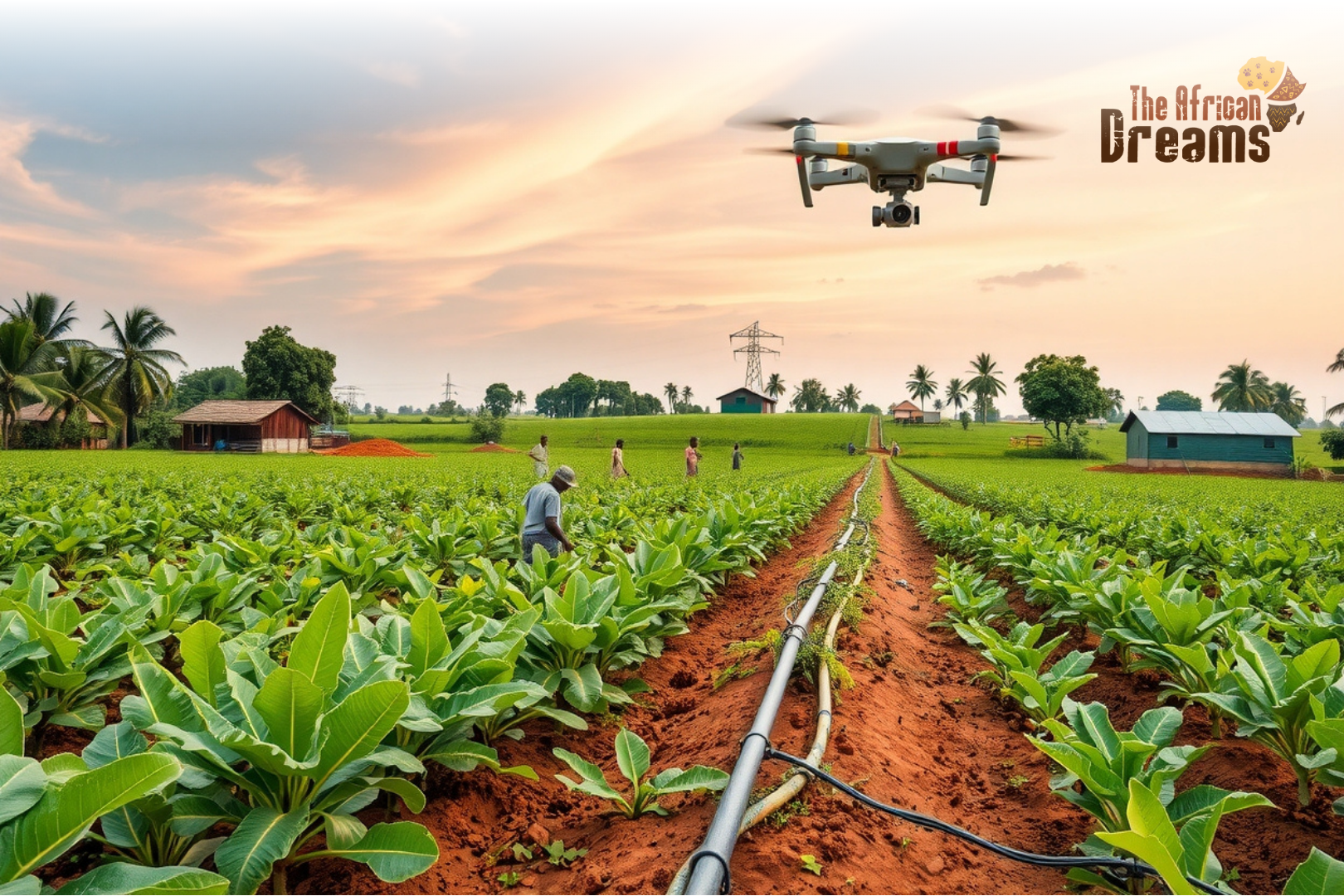
Ghana's Agricultural Sector: An overview
Ghana has a significant role in the world’s agricultural system. This country is currently the world’s second-biggest producer of cocoa, accounting for about 20% of global production. Besides, Ghana is the fourth-largest producer of cassava and the world’s second-largest yam producer, with an estimated yield of 8.5 million metric tons in 2020. Not only in these few sectors, Ghana is undoubtedly playing a major role by exporting many types of vegetables, crops, and fruits.
Ghana’s agriculture accounts for over 40% of the country’s export earnings. While Ghana holds a significant position in global agricultural systems, it still faces challenges such as low productivity, high postharvest losses, impacts of climate change, problems with soil health management, efficient water management, and integrated pest management. Adopting technology can address these challenges, thereby increasing the success of Ghana’s agroindustry.
Challenges faced by Ghana's Agrosystem
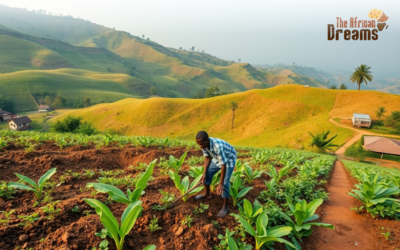
- Low Productivity: Many farmers still rely on traditional practices that are inefficient. High-quality seeds, fertilizers, and modern equipment are either unavailable or too expensive for most smallholder farmers. The rural-urban drift has led to a labor shortage in agricultural-producing areas.
- Climate change: Changes in rainfall and temperature patterns are impacting yields and farming schedules. More frequent droughts, floods, and storms are causing ever greater damage to crops and infrastructure. Climate change can cause new pest and disease outbreaks, further jeopardizing crop production.
- Post-harvest issue: Inadequate storage facilities result in significant loss of perishable goods. This leads to transportation delays, which can potentially cancel the entire transaction due to product spoilage. Inefficient systems are among the major contributors to high levels of food waste.
- Soil health management: Continuous farming without proper soil management leads to a decline in soil fertility. Poor land management practices cause soil erosion and the loss of vital nutrients. To improve soil health, a farmer may not have access to organic fertilizers and soil conditioners.
- Poor Water management: Because most of the farmers practice rain-fed agriculture, their production is vulnerable to water scarcity. Agricultural runoff can contaminate water sources, posing a threat to crops and human health. Modern methods of irrigation have an initial high investment cost that is inaccessible to smallholder farmers.
- Integrated Pest Management: Most smallholder farmers still have a low level of adoption of integrated pest management (IPM) practices. Most farmers lack the knowledge and skills necessary to practice IPM. Over-reliance on chemical pesticides can lead to the development of practices that are detrimental to the environment.
Thoughts of Farmers from Ghana's Agrosystem
Jialini, a Ghanaian farmer, and his many farmer friends operate a variety of farms, each facing a unique set of challenges. They are now seeking assistance from someone who can help them overcome these issues, allowing them to start over. Khadija, a Ghanaian researcher, says that if they can mitigate this co-factor and take small steps to reduce its impact, they will be able to establish a new economic standard.
Solutions
Addressing Low Productivity:
In Ghana, many programs have taken steps to boost productivity, including planting food and creating jobs (PFJ). These programs aim to increase food production, create jobs, and provide farmers with improved seeds, fertilizers, and extension services. Additionally, efforts are underway to enhance the financial services system, empowering farmers to invest and enhance productivity. However, these measures alone won’t suffice, as low productivity remains a primary issue in Ghana’s agrosystem, necessitating the implementation of new approaches such as the utilization of cutting-edge technology. In this scenario, organizations and investors would play a significant role in assisting farmers.
Establishing more well-being organizations could provide farmers with training, lending them equipment to increase productivity, and funds to purchase necessary equipment or tools. Drones and other advanced technologies can help farmers with tasks such as crop spraying, crop health monitoring, and field mapping. Investors or entrepreneurs can establish organizations to enable farmers to purchase advanced tools, such as drones, through microfinance systems.
Adapting to Climate Change:
Ghana’s NDCs aim to reduce greenhouse gas emissions by 15%–45% below the business-as-usual scenario by 2030. The NDCs include actions to scale up renewable energy, promote clean cooking and lighting, and enhance climate resilience in agriculture. The NDCs involve implementing systems that provide farmers with timely weather forecasts and alerts, enabling them to make informed decisions about planting and harvesting.
While these systems are already in place, they are not sufficient. To bolster climate initiatives, there is a need to mobilize additional funds from global sources and private-sector investments, develop innovative financial solutions and bankable projects that can attract institutional investors, and allocate resources to advancing new technologies and practices, including drought-resistant and flood-tolerant crop varieties.
Post-harvest Management:
While some companies, such as Akofresh, have solar-powered cold storage systems, there are many others. Another company, AgroCold, provides energy-efficient cold storage facilities to help reduce postharvest losses. However, the limited availability and high cost of cold storage facilities for small-scale farmers necessitate a partnership.
A partnership between the organization and farmers can address this issue and also provide services such as cold storage facilities. If farmers need to store crops, fruits, and vegetables, they will store them in a cold storage center and then sell them during the selling season. However, the organization will charge farmers for the storage facilities, which could be a highly effective initiative for both parties.
Effective Water Management:
Many programs promote water-smart agriculture, which helps use and share water more effectively to reduce the risk of climate change to crops while improving farmers’ resilience. In the wake of climate change, Africa’s research strongly drives improved efficiency and resilience practices in water use. Estimates suggest that the Republic of Ghana’s irrigation potential ranges from 360,000 hectares to 1.9 million hectares, yet less than 3% of cultivated lands receive irrigation. Therefore, they should take the necessary actions immediately, and implementing digital tools is an excellent option.
Farmers can optimize water use by implementing digital platforms for real-time monitoring of water use and weather conditions. Drip irrigation and sprinkler systems are among the techniques that reduce significant water losses and increase yield. To avoid water scarcity, they can recycle treated wastewater for irrigation and encourage its reuse.
Integrated Pest Management:
Many farmers have basic knowledge of Integrated Pest Management (IPM) techniques, including pest identification, monitoring, and organic pest management. Research institutions in Ghana are actively developing pest-resistant crop varieties and innovative pest management techniques. Despite these efforts, there are still problems, such as limited access to IPM resources and the high fees associated with some IPM practices. Implementing digital equipment for real-time pest tracking and early warning systems can help farmers respond to pest outbreaks more efficiently.
Collaborating with private companies to develop and distribute low-cost IPM solutions can significantly increase accessibility for smallholder farmers. Organizing business enterprises to provide financial incentives or subsidies for farmers who adopt IPM practices would be greatly encouraging.
Final Remarks
The most crucial topic is for investors or those who are willing to construct new or additional facilities for farmers. Undoubtedly, Ghana’s agriculture presents a promising business opportunity, particularly given its current boom. Ghana’s agricultural land makes up about 57% of its total land area, with approximately 136,000 km of roads. As a result, cultivated land covers approximately 58,000 km2. Under irrigation, the land is about 11,000 hectares. Agriculture employs approximately 52% of the workforce, a sector that consistently experiences high demand. This entire number is an indication of so many opportunities for investors.
Investments in food processing and supply chains can provide long-term stability and sustainable returns. With the right investments in technology, infrastructure, and training, productivity can increase dramatically, leading to higher returns. Therefore, this will assist both the community and the farmers in overcoming the challenges.
0 Comments