
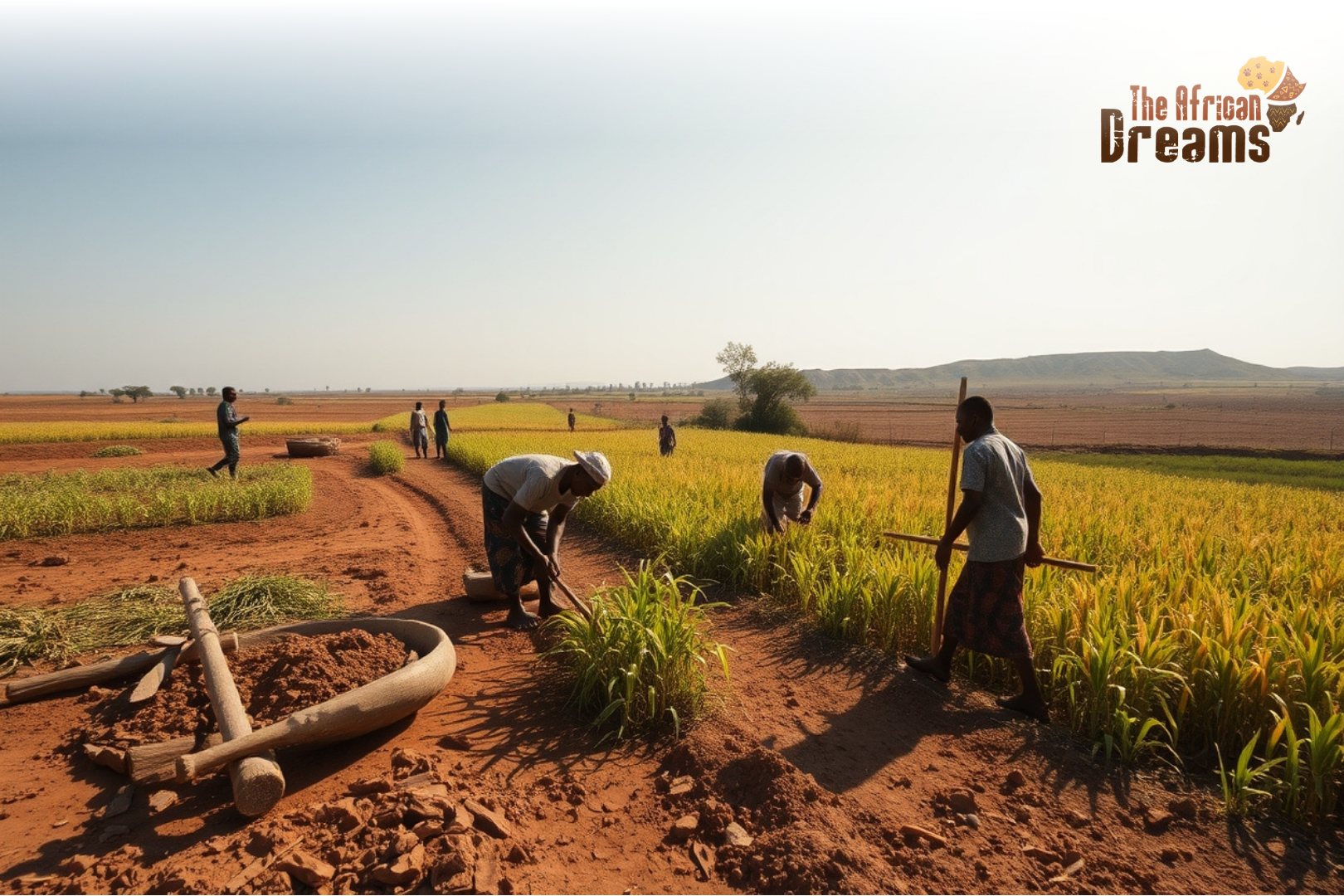
Introduction: Discover Congo’s Millet
Over the years, millet has acquired center stage in the global debate on food security, climate resilience, and sustainable agriculture. An ancient cereal crop that was once relegated to the background by more popular staples such as wheat, corn, and rice is making its way back up the food chain, mainly in regions of Central Africa. This blog discusses the future of Congo’s millet cultivation and its sustainable path to food security and economic growth.
Congo’s Millet Cultivation
The United Nations and other international organizations focus on millet as one of the crops whose potential has not yet been completely exploited, notably for countries like the Democratic Republic of Congo, also known as Congo-Kinshasa, which is faced with repetitive problems due to climate change, food insecurity, and underinvestment in the agricultural sector.
Millet is a hardy grain, relatively well adapted to arid and semi-arid conditions, which do not apply to several other crops. According to Food and Agriculture Organization data, millets today account for less than 3% of global grain trade.
But there is now also a current drive to revive millet because of its resilience to frequent climate shocks in countries like Congo, where crops are usually affected by severe droughts and erratic rains.
Over and above all these, millets play a central role as grains for sustainable agriculture with lowered water needs in the climate-challenged regions of Africa. They mature quickly in a relatively short growing season and hence can avert food insecurity in situations that could cause crop failure due to inclement weather. However, in Congo, they are not produced in large quantities, and the yield is neither consistent nor high.
Current State of Congo’s Millet Farming
As of now, Congo’s millet is not a popular crop in the agricultural landscape of the country yet. Recent data from the USDA Foreign Agricultural Service shows the potential in the country.
Congo has a 5-year average yield of millet between the years 2019 and 2023, at around 42 kg per hectare. While these figures indicate modest output, they also underline some room for improvement with just the right agricultural investments.
Better prospects for Congo’s millet production could diversify the grain economy of Congo and reduce the dependency on staples that have been more prone to disturbances in the global supply chain. In fact, some countries in the region, like the Central African Republic, already perceive millet to be an integral part of their agrarian economy. Congo can join the ranks of its neighbors with enhanced millet farming, which already helps in stimulating local economies and in the fortification of the food system.
Millet is now a global crop whose demand for sustainable agricultural products is increasing day by day, and Congo could further build on this opportunity to make this particular crop a pave-it leader on a global basis in the millet trade and to lure local and international investors into the high potential it holds.
The Global Millennium Revival
The reviving millets are not just a regional affair; worldwide, governments, NGOs, and research organizations look to millets as a solution to some of the world’s starkest agricultural challenges. In 2023, the UN initiated a global campaign aimed at placing the role of millet in food security when facing global climate change challenges at the center of attention.
To be focused on is the great potential for this crop, which could survive in tough environments; Congo and its environs are due to benefit hugely from this growing focus on millets. In view of this assertion by FAO,
‘Millet is not only important for food security but also presents economic benefits for its low cost of production and resilience, which can accord stable income to small-holder farmers.’
Indeed, in the drier zones, where climate shock is quite frequent, millet has very much been observed to give a more stable and resilient alternative compared to the staple crops.
These present means that Congo could reduce its vulnerability to climate-related disruptions in agriculture and open several opportunities for growth and trade.
Congo’s Millet as a Driving Force for Sustainable Agriculture
Another very important reason Congo’s millet is making a comeback is its compatibility with sustainable agricultural farming. With the world increasingly moving into environmentally friendly ways of farming, it is millet that can take the least inputs of water, fertilizers, and pesticides. This makes it a natural fit for countries like Congo, with smallholder farmers who find it a bit hard to afford expensive agricultural inputs.
As one integrated review in 2023 observed, millet was considered to be a vital crop in sustainable agriculture since it required less input, and it improved the health of the soil due to the fact that it has the ability for deep rooting. This would facilitate Congo’s millet to be able to tap nutrients residing from the lower part of the soil, thus reducing the dependency on artificial fertilizers and improving the general structure of the soil.
In Congo, making millet a cornerstone of the nation’s agriculture could have scope for giving more enduring environmental benefits, such as holding back soil degradation and conservation of water resources.
Economic Opportunities for Investors in Congo’s Millet
The potential of millet in the global market is a message it sends forth to investors interested in the agricultural sector. This crop, therefore, should ensure that the current minimal percentage of the grain that millet takes in the global trade meets its potential of gaining a better share in the market, heightened by the demand for drought-resistant and climate-resilient crops.
Indeed, currently, there is massive attention being directed toward food security and sustainable agriculture in most countries, and wheat is anticipated to play a major role in terms of meeting the demands. This would modernize the agricultural sector of the Congo, which holds vast potential for investment in the large-scale production of wheat.
Uptakes from improved farming techniques, better varieties of seed, and investment in infrastructure like irrigation schemes would dramatically increase millet yields and its volume of production. This is an untapped agricultural area, coupled with the resilience that millet has, which can become a money-spinning investment for both the locals and the foreigners.
If well supported, the Congo’s millet could be one of the major millet exporters, thereby offering employment, revenue-generating, and food security-enhancing opportunities in enormous proportions to its population.
To learn more about investment opportunities in other sectors of Congo, you can read How a Small Investment in Congo’s Coffee Industry Yielded Big Returns
Challenges
Whereas there has been an immense opportunity for millet, the problems in scaling up Congo’s millet production have always been because of the problems of
- Having less access to varieties of improved seed,
- Inadequate infrastructure facilities, and
- The unavailability of agricultural extension services.
- In addition, smallholder farmers usually lack sufficient money to invest in modern farming techniques, subsequently limiting the improvement in yield.
Opportunities for Congo’s Millet Cultivation
Investments on the part of both public and private players will be necessary if Congo’s millet are to overcome these barriers.
- International organizations and nongovernmental organizations can also technically craft out assistance to farmers, promote millet cultivation, and form part of a larger strategy for food security and sustainable development.
- Public investments are accompanied by research toward the development of improved varieties of millet seed as carried out through subsidies offered to farmers to inculcate sustainable farming while working on rural infrastructure development.
Final Thoughts: Congo’s Millet as a Catalyst for the Agricultural Rebirth of Congo
Congo’s millet bears the potency of being an agricultural breakthrough in Congo. Particularly in a world entering an era of increased uncertainty around food security and sustainable agriculture, millets could offer a solution that is resilient and can thrive in tough environments.
In Congo, prospects for increased cultivation of millet extend to long-term economic growth of the country, bettering food security, and pulling down poverty levels.
Rediscovering the potential of Congo’s millet will attract investors who are interested in investing in sustainable agriculture, creating new employment, and reducing supply dependence on imported foodstuffs. Given the right set of policies and investments, Congo’s millet could very well jump to the front of the global millet market, too, feeding not just itself but contributing to the larger global effort against hunger.


0 Comments