
Introduction: Bijagós Archipelago, Guinea-Bissau's Secret Paradise of 88 Islands
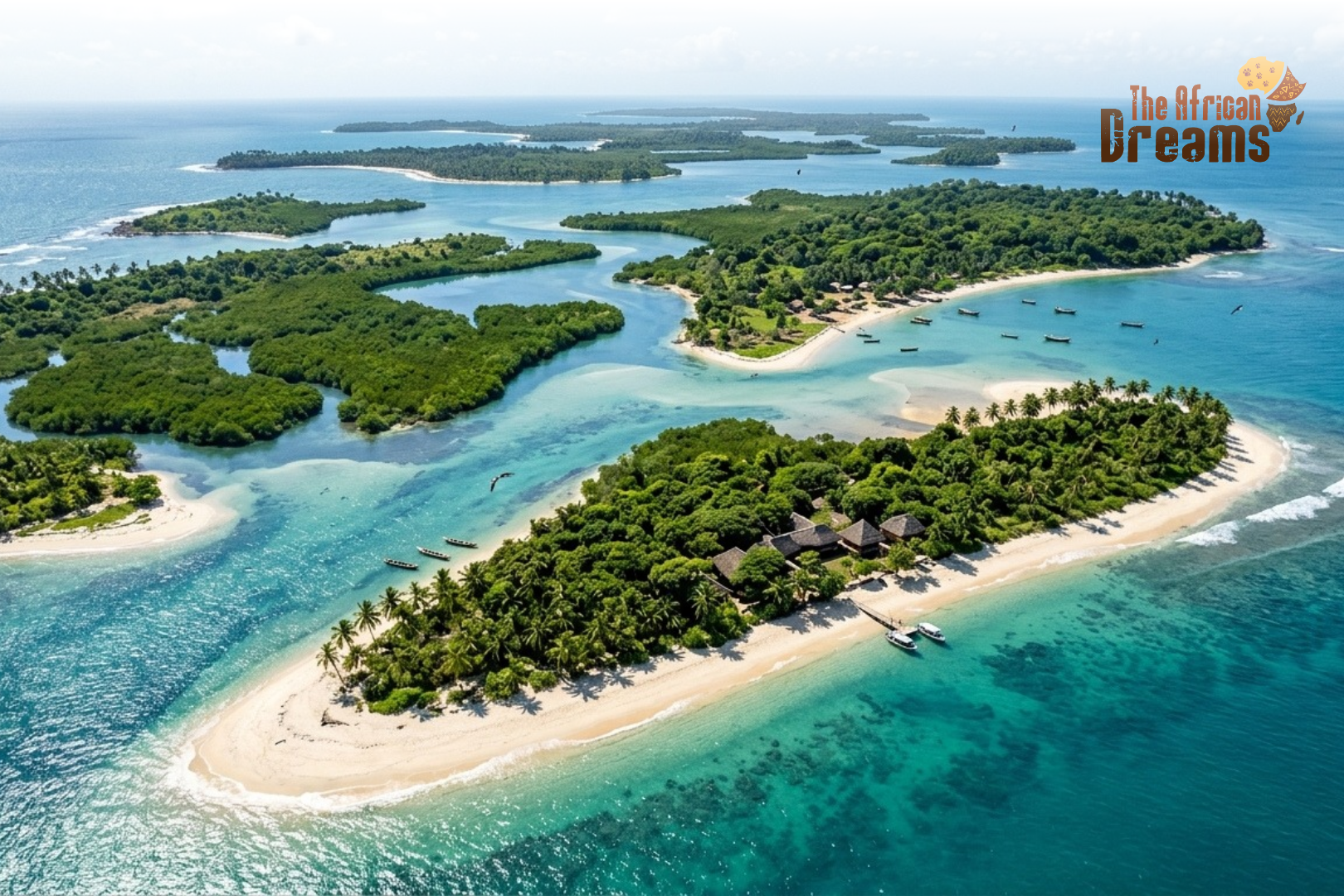
Do you know the meaning of archipelago? It means an extensive collection of islands. Wherever we imagine an island, we create beautiful images of charming nature. When it leads to a collection of islands, it is more attractive and has more new structures with natural beauty than a single island. Bijagós Archipelago is a group of islands. It consists of around 88 islands and islets. The Bijagós Archipelago is situated in Guinea-Bissau. The Bijagós Archipelago is located in the Atlantic Ocean, off the Guinea-Bissau coast of West Africa. This article is about the Bijagós Archipelago’s natural beauty and investment opportunities.
Article Highlights:
Bijagós Archipelago is an unspoiled archipelago of 88 islands and islets along the coast of West Africa in Guinea-Bissau.
Bijagós Archipelago is a UNESCO Biosphere Reserve famous for its biodiversity, including over 500 bird species and abundant marine life.
Apart from 20 populated islands, some are sacred, nature reserves, or too small for human habitation.
Main islands like Bubaque, Rubane, Orango, Poilão, and João Vieira have unique landscapes and activities.
The highly developed indigenous culture is in a matriarchal culture, a traditional culture, and a rich seafood-based gastronomic culture.
Eco-tourism, eco-friendly fishery, and organic farming are high-value investment opportunities.
An Overview of Bijagós Archipelago
Bijagós Archipelago is a UNESCO Biosphere Reserve known for its untouched nature and unique matriarchal culture. It is located on the nation’s mainland, about 60 kilometers from the capital city of Bissau.
Bijagós Archipelago is formally known to consist of 88 islands, though only about 20 are permanently occupied by humans. The others remain untouched, either because they are too small, are nature reserves, sacred places, or simply because nature has been left to claim them unencumbered.
Biodiversity: Land, Sea, and Bird Species in the Bijagós Archipelago
There is a vast species diversity because of its protected and untouched ecosystems. More than 500 bird species live there. Many terrestrial animal species necessary for the ecosystem live there, and the rich marine life includes dolphins, turtles, and manatees. Mangrove and coastal environments are dense and shelter innumerable smaller animals (crabs, oysters, fish).
The terrestrial fauna of the Bijagós Archipelago is rich but not very vast in terms of number, mainly because most of the islands are small and isolated, with around 25 to 30 mammal species. Therefore, 35 to 45 land-dwelling animal species, including reptiles and mammals, have been discovered.
The sea environment has much higher marine animal diversity. More than 200 fish species inhabit the Bijagós, as do some marine mammals (dolphins and manatees). A few species of sea turtles and numerous crustaceans also inhabit the Bijagós. Thus, on average, marine animal diversity is much higher than 250 species.
Most Important Islands of Bijagós Archipelago
Twenty islands are inhabited, but others are reserved and unavailable because of sacred traditions or nature conservation. For example, Poilão Island is a holy island, and local authorities need permission to enter it. Some islands, like Bubaque, Orango, and Rubane, are navigable by boat and can be visited for tourism or research work. Some small islets are just mangroves or sandbars and are not inhabited or viable for tourism.
Each island has its environment, geography, and purpose. Some are dense with mangrove forest, some are mainly white sandy beaches and lagoons, some are savannah grassland and palm trees, and some are rocky and spiritual. Some are famous for wildlife, fishing villages, and some for empty wildernesses.
As there area many islands but among them some important islands are – Bubaque (most significant and most populated island), Rubane (luxury eco-tourism island), Orango (wildlife sanctuary, famous for hippos), Poilão (sacred turtle nesting island), Bolama (old colonial capital), Caravela, Carache, Canhabaque (also called Roxa island), Uno, Formosa, Enu, Soga, Nago, Cavalos, Imbone, Ponta, Uracane, João Vieira (part of the João Vieira and Poilão National Marine Park), Meio.
Popular Tourist Activities and Top Islands to Visit
People mostly visit Bubaque, Rubane, Orango, Poilão, João Vieira, Bolama, and Roxa (Canhabaque). Here is an overview of these islands and the activities that can be done.
Bubaque is the archipelago’s central tourist hub. It is the biggest and most populated island and the archipelago’s main administrative town. It features a small harbor, guesthouses, eco-lodges, markets, and a few plain restaurants serving local seafood cuisine.
The town provides a relaxed environment, as old Bijagó culture blends with unhurried tourism. Bubaque is the best departure point for island-hopping tours to the surrounding islands of Rubane, Orango, and João Vieira. These include Bruce Beach, known for its sweeping white sands and smooth waves, and Eticoga Beach, close to Eticoga village.
Activities in Bubaque include visits to the local villages, boat hire for island trips, visits to traditional villages, nature walks in the coconut grove, and cultural festivals (especially during the dry season), which are especially popular here.
This island is famous as a tourist entry point, with lovely beaches and good logistics compared to more remote islands.
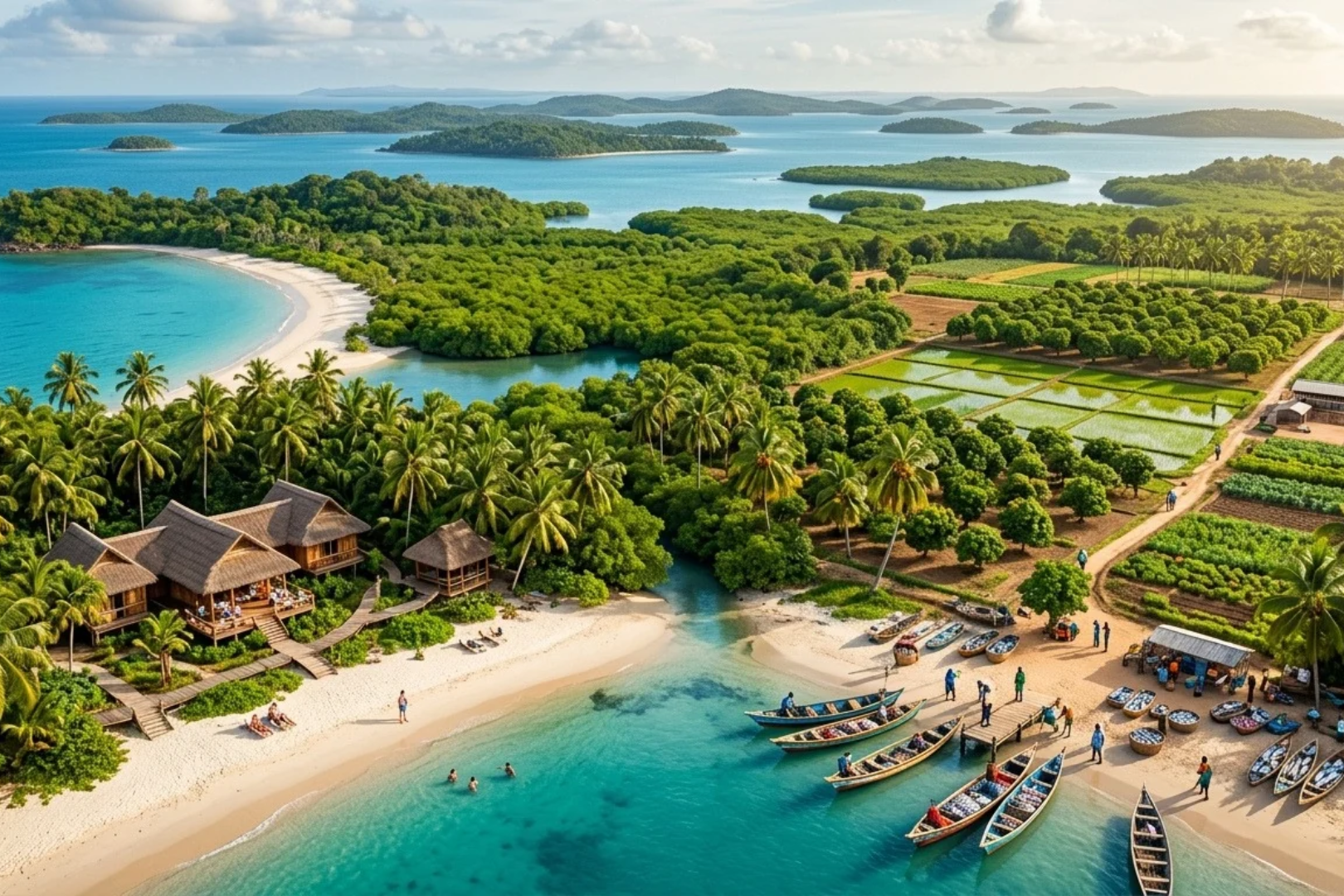
Rubane: Rubane is situated just beyond a narrow strait from Bubaque. It is tiny, peaceful, and almost entirely dedicated to ecotourism. Rubane has a handful of boutique eco-lodges that blend seamlessly with the environment without affecting it too much. Forests dominate the island, with its lovely palm tree-fringed beaches.
Tourism activities on Rubane include birdwatching (forest birds), mangrove kayaking, swimming, snorkeling, nature photography, and private boat excursions to nearby uninhabited islets can be done here. This is famous for luxury eco-lodges, seclusion, tranquil beaches, and nature immersion.
Orango: Orango is one of the archipelago’s most important islands for nature and wildlife. It is the hub of Orango National Park, which includes several islands and coastal waters.
Orango is most famous for its saltwater hippos, which are extremely rare and swim in the mangroves and lagoons. The island is also home to African manatees, threatened birds, crocodiles, and high marine biodiversity.
The ancient Bijagó settlements in Orango have preserved their traditional ways of life, with matriarchal societies and strong spiritual practices. Here, activities range from eco-safaris to spot saltwater hippos, boat excursions to lagoons and estuaries, and birdwatching excursions for unusual and rare birds. Guided visits to Bijagó villages, cultural tours to learn about sacred rituals, and walking on forest and mangrove trails can also be undertaken. This is famous for national park eco-tours, manatees, saltwater hippos, cultural experiences, and wildlife.
Poilão: Poilão is a small, sacred island that belongs to the João Vieira and Poilão Marine National Park. It is globally renowned as one of the most important green sea turtle nesting beaches in the Atlantic Ocean. Thousands of turtles come ashore annually to nest, mainly from June to October. Visitation to Poilão is strictly limited to help maintain the environment and respect local spiritual traditions. It is only visited by researchers, conservationists, and permitted eco-tour groups.
Activities on Poilão include viewing turtle nesting and hatching (with guided conservation experts), participating in turtle protection activities, researching mangrove and beach ecosystems, and learning about wildlife conservation-related traditional beliefs. The area is renowned for turtle conservation, holy beaches, limited ecotourism, and marine biodiversity.
João Vieira: João Vieira is the second significant element of the Marine National Park. It is bigger than Poilão and has little room for low-impact ecotourism. The island has stunning beaches, intact mangroves, and small forest patches. It is not as tightly managed as Poilão but remains under conservation cover.
João Vieira’s activities usually include: observing turtle nesting (during certain seasons), swimming and snorkeling, camping at site-specific eco-camps, guided nature walks, and eco-fishing trips with locals. It is famous for turtle conservation, untouched beaches, and eco-camping escapades.
Bolama: Bolama is unlike the natural islands. It is a place of historic significance. It was once the capital of Portuguese Guinea and was planned with colonial design: boulevards as wide as city streets in Europe, European-style public buildings, and formal gardens. But when the capital moved to Bissau in the 1940s, Bolama was abandoned. Today, the island is almost ghostly, with empty colonial ruins overgrown with vegetation.
Walking through colonial ruins, exploring ancient public plazas and crumbling mansions, learning about colonial history, and photographing the spooky, abandoned town are popular here. It’s famous for its colonial heritage, ghost town environment, and historic ruins.
Rich Culture and Traditional Food of the Bijagós People
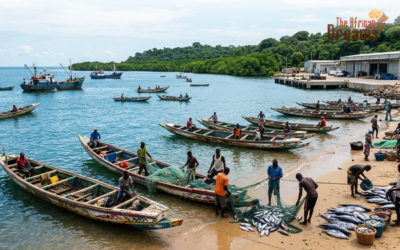
The Bijagós Archipelago has abundant seafood, tropical fruit, and low-key agriculture. Fresh seafood and fish are standard and famous dishes. Barracuda, snapper, grouper, and shellfish like oysters, crabs, and lobsters are basic fare.
Seafood is roasted, smoked, or prepared in hearty stews. The staple food is rice. The Bijagós traditionally cultivate rice in tidal swamp lands, an advanced and old cultivation system.
All the stews often use palm oil, a rich, red oil pressed out of the palm fruit, with fish, spices, and sometimes vegetables. Coconut is used in various dishes, eaten fresh or as part of a sauce. Papaya, mango, bananas, and cashews are abundant and eaten fresh or in sweet dishes.
Caldo de Peixe is a fish stew with onions, garlic, palm oil, and local spices. Arroz de Marisco is a seafood rice derived from Portuguese colonial cuisine. Grilled lobster and crab are especially common in Rubane and Bubaque. Fried plantains can be served as a side dish.
Investment Opportunities in the Bijagós Archipelago
Bijagós Archipelago is a wonderful place for tourists planning a trip. Its diverse, beautiful islands and natural creations motivate everyone to visit at least once. Besides, many ongoing businesses are outside these islands, based on the demand for various things. Investors who want to invest here also have the opportunity. They can invest in multiple sectors. The sector has an on-demand approach, and how they can invest is demonstrated below.
1. Eco-Tourism Development: Bijagós Archipelago is one of the few remaining chunks of virgin natural landscape in West Africa. It is a UNESCO Biosphere Reserve, and its ecosystems are safeguarded and globally appreciated as integral to biodiversity. Small-scale and underdeveloped tourism exists, and there is enormous potential for eco-conscious investors to establish a sustainable tourism economy without harming the environment.
Eco-lodges are small, sustainable hotels made of local materials such as wood and lit by sunlight. They offer visitors real experiences, waking up near virgin beaches, waking up to the sounds of tropical birds, and walking along mangroves. Island-hopping tours, wildlife tours for viewing saltwater hippos, turtle nesting tours during breeding time, and guided fishing tours can be booked through boat tour operators.
Opening up small facilities for environmentally friendly snorkeling and scuba diving tours to explore the archipelago’s still largely unexplored reefs and sea life. Eco-tourism is flourishing globally. Wild, natural, and pristine tourism is what foreign tourists from Europe, North America, and Asia are seeking more and more in place of mass tourism. Both governments and local populations are highly environmentally conscious, creating a perfect setting for investors who arrive with ecologically friendly tourism models. There is little competition, and thus it is an easy task for new players to become industry leaders if managed properly.
2. Sustainable Seafood and Fisheries Processing: There’s rich life in Bijagós’ seas: shrimps, fish (snapper, barracuda, grouper), crabs, oysters, and lobsters. It is already a way of living for the majority of Bijagó people, but there’s currently no commercial-scale, contemporary processing and exporting of seafood.
Training fishermen and involving them in cooperation to assist in bringing in sustainable fishing methods, avoiding overfishing and harvesting with eco-friendly techniques, and building small factories equipped with new freezing and packaging machinery to ship shrimp, crab, and fish to the mainland or abroad directly to European markets.
There is a lucrative demand globally for sustainable seafood, especially from high-end hotels, restaurants, and health-oriented consumers. Organically and sustainably produced seafood is growing in Europe’s market, especially. Natural resources, clean waters, conserved ecosystems, and high biodiversity are present in Bijagós, delivering high-quality seafood. No big seafood export firms exist, giving new investors a first-mover advantage.
3. Agriculture and Organic Farming: Nowadays, Farming in the Bijagós Archipelago is small-scale and conventional. The produce includes rice, cashew nuts, and some tropical fruits like mangoes and coconuts. The land and climate support organic farming, which can be made more productive with low investment in irrigation facilities, equipment, and training.
Adopt green farming practices to develop conventional swamp rice systems without damaging the environment, increase production, and open export markets for organic-certified rice.
Today, cashews are planted, but most are sold in their raw form. A small local processing plant would roast, pack, and brand Bijagós cashews for domestic and export markets.
Establishing larger-scale, organic mango, papaya, and coconut farms to supply Bissau, neighboring nations, and foreign markets can also be an option. Organic products are successful globally. European and American consumers, among others, are willing to pay a premium for organic, morally produced food.
Final Words: Visiting Bijagós Archipelago
Guinea-Bissau’s Bijagós Archipelago is a wonderful place for anyone who wants to visit and plan a trip. The diverse ecosystems and species here make it a great adventure. Besides, the cuisine and culture are different here, which means getting a taste of something new.
Moreover, investors have many opportunities to invest in the Bijagós Archipelago, especially for tourists. Overall, investment can create opportunities, and with those facilities, there can be an increase in tourists, improving the economic system.
FAQs:
1: Where is the Bijagós Archipelago?
It is situated in the Atlantic Ocean, 60 kilometers off the coast of West Africa, in Guinea-Bissau.
2: What makes the Bijagós Archipelago special?
It’s in an untouched condition, with a matrilineal culture, holy islands, and a UNESCO Biosphere Reserve.
3: What are the most visited islands by visitors?
The major islands visited are Bubaque, Rubane, Orango, Poilão, João Vieira, Bolama, and Canhabaque (Roxa).
4: What wildlife is one able to view?
Saltwater hippos, African manatees, green sea turtles, dolphins, rare avifauna, and over 250 species of sea creatures.
5: What areBijagós’s business opportunities?
Eco-lodges, boat tour operators, seafood processing plants, oyster aquaculture, organically grown rice and cashews, and eco-tourism activities.
6: Why invest in the Bijagós Archipelago?
It provides thrilling first-mover possibilities for eco-tourism, seafood, and agribusiness as global demand is rising for eco-products.


0 Comments