
Introduction
Farming special crops like zucchini and squash contributes to the nation’s drive to diversify Congo’s farming sector. This demand complements urbanization, from food uses of this vegetable to its use as a raw material. Because of this, the growing demand for zucchini and other varieties of squash is finding a niche in the Republic of Congo’s emerging agribusiness landscape. This case study will analyse challenges, opportunities, and implementation strategies for growing zucchinis and squash in Congo, as well as current results.
The Challenges
- Agriculture plays a significant role in the Republic of Congo, but it faces serious challenges, including low production and a high reliance on imported food. It imports nearly 80% of its food. This is very expensive and further contributes to the food crisis.
- In addition, poor farming practices and adverse climatic conditions have adversely affected crop yields.
- Similarly, due to urbanisation and changing consumer preferences, demand for vegetables such as zucchini and squash is rising; these crops are not widely grown domestically.
- Farmers in Congo often face limited access to quality seeds, irrigation infrastructure, and poorly trained farmers in modern farming methods. This has resulted in relatively meagre agricultural yields barely meeting a fraction of the national demand.
- Vegetable farming has often remained focused on staple crops, such as cassava and maize, leaving a gap in the produce market.
The Solutions
The government, as well as various agricultural organisations in Congo, has identified the potential for farming zucchini and squash amid surging market demand for diversified vegetables. Both vegetables belong to plant types adaptable to different climatic conditions, with relatively short maturation periods and high yield potential. IFAD and other agencies have initiated various projects enhancing vegetable production through adequate investment and training programs.
Strategies and Innovations
1. Introduction of Improved Seeds and Varieties: This agency has been working towards the provision of improved seed varieties resistant to pests and more adapted to the different climatic conditions in Congo. This approach helps farmers raise yields with a reduced risk of crop failure.
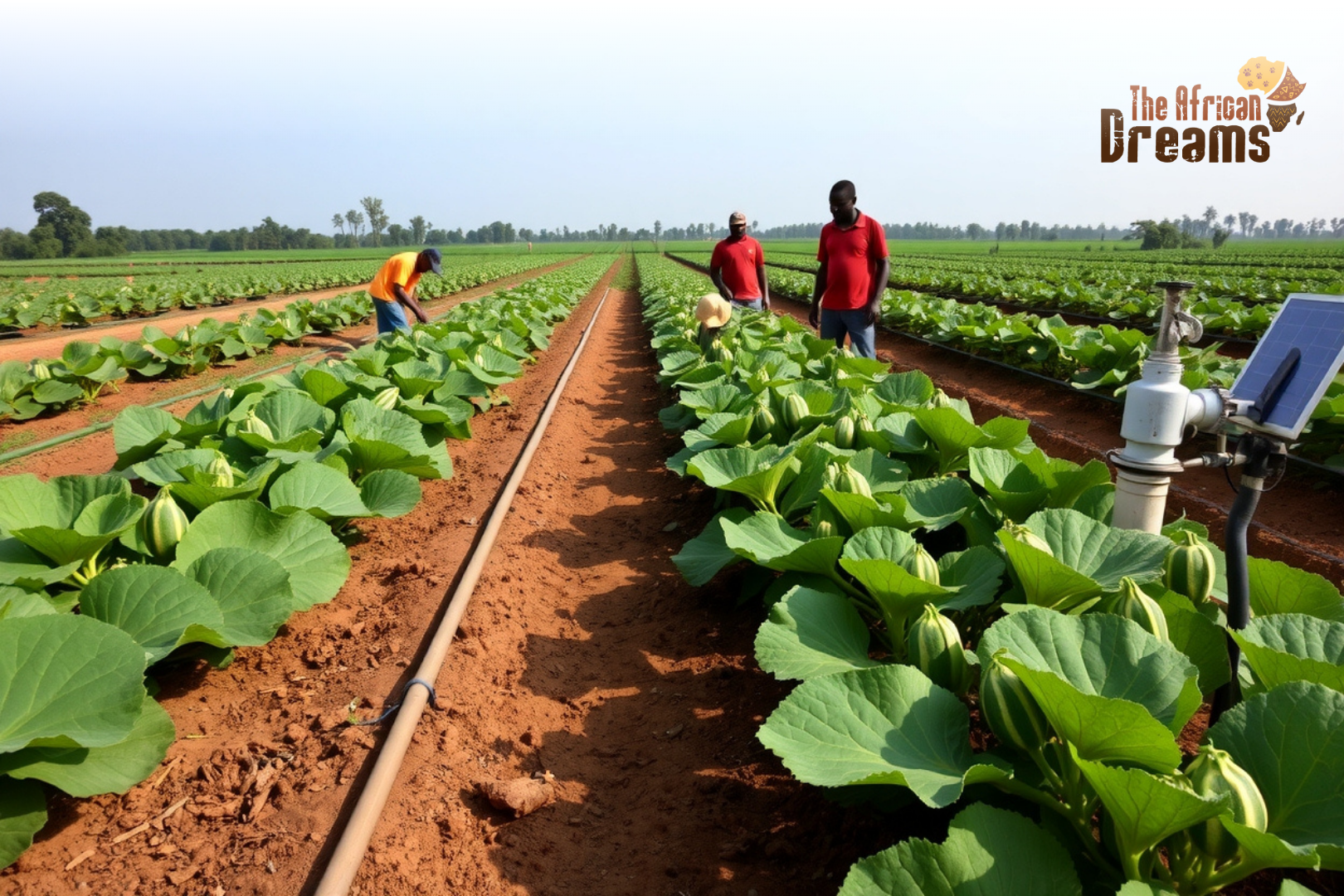
2. Infrastructure Irrigation Development: Since both zucchini and squash are water-sensitive crops, there is a need for improved irrigation access. Various projects currently in construction across the main farming zones of Zucchini and Squash focus on higher drip and sprinkler irrigations. From mobilising water from surrounding rivers to giving farmers access to solar-powered systems, a constant supply can be achieved all season long.
3. Farmer Training and Support Programs: Capacity-building programs, including farmer field schools aimed at training farmers in good agricultural practices, integrated pest management, and post-harvest handling. Such programs by national agricultural ministries and international agencies are important in increasing farmers’ technical capabilities and efficiency.
Implementation
Expanding the scope of the projects on farming zucchini and squash is done in the following stages:
1. Pilot Projects and Demonstration Plots: Initial pilot projects have just been initiated and launched in key agricultural zones, including Cuvette and Bouenza. These run on demo plots, where improved varieties are tested. Farmers participating in these projects are taken through, firsthand, the new methods of crop cultivation and irrigation systems. The goal is to scale up to other regions after analysing the initial results.
2. Improved Market Linkages: Besides increasing output, efforts are also going on to link small-scale farmers to the main local and regional markets. Partnerships with cooperatives and agribusinesses aim to secure better prices and reduce post-harvest losses. This is particularly important for crops like zucchini and squash, which are perishable and therefore require a fairly efficient supply chain management.
3. Technical Assistance and Financial Support: Access to microloans and grants shall be eased to facilitate farmers’ investment in high-yielding seeds, fertilisers, and quality equipment. To this end, the government has also provided tax incentives for private investments in agro-processing facilities to add value to these vegetables and enhance local food processing.
Results and Economic Aftermath
The initial or latest results of the pilot projects are promising, showing increases in the production of zucchini and squash. Farmers using improved seed varieties said yields reached 15-20 tonnes per hectare, much higher than for staple crops like cassava. Introduction of better post-harvest practices reduced losses and improved the quality of produce available for sale in urban marketplaces.
The economic benefits are also unfolding. Zucchini and squash farming have generated more streams of income for smallholders, enabling them to diversify from subsistence crops. Urban demand, especially in the two largest cities, Brazzaville and Pointe-Noire, has increased due to the surge of these vegetables in local cuisine and the growing consumption by middle-income groups.
This shift towards diversified farming has contributed much to the larger food security initiatives. As local production becomes more pronounced, the economy will depend less on vegetable imports, thereby taking pressure off national reserves and, consequently, food inflation. According to more recent market data, Congo ranked 59th globally in zucchini production, with about 30.67 million kilograms annually in 2022.
Sustainable Future and Expansion Plans
The Congolese government plans to scale up vegetable farming projects, focusing on scaling up successful practices from the pilot projects. This will entail introducing agro-processing facilities in rural areas to prolong the shelf life of zucchini and squash products through methods such as drying and canning. It will also entail the use of digital platforms that link farmers directly with buyers, enhancing transparency and market access.
Final Remarks
The Congolese rush toward growing zucchini and squash is an opportunity to diversify agriculture in response to increased market demand. By undertaking this venture with less mainstream crops, Congo is tackling food security and boosting economic activity in rural areas. It will be important that irrigation infrastructure, farmer training, and market linkages persist beyond the initial investments if momentum is to be maintained. With proper strategies in place, the growing of zucchini and squash in Congo can become an example of how niche vegetable farming can provoke agricultural transformation and economic growth.



0 Comments