
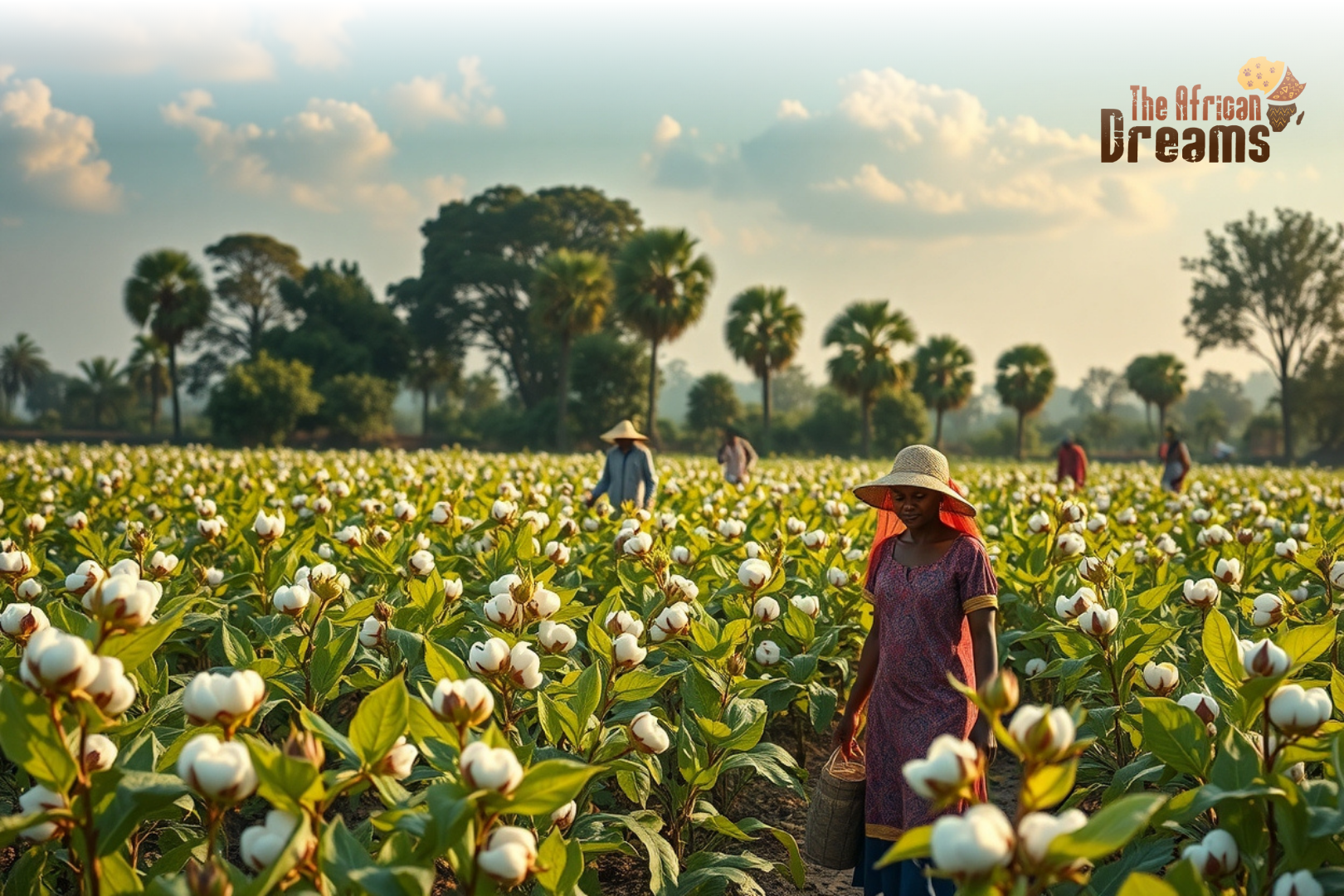
Did you know that cottonseed oil can be consumed? It has some benefits and also many side effects. It can be taken in 95 grams, but one should also get advice from a healthcare professional before taking it. Cottonseed oil comes from cotton fields, which are byproducts of cotton production. Many countries worldwide are famous for their cotton production. However, Gambia is renowned for its cotton and is still trying to gain the position.
The Fall of Gambia's Cotton Production
The cotton production in the Gambia has significantly declined. Production reached around 3,000 tonnes in the early 1990s, but by 2000, it had fallen to less than 500. It has fallen further, with exports between 197 tonnes in 2004 and 402 tonnes in 2006. This decline was because of changes in the global cotton market, such as the shift from fixed to negotiable prices, making it hard for The Gambia to compete with much larger and more mechanized producers like Senegal.
Until today, cotton was an essential part of the economy, employing farmers, weavers, tailors, and retailers in the Gambia. However, it has lost competitiveness in the larger neighboring countries, where it can be grown on more extensive plantations at lower prices. Changes in the world cotton market, especially the abolition of fixed prices per ton for the crop and the introduction of negotiable prices have caused Gambia to lose its competitive edge and drastically decline in cotton production.
The Impact on Farmers and the Economy
A farmer who worked on a cotton farm in Gambia shared his miserable story: “Our Gambia is a small country. Still, we have many resources. Once upon a time, we were famous for our cotton production. Cotton was one of the most important cash crops in The Gambia during the 1970s and 1980s, offering vast employment opportunities to farmers. Though it was not a big amount, we still exported it to our neighboring country, and besides, it played a crucial role in our economy. I also had a cotton farm, so I had to switch then. This decline resulted in the loss of livelihoods for many farmers and related businesses involved in cotton processing and trade.”
Why Did Cotton Production Decline in The Gambia
The country’s transportation network must be developed. It primarily relies on road networks, which results in inefficient movement of goods and, hence, increased logistics costs.
Frequent disruptions in electricity supply disrupt manufacturing processes and increase costs as industries resort to using generators.
SMEs need more access to financing and credit, hence the difficulty in investing in modern machinery and technology.
There is a need for more adequately trained and skilled labor that would support such advanced manufacturing processes.
The domestic market limits manufacturers’ ability to achieve economies of scale. The cost of renting offices or warehouses in commercial areas is very high, adding to the final price of commodities.
Projects in Gambia
Though many challenges are decreasing cotton production in Gambia, some projects are still under development. The project “The Gambia Cotton Trail” tries to revive the industry by focusing on locally produced, hand-loomed cotton products from small-scale sustainable farming. The project links various communities and industries in a chain of skills and craftsmanship. Just like this project, investors can take other new initiatives. New initiatives to revive the cotton industry will create opportunities for the textile industry in Gambia. Elsie’s women empowerment farm also inspires investors who are still confused.
Elsie’s Women Empowerment Farm is the first organic cotton farm for women in The Gambia. Established in 2019, it was founded by Elsie A. Williams, a Young Female Farmers Association member. The farm focuses on the economic empowerment of women and the revival of the country’s cotton production. Cotton is used for more than just the textile industry; it has versatile uses. In addition to its byproduct, cottonseed oil is used in many processes.
Cotton's Versatile Applications
It is used in bed linen, towels, curtains, and upholstery for its smooth and cuddly feel. Hats, scarves, and bags are made with cotton mainly because of their versatility and easy care. Cotton serves well in applications requiring high absorbency, like medical dressings and bandages. Surgical sutures are manufactured with cotton, as the material is biocompatible and strong. Necessary for hygienic purposes and cosmetics. The reasons for this are that it is hypoallergenic and very soft. Used in baby clothes, diapers, and wipes. Cotton fibers are used in both air and liquid filtration systems. It is used inside car interiors, in car seats, and the carpeting of cars due to its durability. Extracted from cotton seeds, the products are used in cooking, food processing, and as a base for other products. Cottonseed meal, after extraction, is a high-protein feed for livestock. Cotton is a popular fabric for quilting and other sewing projects. Cotton canvas is a popular medium for painting. Cotton is used in biodegradable and eco-friendly products, grown without synthetic pesticides and fertilizers, and in sustainable and eco-conscious products. Known for its durability and high quality, it is used for important documents, currency, and high-end stationery. Cotton’s strength makes it suitable for making fishing nets and ropes. Most binding employs a cotton thread because of its longevity and strength.
Cottonseed oil also has benefits. Its oil contains a high amount of polyunsaturated and monounsaturated fats, which can lower LDL cholesterol and raise HDL cholesterol. It also improves blood pressure and reduces the risks of heart disease and stroke. One study found that a diet rich in cottonseed oil improved blood lipid values in adults with hypercholesterolemia.
Why Invest in Gambia's Cotton Industry
Cotton has versatile applications. With the proper infrastructure, technology, and training investment, the Gambia’s cotton industry has enormous potential. Located in the tropics, with its richly fertile soil, the country offers the best option for cotton production. Over the past years, the Gambian government has undertaken various initiatives and projects to develop agricultural activities, especially cotton farming. Programs like Vision 2020 target increasing crop production for food security and sustainable development of good farming practices.
0 Comments