
Chad, a landlocked nation in Central Africa, is one of many places that come to mind when considering investment opportunities. However, Chad’s unique natural assets and growing population present an environment ripe for business growth. With key investors like Nigeria, France, the United Kingdom, and South Korea already showing interest, the question arises:
Why invest in Chad?
Well, that question can be answered if you look at their economy. To understand the potential, let’s dive deep into Chad’s economy and its prospects for future growth. Despite being heavily dependent on oil, Chad’s economy has gradually diversified, presenting promising opportunities in other sectors.
In this blog, we explore the top three industries where investments can yield substantial returns: oil, agriculture, and energy.
1.Oil Sector: The Potential Beneath
Chad is open to partnerships that may help it develop its resources, notably in the Doba Basin, where petroleum is produced. Giant companies like ExxonMobil and Shell have previously drilled the basin, with an estimate that it holds large quantities of unexplored hydrocarbons.
Chad looks forward to working with both foreign and local partners who share mutual interests in upstream oil and gas exploration. The focus is on optimizing oil and gas reserves to enhance socio-economic development and energy security.
Government-Backed Refining Operations
N’Djamena Refinery, integrated with the country, operates through PetroChina and holds CNPC, China National Petroleum Corporation. SHT is a partner company involved in processing crude oil from the Doba Basin. And this is expected to continue until 2030. The refinery’s operations depend on a crude distillation unit of 20,000 bpd, which is Chad’s key source of refined petroleum products. Therefore, new investments are necessary to enhance its efficiency and expand its capacity to meet the rising demand.
Policy Support and Investor Incentives
- Chad is making progress in energy development by attracting investment, improving infrastructure, and creating better conditions for businesses to operate.
- In Djermaya Economic City, the government offers private investors tax holidays, and customs processes are simplified.
2.Agriculture: A Fertile Ground for Growth
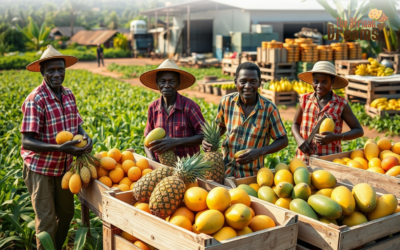
Farming plays a big role in Chad’s economy. The country offers great opportunities for agribusiness, with plenty of fertile land and different climate zones suitable for growing various crops.
In 2022, agriculture, which encompasses farming and animal husbandry, accounted for an average of 25% of the GDP. The sector employed 69% of the labor force.
Key Crops and Export Goods
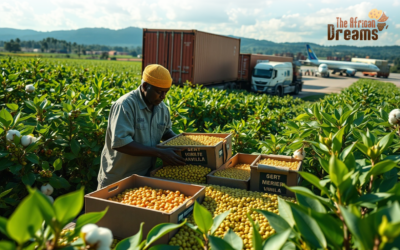
Chad’s most significant agricultural product is cotton. Although this crop is grown for export, it employs most people involved in the industry. A significant part of Chad’s export earnings comes from its raw cotton processing activities.
Sesame seeds and gum Arabic have recently shown potential to increase the buying capacity among rural farmers and entrepreneurs. Investing in sesame has an added advantage, as the majority of traders, wholesalers, and exporters in the sector also trade gum Arabic, making it easier to penetrate this market by investing in sesame production.
Another factor that makes sesame seeds an attractive option is the overlap in trade networks. Almost all traders, wholesalers, and exporters of gum Arabic in Chad are also directly or indirectly involved in the sesame seed trade.
Other Crop and Livestock Opportunities
Some crops with potential for large-scale cultivation include sorghum, millet, maize, and rice. Therefore, these crops not only have high domestic demand but can be exported as well. Additionally, there are opportunities for livestock production, particularly in the form of meat and dairy products.
Challenges and Solutions
To fully capitalize on farming opportunities in Chad, the country must address several key challenges.
- Firstly, there is no infrastructure (roads and storage facilities), which makes it hard to transport crops from the villages to the markets.
- They also require improved irrigation systems that deal with the country’s seasonally changing rainfall patterns.
Overall, Chad’s agricultural potential presents an excellent opportunity for any organization willing to invest money in it. These organizations include Agritranscom, Grainothèque Tchad, Natural Halla, Mossosouk, and Ets Bakara Nadif.
If organizations work to overcome the challenges in the industry and make effective use of the country’s natural resources, they can contribute to economic growth and enhance food security for the people of Chad.
3.Energy: Harnessing Solar Power
Chad is a country with oil, raw materials, and sustainable energy. It has an intermediate amount of radiation, ranging from 2000 to 2800 kWh per square meter, and between 2750 and 3250 sunshine hours per year, thus making it a natural paradise for solar energy development.
Despite its enormous wealth in fossil fuel reserves and vast sunlight production, Chad has one of the world’s lowest electricity access rates, at just 6.4%, compared to sub-Saharan Africa’s average of 48%.
Government Support for Renewable Investment
- Therefore, the government approved tax credits for renewable energy investments, including solar projects, by the end of this decade. This will be accompanied by the National Investment and Exporting Agency (ANIE), a government body providing a one-stop shop (Guichet Unique) for international and national business registration.
- New initiatives, such as the Djermaya Solar Power Plant and the expansion of rural electrification, indicate considerable business opportunities.
Current Projects and Business Prospects
- Investors can boost solar infrastructure by introducing new technologies and expanding renewable power generation systems within this country.
- In addition, projects like the Goz Beïda Solar Plant may also be mentioned, which aims at rural electrification. Other opportunities lie in developing mini-grids or off-grid solutions, which aim to provide locally small-scale power provisions.
Why Now Is the Time
Excellent opportunities for oil, agriculture, and energy are impossible to ignore in Chad’s underdeveloped economy.
The virgin oil sector provides unexplored land and facilities ready to use for the right strategic partnerships. Its rich soils, varied climate, and encouragement from the locals make agriculture offer lucrative returns. Abundant sunshine and supportive policies prepare the energy sector (especially solar power) to take a quantum leap, not just in words but indeed!
For the investors, this is going to be a thrilling ride ahead. Using intelligent strategies and building resilience will give Chad the right to land profits and high-impact development in your hands. Jump in and help mold Chad’s vibrant future!
Conclusion: A Promising Future for Chad’s Economy
Chad’s economy, though underdeveloped, presents excellent opportunities for investment in oil, agriculture, and energy. The oil sector offers untapped resources and strategic partnerships, while agriculture benefits from rich soils, varied climates, and growing demand. Meanwhile, the energy sector, especially solar power, is poised for rapid expansion with the support of favorable policies and abundant natural resources.
Investors who are ready to face challenges and use smart strategies have the chance to be part of Chad’s promising economic future. By investing in key sectors, they can earn strong returns while supporting the country’s growth and progress.
0 Comments