
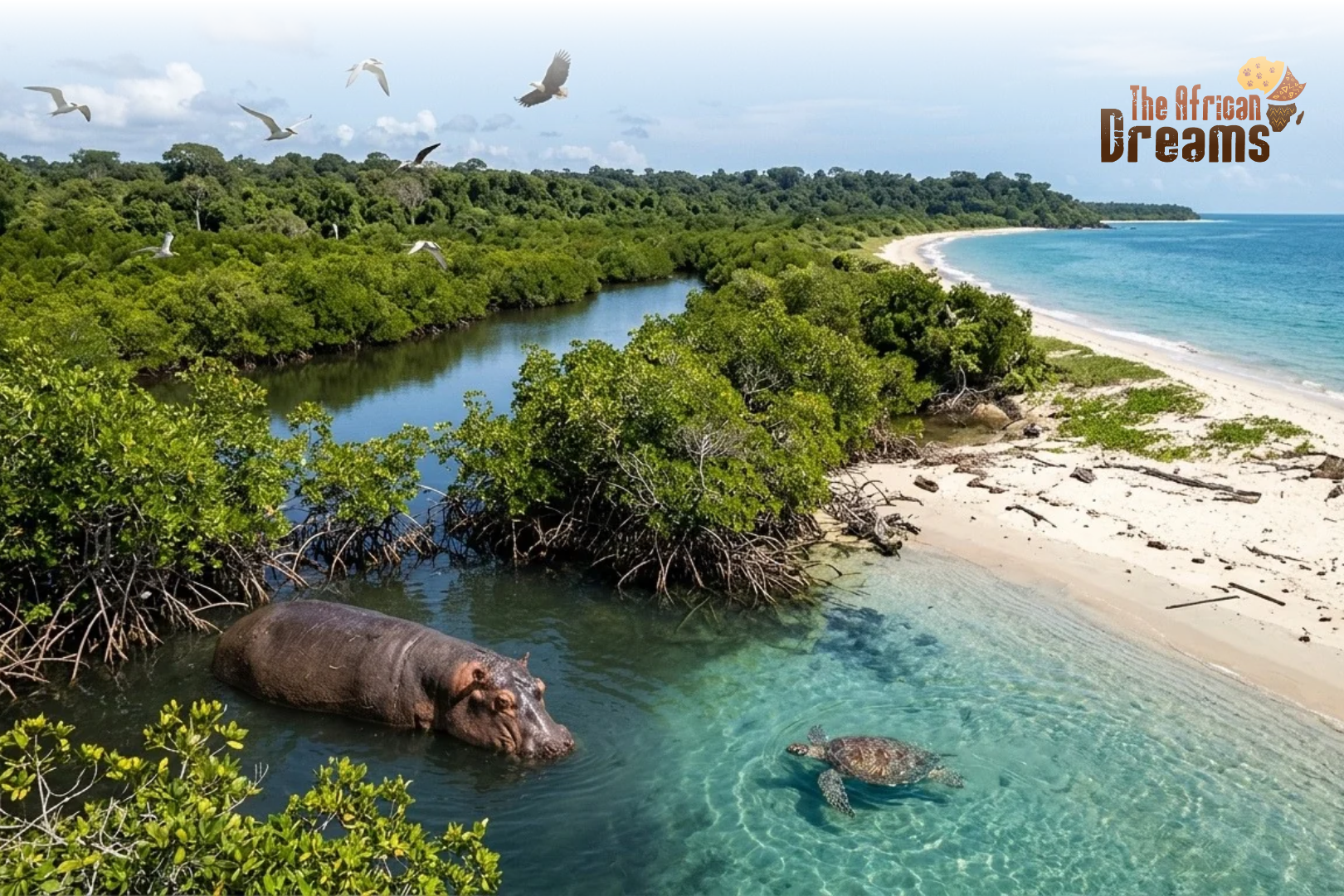
Introduction: National Parks in Guinea-Bissau
Guinea-Bissau is famous for its natural attractions. This country has many parks that preserve wildlife and provide charming natural beauty. Many national parks in Guinea-Bissau have many different types of species and birds. Guinea-Bissau can be a must-have option for any tourist planning a trip, especially for those who live near Guinea-Bissau and are planning to go there.
Though there are many small to medium-sized national parks in Guinea-Bissau, some play a significant role in the ecosystem of Guinea-Bissau. Most protected areas in Guinea-Bissau, e.g., Bijagós Archipelago and Cacheu River Mangroves, have high-profile international statuses like UNESCO Biosphere Reserve and Ramsar Wetland, suggesting they hold international environmental importance. This article is about the top 4 national parks in Guinea-Bissau, their location, wildlife, biodiversity, etc.
Article Highlights:
Guinea-Bissau is a rising eco-tourism destination with unique national parks and marine reserves.
Orango National Park is a UNESCO Biosphere Reserve and home to the world’s only permanent resident saltwater hippos.
João Vieira and Poilão Marine National Parks host one of Africa’s largest nesting populations of green sea turtles.
Cantanhez Forests National Park safeguards over 600 critically threatened Western chimpanzees in the rainforest canopy.
The Cacheu River Mangroves Natural Park protects one of West Africa’s largest remaining intact mangrove forests and hundreds of migratory birds.
The national parks in Guinea-Bissau currently have low tourist volumes, making them ideal for adventurous eco-tourists and scientists seeking raw, unspoiled nature.
Both national parks in Guinea-Bissau play crucial roles in conserving Guinea-Bissau’s ecological balance and supporting local traditional communities.
Orango National Park
Location and Area: Orango National Park is one of the most significant national parks in Guinea-Bissau. It is located south of the Bijagós Archipelago, along the Atlantic coast of Guinea-Bissau. It is among the largest conservation national parks in Guinea-Bissau, with approximately 1,582 square kilometers of terrestrial and marine habitat on the islands.
Natural Habitat and Landscape: Some natural habitats are undeveloped sandy beaches, palm groves, open savannah, and closed mangrove forests. Five large islands form the park: Meneque, Imbone, Orangozinho, Orango, and Canogo. The shoal channels, intertidal mudflats, and coastal lagoons form a dynamic terrestrial and marine ecosystem mosaic.
Wildlife and Biodiversity: Orango is one of the better-known national parks in Guinea-Bissau for its resident population of saltwater hippos. They are the only hippos in the world that inhabit and thrive in brackish wetlands of coastal mangrove lagoons. The park also hosts green and African manatees, hawksbill and Kemp’s ridley sea turtles, dolphins, and West African crocodiles.
There are over 180 species of birds, including flamingos, pelicans, African spoonbills, and fish eagles. Its waters harbor reef fish, shellfish, and colorful mollusks. The park’s coastal wetlands have around 150 to 200 saltwater hippos. Sea turtles, green turtles, nest on Orango beaches, and hundreds of nests are found during the peak season.
Tourism and Visitors: Tourism is developing in Orango but is constrained by access difficulties. It receives around 500 to 700 visitors annually, mainly adventurous eco-tourists, marine biologists, and conservation volunteers. Guided tours typically include canoeing excursions, hippo spotting, beach walks, and village visits.
Facilities for Tourists: There are various eco-lodges in the national parks in Guinea-Bissau, the most prominent of which is the Orango Parange Hotel on Orango Island. They are humble but comfortable accommodations that offer local food, canoe tours, hippo-watching safaris, village tours, and trekking tours by local guides. The guides are professional local staff. They are mostly trained naturalists who provide more detail on local Bijagó life. Guided tours include boat safaris, wildlife-sighting trails, and cultural visits to local villages.
Interesting Facts: Orango Island is also one of those national parks in Guinea-Bissau that is extremely culturally, if not archaeologically, significant to the Indigenous Bijagó people. Several ancient ceremonies and rituals occur on the island. The park is also part of the larger Bijagós Archipelago UNESCO Biosphere Reserve for its exceptional natural and cultural significance. Scientists have found that female-harem groups of freshwater hippos in Orango have distinct social behaviors that are not found anywhere else.
João Vieira and Poilão Marine National Park
Location and Size: João Vieira and Poilão Marine National Park is like an organic park on islands. It is on the Bijagós Archipelago’s eastern side. The park comprises four small desert islands: Joilão Vieira, Poilão, Meio, and Cavalos. It has a total area of approximately 495 square kilometers, of which the majority is marine, with small island landmasses.
Natural Landscape and Ecosystems: The park has white sandy beaches, crystal-clear waters, coral reefs, and mangrove-fringed shores. The islands are generally low, flat, and edged with precious breeding beaches for sea turtles.
Wildlife and Biodiversity: João Vieira and Poilão are internationally renowned as one of Africa’s most prized green sea turtle breeding sites. Every year, thousands of female turtles visit the beaches to lay eggs. Other turtles that visit here include the olive ridley and the hawksbill turtle. The waters here are rich in marine life, including bottlenose dolphins, reef fish, rays, small sharks, and humpback dolphins. The birdlife is also superb, with terns, ospreys, and frigatebirds regularly spotted.
Animal Population: The park is crucial as one of the national parks in Guinea-Bissau for sea turtles. Over 10,000 turtle nests have been counted on the park’s beaches seasonally, one of the highest nesting densities along the Atlantic coast.
Tourism and Visitor Statistics: Access is highly restricted to protect nesting turtles. Few visitors come, usually through guided eco-tourism itinerary groups and scientific surveying parties. Visitors per year are few, maybe 100 to 200 persons, usually researchers or conservationists.
Facilities for Tourists: No lodges, hotels, or resorts within the islands. Tent camping by official ecogroups, subject to a strict leave-no-trace policy, is allowed. No individual visitors; only authorized scientific or ecoguides are accepted. Solo travel is not accepted for the preservation of nesting sea turtles. Entrances are stringently closed during nesting sea turtle times (July–October). Permits may be required. Only small groups are allowed at a time.
Interesting Facts: The leading nesting site, Poilão Island, is sacred to Bijagó and has remained untouched for centuries. Permanent human settlement is prohibited. Amazingly, to this day, there is no organized development like hotels on the islands, all on a leave-no-trace basis to allow the perpetuation of the turtles.
Cantanhez Forest National Park
Location and Size: Cantanhez Forest National Park is one of the national parks in Guinea-Bissau’s beautiful attractions. If you plan to visit Guinea-Bissau, it is a must-visit place in West Africa. It covers the entire Cubucaré Peninsula in the southernmost part of the country, Tombali province. The park is approximately 1,057 square kilometers, or roughly 408 square miles, and is among the best-guarded areas of the nation.
Landscape: The park was officially announced in 2007 to conserve the exceptional biodiversity of this remote and ecologically diverse corner of Guinea-Bissau. Cantanhez stands out for its diversity of ecosystems among the national parks in Guinea-Bissau. It includes closed tropical rainforest, vast mangrove swamp, freshwater wetland, open grassland, and secondary forest. Due to this diversity of ecosystems, it can support an outstanding diversity of fauna species, including critically endangered species.
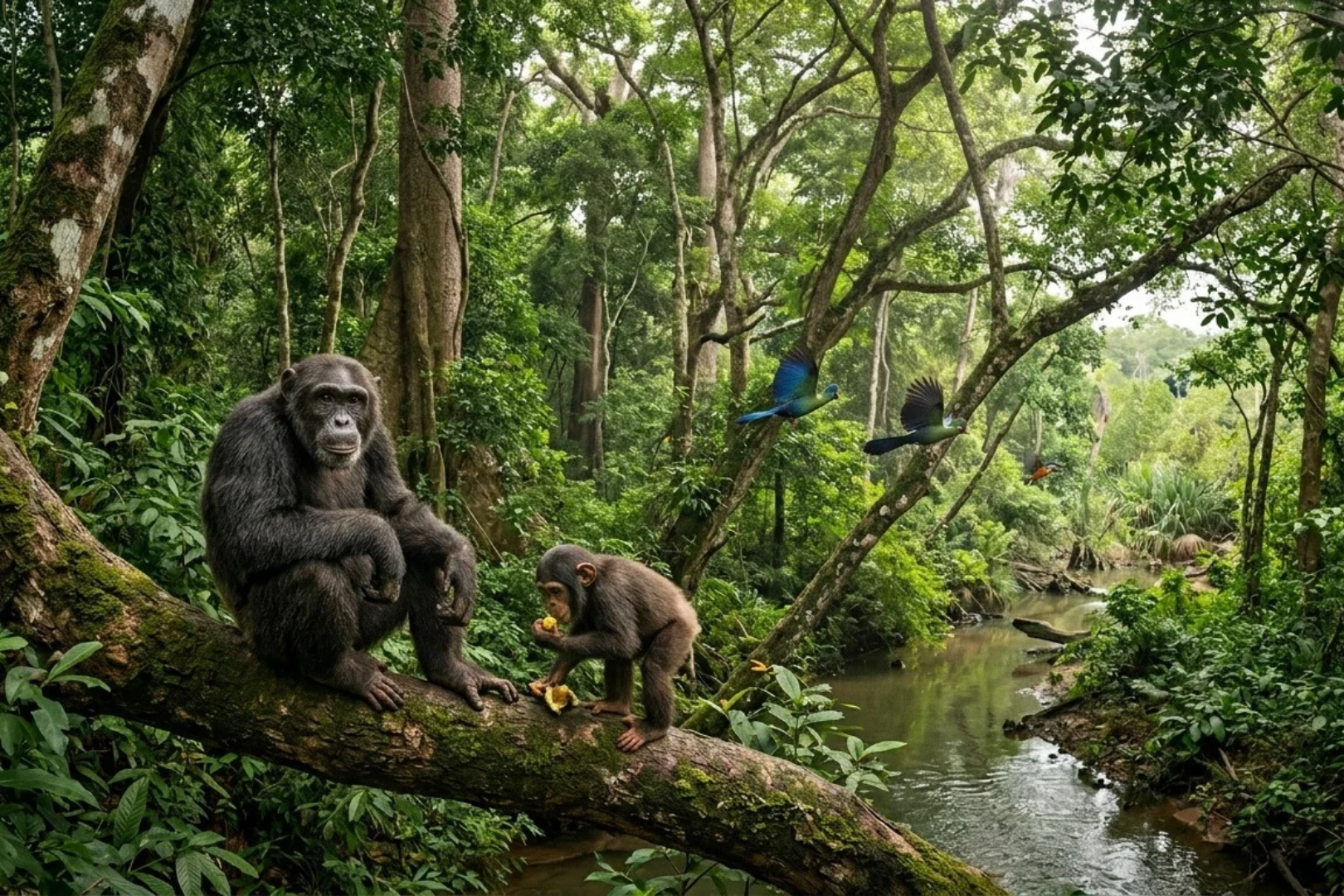
Wildlife Diversity: One of the most famous residents of Cantanhez is the Western Chimpanzee (Pan troglodytes verus), a subspecies on the critically endangered list. The park is one of the safest refuges for subspecies outside of East Africa. More than 600 individual chimpanzees have been estimated to reside in the forest, one of the region’s largest. These are remarkable chimpanzees because they live in close contact with human populations and commute through open ground between forest patches, a rare lifestyle for chimpanzee groups elsewhere.
Besides the chimpanzees, Cantanhez also accommodates a wide range of other fascinating mammals. Forest elephants remain resident in some areas of the park, although they are not as numerous nowadays as they were in the past due to previous hunting. Other fascinating mammals are leopards, red colobus monkeys, sitatunga antelopes, duikers, and African civets. In all, approximately 42 mammals have been recorded in this park.
Cantanhez’s birdlife is also diverse among the national parks in Guinea-Bissau, with more than 200 species already identified. Rainbow-plumed hornbills, kingfishers, migratory waders, the forest canopy, and the wetland edges of the park offer resident and migratory birds. Birders in the mangrove forests are particularly rewarded with glimpses of endangered and threatened species like the African fish eagle and Goliath heron.
Cantanhez Forests National Park is also significant for national parks in Guinea-Bissau in conserving reptiles and amphibians. Nile crocodiles, pythons, and numerous endemic toads and frogs inhabit mangrove channels, rivers, and lakes within the park, all relying on the park’s unbroken water systems.
Tourism and visitors: Even though it is ecologically endowed, tourism in Cantanhez National Park is relatively low among national parks in Guinea-Bissau. Fewer than 500 foreign visitors annually visit the park, mainly researchers, nature conservators, or incredibly daring eco-tourists. Significant causes of minimal tourist movement include Guinea-Bissau’s extremely low rate of international exposure, infrastructural mobility limitations, and an emerging tourism industry. But for the daring ones, the reward is witnessing nature in its raw form.
Facilities for Tourists: Small eco-lodges near Cacine village (outside the park) can be found. There are some basic community-managed guesthouses and campsites near the entrance points to the park. Camping in the forest can be organized within the forest for researchers or special trekking groups. Camping gear is recommended for overnight forest excursions. The facilities are extremely primitive, suitable for adventurous travelers.
National conservation authorities and global alliances manage and operate it. Surprisingly, the Cantanhez Chimpanzee Conservation Project, funded by NGOs and research organizations, is going full throttle to protect chimpanzee communities, create forest corridors, and engage local people in a sustainable lifestyle.
Cantanhez is so appealing as one of the national parks in Guinea-Bissau because humans and animals live side by side, in parallel. There are approximately 24 small villages on the park’s periphery. The resident population, mainly Nalú, Balanta, and Fula ethnic groups, lives a largely traditional subsistence of fishing, farming, and forest fruit gathering. Unlike most nature reserves, where residents are relocated, Cantanhez incorporates them, whereby conservation and community goals complement each other. Residents, for example, participate in chimpanzee monitoring and mangrove replanting.
Another fascinating fact is that the park contains some of West Africa’s oldest mangrove forests. The mangroves provide breeding grounds for birds and fish and act as a significant carbon sink, making Cantanhez a natural treasure in the fight against climate change.
Cacheu River Mangroves Natural Park
Location and Area: The Cacheu River Mangroves Natural Park is one of the popular national parks in Guinea-Bissau. The park lies in the northwest corner of Guinea-Bissau, near the ancient town of Cacheu. It runs along the Cacheu River and estuarine streams that empty into the Atlantic Ocean.
Covering an area of about 886 square kilometers (or about 342 square miles), it is also one of the country’s most significant and ecologically valuable regions for preservation. Created in 2000, it was first established to protect the country’s vast and biologically rich mangrove forests.
Ecological Significance and Natural Landscape: The Cacheu River Mangroves Natural Park is one of the national parks in Guinea-Bissau that primarily comprises mangrove forests covering almost 68% of the park. The mangrove forests are part of the largest unbroken blocks of mangrove forests along the entire coast of West Africa. They are natural barriers that protect the interior from tidal flooding, soil erosion, and invasion by salt.
Apart from mangroves, the park consists of tidal flats, salt marshes, beaches, lagoons, and high ground savanna dry land areas. Its productive coastal and aquatic environment serves as many species’ breeding, feeding, and refuge areas. Thus, it is among the national parks in Guinea-Bissau as an ecologically significant site for transcontinental migratory species.
Wildlife Diversity: The Cacheu River Mangroves Natural Park fauna is highly diverse. Many species inhabit the thick mangrove forests and fertile wetlands. One of the most dramatic animal experiences is the West African manatee, a shy and reclusive brackish water mammal of the mangrove seas. Nile crocodiles are in the area, commonly basking on riverbanks and estuaries. Hippopotamuses are present in the park, particularly in the wide tidal channels and lagoons. Some forest patch land animals include the green monkey, bushbuck, and African civet. Birdlife is remarkably diverse.
The park is one of the national parks in Guinea-Bissau to have its BirdLife International Important Bird Area because it supports high numbers of native and migratory birds. Goliath heron, African fish eagle, lesser flamingo, black-winged stilt, and other terns and gulls breed and feed in the park’s wetlands. It is a point of overflight for thousands of birds migrating between West Africa and Europe, and it is heaven for an ornithologist and bird enthusiast.
While precise figures are not available, experts believe that the Cacheu River Mangroves Natural Park harbors several hundred individual manatees and crocodiles. Hippo numbers are fewer but frequent due to the huge aquatic habitat. By species of birds, more than 200 species are recorded to be present in the park, with tens of thousands of birds that capitalize on the park during peak migration periods. New plant and insect species are still being brought in through research even now, which is indicative of the relatively untapped biodiversity of the park up to this point.
Facilities for Tourists: Tourism in the Cacheu River Mangroves Natural Park is extremely low. No more than 300 foreign tourists visit the park every year. Most tourists include specialized tours like birdwatchers, science researchers, ecologists, or adventure eco-tourists looking for off-the-beaten-path sites.
No camps exist in the park. The town of Cacheu or nearby villages accommodate tourists with basic guesthouses. Canoe camps and wooden homes offer bush camping arranged by local cooperatives. Local eco-guides can be hired on a specific basis, especially for canoeing through mangroves and bird viewing.
It is wise to visit with a local guide. Plan tours between the dry season months of November and April when the waterways are navigable. Small-scale ecotourism operations are currently planned, ranging from canoe cruising of mangrove creek systems, bird-watching excursions, and tours to villages.
Interesting Facts and Attractions: Cacheu River Mangroves Natural Park has a couple of quite unexpected pluses to its title that most nature tourists and lovers do not always expect.
1. First, it is a Ramsar Site, which is being preserved internationally by the Ramsar Convention on Wetlands because it is of international environmental significance.
2. Secondly, its mangrove forests are West Africa’s longest and most resilient, having survived centuries of nature and man’s utilization. The second argument that holds water is that mangroves are also culturally attached to locals. Centuries of traditional fishing, ecologically harmonious shellfish gathering, and communal defense maintained the delicate balance between human use and nature’s home for centuries. Mangroves provide havens for small fish traps constructed by the fishermen, an ancient tradition, and mangroves continue to be essential in coastal communities for wood, food, and medicine.
Final Words: Visiting National Parks in Guinea-Bissau
The national parks in Guinea-Bissau undoubtedly offer many adventure options. Besides, natural, environmental, and wildlife researchers also visit here, as each distinct park demonstrates a different natural beauty. Each of them is different from the others.
Parks like the Bijagós Archipelago and the Cacheu River Mangroves have high-profile international status, such as UNESCO Biosphere Reserve and Ramsar Wetland. Furthermore, many other national parks in Guinea-Bissau are also famous. Still, these parks are the most significant option for tourists.
Those who want to see natural beauty and feel the thrill of an adventurous trip can find these options a good combination. Besides these, many other national parks in Guinea-Bissau also play a significant role in managing Bissau’s ecosystem. Therefore, it is high time for visitors to explore these places and savor the beauty.
FAQs
1. What are the best national parks in Guinea-Bissau to visit?
The best national parks in Guinea-Bissau include Orango National Park, João Vieira and Poilão Marine National Park, Cantanhez Forests National Park, and Cacheu River Mangroves Natural Park.
2. Where are saltwater hippos located in Guinea-Bissau?
Saltwater hippos are located exceptionally at Orango National Park in the Bijagós Archipelago.
3. Why is João Vieira and Poilão Marine National Park famous?
It is Africa’s largest green sea turtle nesting site, with more than 10,000 nests per year.
4. How many chimpanzees are estimated to live in Cantanhez Forest National Park?
Over 600 individual Western chimpanzees are estimated to live in Cantanhez, making it a priority site for conservation.
5. Why is the Cacheu River Mangroves Natural Park special?
It protects one of West Africa’s biggest and most established mangrove forests and maintains hundreds of aquatic and bird species, ranging from manatees to crocodiles.
6. Are tourism facilities well developed in these parks?
Tourism development is only emerging. Visitor numbers are low, so there are opportunities for true eco-tourism activity without masses of people.
7. Are the parks suitable for wildlife researchers?
Yes, the national parks in Guinea-Bissau possess unique biodiversity, low human disturbance, and an excellent opportunity for studies on marine, forest, and wetland ecosystems.
8. What are the cultural aspects of the parks?
Yes, especially in Orango and Cacheu, where the Bijagó traditional rituals and mangrove-based livelihoods are fundamental to the parks’ cultural heritage.


0 Comments