
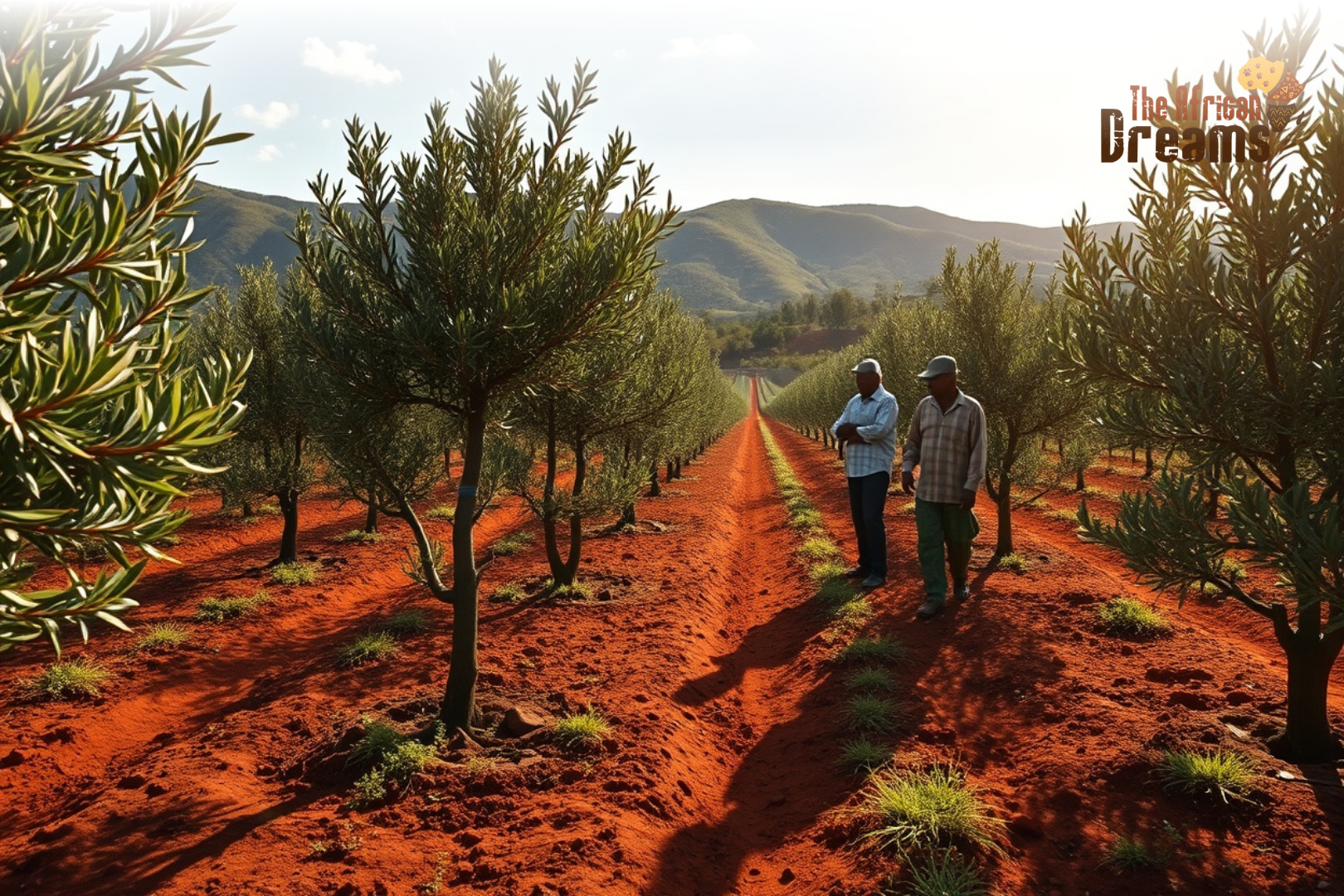
Introduction: Congo's Olive Industry
Congo’s olive industry offers many exciting opportunities for sustainable agriculture. The olive tree is a hardy crop and highly adaptable; besides its ecological benefits, it may present economic ones.
Even though Congo’s olive trees are traditionally grown in Mediterranean regions, lately, there has been a modern exploration of olives in different climates around the world for specific reasons such as drought resistance and soil conservation.
This case study analyzes the viability, challenges, and opportunities of Congo’s olive industry, which offers economic resilience and ecological stability.
The Challenges in Congo's Olive Industry
Congo’s olive industry has a host of environmental and logistical obstacles.
1. For optimal growth, olive trees require well-drained, loamy soil within the pH range of 6.0-8.0 and total sun exposure. The general climate of Congo is warm; however, high humidity and seasonal heavy rains pose a threat to fungal diseases of the tree, such as verticillium wilt, which, unless properly controlled, can seriously affect the yield and health of the tree.
2. Olive trees grow slowly and take about four years to mature and give any reasonable yield of their fruits; in about ten years, they reach their prime for production. This, of course, requires a significant amount of patience on the part of the farmer.
3. Lack of infrastructural access to specialized equipment and other essential facilities for cultivation presents additional challenges for forming large-scale plantations of olive trees. The very novelty of olive tree cultivation in the region means that knowledge of the cultivation of olive trees and the treatment of diseases is very scant in Congo.
The Solution
Flourishing Congo’s olive industry requires the adoption of a strategy known to work well in other climates. In this respect, essential recommended practices for successful growth are:
1. Soil and Water Management: The olive tree is somewhat drought-hardy and, hence, requires less water compared to many other crops after attaining reasonable maturity. The drip irrigation farming practice allows accuracy in terms of delivering water to the roots of the olive trees, hence allowing water conservation. ]
In Spain – one of the leading producers of olive trees- the use of soil amendments along with controlled irrigation practices has made the trees productive even in arid conditions and saved thousands of cubic meters of water per hectare. Methodologies such as these, if applied in Congo, would aid in the sustainability of water resources and in optimizing growth in olives.
2. Planting Climate-Resilient Varieties: There are some popular varieties that can withstand extreme climatic changes, such as Arbequina and Cipressino. Arbequina endures poor soil, is resistant to frost, and develops compactly, allowing high planting density. Choosing the right variety will improve yields and reduce exposure to pests, while the humidity will increase resistance against diseases.
3. Knowledge and Training Transfer: Knowledge transfer to local farmers on disease prevention, especially from fungi, which is normally common in wet climatic conditions. This would train farmers how to ensure aeration around their trees to avoid fungal outbreaks.
In Italy, pruning, among other methods to prevent disease, has been important for tree health; Congo could follow this example to try and fight its unique climatic challenges.
4. Market Development and Value Addition: Better returns are realized in the sale of olive oil than in raw olives. For example, the global market for olive oil is insatiable because of its health benefits and its use in the culinary and skincare industries.
Processing olives domestically would, therefore, offer Congo an opportunity to access high-end markets for olive oil, earning up to seven to eight times as much as from selling raw olives. This will help in adding value locally and hence enable farmers to have more market share through the establishment of small processing facilities.
Implementation
The introduction of olive farming into Congo requires involvement:
1. Pilot Projects and Testing of Soils: Testing various types of soils across regions to select the best areas for planting olives would minimize risks. In addition, subsidized pilot projects by NGOs or government agencies will more easily be able to prove if olives are feasible in Congo. Indeed, in other countries, this has helped farmers create high-value crops while building data and a roadmap for scaling later on.
2. Infrastructure and Cooperative Formation: Setting up a cooperative among olive farmers will ensure shared resources for the farmers, such as equipment to press the olives into oil, storage facilities, and transportation networks.
Cooperatives enhance the bargaining power of farmers, thereby facilitating loans and investment in infrastructure, as required by this slow-growing culture.
3. Environmental Conservation Practices: The olive tree prevents soil erosion and promotes biodiversity. Planting olives in an agroforestry system contributes to soil stability and biodiversity, hence decreasing dependency on other forest products. For example, in North Africa, olive agroforestry is described as having a number of positive environmental effects; therefore, adopting these practices in Congo’s olive industry can support sustainable land use.
4. Government Support and Investment Incentives: Subsidies for buying seedlings and protection kits, and probably other forms of government incentives, shall reduce initial costs to farmers. Adequate policies that support organic and sustainable farming methods will contribute to the production of eco-friendly olive products acceptable to global requirements and create a niche in a widening market for ethically sourced oils.
The Results
It may also open up other various benefits of olive farming in Congo: environmentally, olive trees would help to keep the soil healthy, prevent erosion, and maintain biodiversity.
Economically, producing olive oil domestically could be exceptionally gainful, with premium olive oil selling for $15-25 per liter on world markets, making the business more promising in view of cultivating other staple crops. These would bring better revenues from Congo’s olive industry through cooperative structures, making local communities more resilient to economic fluctuations.
In addition, besides the mere quantity of resources it requires when settled, it is an amiable kind of agriculture from an environmental perspective. Therefore, the increment in olive agroforestry has the potential to place Congo as a possible exporter in the world market for olive oil and contribute to rural development by decreasing dependence on other agricultural imports.
Final Remarks: Congo's Olive Industry, New Frontier in Agroforestry
A promising frontier for the sustainable agriculture sector is Congo’s olive industry. Harnessing the strengths of olive trees through intelligent agricultural practices could, therefore, lead to an emerging industry in Congo that helps balance economic development with environmental protection.
With further investment and knowledge sharing, it is expected that Congo’s olive industry will flourish, paving a sustainable path toward food security, economic diversification, and ecological restoration.
In short, the “olive tree initiative” offers Congo a viable, profitable future; it ushers in agroforestry that integrates human needs with nature preservation.
0 Comments