
Uganda’s Agroecology Practices: Breaking the Subsistence Farming
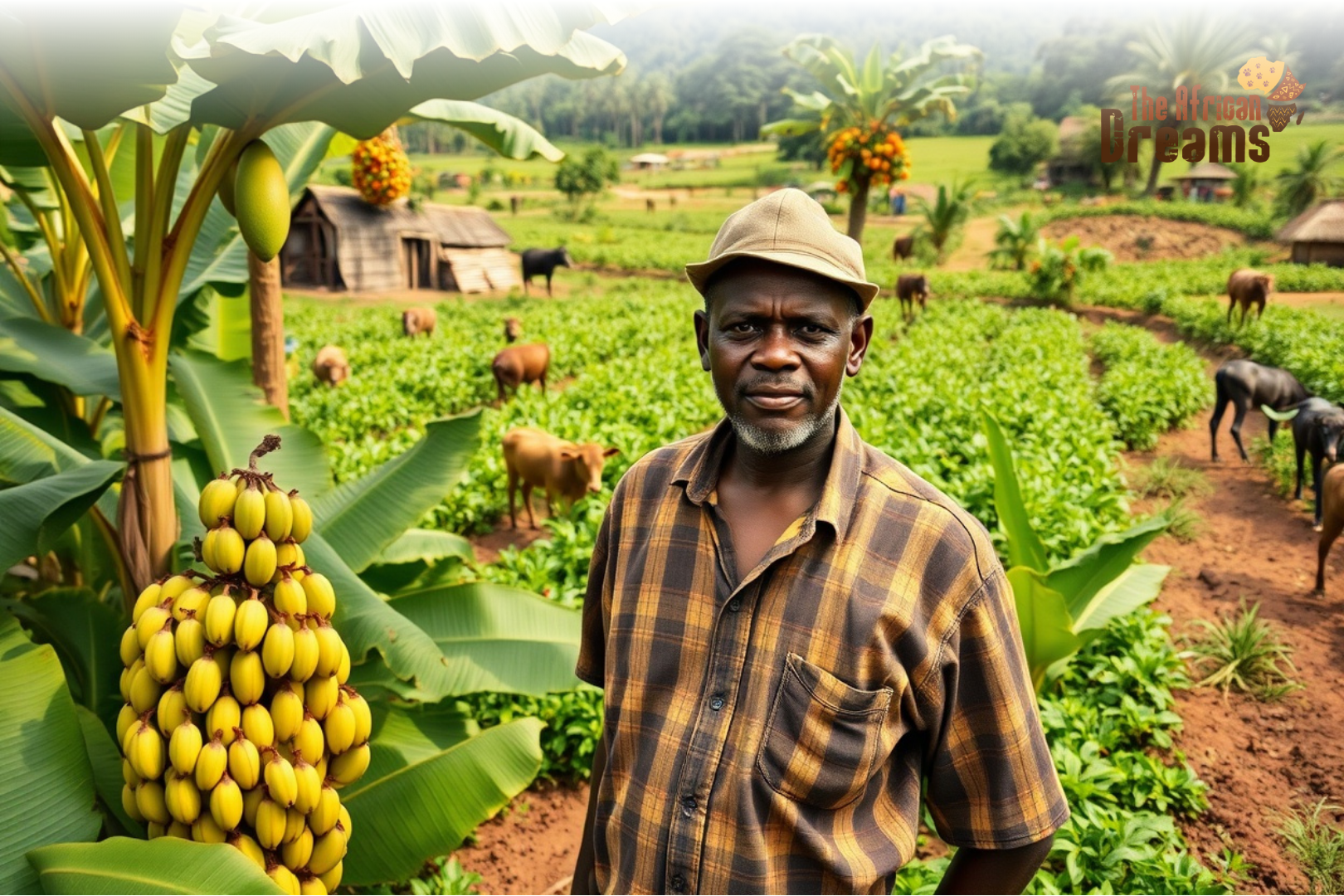
Mutegeki Johnson is from the lush landscapes of the Rwenzori Region and lives in the Rwano Village. He used to produce 10 bunches of bananas per week. Unsatisfied with his banana plantation, he was looking for a way to increase production. He also learned about the Building Resilience and Inclusive Growth of Highland Farming Systems for Rural Transformation (BRIGHT) project. The project empowers agroeconomic practices from communities to households. The farmer who once failed to generate enough to feed his family now yields a bountiful 20 bunches per week.
A small-scale farmer lives his day off through subsistence farming. He focuses only on producing a small amount of food for the family. Subsistence farming is built on providing household needs. But the future demands more. In Uganda, the population will be over 100 million by 2050. The demand for food will increase proportionately. Thus, Uganda will need a new system of producing food: agroecology. Hence, Uganda’s agroecology practices are important for ensuring food security.
Breaking subsistence farming to give it a renovative nature is a must-do. Uganda’s agroecology practices can not only meet future demands but also protect farmers economically and socially. It can increase yield and use whatever is available on the existing farm, creating a complete ecosystem within the farm. This blog will talk about it.
Article Highlights
Uganda’s agroecology practice uses the available resources within a farm, making it an ecosystem that depends on itself for everything.
Subsistence farming provides most of the world’s food consumption, but this must stop. Countries need to implement a new vision to be future-proof.
Turning subsistence farming into other modes of production, like agroecology, is a more viable option than others.
What is Agroecology Practice?
Agroecology is an approach to farming that simultaneously integrates ecological (environmental) and social ideas to manage food production. It started to take shape in the early 1980s. However, it is still not widely used in agricultural research today.
The innovative approach offers a sustainable way to improve outcomes, including healthy diets, biodiversity conservation, and mitigation of the effects of climate change. It also ensures that no one is behind the food system. Agroecology is helping countries that practice and aim to achieve Sustainable Development Goals (SDGs).
The current climate crisis and food insecurity are becoming concerns for most people, including in rich countries. In other words, the problem of food insecurity is real for all. At the same time, managing the environment to support sustainable agricultural practices is a concern. So, there is a need to produce more food and meet the needs. On the other hand, countries also need to manage the environment properly to ensure it is less damaged.
Elements of Uganda’s Agroecology Practice
Agroecology respects the environment. Uganda’s agroecology practice does the same. Not all current practices aimed at increasing yields consider the environment to keep it safe. But the elements of agroecology are built on a correlation among the existing elements. The key principles of agroecology are provided by a publication from the High-Level Panel of Experts on Food Security and Nutrition (HLPE). They are:
- Co-Creation of Knowledge
- Social Values & Diets
- Connectivity
- Fairness
- Land & Natural Resource Governance
- Participation
- Recycling
- Input Reduction
- Soil Health
- Animal Health
- Biodiversity
- Synergies
- Economic Diversification
Integrating Uganda’s Agroecology Practice to Subsistence Farming
Subsistence farming is the only providing sector for most of the world’s food production. Family farms are the source of 80% of the world’s consumed food. But these farms cover only 12% of all agricultural land.
Farmers with less than 10 hectares of land are often known as subsistence farmers. Their production is limited to a small amount. And most of these are consumed in-house. These farmers, at best, sell the produced goods to the local communities.
Although current overall consumption is sufficient, future needs must be protected. In Africa, the child population will reach 1 billion by 2055. Countries need to secure food for themselves. More than the ongoing subsistence practice will be required to do so. That’s why Uganda is working towards it
The solution? Yes, integrate Uganda’s agroecology practice into agriculture. Terms like climate-smart agriculture and sustainable farming are already well known. Agroecology has a similar vibe. It pursues ecological balance and addresses social approaches, and sustainable farming practices do the same.
What Farmers are Saying about Uganda’s Agroecology Practices
Nakijoba Irene is a small-scale farmer from Mukono District in Uganda. Agroecology is so viable that anyone can practice it. The farmers use locally available materials. They do not have to buy them from the shop.
Agroecology helped Irene practice mixed farming and rear animals alongside crops. She has a small farm filled with agroforestry elements like fruit trees. She has planted avocado, jackfruit, and oranges as part of her intercropping system. She makes organic manure from her animals, and the manure feeds the soil. Then, the soil feeds her plants. She’s a part of the amazing ecosystem that she built herself.
“So in the end, I will harvest fruit from the plants, I will harvest from the livestock, and I will also harvest from the crops,” she said confidently.
Christopher Wali is another farmer from the same district in Uganda’s central region. In this view, the world has changed, and along with it, Uganda’s agroecology practice has become a viable option. These changes are related to the overhaul of Uganda’s climate. The world is becoming hotter for living beings. So, many challenges are coming up, like soil degradation, lack of rainfall, new varieties of pesticides and diseases, etc.
Adward Mukiibi, the president of Slow Food International, says that now is the time to make a shift. It will be towards a sustainable system that preserves the ecosystem and respects human dignity. The system is agroecology.
Final Thoughts: Adopting Uganda’s Agroecology Practices
It is important that national policymakers start thinking about highlighting the presence of Uganda’s agroecology practices in national policies. It should specify what agroecology is and outline the possible prospects.
Uganda’s agroecology practices are integral to food production, a sustainable environment, and the value chain. So, it is very important to include it in the national policies. By introducing it on the national level, every community will be a part of restoring the ecosystem. It will also ensure higher yields for each crop, providing food security for future generations in Uganda.





0 Comments