
Introduction: Malawi’s Agriculture & Industrial Sector
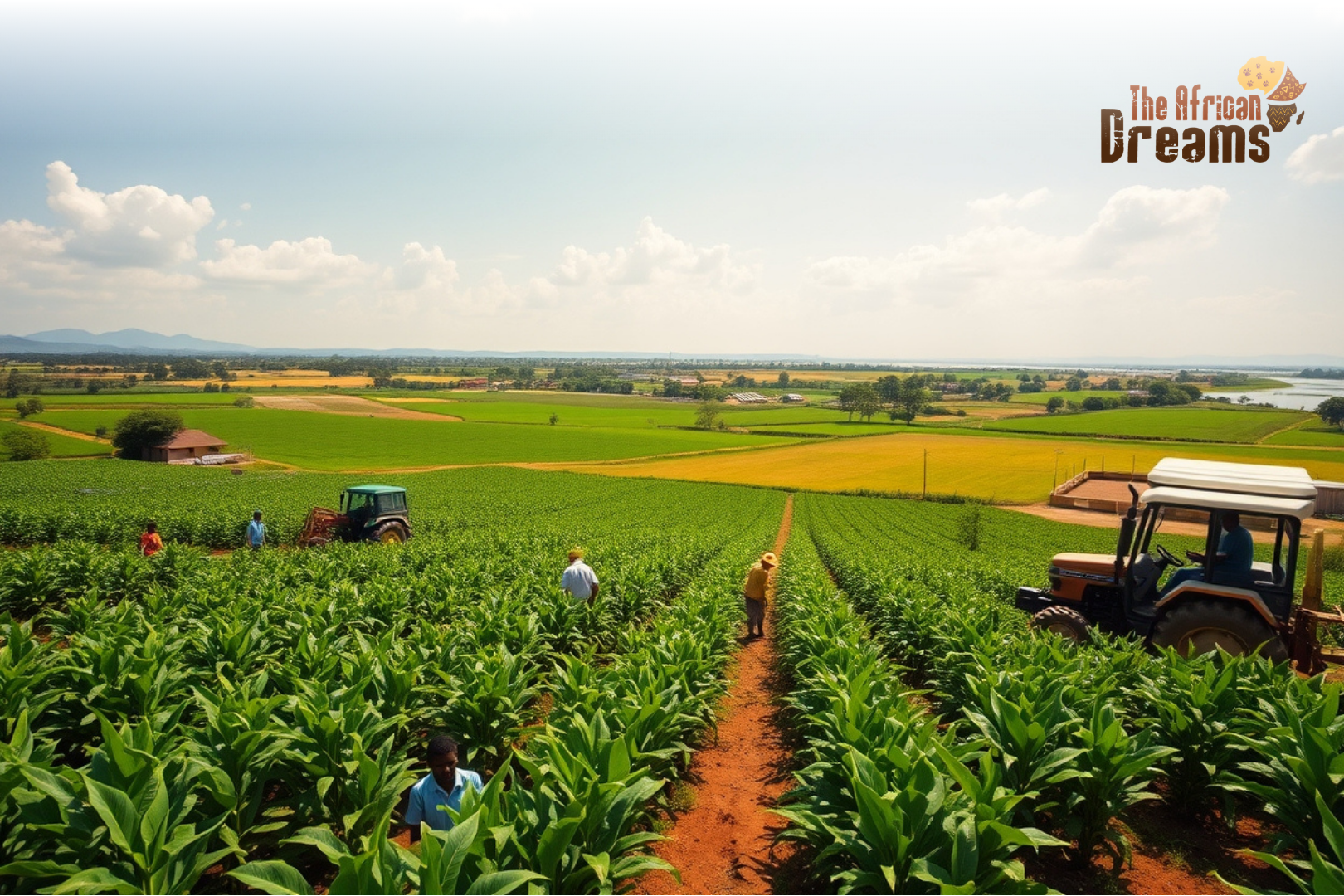
Malawi’s agriculture has a long history as the primary source of food and income for its people. Traditionally, most farmers grew crops mainly to feed their families. Agriculture remains a key part of the economy, with small and large farms. The main crops grown include maize, tobacco, tea, and sugarcane.
Farming methods now use a mix of traditional and modern techniques. Industrial investment is also increasing, helping Malawi to process crops and improve production. This growth supports job creation and economic development in Malawi.
This article explores the investment opportunities in Malawi’s agriculture and industry, highlighting key trends, government support, and areas for potential growth.
Article Highlights
Agriculture’s Role: Malawi’s agriculture is very important to its economy. It provides jobs for over 80% of the population. It also helps the country earn revenue, ensure enough food, and export products such as tobacco and tea.
MAIIC Support: The Malawi Agricultural and Industrial Investment Corporation (MAIIC) boosts economic growth. It funds and supports Malawi’s agriculture, industry, and small businesses. This work aims to cut poverty and encourage innovation.
Investment Opportunities: Malawi has fertile land and a great climate. This supports crop diversification, livestock farming, and aquaculture. There are also chances in agro-processing, manufacturing, energy, construction, and mining.
Government Policies: Supportive policies include land reforms, financial subsidies, tax incentives, and infrastructure development. They also cover R&D funding, improved market access, and climate-smart farming initiatives.
Challenges & Climate Impact: Climate change brings risks like droughts and floods. These threaten food security and GDP growth. So, there’s a push for investments in climate-resilient farming and renewable energy projects.
Economic Outlook: Malawi’s economy is set to grow. This comes despite issues like inflation and foreign exchange shortages. Growth will be driven by improvements in Malawi’s agriculture and industry. Hydropower and solar energy projects will also support this progress.
Overview of Malawi Agricultural and Industrial Investment
Malawi Agricultural and Industrial Investment Corporation (MAIIC) is a state-owned company. It promotes socio-economic development in Malawi. It provides support to agriculture, industry, and small businesses.
MAIIC aims to reduce poverty. It helps farmers and entrepreneurs grow their businesses. It encourages innovation as well as investment in local industries. The company serves both the public and private sectors.
Its objective is the development of a more robust economy through job creation and sustainability. MAIIC funds projects that help the community. This boosts food security and grows Malawi’s industrial strength.
Importance of Malawi's Agriculture to its Economy
Malawi’s economy is based on agriculture. It is central to the lives of most Malawians and undergirds the country’s growth in countless ways.
1. Main Source of Employment
The majority of Malawians grow their food for a living. More than 80% of people rely on Malawi’s agriculture for their daily income. Smallholder farmers cultivate crops like maize, beans, groundnuts, and vegetables. These farmers are also engaged in animal husbandry, mainly goats and chickens.
2. Major Contributor to GDP
Malawi’s agriculture sector significantly contributes to its Gross Domestic Product (GDP). It accounts for more than one-third of the country’s GDP. It generates a great deal of revenue for the country, improving people’s lives. When the farming season is strong, the economy expands more quickly.
3. Source of Food
The majority of Malawi’s families are fed by small-scale farming. Maize, rice, and cassava are some of the staple foods. A bumper harvest can help ease hunger and improve nutrition. That leads to better health for children and adults.
4. Foreign Exchange Earnings
Agricultural exports make up a significant portion of Malawi’s foreign currency earnings, accounting for over 80%. Principal export crops include tobacco, tea, sugar, coffee, and groundnuts (or peanuts). These goods are sold in international markets and generate revenue that the country uses to buy goods and services it cannot produce.
5. Boosts Other Sectors
Farming propels parts of the economy. For instance, Malawi’s agriculture sector is a source of demand for transport, storage, and packaging services. It also helps support agro-processing industries, which take raw crops and turn them into products such as cooking oil, flour, and juice.
6. Encourages Rural Development
When Malawi’s agriculture thrives, so do rural areas. Farmers can afford better houses, schools , and health care. Highways were constructed to aid the transport of goods, and markets were established where one could buy and sell farm produce.
7. Promotes Economic Stability
A vibrant farming sector keeps poverty down and the economy strong. When people make more from farming, they have more money to spend, which fuels business growth. This provides jobs and takes the pressure off of government funds.
Opportunities for Malawi’s Agriculture and Industry Investment
Malawi is a landlocked nation in southern Africa. It has strong investment potential in both agriculture and industry. Malawi is a popular investment spot. Its growing population, rich soil, and strong government support make it attractive. Here, we simply explore the significant investment opportunities in agriculture and industry.
Agricultural Investment Opportunities
1. Fertile Land and Good Climate
Malawi has good soil and a good climate. These are good conditions for Malawi’s agriculture, cultivating crops such as maize, tobacco, tea, cotton, sugarcane, and soybeans. Investors can use great swaths of unused or underused land for commercial farming.
2. Crop Diversification
There is much room for developing new crops like avocados, macadamia nuts, and chillies. These high-end crops have international demand. Cultivating such crops can bring high income in those regions.
3. Livestock and Dairy Farming
There is also animal husbandry in Malawi. Cattle, goats, pigs, and poultry are profitable. The country and neighbouring areas also witness increased demand for meat, milk, and eggs.
4. Aquaculture and Fisheries
Malawi has many lakes and rivers. Fish farming is growing fast. Investors can invest in fish hatcheries, feed production, and cold storage to boost the fish supply chain.
5. Agro-Processing
Most crops are sold raw. Investors can establish peanut butter, fruit juice, flour, and cooking oil processing plants. Agro-processing provides value addition and job creation.
Industrial Investment Opportunities
1. Manufacturing
Malawi imports many items that it could make itself. These include furniture, clothing, construction materials, and household goods. Manufacturing plants reduce imports and fulfill local needs.
2. Agro-Industries
Local industries that manufacture products from raw agricultural materials are required. For instance, Malawi can make ethanol from sugarcane, and it can make textiles from cotton.
3. Energy Sector
There is a vast need for clean and reliable energy. Solar, hydro, and biomass power offer investment opportunities. Nobody wants to cut energy supplies, and providing more energy supplies helps homes and businesses.
4. Building and Construction
As Malawi expands, the need for improved roads, housing, and public facilities is evident. Investors could participate in constructing roads, bridges, schools, and hospitals. This also makes it possible to open rural areas to economic activity.
5. Mining and Mineral Processing
Malawi has unexploited mineral resources, including uranium, coal, limestone, salt, and rare earths. Investing in responsible mining and mineral processing can yield good returns. More importantly, it also helps diversify the economy.
Government Policies Supporting Agriculture & Investment
Government interventions are crucial for the investment to take place. These policies make it easier for farmers to access finance, land, technology, and markets. They also contribute to food security, rural development, and economic growth.
1. Land Reform Policies
Land reform is one of the critical steps that governments will take. Clear land titles promote investment in Malawi’s agriculture. Land registration programs have improved land security in countries such as Rwanda. That has resulted in a 10% increase in agricultural productivity, the World Bank says.
2. Financial Support and Subsidies
Many countries give financial support with subsidies and loans at low interest rates. Those cut the cost of seed, fertilizer, and equipment. For instance, India’s agricultural subsidies are more than ₹1.3 trillion annually. In the United States, the 2018 farm bill authorized $428 billion over five years, much of it for farmers. Malawi is also on its way to supporting farming financially.
3. Tax Incentives
Governments also provide tax breaks to encourage private-sector investment in agriculture. The benefits include tax breaks for farm income and import exemptions for equipment. For example, Nigeria has given tax holidays and duty-free imports to agricultural investors. This is part of the Agricultural Promotion Policy. Malawi’s agriculture sector also offers such incentives to promote investment.
4. Investment in Infrastructure
The state invests in rural infrastructure (roads, canals, and storage). This minimizes post-harvest losses and enhances access to the marketplace. Impounding projects produced 20 percent better crop yields on state-run irrigated land in China. In Africa, better infrastructure is believed to increase farm productivity by 30%. Malawi’s agriculture is no different in this case.
5. Research and Development (R&D)
Support for agricultural R&D is another important policy issue. Governments support research institutes. They help create new seeds, pest-control methods, and sustainable farming practices. In the United States, each $1 invested in agricultural research yields $20 in benefits, according to estimates by the USDA. Supporting agricultural research and development will also accelerate the growth of Malawi’s agriculture.
6. Trade Policies and Market Access
Policies that make it easier to access markets make it easier for farmers to sell what they grow at higher prices. This would include establishing regulated markets to facilitate fair pricing. Governments could also sign trade deals to prize open markets. A case in point is the African Continental Free Trade Area (AfCFTA), which is likely to increase agricultural exports by 7%.
7. Training and Extension Services
Most countries also provide training programs and extension services to train farmers. In Ethiopia, wheat production has grown by more than 30% in focused regions with the assistance of extension services. In Malawi, these programs also teach modern farming practices and climate-smart agriculture to improve Malawi’s agriculture.
8. Climate and Environmental Policies
Governments are integrating climate-smart agriculture into their policy plans. It also covers promoting organic farming, agroforestry, and water conservation technologies. More than 40% of the EU’s Common Agricultural Policy funds go to environmental practices today. Malawi’s agriculture can take advantage of such kinds of policies.
Future Outlook for Malawi’s Agriculture & Industry
A. Malawi’s Agriculture: Current Status and Future Outlook
Malawi’s agriculture is the backbone of its economy. It contributes around 31% to the GDP. Some 60% of the population is employed in agriculture. However, climate disruption poses a huge threat to Malawi’s agriculture. Droughts and floods have become more common, causing lower crop yields and endangering food security.
The World Bank projects that, without climate-adapted policies, Malawi’s GDP may fall by 16% by 2050 due to climate change impacts.
Malawi is investing in climate-smart agriculture to tackle these problems. This includes support for drought-resistant crops, stronger irrigation systems, and improved farming techniques. These measures have been taken to boost production and ensure food security for an expanding population.
B. Malawi’s Industrial Development: Progress and Prospects
Malawi’s industry is still relatively underdeveloped but demonstrates potential. It currently makes up around 18.3% of GDP and employs 8% of the working population. The government is trying to revive this sector through PPP and policy reforms.
The Mpatamanga Hydropower Project is one of the big projects that, once completed, will pave the way for 358 MW on the national grid. This development will see the country’s hydro generation capacity double its current capacity. The project will provide electricity to over one million homes. It will also create thousands of jobs and boost industrial growth.
Furthermore, Malawi is extending its renewable energy operation. Dwangwa Solar Power Station (55 MW), Bwengu Solar PV Power Station (50 MW), and Nkhoma Deka Solar Power Station (50 MW) will boost power for industry.
C. Malawi’s Economic Outlook
Malawi’s economy is projected to grow by 3.2% in 2025, up from 1.5% in the previous year. Improvements in Malawi’s agriculture and industrial activities drive this growth.
Although challenges in Malawi’s agriculture still remain. High inflation hit 28.5% year-on-year in January 2025. Also, foreign exchange shortages are risks we can’t ignore.
The government aims to solve these problems by boosting Malawi’s agriculture and industries, which bring in foreign currency. These also include tourism, and mining. Steps are being taken to restructure public debt. This will help attract foreign investment and support sustainable economic growth.
Final Thoughts: Malawi’s Agriculture & Industry
Malawi’s agriculture is still key to the economy and the lifestyle of most Malawians. Today, many farmers produce key crops such as maize, tobacco, tea, and sugarcane using traditional and modern methods. Therefore, investment in this industry boosts farming, processing, and exports. This drives economic growth and creates jobs.
With further investment and development, Malawi’s robust agricultural and industrial sectors could expand significantly. This growth will increase incomes, reduce poverty, and strengthen the economy. In the long term, it will improve the lives of many people and help the country become more successful and stable.
In order to grow and develop internally, the government and businesses should focus on Malawi’s agriculture and industry, offering incentives and promoting opportunities. With proper investment, strategy and collaboration, Malawi’s agriculture and industry sector will continue to grow.
To learn more about Malawi’s agriculture, you can read, Investment Opportunities in Malawi’s Agriculture: An Overview.

0 Comments