
Explore Burundi’s Coffee Industry
Do you know that farmers in Burundi were forced to cultivate coffee in the early 20th century?
Under the Belgian colonial rule, the product was first introduced, and people had no idea what it was. A century later, coffee is now the major export product of Burundi, bringing millions to the country’s economy. Burundi’s coffee industry holds much potential and can bring so much more to the table. In this article, we will take a deep look into Burundi’s coffee industry.
Burundi is an agriculture-dominated country. The sector employs four out of every five people and contributes nearly 40% to its GDP. With fertile soil and a favourable climate, the country has an untapped potential in agricultural products, but is limited in production due to several challenges.
Burundi’s farming is dependent on the subsistence method, as most of the farmers are fighting poverty. Thus, managing food for in-house consumption has been the sole aim of the farmers. Commercial agriculture has a long way to go here.
Despite the difficulties Burundi faces in agricultural production, coffee slowly became the major export product. This article will explore Burundi’s coffee industry by taking an inside-outside look.
Article Highlights
Coffee in Burundi was introduced in the early 1920s during the Belgian colonial period, and now it is the key export product.
The country’s ongoing political chaos since its independence has halted coffee production severely, and potential production is still capped.
Investment is associated with Burundi’s coffee industry, and value addition can increase production, profit, and ROI for both the producers and the investors.
The History of Burundi's Coffee Industry
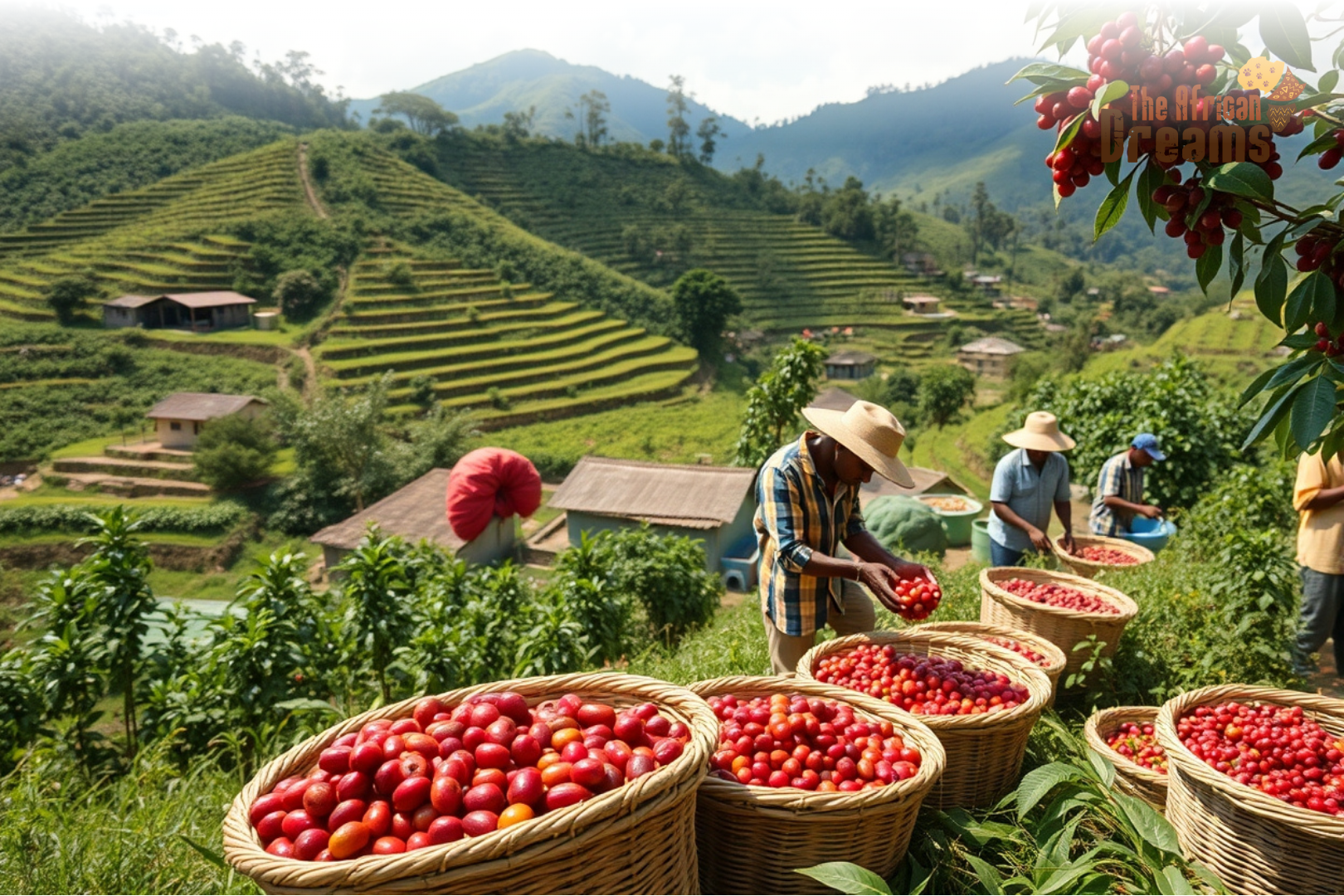
Burundi’s coffee farming history began in the early twentieth century. Coffee was first introduced under Belgian colonial rule in 1920. Unaccustomed to the product, people were worried about the outcome, but they were forced to grow at least 50 coffee trees.
After the country’s independence in 1962, farmers started to produce coffee privately. Following a genocide, the government took control of the coffee fields and production. Coffee farming was back in private ownership after Melchoir Ndadaya became the first Hutu president in 1993. Later, the political premise went rogue, and civil war broke out. However, coffee farming continued to be operated by small-scale farmers.
These long conflicts damaged the country’s agriculture sector severely, and after the 2000s, efforts were made to increase the production and value of coffee. The yearly yield is still much lower than the expected value. But Burundi’s coffee industry is making decent progress in its production.
Coffee-producing Regions
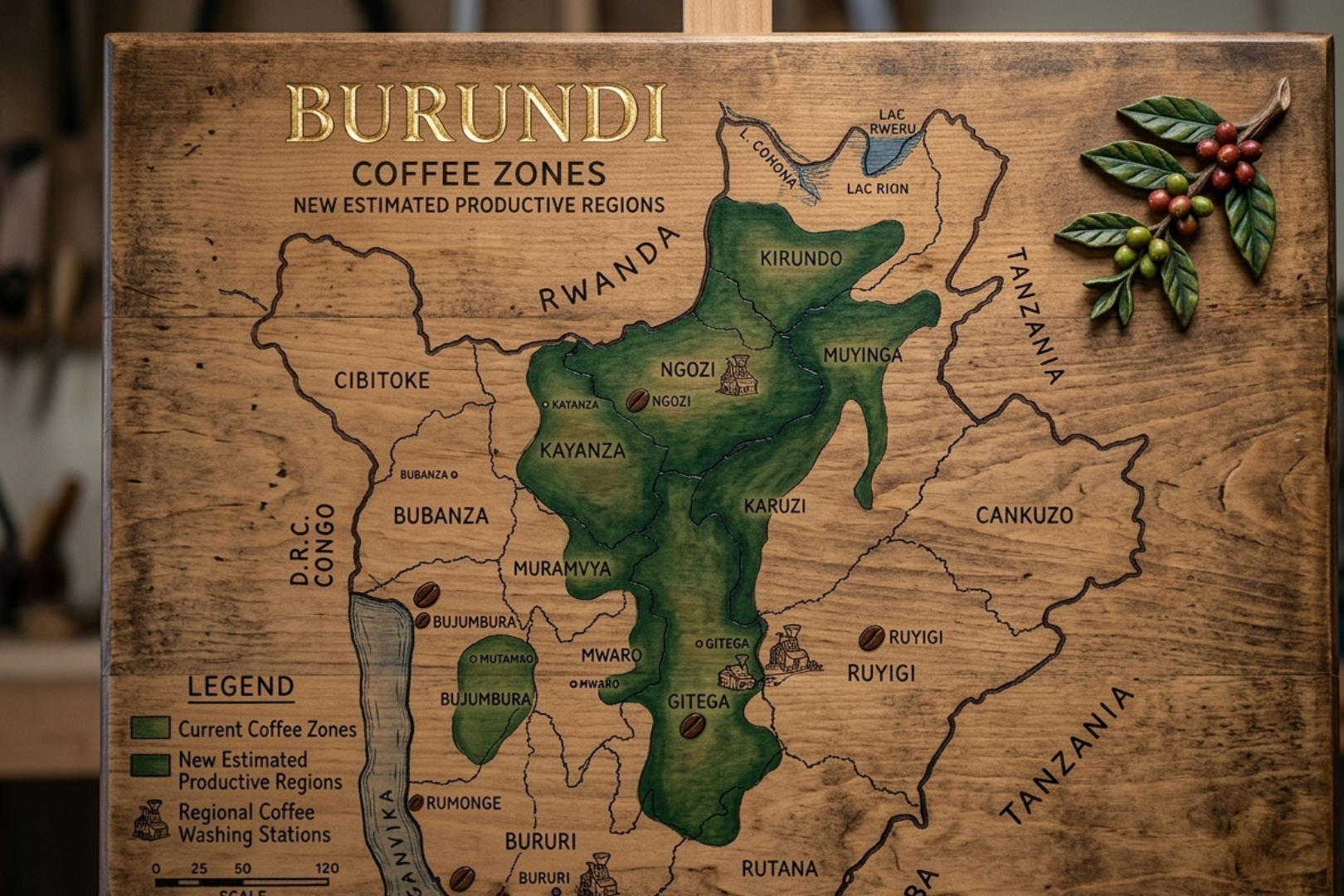
Burundi has five major coffee-producing regions:
- Buyenzi,
- Kirimiro,
- Mumirwa,
- Bweru, and
- Bugesera.
The altitudes of these regions impact the taste and quality of coffee. Higher altitudes make coffee fruitier and sweeter, while lower altitudes can produce a balanced taste. Altogether, the country has about 60,000 hectares of coffee farms and has planted about 25 million coffee trees.
The country experiences two phases of rainfall throughout the year. Between February and May, the amount of rainfall is about 1,200mm. On the other hand, it is nearly the same from September to November.
Most of the coffee produced in Burundi comes from the northern region, adjacent to the Rwandan border. Farmers operate within a small piece of land, so they become extra careful to ensure the quality and yield. Otherwise, the prices will drop, and the return won’t be enough to support livelihoods.
The same process is followed in processing plants. As Burundi produces a small amount of coffee each year, ensuring quality is the most important.
The Unique Quality of Burundi Coffee
Burundi mostly produces Arabica coffee. It is known for quality coffee products, though the yearly yield is comparatively lower than other African countries. Despite this smaller output, the country leads as one of the best-quality coffee producers. And now, it is looking to expand its production each year and is also trying to improve the quality.
Several factors are working behind the quality of Burundi’s coffee. The fertility of Burundi’s land is one of the primary reasons, and it maintains the quality. Another factor is the dedication of its farmers. Though there are several challenges, the farmers put all out efforts into bringing out the best.
Burundi takes good care in wet processing, sorting, and quality control. It relies on the hand-pick method and sorts selectively, so the quality remains top-notch. The taste offers a sweet and bright acidity, with Bourbon and Jackson (a hybrid of Bourbon) varietals commonly grown. Delicate flavours and sweet berry notes make the coffee even brighter. Thus, a sip in Burundi’s coffee cup tastes so refreshing.
Burundi is a landlocked country, but it has a portion of Lake Tanganyika to the west. The hilly topography and favourable climate in this country breed good coffee. Its equatorial and tropical climate has a large impact on the quality and taste of its coffee.
Economic Significance of Burundi’s Coffee Industry
Burundi’s economy is agriculture-dominated. Coffee is the primary export product in Burundi, followed by tea. These two contribute around 40% of total foreign exchange earnings. Coffee dominates with 23% while tea is accountable for 16%. The country exported $31.1M of coffee in 2022.
The economic significance of Burundi’s coffee industry is unfathomable. About 600,000-800,000 coffee farmers are now operating in Burundi, amounting to 40% of the whole population. Most of them are smallholders and cultivate privately owned lands. The average size of a farm ranges from 1 to 3 hectares.
Coffee growing provides both direct and indirect economic value. Apart from being a major export commodity, coffee production provides employment and is a major source of livelihood for the farmers. Moreover, it has a decent contribution to the country’s GDP.
The social impact of coffee is also important to note. To eliminate the country’s poverty and provide people with food security, coffee farming plays an important role.
Burundi’s coffee industry also embodies cultural identity for the people and has tourism potential. Including everything, coffee has a big impact on the economy.
Challenges Faced by Burundi’s Coffee Industry
Despite being a producer of high-quality coffee, Burundi suffers from several challenges in its coffee sector. Some of these challenges are:
1. Low Productivity: Burundi produces a smaller amount of coffee each year than its regional competitors, like Kenya and Tanzania. The country’s land, dependency on smallholders, and other problems are associated with this issue. The yearly yield was about two hundred and thirty thousand 60 KG bags in 2021, which was a decline in yield from 2020.
2. Old Coffee Trees: Most of the coffee trees in Burundi were planted during the Belgian colonial rule. The trees were planted between the 1930s and 1960s. The newest plantation took place in the 1980s. While coffee trees need to be replaced every 15 to 20 years, the newest coffee trees are over 40 years old.
3. Absence of modern knowledge: Literacy among the farmers about modern techniques and ways to operate their farms is another significant barrier to production. Farmers follow the old techniques and cannot produce much. For example, they are not familiar with stumping. So, it becomes difficult to make them understand the usefulness.
4. Transportation costs: Burundi is landlocked on each side, with no seaport. Besides, the road conditions in Burundi are unmaintained. Coffee travels from its rural areas to the country’s processing zone and then is shipped to the nearest country.
The long-distance journey often goes longer as the coffee needs to cross the neighbouring countries to reach the ports and then make it to the overseas market. This whole process significantly increases transportation costs and makes it harder for the coffee to get to the market.
5. Middleman Domination: The sector heavily suffers from this issue. The absence of a continuous supply chain and a proper management system hinders the farmers from reaching out to coffee buyers.
Corruption and syndicates have broken the spirit and resulted in a lesser profit. Mélance Hakizimana, a coffee farmer, said,
“There are too many commission agents in the coffee sector. We coffee farmers would like to be in direct contact with coffee buyers. I know that there are many buyers on standby.”
6. Apart from all these major challenges, there’s a minor one, which is not a defect per se. It’s common for Burundi’s coffee, anyone who has enjoyed a cup would hear the name. Potato defect is caused by pyrazine, a heterocyclic aromatic organic compound. Though the chemical sounds weird, it is common in food and drink.
Potato defects can happen in other ways as well. When insects cause tears or damage the outer skin of a cherry, airborne bacteria can easily enter. The defect makes the taste and smell like raw potato.
However, there are several ways the country can adapt to solve these challenges. It’s never too late for the country to wake up as the next destination of premium coffee.
Opportunities to Revive Burundi’s Coffee Industry
Burundi’s coffee industry has a good reputation in markets like Europe, the US, and Africa. Germany and Sweden. So, the opportunity to grab a larger part of these markets is always present before Burundi. But it needs to scale up the industry to do so.
Solving the challenges is the first key concern for Burundi to revive and scale up the industry. If these challenges can be solved, the production, quality, and foreign exchange earnings will rise automatically.
But there are other ways to scale up Burundi’s coffee industry.
1. Specialty Coffee Markets: As Burundi doesn’t have much land and productivity will be capped even if it uses high-quality and modified plants, it can work on premium products. The worldwide demand for specialty coffee is rising, so Burundi can use this space and become a premium coffee producer. It can then earn good revenue and recognition in overseas markets.
2. Sustainable Practices: If the primary focus is on scaling up productivity, then sustainable practices can be the best option for Burundi. By promoting organic cultivation, agroforestry, and water conservation, the country can increase production while ensuring environmental resilience.
3. Value Addition: By preparing wash plants and processing and packaging facilities, Burundi can earn more foreign exchange than it does today. It’s always better to add value to the product first and then increase production. If Burundi can incorporate these ways to add value, it will also decrease its dependency on others.
4. Training and Raising Awareness: Most of Burundi’s farmers lack literacy and don’t know the basics of modern techniques. They follow conventional practices, and so the limit is capped. Providing training and guidance to the farmers can increase their knowledge and scale up production.
5. Market Access: Providing market access to the farmers is important to cut out the middlemen. The farmers often face trouble in getting a fair price for their products, and most of the profits are taken away. So, establishing a direct relationship between the farmers and the international buyers is crucial. Farmers will not only receive higher prices, but they’ll be encouraged as well.
Why Invest in Burundi’s Coffee Industry
Burundi’s coffee industry is a high-potential investment opportunity. It is suffering now with many issues tightening the neck of its top export industry. But the sector has great potential to draw investments as the future is very bright.
Here are some key reasons behind the sector being one of the high-potential investment sectors in Burundi.
- The quality and premiumness of Burundi’s coffee promote a lucrative business opportunity.
- The overall popularity of Burundi’s coffee is growing rapidly.
- Burundi’s coffee industry and market are expanding.
- The country has a big export potential. So does Burundi’s coffee industry.
- Investors will receive governmental support.
- It will create more jobs for the young workforce.
- Competitive labour costs in the country place it in a higher position for doing business at ease.
- Investing in Burundi is sustainable, and many more.
Final Thoughts: Burundi’s Coffee Industry
Burundi’s coffee industry is fueling the country’s GDP by leading from the front. The historic evolution of coffee in this country is both amazing and promising. From the early days of coffee adoption to the current practices, the sector experienced some tough times.
In an agriculture-dominated country where food security and livelihoods depend entirely on agricultural products, each sector is of similar value. Being one of the major contributing sectors, Burundi’s coffee industry is yet another making a difference.
Recent productivity may be low, and the yearly yield is even lower. But the potential it has is massive. There are several challenges along the way, but solving them could turn the country into a major exporter in the international market. Burundi needs to work closely with the farmers and the investors.
Burundi’s coffee industry can draw a lot of investment by proper pitching and spreading the opportunities. While Burundi is looking for ways to develop, its coffee industry can be the game-changer of its bright future.
To explore more about the agricultural sector of Burundi, including its strengths, opportunities, and challenges, you can read Exploring the Agricultural Sector of Burundi.
0 Comments