
Introduction
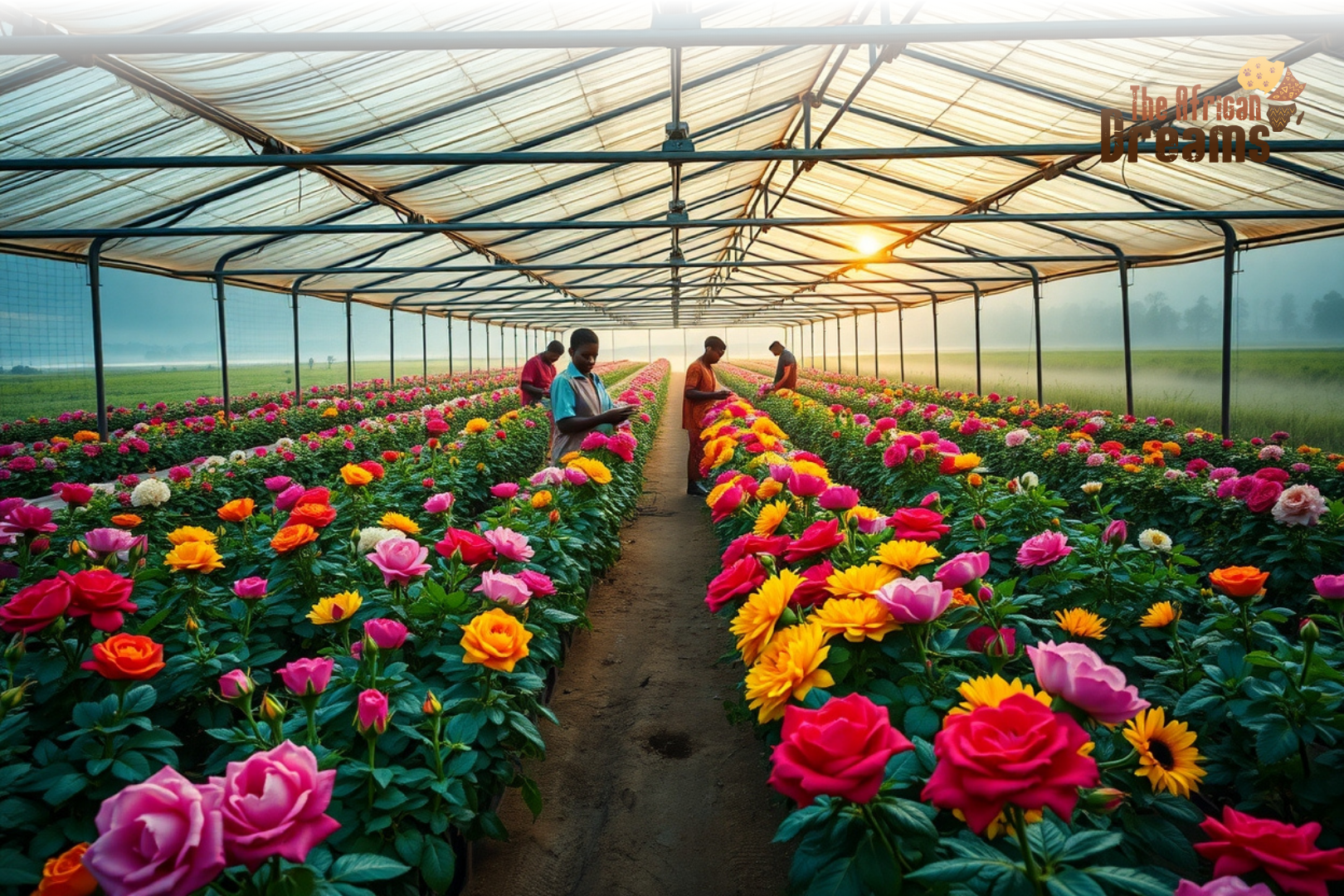
Floriculture is a part of the horticulture industry dealing with the commercial production of ornamental and bedding plants, cut flowers, etc. The overall global market of floriculture has overcome the challenges and is rising each year to new heights. Uganda, being a country most suitable for agricultural activities, also witnessed growth in both production and opportunities. This blog discusses an overview of Uganda’s floriculture, including its importance and impact on agriculture.
Article Highlights
Uganda is one of the top five countries in Africa to export flowers
The Floriculture industry is among the fastest-growing agriculture sectors and drives huge investment
Over 9,000 people are directly employed by the industry, 70% of them are women
Floriculture: What is it and its Significance
The cultivation, production, processing, and marketing of flowers can be simply understood as floriculture. These flowers include ornamental plants, garden plants, cut flowers, etc. It is a branch of horticulture.
Globalization and cultural exchange play an inevitable part in the blooming of the floriculture industry. Flowers are regarded as luxurious goods bearing high social values at home and outside. They improve the quality of life and increase human feelings. The use of flowers in social functions like weddings, Christmas, Valentine’s Day, Mother’s Day, Father’s Day, New Year, Memorial Day, etc. symbolizes the norms and positively expresses human feelings. The diverse use of flowers and ornamental plants makes the industry more demanding and turns it into a lucrative business.
Uganda’s Floriculture Industry: An Overview
Uganda is a new player in the floriculture industry. The country’s first production began in the early 1990s with a single 2-hectare farm. Over the next years, the industry blossomed a lot. By the year 2009, the country had 20 farms covering 192.2 hectares of land. The initial years were very challenging; problems were significant in tampering with the production.
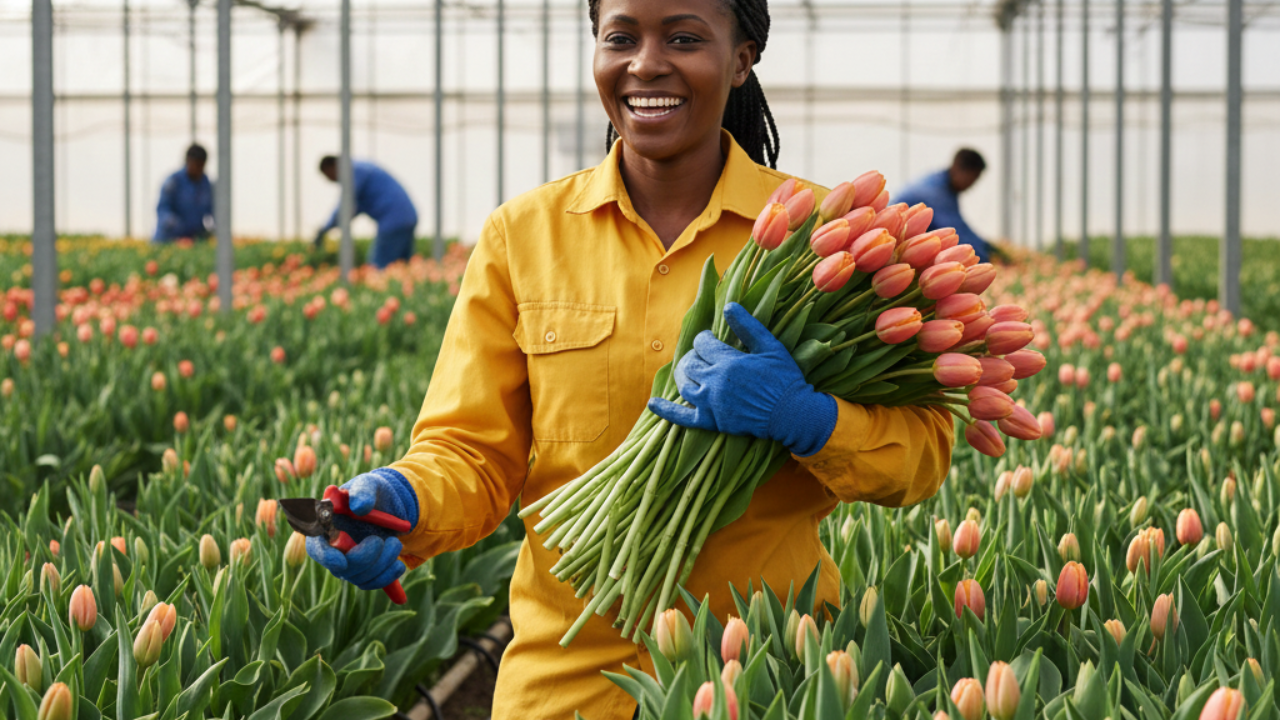
Despite the challenges, the next years of floriculture production rose significantly. Uganda exported 7,000 metric tonnes of flowers in 2015 and 7,500 in 2018. The revenue also witnessed a significant increase from USD 40 million in 2015 to USD 55 million in 2018. The export market of Uganda consists of two main products: cut flowers and cuttings. More than 9,000 people are directly employed by the flower industry, 70% of them are Women. The sector provides direct and indirect benefits to almost 60,000 individuals.
The Floriculture Market: Uganda and the World
The market size of floriculture is, in simple words, “massive”. In 2022, the value of the global cut flower market was approximately USD 36.4 billion. The market is projected to reach USD 45.5 billion by 2027. The return is high, so countries like China, Mexico, Peru, Chile, Bolivia, India, Ethiopia, Zimbabwe, South Africa, Uganda, Tanzania, and Zambia are among the most investment-receiving countries.
Floriculture, though a part of agriculture, is comparatively a new business idea in Africa. However, East Africa is ahead of the curve and leading the market. The interest may be new, but the growth is rapid. In Uganda, the total investment was valued at over USD 54 million, employing more than 6,000 people, as per a study from the Uganda Investment Authority.
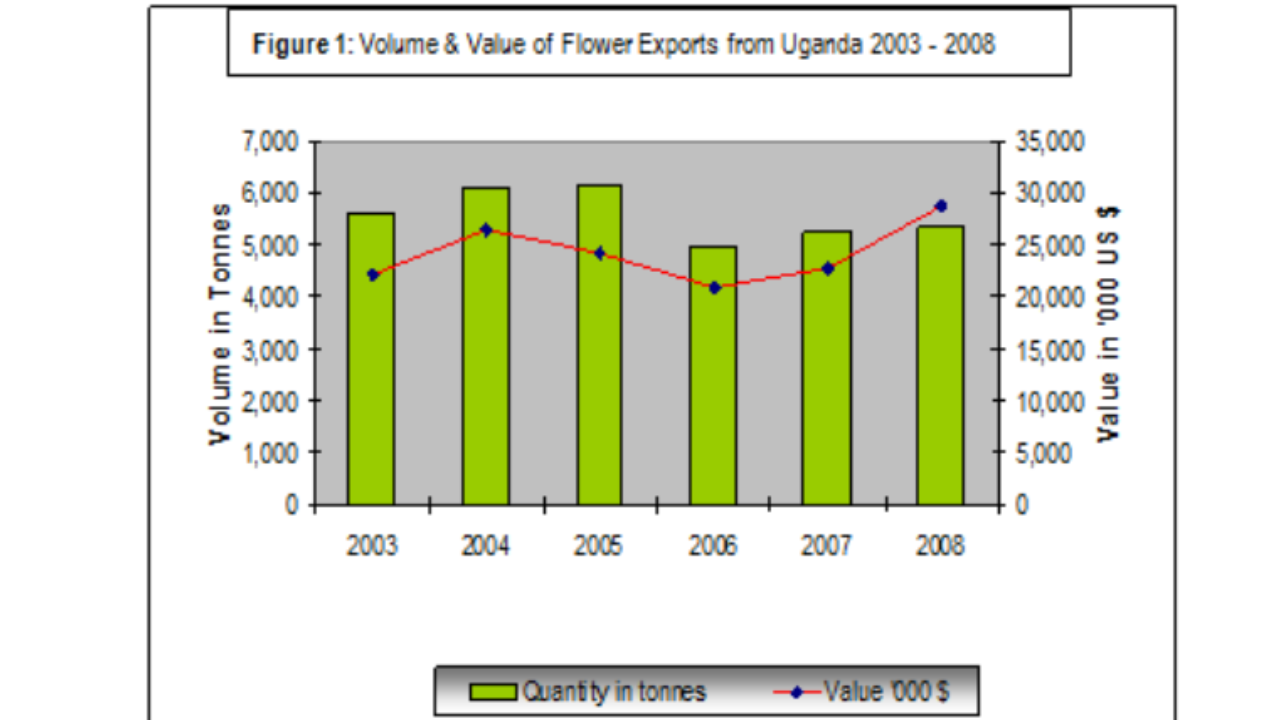
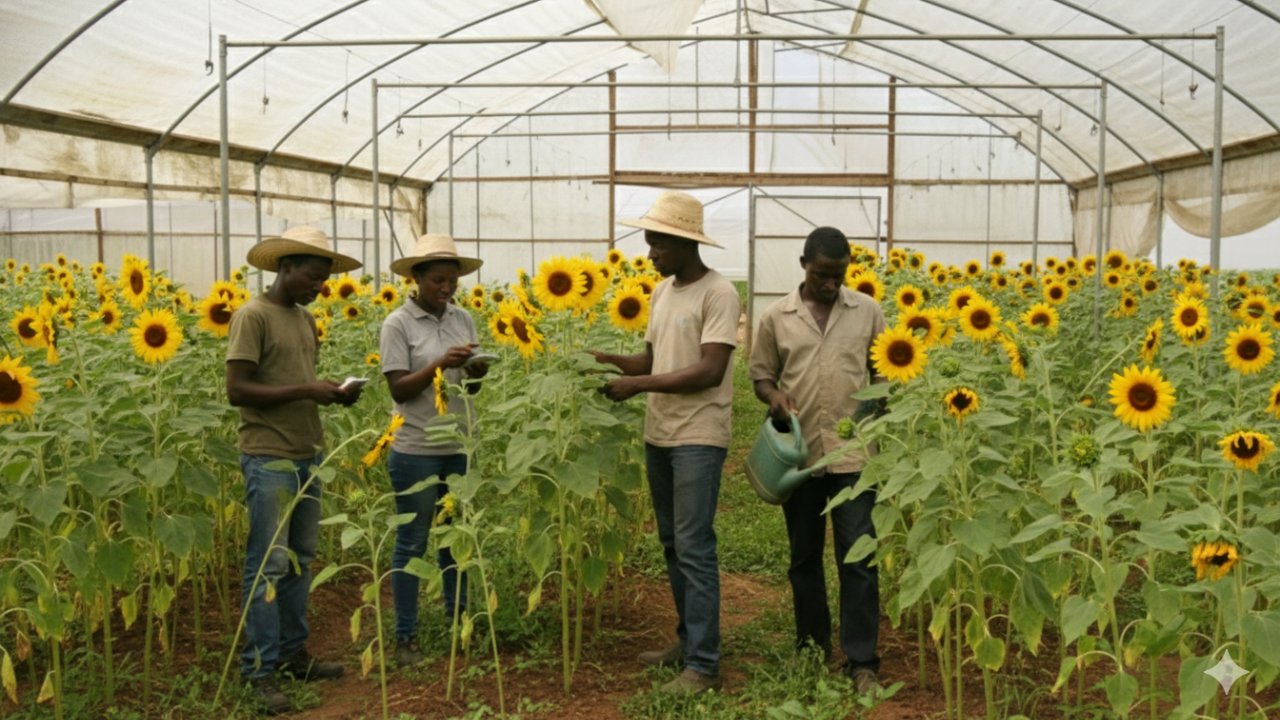
Uganda produces over 40 varieties of flowers, most of them centered on Roses (70%). Districts like Mpigi, Mukono, and Wakiso from the Lake Victoria basin are the main regions of the floriculture production. Besides, the Ntungamo District from the South Western part and Kapchorwa District from Eastern Uganda are the main places. The value of production and income doubled during 2000-2008, placing Uganda among the top five exporters of floriculture products in Africa.
Uganda’s Floriculture: Importance & Its Impact on Agriculture
The economy in Uganda is market-based and has plenty of natural resources. Most of its annual budgets are pointed to building infrastructure. The public debt is high, causing slow economic growth. Besides, the money-driving sectors are so diversified that proper support is barely possible. Thus, the importance of every micro sector is undeniable. Uganda’s floriculture can be utilized here as one of the top “potential” drivers of economic growth. It is one of the most lucrative and productive sectors for investors. About 50% of the world’s flower trade revolves around roses, carnations, and chrysanthemums. The Netherlands is the leading buyer of cut flowers and foliage with 56% in value and 61% in terms of volume. The export is done through the Dutch auction.
Uganda’s flowers are mainly destined for the European Union, particularly the Netherlands. Uganda is accountable for a total of 60% of chrysanthemum cuttings in the Netherlands. The flower industry not only provided new jobs, but it also uplifted the rural areas like the Mpigi, Wakiso, Mukono, and Ntungamo districts. The development in rural areas stopped urban migration. For every direct job in the horticulture industry, 1.5-2 jobs were created in indirect sectors like packaging, storage, handling chains, etc.
Uganda Floriculture to Reach Economic Sustainability
The floriculture market is dominated by a few countries like the Netherlands, Colombia, Ecuador, and Kenya. The top export market is Europe, where 50% of the total production is consumed. The Uganda Flower Exporters Association (UFEA) is in charge of the industry. It pushes the market to keep a fair trade practice, better working conditions, minimum wage and salaries, social welfare, benefits, etc. Overseas organizations like the Dutch-funded HIVOS are also ensuring other concerning factors like women’s safety, gender discrimination, etc. Considering most of the workers are young women, the initiatives function around them.
Final Remarks
Uganda’s Floriculture Industry is full of investment opportunities. The sector is growing and so is its impact on agriculture. As the economy of Uganda relies heavily on agriculture, flower production can be the way out for Uganda from economic instability. With good returns and less risk, the industry is a prominent player in reaching economic goals.






0 Comments