

“I harvested my crops due to my own consumption and my family. Then I sell some to get some money. We used to save only for survival and we picked little loans. We didn’t know about digital. Now we can use savings using digital.” Cathy Avako, who is a farmer based in Yumbe District, Uganda, said the local NGO asked about the use of modern technology in farming.
This is just an example of how the farmers are stacking cash and using them when needed. But the real magic happens when they went for farming. Modern machines have changed their perspective on farming and boosted crop-yielding to a great extent which they couldn’t think of before.
Uganda relies heavily on its agriculture industry. Since the late 1980s and early 1990s, individuals in this area have turned to agriculture to get out of poverty. Agroproducts and agro-processing account for a significant portion of their GDP as well as the export industry. Uganda’s agriculture industry contributes 24% of GDP and more than half of export revenues. Agriculture employs about 70% of the working population and serves as the initial employment for three-quarters of those aged 15 to 24. 78% of Ugandans reside in “rural” regions, where farming is the primary economic activity.
Article Highlights
Uganda’s agriculture industry is heavily reliant on digital technology, contributing 24% of GDP and over half of export revenues.
Agriculture employs about 70% of the working population and is the primary employment for three-quarters of those aged 15 to 24.
The government’s recent budget demonstrates a commitment to improving the use of modern technology in agriculture.
Significant milestones in agro-industrialization were achieved in FY 2022/23, including the construction of an afla-safe facility and an anti-tick vaccine production plant.
Digitalization of Uganda’s agriculture
Agriculture modernization can be a game changer for countries like Uganda, which rely heavily on it. Digitalization in agriculture refers to the use of digital technology, innovations, and data to revolutionize business models and practices throughout the agricultural value chain.
Uganda’s most recent budget indicates its major dedication to improving the use of modern technology in agriculture, which supports the government’s aim of commercializing agriculture to improve production, productivity, and competitiveness in both regional and worldwide markets.
Significant milestones in agro-industrialization were attained during the fiscal year (FY) 2022/23 due to technical developments. These included the building of an afla-safe facility at Namulonge to handle aflatoxins in cereals and nuts, as well as the construction of a local anti-tick vaccine production plant at the same location to battle tick-borne illnesses.
The creation of these facilities demonstrates the government’s commitment to harnessing modern biotechnology to address important agricultural concerns. Furthermore, the increase in large-scale farmer mechanization from 32% to 40%, aided by the acquisition and distribution of 240 tractors and 750 single-axle units, demonstrates the push for mechanization and technical upgrading in farming methods.
Building on these achievements, the FY 2024/25 budget has set aside Shs 1.878 trillion to enhance agro-industrialization, with an emphasis on commercializing and increasing the value of agricultural produce. Key expenditures include increased funding for animal, fish, and agricultural research and genetic development, as well as the expansion of pest, vector, and disease control methods, such as the purchase and distribution of 44 million doses of foot and mouth disease vaccinations. NARO’s use of the anti-tick vaccine, which began with 20 million doses, highlights the importance of current biotechnological treatments.
Also, the budget focuses on reducing risk agriculture by increasing assistance for production, productivity, and value addition throughout key value chains. There is also a sustained emphasis on automation, with increased investments in small and big irrigation systems, especially solar-powered solutions, to ensure long-term water management. The government is also promoting seed multiplication in Ugandan prisons for PDM beneficiaries and giving more financial support to large-scale commercial farmers, encouraging the incorporation of modern technologies into agricultural practices.
Uganda’s budget allocations demonstrate a clear strategy for using contemporary technologies in agriculture, to make the industry more competitive and sustainable.
Use of modern technologies in Uganda’s agriculture
Precision agriculture utilizes GPS and GIS technology to map fields, monitor crop health, and manage resources effectively. This technology enables site-specific farming, which optimizes the use of resources such as water, fertilizer, and pesticides. GPS technology has revolutionized farming by enabling farmers to drive their tractors and machines with precision, ensuring plants receive the right amount of space, water, and nutrients.
This results in happier and healthier plants. GPS also aids in smart mapping, allowing machines to draw maps of the field and collect data about soil and plants, enabling farmers to make informed decisions. This also leads to less waste and more efficiency, as farmers can use the right amount of seeds, fertilizer, and pesticides. Some tractors can even self-pilot, allowing farmers to relax and enjoy the process.
Additionally, GPS-powered drones can capture precise images, enabling farmers to identify areas needing extra care. Drones are used for aerial farm surveys, crop health assessments, and seed planting. They provide high-resolution images, allowing farmers to detect problems early and take corrective action.
Mobile Applications and Digital Platforms
Market Information and Access: Mobile apps such as “EzyAgric” and “AgriNet” offer farmers real-time market prices, weather updates, and agricultural tips. These platforms connect farmers with buyers, reducing middlemen’s exploitation and ensuring better prices for their produce. Iknowfarm is another mobile application based in Uganda. It is one of the leading mobile applications that provide agricultural extension services and digital literacy training to small-scale farmers in Uganda.
Joseph, a resilient refugee from the Imvepi refugee settlement, once faced numerous challenges in farming. His primary crops, maize, and sorghum, struggled due to the long maturity period and frequent floods from the nearby river. This constant battle against nature left Joseph searching for a more sustainable and productive farming solution. Joseph’s story highlights the power of community support and technology in overcoming farming challenges. The iKnowFarm App has transformed his approach, offering hope and practical solutions for many farmers like him.
Farm Management: Applications such as “Farmis” assist farmers in managing their operations by tracking expenses, yields, and inputs. This improves both decision-making and farm profitability.
Irrigation Systems
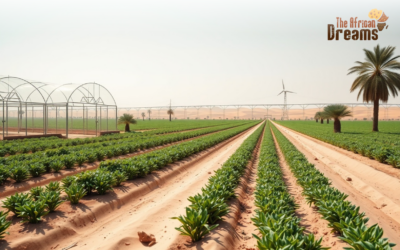
Smart Irrigation: Sensor-controlled drip and sprinkler irrigation systems with automated schedules ensure efficient water use. These systems are especially useful in regions with irregular rainfall patterns, as they help to maintain consistent crop growth. Research was executed among two villages in central Uganda about the importance of technology in irrigation system.
In Uganda, irrigation practices among farmers vary widely, with many still relying on traditional methods such as watering cans, drip kits, sprinklers, and even improvised tools like bottles and basins. However, the majority of farmers are using rudimentary techniques to water their crops. Notably, farmers in Wakiso have greater access to advanced technologies, such as drip irrigation systems and motorized pumps, compared to those in Mpigi. This disparity is likely due to Wakiso’s proximity to urban supply markets, which provides better access to improved agricultural technologies.
The data shows that 25% of farmers in Wakiso utilize wetlands for vegetable production, with a majority (51%) sourcing water from nearby streams. In Mpigi, 30.8% of farmers draw water from shallow wells, while 19.2% also rely on streams. The collected water is primarily stored in drums (62.5% in Mpigi and 31.8% in Wakiso) and jerry cans (27.5% in Wakiso and 33.3% in Mpigi). Despite these storage methods, most irrigated agriculture remains confined to areas close to the water sources.
Farmers recognize the potential benefits of modern irrigation methods, noting that with proper irrigation, they could significantly increase crop yields (52.3%), grow crops during the off-season (44.3%), achieve faster crop growth (18.8%), plant earlier (3.4%), and face less competition in the market (21.6%). They also shared their perspectives on commonly used irrigation technologies, highlighting the need for greater awareness and access to modern solutions that could enhance agricultural productivity across Uganda.
Modern technologies are a quick way out of the traditional “work hard but get small” format. Besides, it not only helps by skyrocketing the productivity and management of everything related to the sectors, but also bring investors to the country. As the return of investment is high, the investors found Uganda to be a prime location to build their next business.
Conclusion
Uganda’s push toward modernizing agriculture through digital tools, mechanization, smart irrigation, and biotechnology is transforming the sector from subsistence-based farming to a commercially competitive industry. These innovations are improving yields, reducing waste, and opening access to broader markets, while also creating a more reliable and data-driven environment for production. With the government’s strong budgetary commitment and growing adoption of technology among farmers, Uganda is positioning itself as an attractive destination for agricultural investment. The combination of higher productivity, improved market linkages, and a favorable return on investment offers both local and foreign investors a compelling reason to bet on Uganda’s agricultural future.


0 Comments