
Introduction: Ethiopia’s Top Attractions
Ethiopia is a wondrous land where ancient history, amazing landscapes, and people with rich cultures converge into a truly singular travel experience. One of the world’s oldest civilizations, with rock-hewn churches, towering mountains, and some of the most diverse cultures anywhere, this beautiful country sits on the Horn of Africa. Whether you love history, enjoy adventure, or are simply fond of discovery, Ethiopia’s top attractions have it all for you.
What makes Ethiopia’s top attractions stand out? First of all, it is the only African country that was never colonized. Its culture and identity remain deeply preserved. It is also the birthplace of coffee, where ancient traditions remain alive, and home to some of the world’s most dramatic landscapes, from the fiery Danakil Depression to the lush highlands of the Simien Mountains.
In this article, we take you through Ethiopia’s top attractions: the mysterious rock churches of Lalibela; the castles of Gondar; the stunning landscapes of the Rift Valley; and the lively traditions of the Omo Valley tribes, all of which make Ethiopia one of Africa’s most fascinating countries. Plan a visit, or just keep it in mind; Ethiopia’s top attractions are worth exploring.
Article Highlights
Ethiopia is the only African country never colonized, home to the ancient Kingdom of Axum and the origins of coffee.
Ethiopia’s top attractions include the rock-hewn churches of Lalibela, the castles of Gondar, and the ancient city of Axum.
Ethiopia’s top attractions include the Simien Mountains, the Great Rift Valley, and the surreal Danakil Depression, one of the hottest places on Earth.
Visit the Omo Valley tribes, experience religious festivals like Timkat, and discover the vibrant city of Addis Ababa.
Ideal visiting months are October to March; use domestic flights for long distances; respect local customs for a better experience.
Ethiopia’s top attractions offer history, adventure, and culture, making it a must-visit destination for travelers.
A Glimpse into Ethiopia's Top Attractions & its Rich History
1. A Land of Ancient Civilizations
Ethiopia is among the oldest countries in the world. Thousands of years were spent by humans living here as they built great kingdoms and left behind amazing stories. Some historians think Ethiopia is where early humans first walked the Earth! Nonetheless, with the passing of time, the mighty kings built cities and traded in gold and spices, forming one of the core civilizations of Africa.
One of the greatest kingdoms was the Kingdom of Axum, which existed more than 2,000 years ago. A rich and powerful country, Axum was an empire that traded with lands such as Rome and India, as well as Egypt. The people of Axum built huge stone pillars, stelae, for their king; some still stand today, some 10 stories high!
2. The Mystery of Axum and Its Ruins
Ethiopia is a place where ancient ruins can be found. Ethiopia’s top attractions include Axum, which is also a realm full of mysteries. A great number of Axumites believe that this ark is the very Ark of the Covenant, the sacred case believed to contain within it the original stone tablets of the Ten Commandments. It is thought to be housed within the Church of St. Mary of Zion, and only one of the monks of the Church is said to see it.
These ruins expose ancient palaces and underground tombs, with inscriptions in stone narrating stories of kings of the past. Walking among these ancient stones is really like walking into a time when great warriors and wise rulers reigned.
3. The Rise of Ethiopian Orthodox Christianity
Very early Christians came to Ethiopia way earlier than most of Europe! King Ezana of Axum accepted Christianity in the 4th century. He became Ethiopia’s first king to recognize Christianity as the country’s official religion. Nowadays, in the span between these two dates, the Ethiopian Orthodox Church is regarded as one of the oldest Christian churches globally, with traditions that have remained unchanged for centuries.
The most remarkable fact about Ethiopian Christianity is that it possesses rock-hewn churches, especially in Lalibela.
Such churches are carved directly into the mountains and today form underground places of worship that still receive pilgrims. Many religious festivals bring people together to celebrate in color, with music and dancing, among other things. Such is the Timkat, which happens every year.
Ethiopia’s past is, indeed, long and rich; it is remarkable, spanning thousands of years of kingdoms and religions that have endured for more than a millennium. Ethiopia possesses the greatest treasure-hiding treasures of the world-waiting for the visit to be discovered!
Ethiopia’s Top Attractions You Need To Visit
Ethiopia is full of amazing places that will take your breath away. Whether you love history, nature, or learning about different cultures, there is something special waiting for you. Let’s explore some of Ethiopia’s top attractions.
Ethiopia’s Top Attractions: Historical & Cultural Attractions
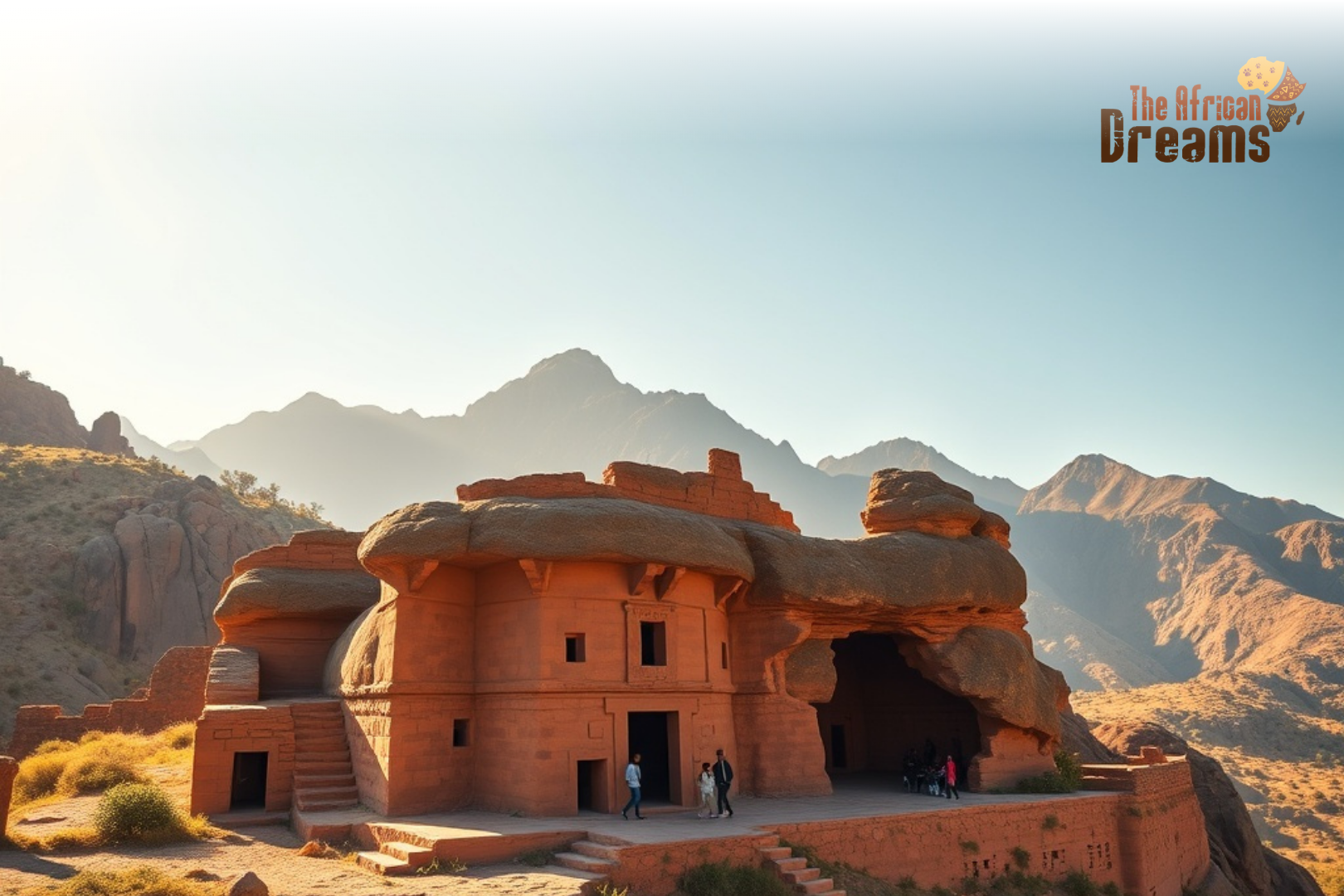
1. Lalibela – The Rock-Hewn Churches
More than a typical tourist attraction, it feels like walking into a cathedral hewn straight from the ground rather than built from the sky. Rock-hewn churches have existed for over 800 years: carved literally from the solid!
Lalibela is a very important place for the Christians in Ethiopia. It is sometimes called “New Jerusalem,” a holy site for pilgrim-site from which pilgrims come. This Bete Giyorgis (Church of St. George) is famous for its gigantic cross shape- another piece of evidence that King Lalibela may have seen a vision from God to build them during his reign over Ethiopia in the 12 th century.
One enters a different world by walking through underground passageways to see these churches. Every January brings thousands to this location for Timkat, the great festival of music, prayers, and color.
2. Axum – The Ancient Kingdom
Ethiopia’s top attractions also include Axum, an ancient city in Ethiopia that was once the heart of a powerful kingdom. The city was a bus stop surrounded by the continents of Africa, the Middle East, and even India, which had a very vast trading area.
Some interesting sites in Axum include stelae fields, where enormous stone obelisks were erected more than 1700 years ago to honor dead kings. The still-standing tallest is 24 meters high (roughly the height of an 8-story building).
It has also been said to be the place of residence of the Queen of Sheba, a figure in the Bible and Ethiopian history. Some people also believe that the Church of St. Mary of Zion is housed the Ark of the Covenant which contains the stone tablets of the Ten Commandments.
3. Gondar – The Camelot of Africa
If you have a penchant for castles, one of Ethiopia’s top attractions, Gondar is truly the place for you. The city has sometimes been called the “Camelot of Africa” because of its well-known barricaded primitive royal castles. This city is the former capital of Ethiopia and was built with quite a number of grand palaces by Emperor Fasilides himself.
Royal Enclosure is among the very recognizable places in Gondar, and many 17th-century castles are preserved in it. Fasil Ghebbi is almost like the dream castle with its high stone towers and elaborate decoration.
Another place not to miss in Gondar is Fasilides’ Bath, a big stone pool being filled with water only once a year during Timkat. The entire populace gathers six days after the feast to witness the ecstatic entries of the brave young men.
4. Harar – The Walled City
Harar, the Walled City, is also listed among Ethiopia’s top attractions. No city compares to Harar. With ancient stone walls encompassing a city that is dotted with over 80 mosques and 300 small alleyways, it seems, more or less, like a magical maze. It is one of the holiest cities in Islam and has a tremendous history in trade, poetry, and art.
Apart from that, what’s most remarkable is the relationship between Harar and the hyenas. Hyena men throw beef for these wild animals outside the city walls every night. It must have started ages ago, and now it has become a great attraction. If you dare, you may even feed a hyena yourself!
Harar is also the place of its colorful markets, where you can buy handicrafts, aromatic spices, and probably the best coffee in the world.
Ethiopia’s Top Attractions: Natural Wonders & Landscapes
5. Simien Mountains National Park
The Simien Mountains are one of Ethiopia’s top attractions for its beautiful natural wonders. This national park features towering cliffs, deep valleys, and stunning landscapes. The mountains are so special that UNESCO has designated them a World Heritage Site.
If you love wildlife, this is the place to be! The Simien Mountains are home to rare animals, such as:
- Gelada Baboons – These are known as “bleeding-heart monkeys” because of the red patch on their chests.
- Ethiopian Wolves – The rarest wolves in the world, found only in Ethiopia.
- Walia Ibex – A type of wild goat that lives on the cliffs.
Hiking in the Simien Mountains is an unforgettable adventure, with breathtaking views and fresh mountain air.
6. Danakil Depression – The Hottest Place on Earth
Ethiopia’s top attractions include the Danakil Depression, one of Earth’s strangest and most extreme places. Among the hottest on the planet, it is devoid of moisture, with temperatures reaching 50 °C (122 °F)! Take on the planets as they look on another planet.
Sulfur-yellow fields with bubbling lava lakes and miles-long salt flats. This is the famous volcano “Erta Ale.” It has a permanent lava lake and looks glowing red at night.
Nonetheless, the Afar have adapted to live and work under such conditions, scraping the salt from the ground and using camels to haul it away. This has been their lifestyle for many centuries.
7. The Great Rift Valley & Its Lakes
The Great Rift Valley splits Ethiopia, a huge crack in the Earth that created many beautiful lakes. Some of the most famous lakes in Ethiopia are:
- Lake Abijatta – A great place for birdwatching.
- Lake Chamo – Known for its giant crocodiles and hippos.
- Lake Awassa – A peaceful spot with fresh fish and stunning sunsets.
These lakes provide a perfect escape for relaxation, boat rides, and spotting amazing wildlife.
Ethiopia’s Top Attractions: Unique Cultural Experiences
8. Omo Valley – Home to Indigenous Tribes
The Omo Valley is one of the most culturally rich places in the world. It is home to many indigenous tribes, each with its own unique traditions and way of life. That is why it is listed among Ethiopia’s top attractions.
Some of the famous tribes include:
- Hamar Tribe – Known for their bull-jumping ceremony, where young men prove their bravery.
- Mursi Tribe – Women wear large clay plates in their lips as a sign of beauty.
- Karo Tribe – Famous for their body painting and decorations.
Visiting the Omo Valley is like stepping into a different world, where ancient traditions are still alive.
9. Addis Ababa – The Vibrant Capital
No trip to Ethiopia is complete without visiting Addis Ababa, the country’s lively capital. This city is a mix of modern buildings, historic sites, and exciting culture.
Some must-visit places in Addis Ababa include:
- The National Museum of Ethiopia – Home to Lucy, the 3.2-million-year-old fossil of one of the oldest human ancestors.
- Merkato – One of the largest open-air markets in Africa, where you can buy everything from spices to handmade crafts.
- Holy Trinity Cathedral – A beautiful church with stunning artwork and history.
Addis Ababa is also the perfect place to enjoy delicious Ethiopian food, such as injera (a spongy flatbread) and doro wat (spicy chicken stew).
Ethiopia is surely a country of surprises; so does visiting Ethiopia’s top attractions. History, natural beauty, and diverse cultures fill it. The rock-hewn churches, the mountains that entice those looking for cliff faces to climb, and the people of the land all tell stories within this land. This country belongs on any adventure, history- and culture-focused travel list!
Practical Travel Tips for Visiting Ethiopia’s Top Attractions
Visiting Ethiopia’s top attractions is an exciting experience, but knowing a few important travel tips can help make your trip even better. Here are some things to keep in mind when planning your journey.
1. Best Time to Visit Ethiopia’s Top Attractions
Different weather is prevalent in various parts of Ethiopia. But in general, the season October-March is the most suitable for visiting Ethiopia’s top attractions. The dry season at this time brings a bright sky and comfortable weather for exploration.
It is the best time for all celebration lovers in the month of January because this month has Timkat, in fact, the main time of religious festivals in Ethiopia. June to September marks the rainy season, which makes it difficult for tourists to visit some places, mainly in the mountains.
2. Safety and Cultural Etiquette
Ethiopia is a safe country for travelers, but like anywhere, it’s wise to take precautions while visiting Ethiopia’s top attractions.
- Keep an eye on your belongings, especially in busy markets like Merkato in Addis Ababa.
- If you’re traveling to remote areas, it’s best to go with a local guide.
Ethiopian culture is warm and welcoming, but there are some things to remember:
- Greet people with a handshake and a smile.
- If you are invited to someone’s home, it is polite to wash your hands before eating.
- Ethiopians eat with their hands, using injera, a spongy bread, to pick up food.
Respecting local customs will make your experience even more enjoyable.
3. Transportation and Accommodation Options
Getting around Ethiopia’s top attractions can be an adventure!
- In big cities like Addis Ababa, you can use blue and white minibusses or taxis.
- For long distances, domestic flights are the easiest and fastest option. Ethiopian Airlines offers good services to most major tourist spots.
- Buses are cheaper but take much longer.
For accommodation, you will find a variety of options:
- Budget travelers can stay in guesthouses or small hotels.
- Mid-range and luxury hotels are available in cities like Addis Ababa, Lalibela, and Gondar.
- If you love nature, you can even stay in eco-lodges in the mountains or near lakes.
By planning your trip well, you can have a smooth and unforgettable experience in Ethiopia’s top attractions.
Final Words: Visiting Ethiopia’s Top Attractions
Ethiopia’s top attractions, especially its cultural heritage, history, and natural beauty, are varied: the ancient rock-hewn churches of Lalibela, the stunning Simien Mountains, and much more to discover, including history, breathtaking landscapes, and welcoming people.
Or walk on the remains of the Aksumite Empire-castle in Gondar or spot wild baboons up there in the mountains, and add everything like tasty Ethiopian food, bright festivals, and old traditions that are still alive today.
Adventure seekers looking for a magical and enchanting place should include Ethiopia’s top attractions in their travel plans. Ethiopia has many stories to tell, surprises to show, and experiences you wouldn’t want to exchange.
If you love adventure and want to explore a unique and fascinating country, Ethiopia’s top attractions should be on your list. It is a place filled with stories, surprises, and unforgettable experiences. So pack your bags, open your heart to new cultures, and discover Ethiopia, Africa’s hidden gem!
FAQs
1. What is Ethiopia best known for?
Ethiopia could be the only country on the African continent that has ever been invaded or colonized and still has a culture and identity that were infused in its heritage. It is the birthplace of coffee, the place with ancient traditions that are still remaining alive, and home to most of the world’s dramatic landscapes-from the fire-spitting Danakil Depression to the lush highlands of the Simien Mountains and beyond.
2. What are some of Ethiopia’s top attractions?
Ethiopia’s top attractions include the rock-hewn churches of Lalibela, the castles of Gondar, the breathtaking landscapes of the Rift Valley, and the joyful customs of the tribes in the Omo Valley.
3. What is the best time to visit Ethiopia?
Ethiopia is best visited during the dry months, which run from October to March. It enjoys clear and temperate weather, making distraction-free exploration of various attractions possible.
4. What are some things to keep in mind when traveling to Ethiopia?
Usually, greetings are accompanied by a handshake or simply a smile. If you were invited to his house, it is typically due to washing your hands before having any meals. Actually, Ethiopians eat with their bare hands; they use a spongy bread called injera while scooping food. Obviously, one needs to understand a culture with respect.



0 Comments