

The story of Ivory Coast and its cocoa industry unfolds like a dramatic novel, full of ups and downs. In the heart of West Africa, this country is rich in tradition and prosperity. Ivory Coast’s journey with cocoa is filled with emotion, reflecting the lives of thousands of farmers who depend on it for their livelihood.
Let’s delve into this article to determine whether cocoa remains a golden goose for investors or if it has become a risky bet in Ivory Coast’s complex economic landscape.
Ivory Coast's Economy with Cocoa
In Ivory Coast, cocoa is more than just a crop; it is the backbone of the nation’s economy. As the world’s largest producer, Ivory Coast accounts for around 40% of the global cocoa supply. This market dominance has traditionally made cocoa a lucrative venture for investors. In the 2021/2022 season, the country produced approximately 2.2 million metric tons of cocoa beans, underscoring its significant role on the global stage
The Ivorian agricultural sector is responsible for about a quarter of Ivorian GDP, and cocoa alone is responsible for more than 7.5 percent. The vast majority grows in the southern states: regions including Sud-Bandama, Comoé, Lagunes, Bas-Sassandra, Sassandra-Marahoué, and Montagnes.

Figure: Global Cocoa production
Rising Prices and Production Challenges in Ivory Coast
However, the cocoa industry in Ivory Coast is filled with challenges. Recent market reports have shown an alarming significant decline in cocoa production. Because of the adverse weather conditions and rampant plant diseases, production was declining. From both the Ivory Coast and Ghana there was a supply shortage because of these reasons. By the end of March 2024, the International Cocoa Organization reported a surge in cocoa prices. The prices rose nearly 47% in London and 44% in New York.

Figure: Price Fluctuations of Cocoa in the International Market
Adding to these disasters in the 2023/2024 cocoa season saw a projected 20% drop in harvest due to poor weather. Which has put additional upward pressure on prices. Farmers are now struggling with the complexities of maintaining their farms. The unpredictable climatic conditions and the spread of plant diseases like the Cocoa Swollen Shoot Virus Disease made their life more hard.
Tales from the Cocoa Farms
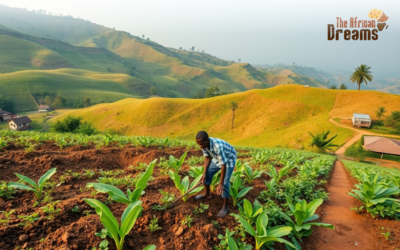
Farmers are working hard on their cocoa farms in the green lands of Ivory Coast. For example, a farmer named Kofi also has a cocoa farm. Growing cocoa is more than just a job to him. It’s a family tradition passed down through generations to Kofi. But recently, things have gotten really tough for him. Even with all his hard work, Kofi’s cocoa harvest has dropped. He is also struggling with the unpredictable market prices.

Figure: Cocoa Farming
Kofi’s situation reflects the difficulties many cocoa farmers face. In April 2024, the government set the price for cocoa beans at 1,500 CFA francs per kilogram, which is about $2.48. This amount barely covers what it costs farmers to grow the cocoa. While big chocolate companies make huge profits, farmers like Kofi earn very little, highlighting a significant and troubling imbalance.
Market Dynamics and Investor Sentiment
From an investor’s point of view, the ups and downs in cocoa production and prices offer both big chances and serious risks. High prices might mean big profits, but the unpredictable supply can cause major problems. Investors need to balance the potential for great returns with the risk of the supply chain. The main issue is the ethical concerns of investing in an industry where farmers often earn very little.
Additionally, the global cocoa market is getting tougher. Countries like Indonesia and Peru are increasing their cocoa production. They are trying to grab a bigger piece of the market. This growing competition could affect global prices and make cocoa investments in Ivory Coast less profitable.
Price Instability and Market Risks in the Cocoa Sector
However, if we see farmers like Kofi their life is filled with challenges. Cocoa prices are famously unpredictable. One year, Kofi might earn well the next, he could struggle to get by. In 2020, for example, cocoa prices jumped between $2,200 and $2,800 per metric ton due to political instability and changing weather patterns. This uncertainty makes it hard for Kofi to plan for the future.

Ivory Coast’s heavy dependence on cocoa exports makes its entire economy vulnerable to global market changes. A sudden drop in cocoa prices can cause economic problems. Which will impact everything from national infrastructure projects to local school funding. For investors, these price jumps are a big risk. What seems like a profitable investment one day can become a bad deal overnight if the market shifts.
Government and Technological Initiatives for Cocoa
Recognizing the need for change, the Ivorian government has introduced new plans to improve the cocoa industry. One of these is the Living Income Differential (LID) scheme. Which aims to ensure that farmers like Kofi get a fair price for their cocoa. This initiative boosted the price of cocoa beans by $400 per ton, which has really helped farmers earn more.
Technology is also playing a big role. Kofi now uses a mobile app that gives him updates on weather and prices in real time. This helps him make smarter choices for his farm. Plus, satellite images and data analysis are being used to check how healthy crops are and find better ways to farm. These advances are making cocoa farming more effective and better for the environment in the long run.
Sustainability and Future Prospects of Cocoa
In the cocoa industry, there are stories of success that inspire and teach valuable lessons. Big chocolate companies like Mars and Nestlé have pledged to use sustainable cocoa and support community projects. These efforts haven’t just made their supply chains more stable but also improved how consumers see them.

Figure: On April 17, 2019, Ivanka Trump announced a $2 million investment in women in the Ivory Coast cocoa industry.
However, there are also stories of caution. Some investors have lost a lot of money because of unexpected political problems or bad weather. These stories show how important it is to do careful research, assess risks, and spread investments when you’re putting money into cocoa.
Sustainability is becoming increasingly important for the future of Ivory Coast’s cocoa industry. Efforts to improve how cocoa is grown, fight plant diseases, and ensure fair pay for farmers are crucial for the industry’s long-term success. Investors now consider these sustainability efforts when making decisions because they know that a sustainable supply chain is good not only for ethics but also for making money in the long term.
The Ivorian government and international groups are working hard to deal with these challenges. They’re trying
☑ to improve how cocoa is grown,
☑ invest in types of cocoa that can resist diseases, and
☑ make sure the farming sector can keep going strong.
These steps are really important for keeping cocoa growing steady and making sure farmers like Kofi have a good life.
Conclusion
For farmers like Kofi and many others, there is hope for a future where cocoa farming benefits everyone. This means adopting sustainable farming practices and ensuring fair treatment for farmers. If these changes happen, cocoa farming could be a win-win for both investors and hardworking farmers.
In conclusion, investing in cocoa on the Ivory Coast is like flipping a coin. On one side, there’s the chance to make a lot of money due to high global demand and rising prices. Thats why cocoa is an attractive sector. However, on the other hand, there are significant risks from climate change, plant diseases, and market volatility. Investors must carefully consider these risks before diving in.
0 Comments