
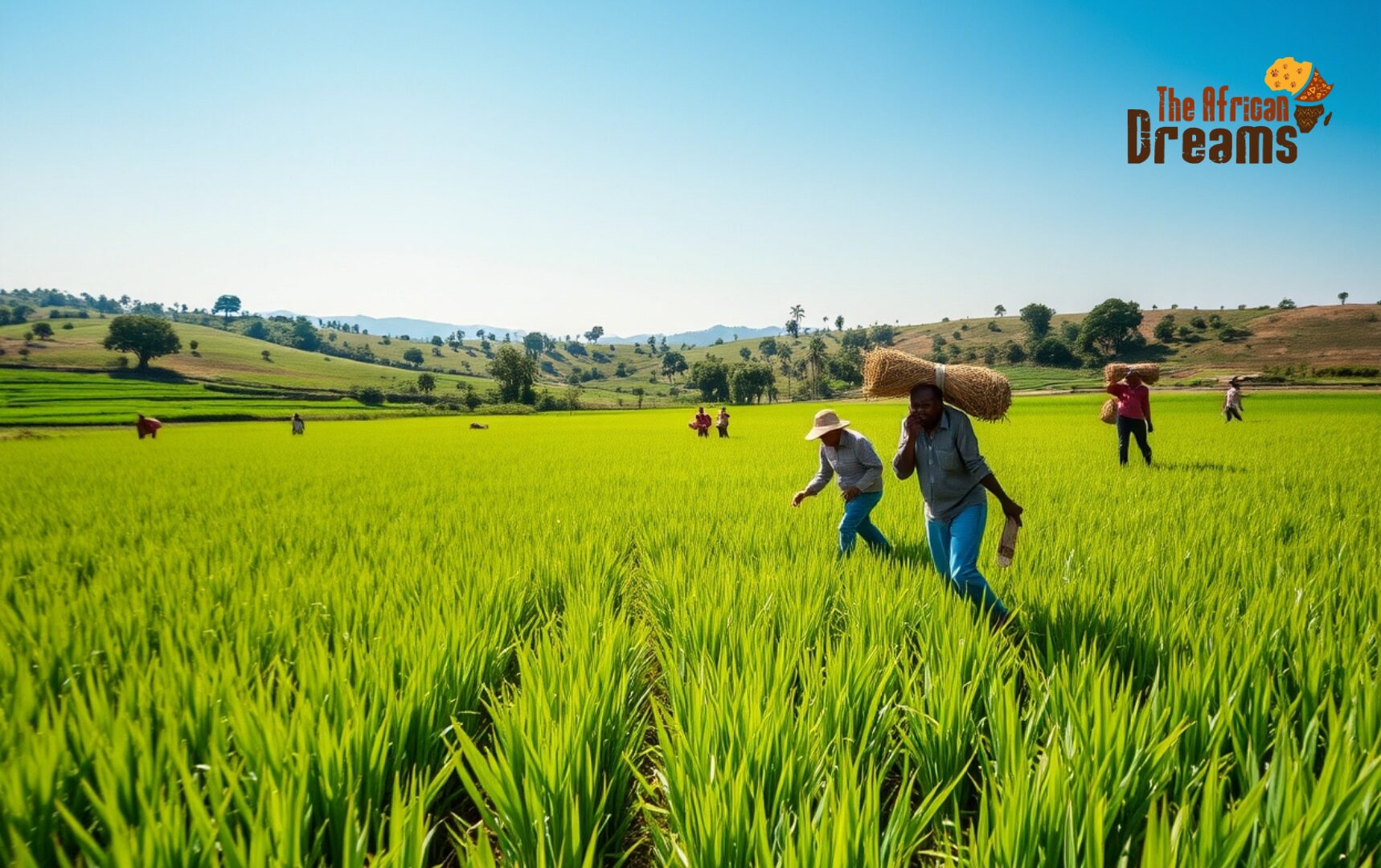
Rice is now a crucial crop for Uganda. It is a staple food and a source of income for smallholder farmers. In 2021, rice made up 15% of Uganda’s cereal production. It was the second most important cereal crop after maize. Uganda’s rice consumption is rising, driven by urbanization and changing diets. Annual per capita consumption is now 12 kilograms.
Despite its significance, Uganda faces a substantial production shortfall. The country produces only 238,000 metric tons of rice a year. This is far below the demand of over 300,000 metric tons. Uganda’s rice deficit forces it to import 62,000 tons annually which costs about $23.2 million.
Rice farming in Uganda is mostly done by smallholder farmers. They rely on both rain-fed and irrigated systems. However, low productivity—2.8 tons per hectare—limits farmers’ income. It is far below the 9-ton potential under optimal conditions. Better farming, modern tech, and infrastructure could boost rice yields. It would raise incomes and food security.
The Challenges
One of the most severe challenges in rice cultivation in Uganda is low yields. The average yield of 2.8 tons per hectare is significantly below the global average of 4.7 tons per hectare. Low productivity is mainly due to poor soil, low-quality seeds, and low fertilizer use. The lack of irrigation worsens the situation. Most rice farming is rain-fed, so farmers are vulnerable to climate variability.
Another critical challenge is the need for more adoption of modern farming techniques. Many farmers are slow to adopt advanced rice varieties, like NERICA, which have higher yields. It comes from the high costs of inputs, like fertilizers and modern machines. There is also uncertainty about these technologies’ success in local conditions. Many smallholder farmers lack access to training programs which would help them use the new methods effectively.
Financial constraints present a further barrier. Limited credit access makes it difficult for farmers to invest in better seeds or irrigation. This strain cuts productivity and income. It traps many farmers in poverty.
The Solution
A top solution for better rice farming in Uganda is new rice varieties. The NERICA (New Rice for Africa) variety is a notable example. It is designed to thrive in local conditions and yield much more. NERICA varieties have boosted farmers’ yields by up to 50%, even in rain-fed areas. This variety resists pests and diseases. So, it suits Uganda’s smallholder farmers, who often lack access to pesticides.
Training programs have been vital in teaching farmers modern farming techniques. The System of Rice Intensification (SRI) is a better, more efficient rice-farming method. It is more efficient. This system uses fewer seeds and less water while significantly increasing yields. Farmers using SRI report higher yields, lower costs, and better climate resilience.
Another critical solution is improving access to credit. With NGO support, financial institutions are now offering loans to rice farmers to invest in high-quality seeds and fertilizers. Credit lets farmers grow their operations, boosting their income and livelihoods.
Implementation
In Uganda, a multi-step process improved rice farming. It used key strategies to help smallholder farmers. These strategies came from a collaboration among the government, NGOs, and private partners. Below is the detailed implementation process:
-
Introduction of Improved Rice Varieties:
The Ugandan government, along with partners like the Africa Rice Center, has introduced NERICA and other high-yield rice varieties across the country. These have been given to small farmers. Their yields are up by 50% compared to traditional varieties, even without irrigation.
Distribution programs were coupled with training sessions. They aimed to help farmers use new seeds. This would reduce pest and disease losses.
-
Farmer Training and Capacity Building:
NGOs like Kilimo Trust have trained farmers in modern techniques, such as the System of Rice Intensification (SRI). Through demonstrations, farmers have learned to use fewer seeds and water, achieving higher productivity. The government also provided extension services to reinforce these trainings.
-
Formation of Farmer Cooperatives:
Smallholder farmers were urged to form cooperatives. and knowledge and better access markets. The cooperatives helped secure better rice prices through collective bargaining and lowered costs by buying in bulk. The National Farmers Association strongly supported this model, aiding farmers in organizing effectively.
-
Improved Access to Credit:
Centenary Bank and development programs have teamed up. They now offer loans for rice farmers. Credit access has let farmers buy vital inputs, like fertilizers, quality seeds, and irrigation tools. Some cooperatives have set up savings schemes to help members in need.
-
Infrastructure Development:
The Ugandan government invested in expanding irrigation systems and upgrading rural roads. These investments have been key. They improved water access for rice farming. They also let farmers transport their products to markets without delays. Such improvements have worked well in high rice-producing areas, like Eastern Uganda.
These implementations have been key in boosting rice production and farmer incomes. They show a holistic approach that improves both productivity and market access.
The Results
Improved rice farming techniques in Uganda have boosted productivity and farmer incomes. Farmers have seen higher yields in areas using improved rice varieties like NERICA and SRI. Yields have risen from the national average of 2.8 tons per hectare to over 4 tons per hectare in some areas. This boost in productivity has cut rice imports and improved food security.
Farmers who adopted modern methods and received credit reported higher incomes. By investing in better seeds, fertilizers, and irrigation, many farmers have been able to double their profits. This income growth has reduced poverty, especially in rural areas where rice cultivation is a key livelihood.
Also, forming cooperatives has helped farmers access better markets. It ensures they get fair prices for their crops. Improvements to roads and irrigation have boosted market access and cut post-harvest losses. These efforts have improved rice yields and rural development in Uganda.
Conclusion
Uganda’s rice sector has made encouraging progress. It has improved productivity, income, and rural development. New rice varieties, like NERICA and the SRI, have helped many smallholder farmers increase their yields and profits. These advances have reduced Uganda’s reliance on rice imports and boosted food security.
To sustain this growth, they must invest in infrastructure, credit, and farmer training. Better irrigation and rural roads will boost market access and cut losses, helping Uganda compete in the regional rice market. Also, scaling up cooperatives and boosting government support will help more farmers benefit from these innovations. Uganda’s rice farming has a bright future. It can boost growth and reduce poverty.






0 Comments