
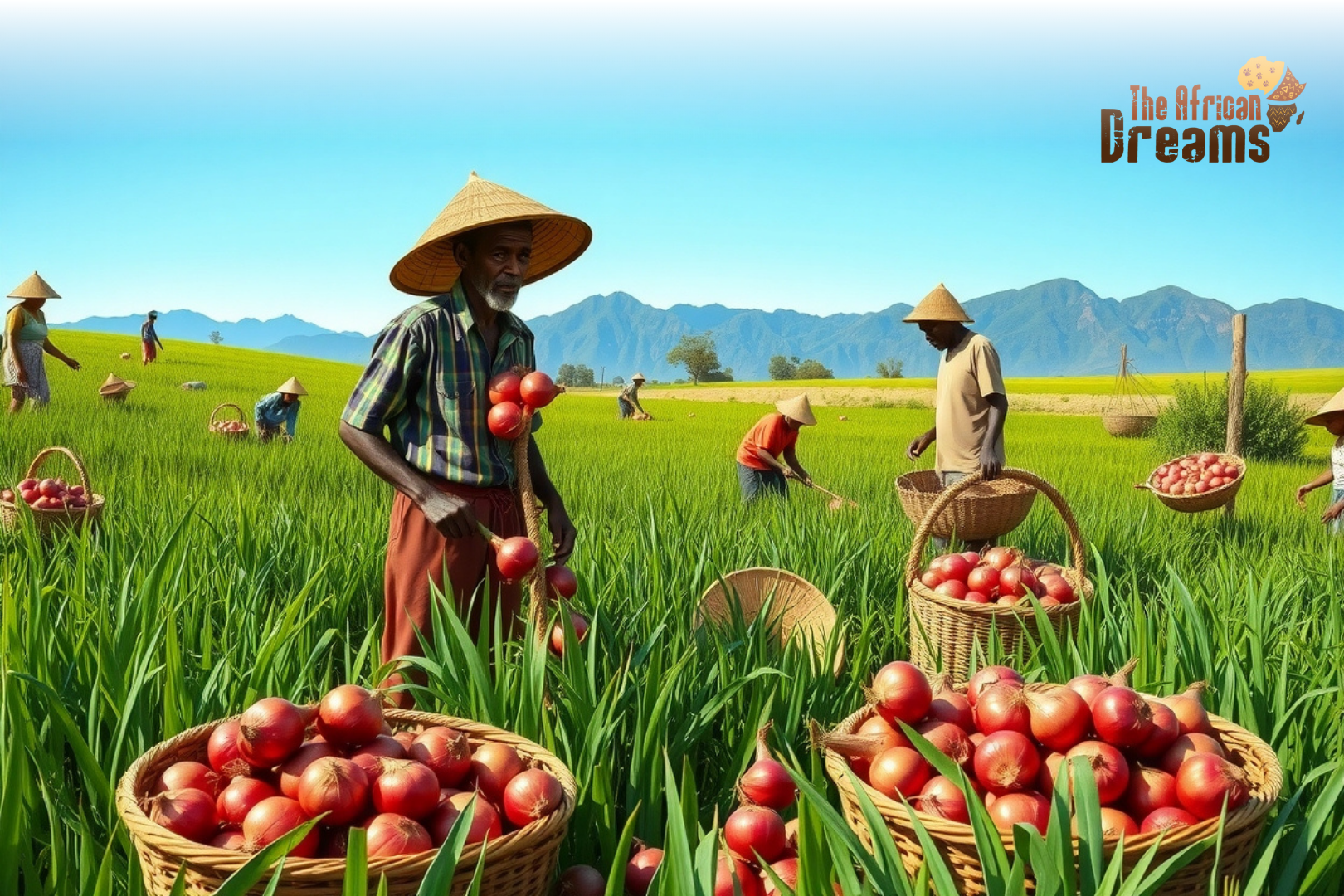
Kenya’s agricultural landscape is diverse and vibrant, with onion farming emerging as a lucrative venture for smallholder farmers and large-scale investors alike. This guide delves deeply into the ins and outs of onion farming, from land acquisition to pest control, providing actionable insights for aspiring farmers.
Upon reading this article, you will,
Learn about the best onion varieties for Kenyan climates and their unique benefits.
Get step-by-step guidance on land preparation, soil testing, and irrigation methods.
Know about Practical pest and disease management techniques for healthier crops.
Get insights into harvesting, post-harvest handling, and effective market access strategies.
Get real data-backed tips to maximize profitability and reduce farming risks.

Introduction to Onion Farming in Kenya
Overview of Onion Farming in Kenya
Onion farming has gained popularity due to the vegetable’s high demand in both local and export markets. Kenya’s climate supports the cultivation of onions year-round, making it an ideal location for farming. According to the Ministry of Agriculture, onions contribute significantly to household incomes in regions like Nyeri and Narok.
Importance and Benefits of Onion Cultivation
Onions are a staple ingredient in Kenyan households, driving consistent demand. They are also highly profitable, with farmers reporting up to 20 tons per hectare yields. Export opportunities to neighboring countries like Uganda and Tanzania further enhance profitability, creating a stable source of income for growers.
Current Market Demand and Opportunities
Kenya imports onions during shortages, particularly from Tanzania, highlighting a gap in local production. The Kenya Bureau of Statistics data indicates that domestic production meets only 60% of the national demand. With proper techniques, Kenyan farmers can reduce import dependency and capture untapped market potential.
Getting Started: Land Acquisition and Preparation
Selecting the Ideal Location
Thanks to their favorable climatic conditions, optimal onion farming areas in Kenya include Nyeri, Narok, and Kajiado counties. To minimize transportation costs, ensure the land has access to water for irrigation and is close to markets. Depending on location, farmers should also consider land rental options ranging from KES 5,000 to KES 15,000 per acre annually.
Understanding Soil Requirements and Testing
Onions thrive in well-drained, sandy-loam soil with a pH of 6.0-6.8. Conduct soil tests to determine fertility and amend the soil with lime if it is too acidic. Local agricultural extension offices or private labs, such as CropNuts, offer affordable soil testing services for around KES 2,000 per sample.
Land Preparation Techniques
Clear the land of weeds and debris, then plow and harrow to create a fine tilth. Proper land preparation enhances root penetration and moisture retention. Raised beds are recommended in areas prone to waterlogging. Adding organic matter such as compost or manure improves soil structure and fertility.
Cultivation Practices
Choosing the Right Onion Varieties
Popular onion varieties in Kenya include Red Creole, Bombay Red, and Hybrid Red Passion. Red Creole is known for its long shelf life, while Hybrid Red Passion offers high yields and disease resistance. For certified seeds, consult local seed suppliers like Kenya Seed Company.
Seedling Nursery Establishment
Prepare a nursery bed by loosening and enriching the soil with well-decomposed manure. Sow seeds at a depth of 1.5 cm and cover lightly with soil. Water daily and protect the nursery with a shade net to prevent drying. Germination typically occurs within 7-10 days.
Transplanting Seedlings to the Field
Transplant seedlings 4-6 weeks after sowing when they are 15 cm tall. Maintain a spacing of 10 cm between plants and 30 cm between rows to allow proper growth and ease of weeding. Transplanting in the late afternoon reduces transplant shock.
Irrigation Methods and Water Management
Onions require consistent watering, especially during bulb formation. Drip irrigation is the most efficient method, as it minimizes water wastage and reduces the risk of fungal infections. On average, onions need 25-30 mm of water per week. Avoid overwatering, as it can lead to root rot.
Fertilization and Nutrient Management
Apply well-rotted manure at planting time, supplemented with nitrogen-rich fertilizers like CAN (Calcium Ammonium Nitrate) during early growth. Switch to potassium-based fertilizers like MOP (Muriate of Potash) during bulb development to enhance size and quality. A typical fertilization schedule may cost between KES 10,000 and KES 15,000 per acre.
Weed Management Strategies
Weeds compete with onions for nutrients and can harbor pests. Mulching with dry grass or plastic sheeting reduces weed growth. Manual weeding should be done carefully to avoid damaging shallow onion roots. Herbicides like Stomp 455 CS can also be used selectively.
Pest and Disease Management
Common Pests Affecting Onions
Major pests include thrips, which cause leaves to curl and discolor. To control them, use insecticidal soaps or neem-based sprays. Crop rotation and maintaining field hygiene can also manage other pests, such as cutworms and onion maggots. If unchecked, thrip infestations can reduce yields by up to 50%.
Identifying and Controlling Diseases
Onions are susceptible to fungal diseases like downy mildew and purple blotch. Regularly inspect crops for symptoms such as yellowing leaves or purple lesions. Fungicides containing copper or mancozeb can effectively manage these diseases. Farmers should also practice crop rotation to reduce disease buildup.
Integrated Pest Management Approaches
IPM combines biological controls, such as introducing natural predators, with cultural practices like intercropping and maintaining optimal plant spacing. It minimizes chemical use, ensuring a more sustainable farming approach. Organizations like the Kenya Agricultural and Livestock Research Organization (KALRO) often offer training sessions on IPM.
Harvesting, Post-Harvest Handling, and Marketing
Determining the Right Time to Harvest
Onions are ready for harvest when 70-80% of the leaves have fallen over. Depending on the variety and growing conditions, this typically occurs 90-120 days after transplanting. Delayed harvesting can result in sprouting and reduced shelf life.
Harvesting Techniques
Use a garden fork or hand tools to lift onions from the soil carefully. Avoid bruising the bulbs, as this reduces their market value and storage potential. Allow the onions to cure in a dry, well-ventilated area for 2-3 weeks. Curing enhances their flavor and longevity.
Post-Harvest Handling and Storage
After curing, trim the tops and roots, leaving 2-3 cm of the stem—store onions in mesh bags or wooden crates in a cool, dry place with good ventilation. Proper storage conditions can extend shelf life to six months. In some cases, losses due to poor storage can exceed 20%.
Accessing Markets and Selling Your Produce
Onions can be sold directly to local markets, wholesalers, or through cooperatives. For higher profits, explore export opportunities or partner with agro-processing companies. Platforms like Twiga Foods and DigiFarm connect farmers with reliable buyers. Depending on market demand, prices typically range from KES 50 to KES 100 per kilogram.
Conclusion
Onion farming in Kenya is a profitable venture with immense potential. By following best practices in land preparation, cultivation, and pest management, farmers can achieve high yields and tap into lucrative markets. With growing demand for onions locally and regionally, this is an opportune time to invest in onion farming. As the sector grows, leveraging modern farming techniques and market linkages will be key to success.

0 Comments