
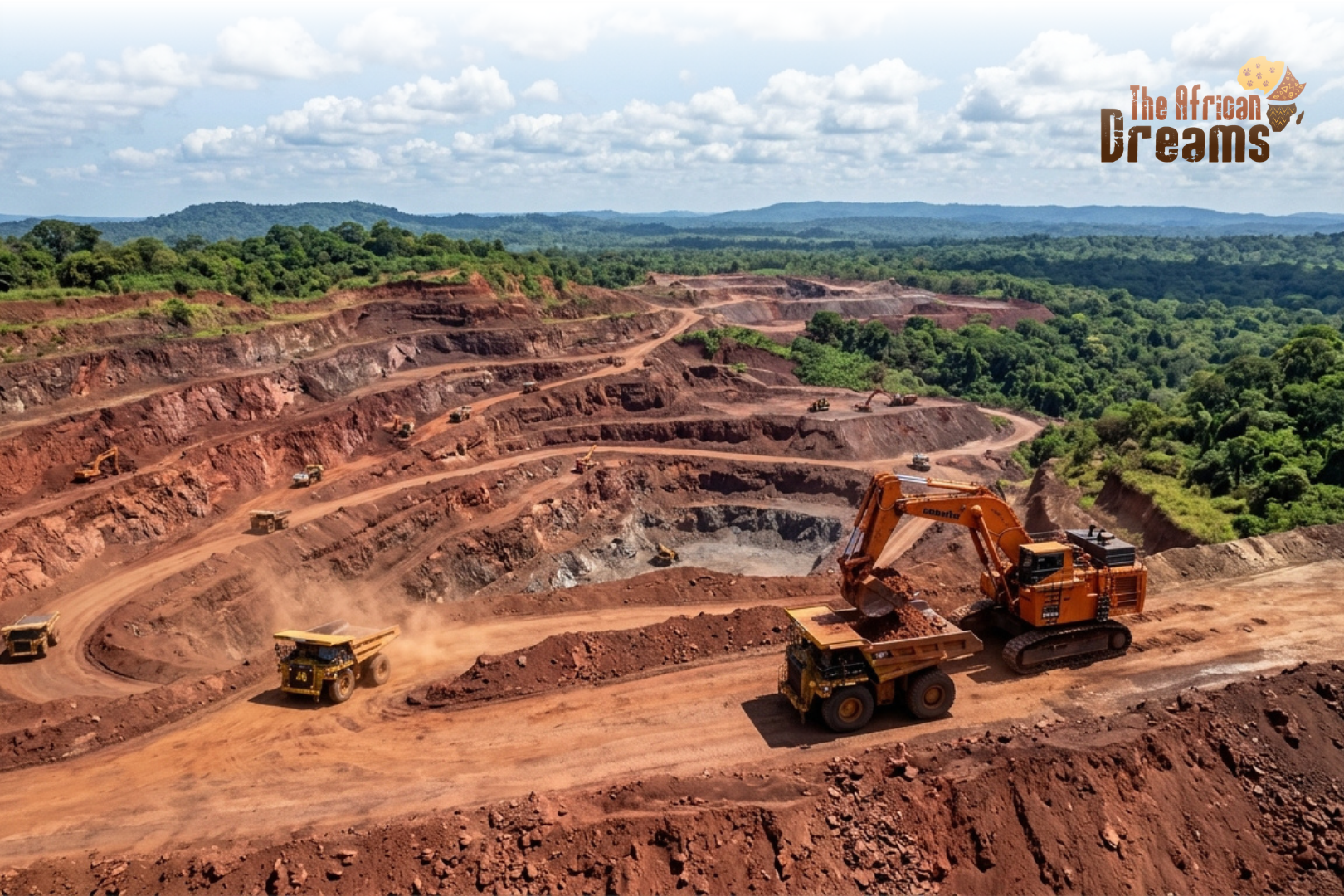
Introduction: Guinea-Bissau's Bauxite
Did you know Guinea-Bissau has around 110 million tonnes of bauxite with an average Al₂O₃ concentration of 44%? It is also believed to hold nearly one-third of the world’s known bauxite resources, amounting to around 7.4 billion tonnes.
Well, you might wonder what Guinea-Bissau’s bauxite is. Bauxite is a naturally occurring aluminum ore. It is a mineral-bearing rock comprising aluminium hydroxide minerals with some iron oxide, silica, and titanium dioxide impurities. It was discovered in 1821 near Les Baux, France (hence the term “bauxite”). It is not a mineral but a rock comprising several minerals.
Guinea-Bissau’s bauxite is formed in tropical and subtropical regions through the intense chemical weathering of granites and basalts. Rain and high temperatures over millions of years leach silica and other soluble materials from the soil, resulting in a concentration of aluminum oxides. Guinea-Bissau’s bauxite industry either uses bauxite directly or depends on the aluminum that it yields. This article concerns Guinea-Bissau’s bauxite and how new investors can invest in this sector.
Article Highlights
Guinea-Bissau has an estimated 110 million tonnes of bauxite with 44% Al₂O₃ content.
This country could be in the top 5 bauxite resource holders globally.
Tremendous opportunities are available due to underused mining infrastructure and a lack of competition.
Increasing global demand for aluminum (40% growth forecast by 2040) adds investment attractiveness.
First-mover advantage for trading houses and mid-sized firms.
High sustainability potential with minimal past land degradation.
Strategic location near Europe offers lower freight costs than from Brazil or Australia.
Existing foreign investment from Russia and China attests to international attractiveness.
Infrastructure shortcomings (only 11% paved roads) offer private development opportunities.
What is Bauxite and How is it Formed?
Bauxite is a critical raw material for most large industries. It is mainly utilized to obtain alumina (Al₂O₃), which is then further processed to produce aluminium metal.
The Boé region is the principal region where bauxite deposits have been discovered. It is situated in the southeast of Guinea-Bissau. Comprised of plateaus and hills with an average elevation of around 300 meters above sea level. The region’s topography and geology have assisted in forming and preserving bauxite deposits.
Key Industries Dependent on Bauxite and Aluminum
Below is a list of industries that either use bauxite directly or depend upon the aluminium it produces:
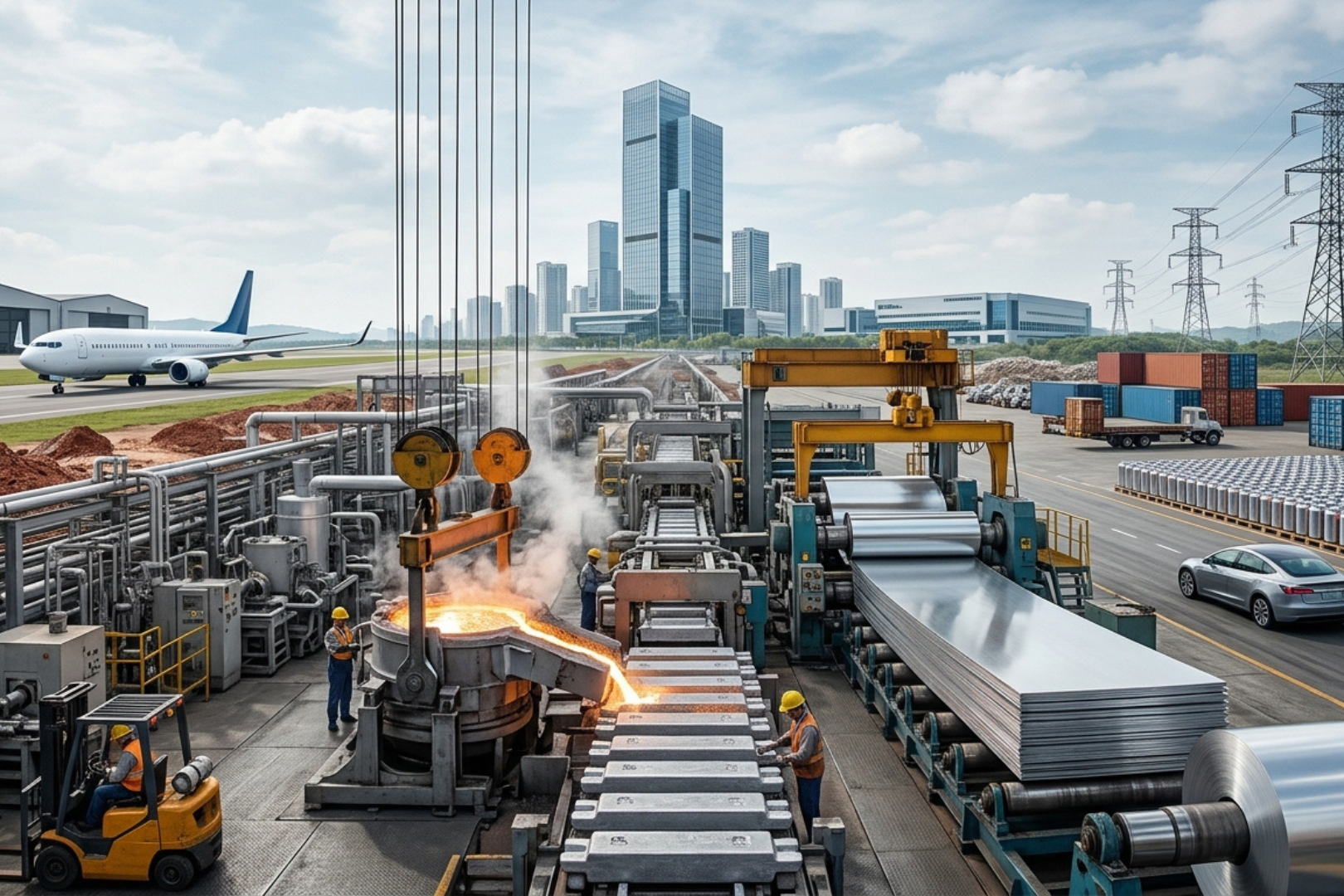
1. Aluminum Manufacturing Industry: Using the Bayer Process, Bauxite is extracted to produce alumina. The alumina is smelted into aluminum metal. Over 90% of bauxite globally is used in the production of aluminum.
2. Motor Vehicle Manufacturing Industry: Bauxite in aluminum is used in Auto bodies and frames, Engine components, Wheels, and transmission housing. It provides lightweight strength and fuel economy.
3. Aerospace Industry: Aircraft structures and structural components are manufactured with high-strength aluminum alloys. The metal best suited for use in aviation is lightweight, with corrosion resistance from aluminum.
4. Construction Industry: Aluminum products are used in windows, doors, curtain walls, Roofing sheets, and Structural framing. They are strong, easy to maintain, and smooth on the surface.
5. Food Packaging Industry: Aluminum rules Wrappers, Food and beverage cans, and Flexible packaging. Aluminum derived from bauxite is reusable, lighter, and non-toxic.
6. Electrical Industry: Aluminum for Circuit devices, Wiring, and Overhead power lines. Lighter or cheaper than copper and an excellent conductor of electricity.
7. Chemical Industry: Used in non-metallurgical applications: Alumina as abrasives (sandpaper, etc.). Used in water treatment as a coagulant and catalyst. Used in refractory and ceramic manufacturing
8. Cement and Steel Industry: Calcined bauxite used in high-alumina cement is a steelmaking slag conditioner and foundry mold filler.
9. Domestic Appliances and Electronics: Bauxite aluminum is used in refrigerators, microwaves, laptops, mobile phones, and tablets (cases and heat sinks).
Current Status of the Mining Sector of Guinea-Bissau's Bauxite
Guinea-Bissau’s bauxite mining sector is relatively new. Though bauxite, phosphate, gold, and other mineral deposits have been discovered in the country, large-scale operations and processing activities are limited.
The bauxite deposits of the Boé region, found in the 1950s, are yet to be fully exploited. Previous attempts to exploit them, such as the one awarded to Bauxite Angola in 2007, fell apart owing to the various challenges surrounding them, such as infrastructural inadequacies and fluctuating global commodity prices.
Employment and Economic Impact of Guinea-Bissau's Bauxite
Currently, accurate information on employment in Guinea-Bissau’s bauxite mining sector is lacking. However, due to the limited extent of activities, the industry is assumed to contribute negligibly to the country’s employment rate.
The broader economy remains highly agriculture-dependent, and cashew nut farming employs many individuals. The mining sector of Guinea-Bissau’s bauxite, nonetheless, holds possibilities for job creation, skill building, and economic diversification if developed.
Many foreign investors are now interested in this sector and want to improve the current situation and increase capacity. In May 2024, Guinea-Bissau and Russia signed an understanding for cooperation in bauxite mining development and oil exploration. Russian aluminum titan Rusal was interested in building infrastructure, i.e., a railway line and a port, to aid in exploring bauxite in Guinea-Bissau.
Guinea-Bissau’s development has also attracted China. In July 2024, China gave Guinea-Bissau $27 million to invest in the country’s development projects, which ranged from mining to infrastructure projects.
Though many ongoing projects are taking place in Guinea-Bissau’s bauxite sector, investors still have a great chance to secure a business. First, one could question why investment is possible.
Why Investment in Guinea-Bissau's Bauxite is Possible
Guinea-Bissau’s bauxite reserves are predominantly unexploited. The government encourages foreign investment and highly desires collaborations to invest in its mining industry. Compared to very competitive ventures like Guinea-Conakry or Australia, it is a low-competition venture. The country has just reached cooperative deals with countries like Russia and China, making the sector accessible to international trade.
Why Should Investors Invest in Guinea-Bissau's Bauxite Sector?
Guinea is next to Guinea-Bissau, which is now the world’s top-ranked bauxite reserve. If the estimated 7.4 billion tonnes in Guinea-Bissau is confirmed, it will make it one of the world’s top 5 owners of bauxite resources. As of 2023, Guinea-Bissau processed less than 100,000 tonnes per year, primarily for local consumption or trial mining, while Guinea-Conakry processed more than 87 million tonnes per year.
The global price of bauxite is around $40–$60 per tonne. Hence, Guinea-Bissau’s bauxite reserves (110 million tonnes) are around $4.4–6.6 billion, excluding the full exploration potential. Compared to rivals like Brazil or Australia, European buyers might have less expensive shipping costs. Global demand for aluminum will grow by 40% by 2040.
These previous sections show the opportunities and why they should consider Guinea-Bissau’s bauxite ideal for investors, but how? Let’s discuss.
Strategic Ways to Invest in Guinea-Bissau's Bauxite
There are several ways to invest here and build a business in this sector. Among them, some strategic options they can take include:
1. Joint Venture with Local or Foreign Firms: Instead of starting from scratch, investors can make a joint venture with existing small mining firms of Guinea-Bissau’s bauxite licensed to operate but with poor financial or technical resources. They can form a joint venture whereby the new investor contributes capital, equipment, or technical knowledge in exchange for ownership and management control stakes. This also carries some advantages, like Faster entry into mining without full bureaucratic barriers.
2. Investment through Infrastructure Development: Guinea-Bissau has less than 4,400 km of roads, only 11% of which are paved, and no specific mineral export port. New investors can strategically invest in basic mining infrastructure, turning a weakness into an asset.
3. Investing in Workforce Development: With Guinea-Bissau having only about 2.5% of the labor force trained in mining, geology, or heavy machinery, investors must develop human capital alongside mining activities.
4. Trading and Export Company: Another option besides Guinea-Bissau’s bauxite mining is starting a bauxite trading and export company. This has advantages like the absence of a vast mining investment, profit from price arbitrage, and logistics efficiency. Besides, not taking a common type means some different approaches can be taken, such as –
5. Comparative Advantage from Neighboring Nations: Although Guinea-Conakry is the world’s biggest bauxite exporter, it is already controlled by the most prominent players in the world, like Rio Tinto, Chalco (China Aluminum Corporation), and Alcoa, who spent more than $15 billion as a group over the last ten years. Simandou alone in Guinea-Conakry involves more than $15 billion of scheduled infrastructure investments.
Future Outlook of Guinea-Bissau's Bauxite
Over 95% of Guinea-Bissau’s potential for bauxite is not being locally processed, so raw bauxite is exported or left in the ground. According to International Aluminium Institute models, it would cost an estimated $400–600 million investment to build even a small alumina refinery (capacity 500,000 tonnes/year).
As set out in Agenda 2063, Africa’s industrial development plan prioritizes local mineral beneficiation, and development banks are now ready to provide up to 30%–40% of the cost of industrial projects as concessional loans. Guinea-Bissau could capture far more value and create industrial employment by moving beyond simple raw export schemas and investing in semi-processing locally.
Final Words: Growing Potential of Guinea-Bissau's Bauxite
Guinea-Bissau’s bauxite is a treasure of the country. A large amount of dependency is on this bauxite, leading to a great demand. Guinea-Bissau can become one of the top globally significant nations by improving its bauxite sector.
Many public-to-private projects are going on, and investors are still welcome. They can play a substantial role by choosing different approaches. Furthermore, the statistics of the future outlook also demonstrate why someone should invest here. Therefore, it’s a perfect opportunity for investors to invest in Guinea-Bissau’s bauxite.
FAQs:
1. For what purposes is bauxite used?
Bauxite is primarily used to produce alumina (Al₂O₃), which is smelted to produce aluminium metal. It is used in the automotive, aerospace, packaging, construction, and electronics sectors.
2. How big is Guinea-Bissau’s bauxite?
Guinea-Bissau has a proven bauxite reserve of around 110 million tonnes, with an average Al₂O₃ content of 44%, and exploration can produce several times more.
3. What makes Guinea-Bissau’s bauxite so valuable?
Guinea-Bissau bauxite is found in relatively underdeveloped, high-grade deposits outside the geopolitically sensitive source regions, a novel source for international markets.
4. What is the Al₂O₃ content of Guinea-Bissau’s bauxite?
The Guinea-Bissau bauxite contains, on average, 44% Al₂O₃ content, which is high grade for aluminum manufacture.
5. Where are the bauxite deposits of Guinea-Bissau?
The large bauxite deposits are found in the Boé region, on the southeasternmost tip of Guinea-Bissau.
6. What is the geological origin of bauxite?
Bauxite is found in tropical and subtropical regions due to the chemical weathering of granite and basalt rocks under high-temperature and high-rainfall conditions.
7. What are the primary industries with significant bauxite aluminum dependence?
Some key industries include automobile, aerospace, construction, packaging, electrical transmission, home appliances, and the chemical industry.
8. Why is Guinea-Bissau’s current output of bauxite low?
Sluggish output results from poor roads, low investment, political instability, and slow industrial growth.
9. What obstacles have so far hindered the entry of mining into Guinea-Bissau?
Inexperience, poor road and port facilities, lack of finance, and persistent political instability.
10. What is Guinea-Bissau’s attraction to potential new miners?
Guinea-Bissau has high-grade bauxite, minimal competition, a willingness by the government to invest and be involved, and proximity to Europe for export.
11. How can one invest in the Guinea-Bissau’s bauxite sector?
Investors can purchase exploration and mining rights, form joint ventures with local companies, or invest in trade and logistics firms.
12. What are some benefits of a joint venture strategy?
A joint venture offers quicker market access, access to local knowledge, less risk of regulation, and lower up-front costs.
13. What is the infrastructure situation in Guinea-Bissau?
Guinea-Bissau has fewer than 4,400 km of roads, 11% of which are asphalted, and no mineral or port export specialization, a measure of infrastructural potential.
14. What proportion of the Guinea-Bissau labor force is professionally qualified to be employed in the mining sector?
Fewer than 2.5% of the workforce is professionally qualified to enter mining, geology, or heavy vehicle driving, and this has prompted investors to invest in local training schemes.
15. What are other types of trading apart from mining?
The investors can establish bauxite export and trading companies, buying from the miners and exporting overseas without producing minerals.
16. What are the dominant world trends currently in Guinea-Bissau’s bauxite interest?
Trends include the anticipated 40% increase in worldwide demand for aluminum by 2040, diversified supply chain demand, and sustainable, environmentally friendly mining practices.
17. How is Guinea-Bissau different from Guinea-Conakry, from the viewpoint of bauxite mining?
Controlled by multinationals, Guinea-Conakry is closed, competitive, and off-limits to medium-scale operators. Guinea-Bissau is open, less competitive, and accessible to medium-scale investors.
18. What are the political risks to investment in Guinea-Bissau?
Guinea-Bissau is politically more stable but also faces risks of government change and regulatory change; political risk insurance is advisable.
19. What is the future role of mining here in terms of sustainability?
The clean environment of Guinea-Bissau allows the investor to begin sustainable mining practices from the outset, which would be a marketing attraction in high-priced markets.
20. Will Guinea-Bissau ever achieve a point where it can manufacture alumina refineries locally?
Yes, small alumina refineries can be established. By 2040, they will require $400–600 million, increasing diversified supply chain needs, and green development bank finance support for funding the push for African industrialization.



0 Comments