
Introduction: Halal Protein Snacks in Africa
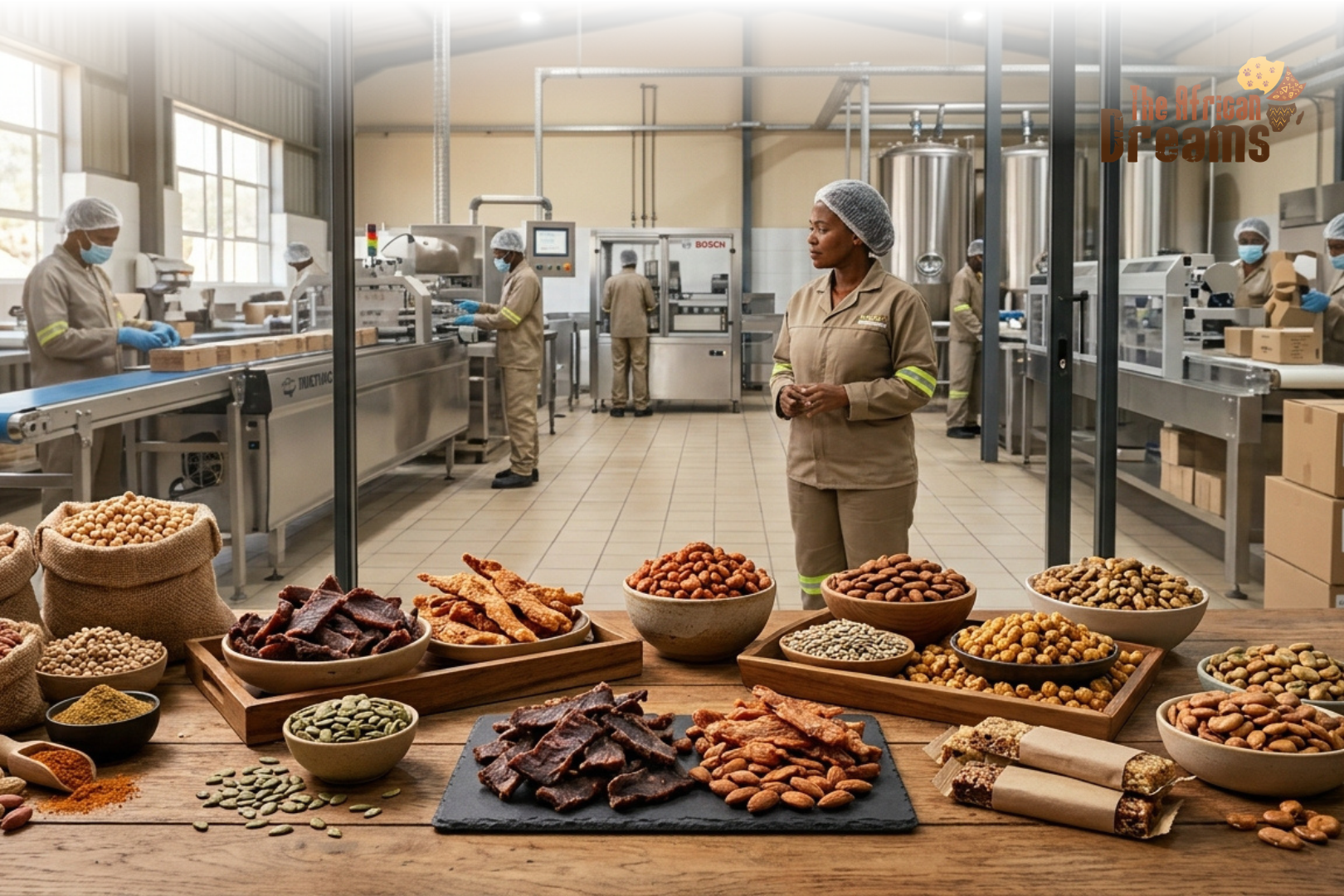
Businesses with the capacity to link local food production with the evolving demand of consumers have the opportunity to make it in Africa’s food industry. One type that can be discussed is halal protein snacks, as they include the halal requirements of foods while being a convenient source of protein. These snacks feature halal meat, Certified Beef, Beef Jerky, Biltong, poultry snacks, protein bars, and plant-based snacks created from chickpeas, beans, nuts, and seeds.
The broader halal food industry is an informative background to this opportunity. Global Muslim consumer spending on halal food was estimated at 1.43 trillion in 2023 and is projected to reach US$1.94 trillion by 2028. These figures apply to the global halal food market, and not to the high-end protein snack category in Africa. It is therefore recommended that they be used as background and not as a direct measure of snack sales.
Africa is worth the attention of its countries, as they combine unique Muslim consumer markets with livestock production, agricultural resources and food processing capabilities. Country-level data on livestock and livestock products, meat production, and agricultural commodities is available in the global agricultural production database to evaluate potential local supply chains. The quantities of agricultural products, however, cannot be used as indicators of the market size for halal-certified packaged halal protein snacks.
The opportunity is not limited to selling products that are manufactured. Africa halal food investment may include meat processing, halal-certified production plants, food preservation, packaging, sourcing, and distribution infrastructure for ingredients. Businesses may explore these areas to determine if it is feasible to produce locally and have competitively priced, high-quality packaged foods. This article will discuss halal protein snacks and how global demand for premium halal protein snacks is rising.
2. Understanding the Premium Halal Protein Snacks Market
2.1 What Are Halal Protein Snacks?
Snacks made from halal protein are easy to make and fit the halal criteria for ingredients, preparation, processing, and handling. These can be meat snacks, dairy, protein bars, nuts, seeds, and legume-based snacks. The potential product range in Africa will vary from country to country depending on the ingredients available, food habits, manufacturing capacity, and consumer tastes.
Halal is a term that describes what is allowed by Islamic law. The international guidelines for using the term “halal” on food labels outline the principles of halal food, which require that it be prepared, processed, transported, and stored in accordance with the requirements to ensure that the food complies with the halal food principles, including the avoidance of prohibited ingredients and unacceptable contact, and preparation, processing, transportation, and storage in accordance with the requirements. The guidelines also apply to slaughtering requirements of legally caught terrestrial animals.
2.2 Main Types of Halal Protein Snacks in Africa
Meat-based snacks: dried meat products, such as beef jerky and biltong, can be produced for halal consumers provided the meat, ingredients, and the production process conform to applicable requirements. The South African National Halaal Authority (SANA) has a directory of biltong businesses associated with halal certification. This is a representation of an established product category but not a measure of sales or market expansion.
Poultry snacks: Strips made from chicken meat could be an opportunity for manufacturers to produce safe and quality products for ready-to-eat snacks. It is important for businesses to confirm halal sourcing and comply with international food hygiene principles for the products.
Plant-based snacks: Roasted chickpeas, beans, nuts, and seeds are also a good source of protein and are great snacks that don’t involve meat. The FAO’s resource on food and nutrition in Africa provides information about the protein content of legumes, groundnuts, and seeds. Manufacturers would still need to confirm the seasonings, coating, etc. in other ingredients before applying halal certification. Not just plant-based, the halal status of a finished product depends on its ingredients and production process.
Protein bars or dairy snacks: These contain whey, milk proteins, soy, or pea protein. Importance of allergen information, food labeling and certification, and sourcing of ingredients.
2.3 What Makes a Protein Snack Premium?
A premium product has value other than convenience. This can involve choosing the right ingredients, maintaining a consistent flavor, quality, nutrition information, good packaging design, and confident Halal certification. If any claim is made about the protein content, manufacturers are required to provide accurate nutritional information and adhere to the labeling regulations of the market in which the product is marketed. The international guidelines for nutrition labeling provide an international reference.
Products placed at premium positions do not necessarily have to be healthier or more nutritious. The international halal labeling guidelines clarify that foods labeled as halal should not be marketed as superior in nutritional values to other foods just because they are halal. It is necessary to separate the halal assurance message and the nutritional benefits message in the communication of businesses.
The key for African producers is to create products that are both verified as halal and have the appropriate flavor, quality, and price. Some businesses may be able to use local sourcing and processing to help differentiate their product, however, profitability will rely on production costs and actual customer demand.
The global agricultural production database can be used for further research to explore national meat, livestock, and agricultural production. These numbers provide an indication of product availability and supply-chain potential, but are not definitive proof of demand for premium halal protein snacks made from halal ingredients.
3. Africa's Halal Food Market: Demand, Demographics and Growth Potential
There are opportunities for Africa halal food investment in food manufacturers, retailers, and investors in the halal sector of the African food market, but these vary from country to country. Commercial potential is affected by population size, religious makeup, buying power, local food production, and the availability of modern retail outlets.
3.1 Africa’s Muslim Population and Consumer Markets
Demographic trends in religion are useful starting points to understand the demand for halal food. The analysis by Pew Research Center in 2025 calculated that there are about 369 million Muslims in sub-Saharan Africa in 2020, which accounted for approximately 33% of the sub-Saharan population. The Muslim population increased by 34% between 2010 and 2020.
The figures show the size of the potential market in sub-Saharan Africa. But they are demographic data and not an estimate of purchases of halal food or sales of halal protein snacks. Consumption also relies on household income, availability of retailers, local dietary habits, and consumers’ willingness to pay the price.
An independent evaluation of regional opportunities should also be made for North Africa. Egypt, Morocco, Algeria and Tunisia are all unique consumer markets, with their own manufacturing bases and regulatory frameworks. UNCTAD’s research on consumer protection in the Middle East and North Africa provides regional context for consumer-protection laws in several of these countries. It is necessary for businesses to look into each country and not make a blanket statement about the entire continent.
3.2 Urbanization and Changing Retail Opportunities
However, there may be opportunities for packaged food manufacturers in urban areas due to the concentration of consumers, retailers, workplaces, and distribution networks within cities. According to a report by the Organization for Economic Co-operation and Development (OECD), the urban population in Africa will grow from some 700 million to 1.4 billion by 2050.
This forecast does not imply sales increases for premium protein snack foods that are halal certified. It does, however, identify a major structural change that businesses should consider when planning distribution. Supermarkets, convenience stores, specialist halal outlets, online, and workplace outlets are potential market opportunities in urban areas.
In selected cities, manufacturers could test portable products like halal-certified meat snacks, roasted legumes, and protein bars in selected areas. They should first look at the competition in the area, customer responses, product pricing, and repeat buying.
The World Urbanization Prospects 2025 also offers country-level and regional-level information which can assist businesses in selecting appropriate cities.
3.3 Global Halal Food Spending and Africa’s Position
The State of the Global Islamic Economy Report 2024/25 by DinarStandard estimates that Muslim consumers spent US$1.43 trillion on food and beverages in 2023, with spending projected to reach US$1.94 trillion by 2028.
These numbers are based on the world market. They should not be marketed as Africa’s halal food investment or the size of Africa’s protein snack market. Researchers require country-specific spending data, trade data, retail data, and information on existing products certified by Halal organizations to determine the position of the market in Africa correctly.
A good example of country-level research is Nigeria. According to DinarStandard’s Nigeria Halal Markets Report 2023, Nigeria experienced a total domestic spending of US$107 billion in 2022 in its wider halal economy. This does not represent the cost of food alone; it includes a number of halal-related industries. Opportunities related to local production, import substitution and exports are also mentioned in the report.
3.4 Food Imports, Local Production and Investment Opportunities
Trade data on foodstuffs can serve as an indicator for businesses to determine whether a country depends on imports of food products or there are potential opportunities for boosting local production. The food-import indicator from the World Bank is an annual indicator of the proportion of food imports to merchandise imports, based on trade statistics from various sources, including the United Nations Statistics Division.
Import data is not sufficient for halal protein snacks. Another area of concern to businesses is imports of processed meat, snack products, protein ingredients, packaging materials, and food-processing equipment. These categories may be helpful in identifying possible gaps in the supply chain, but they must be analyzed on their own.
There may be opportunities for local manufacturing to add value to livestock, agricultural products, and other ingredients produced in Africa. Meat drying and processing, plant-based snack manufacturing, packaging, quality testing and distribution are potential avenues for investors to consider. FAOSTAT provides data on agriculture and livestock which can be useful to assess local raw material availability.
However, if the ingredients can be found locally, this does not necessarily mean that a business is viable. Cost of production, food safety, certification, product consistency, and consumer demand and distribution costs are all factors that must be taken into account by the manufacturers.
4. Why Africa Could Offer Opportunities for Premium Halal Protein Snacks
Several countries are experiencing food demand shifts, retail system and local processing industry changes in Africa, which may present opportunities for premium halal protein snacks. But these shifts are not indicative of consumers already purchasing more premium halal protein snacks. There is a need to link the wider food-market data to research on products.
4.1 Changing Food Demand and Convenience
The report on West African food systems and changing consumer demands looks at how population growth, urbanization, and income changes influence food demand in West Africa. It highlights a growing trend toward convenience, dietary diversification, and food quality.
Such data is helpful for snack makers. When consumers don’t have time to cook, convenient foods that are easy to store and eat are important. Some of these needs may be met with halal-certified meat snacks, roasted legumes, and protein bars depending on the price, availability, and local acceptance.
The wider food demand, however, is covered in the report from 2016 and not specifically for halal protein snacks. It aligns with the overall convenience trend; sales of premium halal protein snacks are growing in Africa.
4.2 Urban Retail and Processed Food Opportunities
The research on food demand at the rural–urban interface in Africa focuses on the food expenditure of rural and urban household food consumption units in 11 African countries. The study reveals that purchased and processed foods are significant even in rural areas, as often assumed, and not just in urban areas.
This evidence underscores the need to research beyond the big cities for producers of halal protein snacks. It may be important to consider urban supermarkets, convenience stores, and online retailers, and smaller shops and regional distributors may be relevant in other locations.
In determining a distribution strategy, manufacturers need to consider their customers’ buying preferences, competitor pricing, and product availability.
4.3 Local Ingredients and Food Processing
The agriculture and livestock resources in Africa could be used for the production of locally made snacks. Agricultural and livestock production data is a database that can be used to access information on livestock, meat production, and agricultural commodities at country level.
If available, and depending on processing capacity, companies may consider sourcing and processing halal-certified dried meat, snacks for poultry, roasted chickpeas, bean snacks, or nut and/or seed-based snacks. Local sourcing could result in a reduction in reliance on some ingredients that are imported into the country; however, the benefit needs to be balanced with processing costs, seasonal availability, transport needs, and quality.
The research on African agrifood processing also looks at ways of enhancing food processing and value chains in Africa.
5. Product Categories and Local African Opportunities
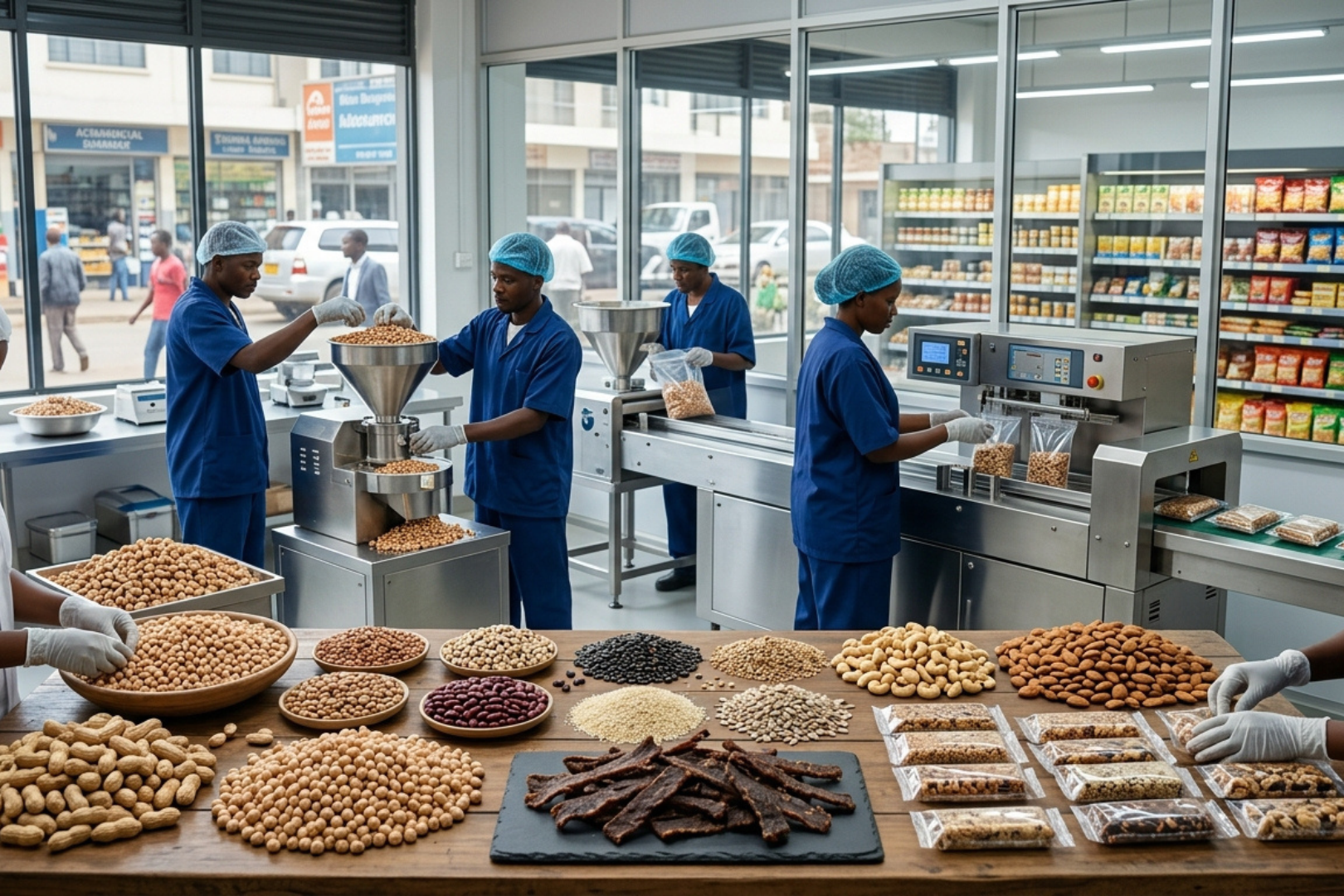
Premium halal protein snacks can feature meat products, plant-based snacks, and easy-to-take protein foods, which are rich in local ingredients. The ideal product will vary by country and region in the arena of Africa halal food investment, as businesses will need to take into consideration the food preferences of the local population, the availability of ingredients, the certification requirements, and the willingness of consumers to pay.
5.1 Halal-Certified Meat Snacks
Dried beef, biltong, and jerky are potential products for manufacturers to investigate. Halal protein snacks are easy to carry, provide good protein, and could be a good choice for those wishing for an easy-to-eat food option between meals.
The South African context is relevant for study as biltong is a well-established local food category. Businesses can research halal and relevant food categories using information that is provided on the certified establishments directory.
But traditional biltong is not necessarily halal. Producers should confirm the sourcing, processing, handling, and certification of ingredients. They also have to meet relevant food safety requirements for meat processing.
5.2 Poultry-Based Halal Protein Snacks
Chicken and turkey snacks may be another product opportunity. This can also be poultry strips, seasoned chicken bits, and shelf-stable poultry snacks that are designed to be eaten easily.
Food safety is a concern in the production of poultry products, as conditions of processing and storage may compromise food safety. Businesses need to confirm the product processing technique, packaging, and shelf life, not taking the fact that it is dried or sealed as sufficient.
The Codex Alimentarius General Principles of Food Hygiene gives an international reference for practices of food hygiene. The producers must set up suitable food-safety control measures in addition to halal and national regulations.
5.3 Plant-Based Halal Protein Snacks
A plant-based product may be able to appeal to consumers who are looking for alternatives to meat snacks and may support manufacturers as they meet these demands. This may include roasted chickpeas, groundnuts, beans, peas, and seed mixes. Research on pulses and plant-based food sources provides background on the role of pulses in food systems.
Many of these ingredients have already been famously used in Africa’s food markets. Processed at a high cost, their localization and acceptability in packaged halal protein snacks are determined by flavor preferences and food-safety controls, as well as their local availability.
Businesses can explore production information for agricultural commodities by country using the FAOSTAT database. This can be useful to help determine which ingredients are worth researching for locally-sourced ingredients.
Plant-based products are still required to be labeled correctly and have appropriate manufacturing controls in place. International food-labeling standards and food hygiene guidelines provide references for these requirements. Seasonings, coatings, and processing aids should also be checked against the selected halal certification requirements.
5.4 Protein Bars and Mixed Snacks
Halal protein snacks like protein bars, nut and seed mixes, and snack mixes containing legumes might be good options for customers seeking on-the-go products. Groundnut, sesame, cereal, dried fruit, or other locally available ingredients can be used to create recipes by manufacturers.
But if a food product is marketed as a high-protein food, the snack should be tested for its nutritional content. Reliable methods for determining protein content or appropriate validated methods should be employed, and local nutrition-labeling regulations should be adhered to. The Codex Guidelines on Nutrition Labeling are a guideline for nutrition information on food labels.
6. Regional Market Opportunities Across Africa
Africa is not a single market for premium halal protein snacks. Consumer preferences, food prices, agricultural production, retail systems, and business regulations can differ across countries. Businesses should therefore assess each target market separately instead of assuming that the same product strategy will work across the continent.
6.1 North Africa: Packaged Foods and Halal Meat Products
Egypt, Morocco, Algeria, and Tunisia are potential markets to investigate for halal food products or halal protein snacks. Meat snacks, roasted nuts, seed mixes, and legume-based snacks are possible product ideas, but their market demand needs to be verified through local consumer research and retail data.
Egypt is worth studying because its food-processing sector connects agriculture, manufacturing, logistics, and food exports. Investors can explore food-processing investment opportunities in Egypt.
Morocco also has an established agri-food processing sector. The industry supports agricultural processing, food production, and investment opportunities. Businesses can review information about Morocco’s agri-food sector and agricultural investment opportunities.
For Algeria and Tunisia, businesses should conduct separate research into food manufacturing, imports, consumer purchasing power, distribution channels, and applicable halal certification requirements before selecting products or estimating sales.
Investors can compare agricultural production and related indicators across countries using country-level food and agriculture data. They can also examine food-import statistics to understand the role of food imports in each country’s merchandise imports. These indicators provide useful background information, but they do not directly measure demand for premium halal protein snacks.
6.2 West Africa: Livestock, Local Processing and Regional Trade
West Africa should be of interest because livestock production and the need for meat are a significant component of the food economy. There is a potential for meat processing, plant-based halal protein snacks and packaged foods in Nigeria, Senegal, Ghana, Côte d’Ivoire and other countries.
A Food and Agriculture Organization (FAO) mapping exercise on livestock, meat and dairy value chains in West Africa explores the demand for animal-source foods in the region and the problems affecting the value chains. The use of historical market figures is expected to be helpful in providing background information on the relationship between livestock production, processing, and regional demand.
Investment opportunities for halal protein snacks might be:
Meat processing: Explore dried beef, poultry snacks, and other shelf-stable products that are halal-certified.
Fruit snacks: Try roasting groundnuts, chickpeas, beans, and seed mixes with local favorite seasonings.
Packaging and storage: Review requirements for food-grade packaging, shelf-life testing, and adequate storage.
Distribution: Visit any supermarket, local stores, wholesalers, and regional food distributors.
There can also be sourcing opportunities for regional livestock trade. The World Bank’s livestock markets research in the Sahel and West Africa discusses cross-border market chains that link livestock production and coastal markets. The establishment of a secure supply chain of processed snack ingredients would still need appropriate slaughter plants, halal certification, food safety measures, and transportation facilities.
6.3 East Africa: Livestock and Value-Added Products
East Africa provides an opportunity to explore local agricultural ingredients for livestock processing, for production of meat products and for snack production. Businesses should assess each country separately, as their trading and consumer markets and production systems vary between Kenya, Ethiopia, Tanzania, Uganda and Somalia.
Livestock provides an important source of income, food and employment. It also states that Ethiopia, Kenya, Rwanda, Uganda, Tanzania and Zimbabwe have nearly 40% of Africa’s cattle herd under their control.
Ethiopia is an interesting investment opportunity for livestock processing and value addition. The investment handbook on livestock and fisheries covers the opportunities and challenges in livestock and fisheries value chains.
In Kenya and Tanzania, manufacturers may explore the possibility of dried meat products and seasoned nuts and legume-based halal protein snacks. Additionally, businesses are encouraged to research the local food preferences and halal certification needs of halal protein snacks before choosing what product or products to launch.
6.4 Southern Africa: Biltong and Established Snack Categories
South Africa offers an interesting case for companies looking into halal protein snacks, especially dried meat snacks. Biltong is an established local product and therefore is a useful category to analyze processing methods, flavors, packaging, and retail competition.
The directory of biltong and related product establishments provides a list of biltong and related product establishments. This is an excellent starting point for conducting a preliminary investigation into the current halal-certified snack market.
South Africa could also be a source of learning about product development and packaging for companies looking to enter other markets. The lessons should not be imported into neighboring countries without modification due to varying consumer preferences, distribution networks, and certification practices.
6.5 Choosing the Right Market Before Investing
The ideal market access will rely on a business’s budget, manufacturing ability, and target market. A company that can access appropriate meat processing facilities might be able to take a different approach than a company specializing in roasted legumes or packaged nuts.
When making the decision to invest, investors need to consider the following factors, among others, which vary from one product to another: ingredient costs, certification requirements, customer demand, competitor pricing, and distribution expenses. If they will be selling their product overseas, they should also refer to import and export regulations.
7. Africa Halal Food Investment: Where Businesses Can Invest
The progress report on agricultural investment in Africa underscores the need for the public and private sector to invest more in African agriculture value chains. This greater investment requirement is applicable to snack production since enterprises require regular supply of farm produce, adequate processing centers, and good distribution channels.
7.1 Investment in Halal Meat Processing
Companies planning to produce dried beef, biltong, and even poultry snacks and other meat products might want to consider investing in meat processing. Companies can consider facilities for hygienic slaughter, meat preparation, drying, seasoning, packaging, and quality testing. International guidance on meat hygiene and processing provides relevant food-safety principles.
Businesses may look at whether they are able to use current meat processing facilities for certified snack processing prior to the construction of new facilities. The initial investment costs may be lower with the use of existing equipment unless the equipment needs to be upgraded and additional food-safety controls put in place.
Raw material prices, reliability of electricity, water availability, labor costs, and transportation costs are other factors to consider for investors. All these can influence the production costs and the final price at which the product is sold. Research on transport inefficiencies and food supply chains in Africa provides further context on the effect of transport and infrastructure challenges.
7.2 Packaging, Storage and Shelf-Life Testing
Investment opportunities for halal protein snacks could include food-grade packaging, sealing equipment, moisture-control equipment, lab testing, and suitable storage. The correct mix depends on the product composition, processing, and shelf life.
Drying and sealing a product does not mean it is suitable for long-term storage. Storage or shelf life cannot be assumed for dried or sealed products. They require appropriate shelf-life studies and food-safety controls appropriate to the product and storage conditions. The international guidance on food hygiene and food-safety controls provides guidance on food hygiene and food-safety controls.
Before buying up large amounts of equipment, companies can also try contract packaging or alliances with existing manufacturers. This can be useful to gauge market demand and cost of production prior to expansion.
7.3 Halal Certification and Quality Assurance of Halal Protein Snacks
Certification can be a key component of market access. It assists businesses in showing compliance with the criteria of a recognized halal certificate program.
Investors should determine the appropriate certification body during the development process. It is important that they are aware of the ingredients it requires, suppliers, production facilities, cleaning, storage, traceability, and recordkeeping.
The international guidelines for halal food labeling provide an international reference for halal labeling of food and related issues. The guidance in the Codex is not intended to supersede national law or national certification needs, and businesses should check with their markets for which requirements apply.
Quality assurance should extend beyond the aspect of halal. There also need to be appropriate measures in place to prevent food from being contaminated, to ensure that allergens are not present and that ingredient labels are appropriate, and to ensure that nutrition information and product consistency are suitable.
7.5 Distribution and Cold-Chain Infrastructure
Dependable delivery methods are vital for manufacturers to get products to retailers and consumers. Investment in halal protein snacks is thus needed in warehousing, transport, distributor relationships, and inventory management.
Distribution of some shelf-stable food items may be made without refrigerated transportation if food storage requirements have been validated. Other products might be required to be handled at a particular temperature. These needs are not fixed, but rather must be established by testing the product, not assuming. Food safety guidance on storage and temperature control provides information on maintaining food safety throughout a product’s shelf life.
7.6 Partnerships, Financing and Market Entry
There’s no need for businesses to construct each component of the operation. They can gain access to this market with lower initial capital investment through partnerships with local food manufacturers, agriculture suppliers, distributors, and food certification experts.
According to the 2023 report on Nigeria’s wider halal economy, the total domestic spending in the wider scope of the halal economy in Nigeria amounted to US$107 billion in 2022. This represents various sectors and not the size of Nigeria’s Halal food market, including the halal protein snacks market.
The report addresses the opportunities for local production, import substitution, exports, and better trade linkages. While these themes can guide investment research, companies still require specific financial models for the products they are interested in.
The best investments in halal protein snacks will be those where there is real demand, reliable sourcing, and efficient production.
With an initially narrowed-down product portfolio and scaling up after market testing, Africa halal food investments with challenging risks can be avoided to invest too heavily in the initial phase.

8. Country-Level Investment Opportunities in Africa
There are several African countries that have the potential to accept halal protein snacks, but their consumer market, food industry, and distribution channels vary. Any business interested in investing in Africa Halal Food should carry out a country-based analysis and confirm the market demand in each country before investing.
8.1 Nigeria: A Large Consumer Market
Nigeria is worth studying for halal protein snacks as it has a sizable population, and there is already a demand for various food products. Snacks that can be considered are roasted groundnuts, legume snacks, and dried meat that is certified by a Halal certifier. The report on Nigeria’s wider halal economy covers opportunities in the broader Nigerian halal economy, including food business activities.
Investors will want to investigate local snack companies, ingredients, the retail outlets, and the purchasing power of customers. Having local manufacturers and distributors to work with could assist new businesses in learning about market conditions prior to making big investments.
8.2 Egypt: Packaged Foods and Local Ingredients
There are potential opportunities for familiar packaged snack items in Egypt, such as chickpeas, nuts, seeds, and meat products. A company must know about the preferences and product prices in the local market, as well as what items are available in the supermarkets, before choosing a product category. Economic indicators can be used to aid initial market research using the country’s economic and development data.
Investors are also required to check the applicable food safety rules, requirements for halal certification, and import regulations. What works in other African markets might not work in Egypt due to the differences in flavors, packages, or pricing.
8.3 Kenya: Agricultural Ingredients and Snack Manufacturing
The market in Kenya is another place to look for local ingredients and for making packaged snack food. Test cooking legumes, groundnuts, seed mixes, and appropriate halal-certified meat snacks can be done with target groups. Businesses can use agricultural production data from the global food and agriculture database to find out which commodities are available locally.
Companies need to evaluate suppliers’ reliability, processing capacity, packaging costs, and channel distribution before investing. They should also assess whether the local production provides any cost benefits over importing finished products or ingredients.
8.4 South Africa: Biltong and Dried Meat Snacks
In the context of halal protein snacks, especially dried meat products, the dried biltong products are a local product that is relevant to businesses that are considering carrying out research on dried meat products in South Africa. Future products may include biltong, dried mature beef, and packaged snack mixes which have been halal certified. New brands would have to compete on flavor, quality, pack convenience, or price.
Information is available to assist businesses in conducting research on halal certification and certified establishments. Manufacturers need to ascertain the certification and food-safety standards and not assume that any food products of meat origin automatically are halal.
8.4 Comparing the Four Markets
|
Country |
Products worth researching |
Main consideration |
|
Nigeria |
Groundnuts, legume snacks, dried meat |
Competition and purchasing power |
|
Egypt |
Chickpeas, nuts, seeds, meat snacks |
Local preferences and pricing |
|
Kenya |
Legumes, seed mixes, meat snacks |
Ingredient supply and production costs |
|
South Africa |
Biltong, dried beef, snack mixes |
Established competitors and differentiation |
Investment Takeaway
Nigeria, Egypt, Kenya, and South Africa are the different starting points for Africa halal food investment and halal protein snacks, but none assures success in the market. It is advisable for investors to consider the demand of the market, halal certification, ingredient price, and distribution cost of the country before deciding on the country.
A small product trial, customer survey, and competitor analysis can help a business determine if there are viable opportunities without a big capital investment.
9. Halal Certification of Halal Protein Snacks and Food-Safety Requirements in Africa
For businesses manufacturing and selling halal protein snacks in African markets, it is essential to obtain halal certification and meet food safety requirements. Consumers must be assured that products meet halal requirements, and manufacturers must ensure that food is safe, correctly labeled, and fit for sale. It is important that investors make a preliminary risk assessment on the production and export of African Halal Food Investment, to avoid the production and export issues that could cause additional costs.
9.1 Understanding Halal Certification of Halal Protein Snacks
Halal certification is a confirmation that states that a product and its corresponding production process are in compliance with the criteria of a halal certification program. These requirements can relate to ingredients, sourcing, processing, storage, handling, and packaging. The international guidelines for halal food claims offer an international guideline on halal food claims.
Manufacturers should make sure that the source of the meat, the slaughtering process, and handling are tested for meat or halal protein snacks and halal protein snacks. They also have to make sure that the ingredients and processing aids used comply with the halal requirements.
While plant-based snack foods might seem easier to make, there are still ingredients to check. Flavorings, coatings, additives, and processing aids may impact halal compliance. Further information on ingredients and halal certification.
Businesses need to reach out to certifying organizations in advance of investing in production. They should inquire about application costs, facility inspections, documentation, ingredient approvals, and continuous auditing. Research by South African businesses can start with the available certification information, which provides information on halal-certified establishments and halal certification.
The exporters should also find out if the chosen certification body is recognized in the destination country. Early confirmation helps prevent delays, shipping rejection, and additional expenses. The international guidelines on halal claims and importing-country requirements explain that halal claims and certificates are subject to the requirements of importing-country authorities.
9.2 Food Safety and Quality Control of Halal Protein Snacks
Food-safety requirements are not superseded by being compliant with halal standards. Manufacturers need to control the risk of contamination, hygiene, allergens, storage, and product consistency. The international food-hygiene guidelines provide guidance for the development of food-hygiene practices and control of food-safety risks.
In the case of meat snacks and halal protein snacks, special care must be taken with processing conditions, moisture control, and packaging and shelf life validation. Drying and/or vacuum packaging alone does not make the product safe for long-term storage, so producers should not presume this. The international standards for food products, including dried meat, are also relevant when reviewing dried-meat product requirements.
Traceability should also be maintained by the business in case of a quality issue, in order to identify the supplier of any ingredients and the respective production batch. The international guidance on traceability and product tracing provides related guidance.
10. Role of AfCFTA in Halal Protein Snacks: Halal Food Manufacturing and Trade
The continental trade agreement is a plan to simplify trade across Africa, eliminate trade restrictions, and create a more integrated continent. This deal might open doors for African companies considering entering the Halal Food Investment arena by expanding their halal protein snacks production and distribution globally.
10.1 Opportunities for Regional Trade
AfCFTA has the potential to open up markets for food manufacturers in markets outside their own borders. As regional trade grows, companies that manufacture halal-certified meat snacks and other types of roasted legumes and packaged nuts could potentially tap other markets. The potential for increased agricultural and food trade across Africa is relevant to these opportunities.
The official agreement and implementation information offers details on the agreement, its goals, and rollout.
But it doesn’t necessarily do away with all trade barriers with tariff cuts. Companies will still need to verify customs clearance, product standards, food-safety regulations, and import regulations in each country of destination. The guide to AfCFTA implementation and trade requirements provides further information about implementation and trade requirements.
10.2 Supporting Local Food Manufacturing
Regional trade could lead to the growth of manufacturing, with better packaging and better product development for a broader audience. It may also be possible to consider partnerships with the ingredient suppliers, packaging suppliers, and distributors from the neighboring countries. The regional trade agreement and its agricultural development objectives provide context for these opportunities.
A manufacturer might use locally available ingredients and make snack packages in one country, then explore market opportunities in nearby countries, for instance. Transportation costs, manufacturing capacity, tariffs, and customer demand would determine the commercial value.
More details about the role of the AfCFTA in African trade and economic integration are available in regional trade implementation resources.
10.3 Challenges for Halal Protein Snacks
It is inappropriate to presume that a halal certificate for halal protein snacks from a particular country will be accepted anywhere. Each market may have different rules for certification acceptance, labeling, and food regulations. Exporters should check the destination country’s requirements before shipping products.
When exporting, manufacturers also need to have reliable sourcing of ingredients, product traceability, and food-safety controls. Meat snacks or halal protein snacks are in particular a good example of snacks that must comply with these requirements.
Investment Takeaway
AfCFTA could help the sustainable development of the food industry in Africa and regional food distribution. When expanding to new markets, businesses need to assess the potential for the Halal market in the neighboring country, confirm the appropriate trade regulations, and determine the cost of exporting.
Nutrition, Product Quality and Responsible Marketing
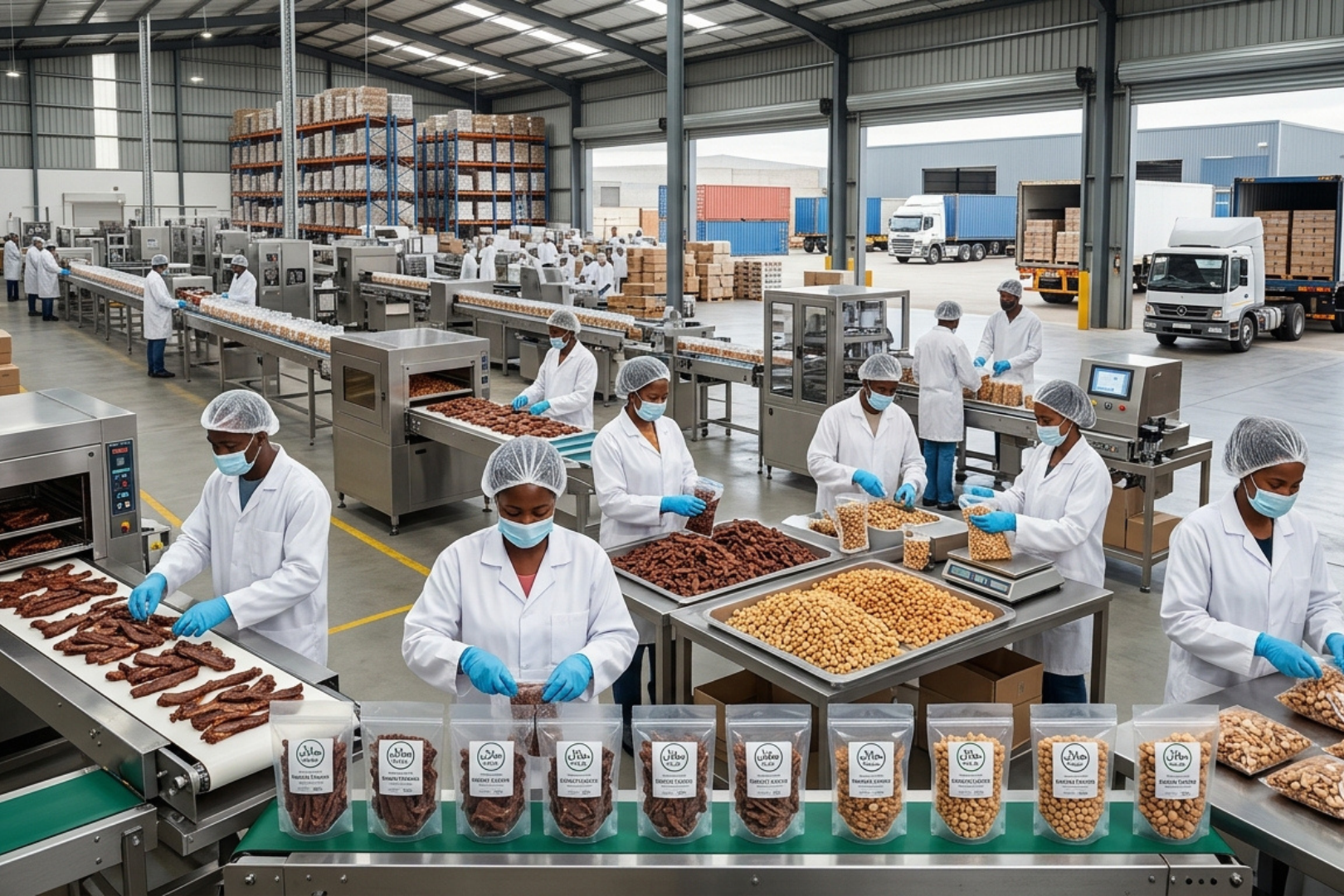
Depending upon the availability of the meat and poultry, as well as groundnuts, chickpeas, beans and seeds, manufacturers can create products. They must analyze nutritional composition and abide by relevant food-labeling regulations before making protein or health claims.
The international guidance on nutrition information gives a global reference for nutrition information. Allergens, food hygiene and food-safety standards, ingredient traceability and shelf life testing should also be managed by businesses.
It is important to differentiate the requirement for a product to be halal-compliant from its nutritional value. Avoid making consumer claims that are not supported by scientific evidence, or for which there are no regulations to support, for example, “healthiest” or “high protein” or “suitable for everyone.” The international guidance on nutrition claims explains the conditions for making claims about protein and other nutritional properties.
In Africa, Halal Food Investment, responsible product development can be a way of developing consumer trust and sustaining the growth of the product for the long term.
Distribution, Pricing and Marketing Strategies
Successful halal protein snacks need suitable pricing, reliable distribution, and marketing that reflects local consumer preferences. Businesses should research customer budgets before positioning products as premium.
Companies can sell through supermarkets, neighborhood stores, wholesalers, online retailers, and food distributors. Packaging sizes, storage needs, and distribution costs can help determine the best approach.
Halal protein snacks marketing should clearly explain halal certification, ingredients, taste, and product benefits. Social media, retailer promotions, and product sampling can help measure customer interest.
The food affordability data can support initial pricing research, but local research is still needed to set suitable prices. Pilot launches and customer feedback can help businesses improve products before expanding their Africa halal food investment.
Challenges & Risks for Investors & Recommendations
- Investing in halal protein snacks in Africa involves risks such as ingredient price changes, processing costs, infrastructure gaps, certification expenses, and competition. Research on agricultural value chains discusses investment needs and market challenges.
- Meat-based snacks require suitable processing, storage, and shelf-life testing. Plant-based snacks also face risks involving ingredient availability, quality, and allergens.
- Certification and food regulations for halal protein snacks can vary between domestic and export markets. Businesses should check the rules before producing halal protein snacks for multiple countries.
- Currency changes, transport expenses, and customer purchasing power can affect profits. Investors should calculate production, packaging, certification, marketing, and distribution costs before setting prices.
- To reduce risk, businesses can start with a limited product range of halal protein snacks, check suppliers, test market demand, and expand after receiving positive customer feedback.
Future Outlook for Halal Protein Snacks in Africa
Consumer interest, local production capabilities, and cost and certification reliability will be crucial to determine the future of halal protein snacks in Africa. Population growth and shifts in food systems will contribute to an investigation of the market, but will not ensure increased sales in every country.
There are a number of opportunities in halal protein snacks, such as halal-certified dried meat, roasted legumes, nut mixes, and other ready-to-eat products. Some of these products could benefit from local sourcing, effective packaging and regional distribution. But businesses require more product-level evidence before getting big. The best markets are identified through customer surveys, retail research, competitor analysis, and pilot sales.
The best investment opportunities for halal protein snacks will probably be found where the product is proven to be halal, quality is consistent, the products are competitive, and local tastes are being considered.


0 Comments