
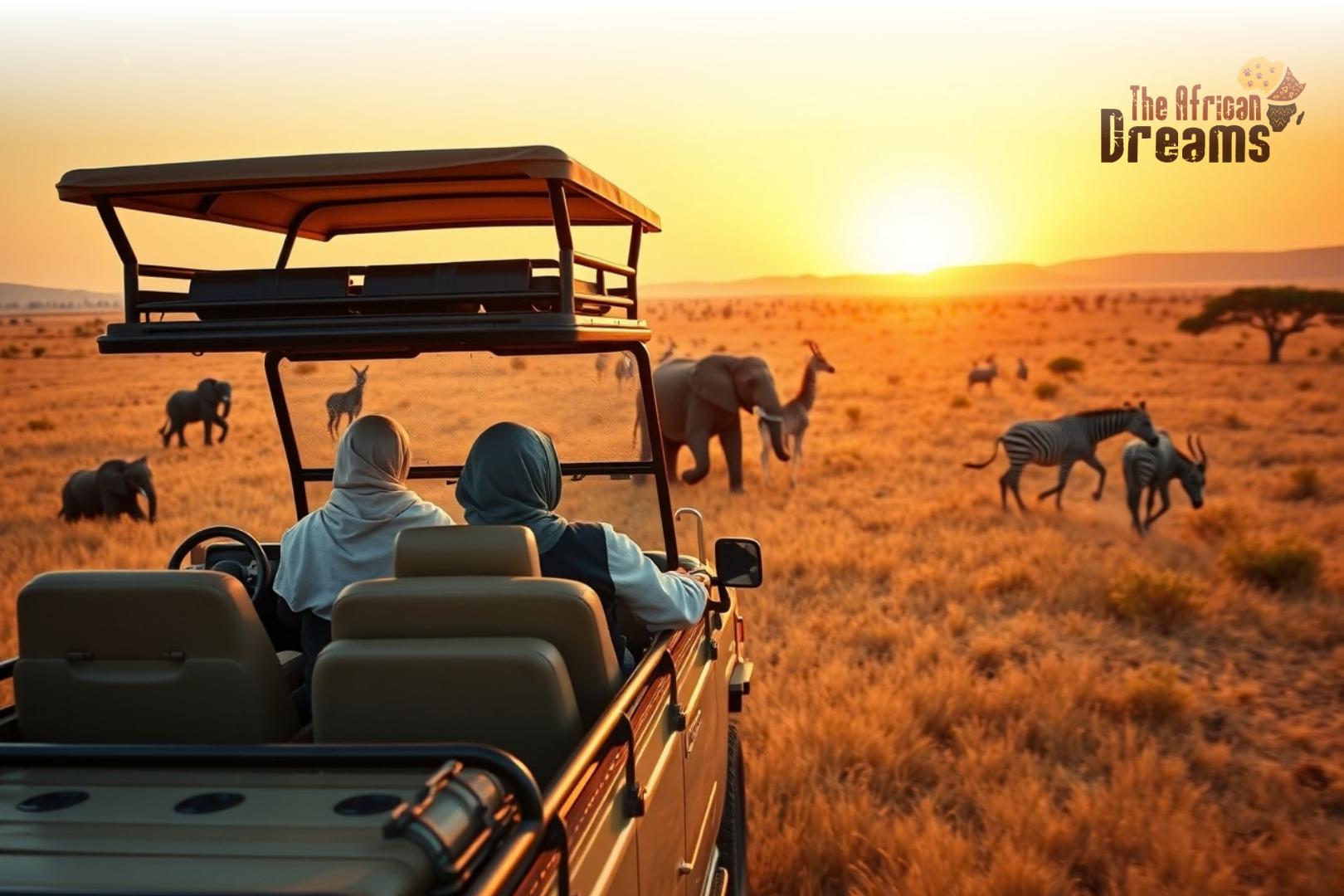
Introduction: Halal Safaris in Africa
Africa is one of the world’s most exciting destinations for wildlife, nature, culture, and adventure. You can explore the open savannahs of Kenya and Tanzania, rivers and waterfalls of Uganda. You can also visit the vast wilderness of South Africa and take halal safaris in Africa. Mostly, the continent offers a wide range of safari experiences.
For muslim travellers, however, choosing one of the halal safaris in Africa involves more than simply finding a place with wildlife. Access to halal food, prayer facilities, ablution facilities, suitable accommodation, and flexibility during game drives are important. These aspects can all make a significant difference to the experience of halal safaris in Africa.
The good news is that halal safaris in Africa are becoming increasingly popular and accessible across Africa. For growing halal safaris in Africa, safari operators, lodges, camps, and tourism destinations are developing services. These places accommodate Muslim travellers, including halal meals, prayer spaces, prayer breaks, and other arrangements that can be requested before a trip.
It is important, however, to understand the difference between a halal-friendly safari and a formally halal-certified destination. A national park or country is not necessarily halal-certified simply because muslim travellers can find halal services there. In many cases, the wildlife destination itself is not certified, while individual lodges, hotels, restaurants, or safari operators provide halal-friendly services.
This means travellers should always confirm their requirements directly with their chosen accommodation or safari operator before travelling.
For example, informing lodges about halal food requirements well in advance is important. This is because many safari camps and halal safaris in Africa operate in remote areas. They may need to arrange specific ingredients or meat supplies before a guest arrives.
Based on a combination of wildlife attractions and documented Muslim-friendly facilities or services, these are five of the most interesting halal safaris in Africa:
1. Maasai Mara, Kenya
2. Serengeti and Ngorongoro, Tanzania
3. Murchison Falls, Uganda
4. Kruger National Park, South Africa
5. Madikwe Game Reserve, South Africa
Each one of the halal safaris in Africa offers something different. Some are famous for the Great Migration, others for waterfalls and rivers, while others stand out because they have dedicated prayer facilities or accommodation that can arrange halal meals.
Together, they show that muslim travellers can experience some of the best halal safaris in Africa. They can enjoy Africa’s extraordinary wilderness while also planning a safari around their faith and dietary requirements.
1. Maasai Mara, Kenya
A Classic African Safari with Muslim-friendly Options
Kenya is one of Africa’s most famous wildlife destinations. The Maasai Mara National Reserve is one of Kenya’s best-known safari locations. The National Tourism Service Portal describes Kenya as a leading wildlife safari destination. It highlights the Maasai Mara and the Great Migration among its major attractions.
The Maasai Mara is located in southwestern Kenya. It is known for its open savannah landscapes and abundant wildlife. The Maasai Mara is known as a preserved savannah wilderness and is listed among the country’s key wildlife destinations.
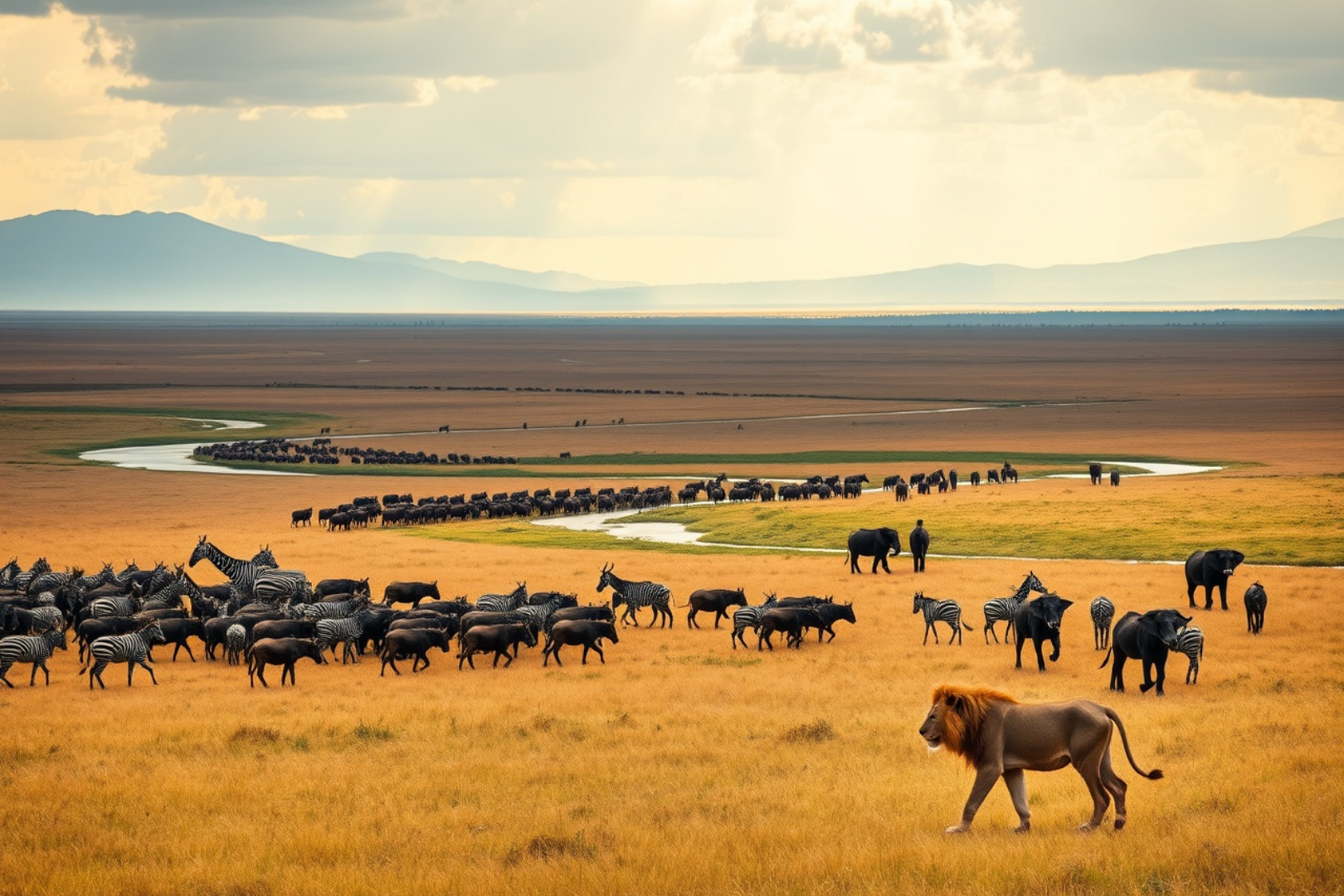
The reserve is particularly famous for the Great Migration. Migration is when large numbers of wildebeest and zebras move across the wider ecosystem. Kenya’s official tourism portal describes the migration as one of the world’s major natural wildlife spectacles.
Kenya is also home to the famous Big Five: lion, elephant, leopard, rhino, and buffalo.
For Muslim travellers, Kenya offers another important advantage: specialist safari providers identify the country as one of Africa’s Muslim-friendly safari destinations. Kenya has an established Muslim community, and Muslim-friendly accommodation is available in the Maasai Mara. That’s why it is one of the best-known halal safaris in Africa.
Wildlife in the Maasai Mara
The Maasai Mara provides opportunities to see many of Africa’s most famous animals.
Visitors may encounter lions, leopards, cheetahs, elephants, buffaloes, rhinos, zebras, giraffes, hippos, and many species of antelope during a safari.
The Great Migration is one of the biggest reasons travellers visit the region. Millions of wildebeest and zebras move through the broader ecosystem during the annual migration cycle. This creates one of Africa’s most recognisable wildlife experiences.
The landscape is also an important part of the experience. The wide grasslands provide long-distance views, while rivers and other water sources attract wildlife.
For photographers, this combination of open landscapes and large wildlife populations provides many opportunities to observe animals in their natural environment.
Why it Works for Muslim Travellers
As one of the halal safaris in Africa, Maasai Mara is particularly interesting for muslim travellers. This is because specialist safari companies identify Muslim-friendly luxury accommodation in the area.
Halal meals can often be arranged when the accommodation receives advance notice.
This is especially important in a safari environment because many camps and lodges are located away from large towns and major food suppliers.
Therefore, muslim travellers should communicate their dietary requirements before arrival so that the lodge has enough time to arrange appropriate food.
Prayer planning is another important consideration.
A game drive can take several hours, so Muslim travellers should discuss prayer breaks with their safari operator before beginning the trip.
Private vehicles can provide greater flexibility for prayer stops during a safari.
A Cultural Experience
Like many other halal safaris in Africa, the Maasai Mara safari does not have to focus only on wildlife.
Visitors can also experience the landscape and learn about local communities and traditions.
For Muslim families, couples, or groups, a private safari vehicle can provide additional flexibility because the itinerary can be adjusted around meals, prayer times, rest periods, and family needs.
This can be particularly useful for travellers who want a slower and more comfortable safari rather than following a fixed group itinerary.
Why Choose Maasai Mara?
The Maasai Mara is a strong choice for travellers looking for halal safaris in Africa.
It combines unique wildlife, the Great Migration, open landscapes, and access to Muslim-friendly safari accommodation.
For travellers who want to experience one of Africa’s most famous wildlife destinations while maintaining halal dietary requirements, the Maasai Mara is an attractive starting point.
2. Serengeti and Ngorongoro, Tanzania
Wildlife and Natural Extension to Zanzibar
Tanzania is one of Africa’s leading safari destinations and offers some of the continent’s most famous wildlife landscapes.
The Great Migration in the Serengeti is one of the country’s major experiences. It also promotes Zanzibar as a destination for coastal and cultural travel.
The country’s northern safari circuit includes destinations such as the Serengeti, Ngorongoro Crater, and Tarangire National Park.
For Muslim travellers, Tanzania can be especially appealing because a wildlife trip can be combined with a visit to Zanzibar.
Tanzania as a Muslim-friendly destination offers the availability of halal restaurants, mosques, and prayer facilities in many areas outside the safari parks.
Serengeti National Park
The Serengeti is one of the most recognisable halal safaris in Africa.
Its huge plains and wildlife populations have made it internationally famous, particularly for the Great Migration.
The Tanzania Tourism Board currently promotes safari packages combining the Serengeti and Ngorongoro Crater.
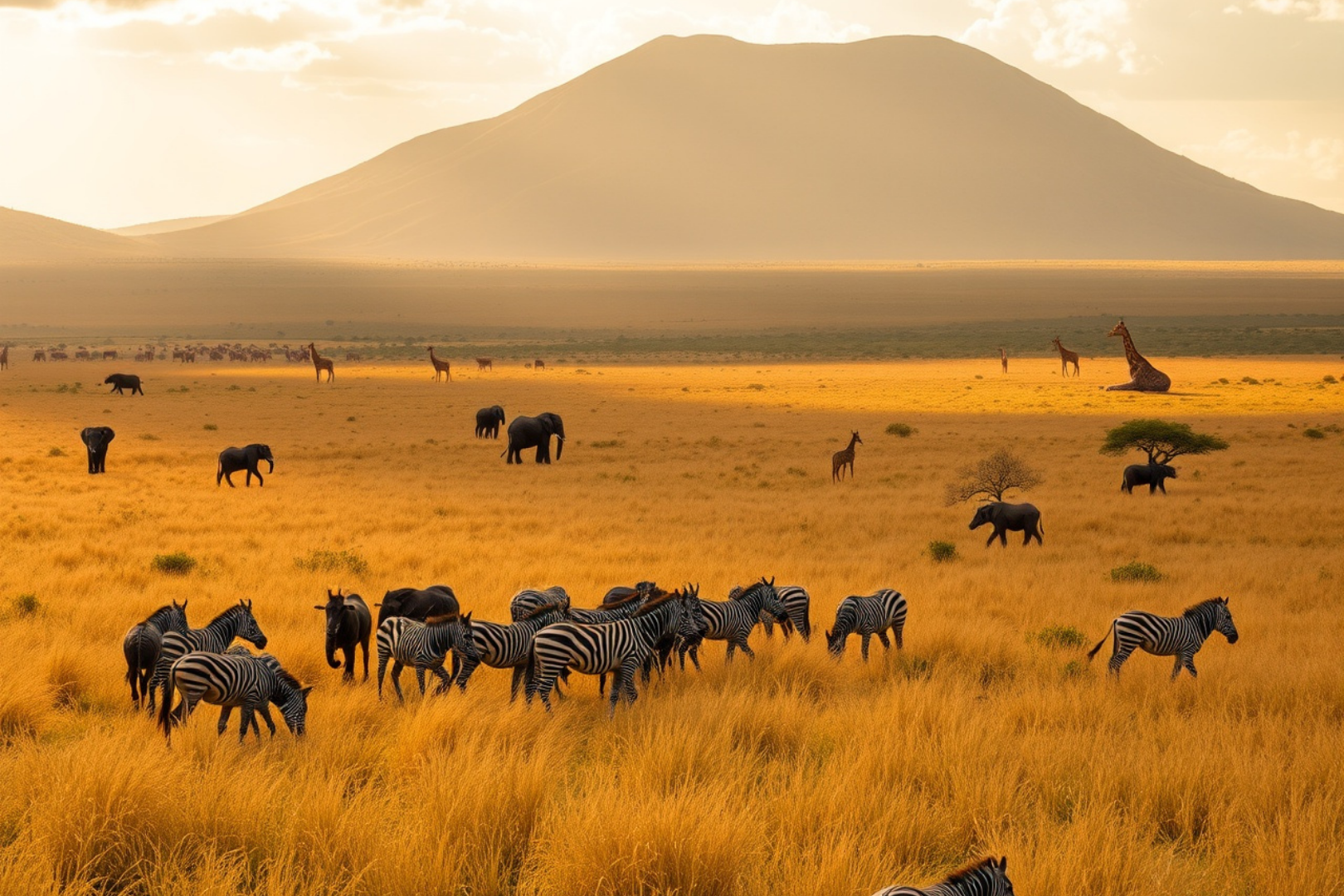
A Serengeti safari can include opportunities to see lions, elephants, buffaloes, giraffes, cheetahs, zebras, wildebeest, and many other species.
The enormous size of the Serengeti also means that visitors can spend several days exploring different areas instead of experiencing the entire safari in a single day.
Ngorongoro Crater
Ngorongoro is another major attraction on Tanzania’s northern safari circuit as one of the halal safaris in Africa.
The Ngorongoro Crater is one of the country’s remarkable natural attractions. It is included in several official safari itineraries.
Current tourism packages also combine the Serengeti and Ngorongoro Crater into multi-day safari experiences.
This combination allows travellers to experience two of Tanzania’s most famous wildlife destinations during one trip.
Why Tanzania is Attractive for Muslim Travellers
Tanzania has a large Muslim population, particularly in Zanzibar and parts of the mainland.
As it also has one of the halal safaris in Africa, halal restaurants, mosques, and prayer rooms can be found in many parts of Tanzania outside the national parks.
However, travellers should not assume that every safari lodge automatically provides halal-certified food.
Instead, halal requirements should be communicated to the safari operator and lodge before arrival.
This is particularly important for remote camps, where food supplies may need to be organised in advance.
Travel From the Serengeti to Zanzibar
One of Tanzania’s biggest advantages is that a safari can be combined with a Zanzibar holiday.
Unlike many other halal safaris in Africa, Tanzania promotes both safari experiences and Zanzibar’s coastal attractions.
The Tourism Board also currently lists safari itineraries that include an optional Zanzibar extension.
Zanzibar provides a very different experience from the mainland safari.
Travellers can move from wildlife viewing to beaches, historic streets, Swahili culture, and coastal experiences.
For Muslim travellers, Zanzibar can be particularly comfortable because Islam has a strong presence across the island and offers many activities like other halal safaris in Africa.
Zanzibar is a predominantly Muslim destination where halal food and prayer facilities are widely available.
A Complete African Holiday
This makes Tanzania an attractive option for travellers who want more than wildlife.
A holiday can begin with several days of safari in the Serengeti and Ngorongoro area and then continue to Zanzibar.
This creates a combination of wildlife, nature, culture, beaches, and history while also being one of the halal safaris in Africa.
For Muslim travellers, the most important step is to organise halal meals and prayer arrangements before entering remote safari areas.
With proper planning, Tanzania can provide one of the most complete halal safaris in Africa
3. Murchison Falls, Uganda
Wildlife, the Nile and Waterfall
Unlike many other halal safaris in Africa, Uganda offers a different type of safari experience.
Instead of focusing only on the traditional Big Five, Uganda combines wildlife with rivers, waterfalls, forests, birdlife, and other natural attractions.
Murchison Falls National Park is Uganda’s largest and oldest conservation area and covers approximately 3,840 square kilometres.
The park is located at the northern end of the Albertine Rift Valley. It also offers savannah, woodland, and riverine environments.
The Murchison Falls
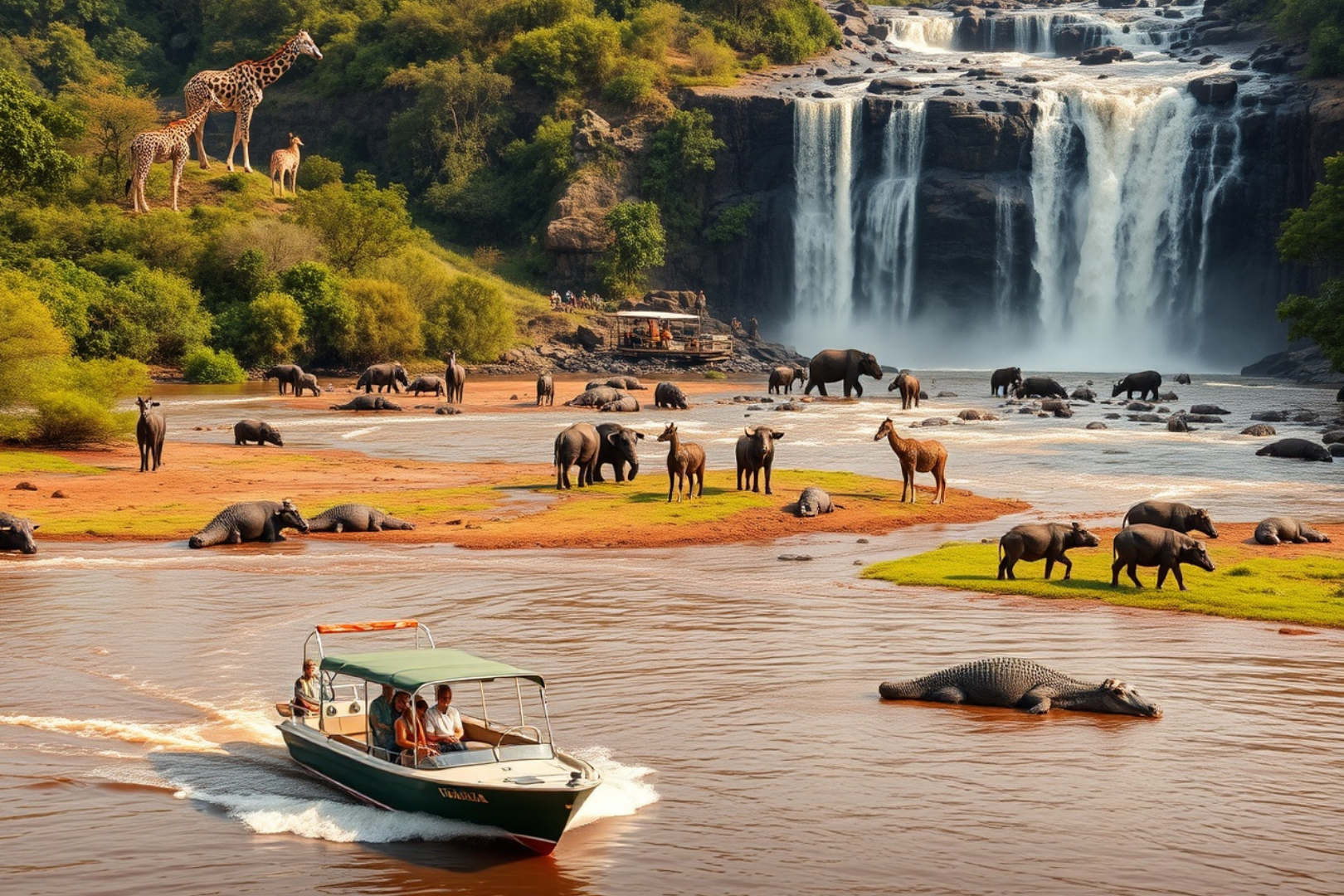
The park takes its name from Murchison Falls, where the Victoria Nile is forced through a narrow gorge before plunging into the Devil’s Cauldron.
The waterfall is one of the park’s major attractions. The Nile passes through the narrow gorge before making a 45-metre plunge. The river below the falls is also an important wildlife-viewing area.
Elephants, giraffes, and buffaloes can be found around the riverbanks. Hippos, Nile crocodiles, and aquatic birds are also present.
Wildlife and Landscapes
Murchison Falls National Park has a wide range of habitats.
The park has savannah, woodland, riverine forest, and other ecosystems that support diverse wildlife. This variety makes the park different from a safari destination that focuses almost entirely on open grasslands.
Visitors can combine game drives with a boat experience on the Nile and a visit to the waterfall.
The boat trip along the Nile is one of the park’s major tourism experiences and provides opportunities to observe wildlife around the river.
Muslim-friendly Arrangements
Uganda is not a destination that should automatically be described as completely halal-certified.
However, like many other halal safaris in Africa, Uganda also offers Muslim-friendly itineraries.
For example, selected properties in Murchison Falls can provide halal arrangements, including properties within the Marasa Collection.
Halal meals can be arranged for Muslim travellers visiting Uganda, particularly when dietary requirements are communicated before arrival.
This makes advance planning particularly important.
Travellers should ask exactly how halal food is sourced and prepared because the level of formal certification can differ between properties.
Prayer Arrangements
Prayer can also be incorporated into a Uganda safari itinerary.
Some Ugandan lodges can provide prayer spaces, while some properties have dedicated muswallas.
Prayer breaks can also be built into game-drive schedules.
Visitors should arrange prayer times with guides before the safari so that the itinerary can be planned around the traveller’s needs.
A Different Type of Safari
Murchison Falls is particularly suitable for travellers who want more than traditional game drives.
A day can combine a game drive, a Nile boat trip, and a visit to the waterfall.
The combination of wildlife and water creates a different atmosphere from the dry savannah landscapes commonly associated with safari tourism.
Like many other halal safaris in Africa, for muslim travellers, Uganda requires careful planning. However, it can provide a highly personalised experience when the safari operator understands halal food and prayer requirements.
4. Kruger National Park, South Africa
Major Wildlife Destination & Dedicated Muslim Prayer Facilities
Kruger National Park is one of Africa’s best-known wildlife destinations.
It is also one of the strongest options for halal safaris in Africa for muslim travellers. Because South African National Parks has specifically introduced prayer and ablution facilities for Muslim visitors.
This makes Kruger particularly notable among African safari destinations.
A Huge Wilderness
Kruger is a very large protected area, and its size influences how visitors should plan their safari.
Visitors are advised not to try to cover too much distance and recommends slower travel more slowly with regular stops because this can produce better wildlife-viewing opportunities.
The park also has many rest camps with restaurants and retail facilities. These facilities provide visitors with more infrastructure than some remote safari destinations.
Dedicated Muslim Prayer Facilities
One of Kruger’s most important features for muslim travellers is its dedicated prayer infrastructure.
The first muslim prayer facility opened at Skukuza Rest Camp on 3 December 2018.
The facility included a wudhu area for both men and women, although visitors were advised to bring their own prayer mats.
There are prayer and ablution facilities at several locations within Kruger National Park.
These included Skukuza Rest Camp, Lower Sabie Rest Camp, Satara Rest Camp, Afsaal Picnic Site, and Tshokwane Picnic Site.
This is an important advantage for Muslim travellers because prayer can otherwise become difficult during a long safari day.
Food and Accommodation
The existence of prayer facilities does not automatically mean that all food in Kruger is halal.
Travellers who require halal meals should therefore confirm food arrangements separately with their chosen accommodation or safari operator.
Specialist safari companies identify muslim-friendly accommodation options in South Africa where halal meals can be arranged with advance notice.
This distinction is important because travellers should not assume that a national park’s Muslim facilities mean that every restaurant or lodge inside the park serves halal food.
A Slower Safari can Help
Kruger’s huge size also makes a slower itinerary useful.
It is advised not to try to cover too much distance and to recommend slow travel and regular stopping.
For Muslim travellers, this can also make prayer planning easier.
Instead of spending the entire day travelling between distant parts of the park, visitors can choose a smaller area and plan their game drives around prayer times.
This can create a more relaxed experience.
Why Kruger Stands Out
Kruger combines three important elements:
- Major wildlife attractions,
- Established visitor infrastructure, and
- Documented Muslim prayer facilities.
For Muslim travellers who want the convenience of a well-developed safari destination, Kruger is therefore one of the strongest choices in Africa.
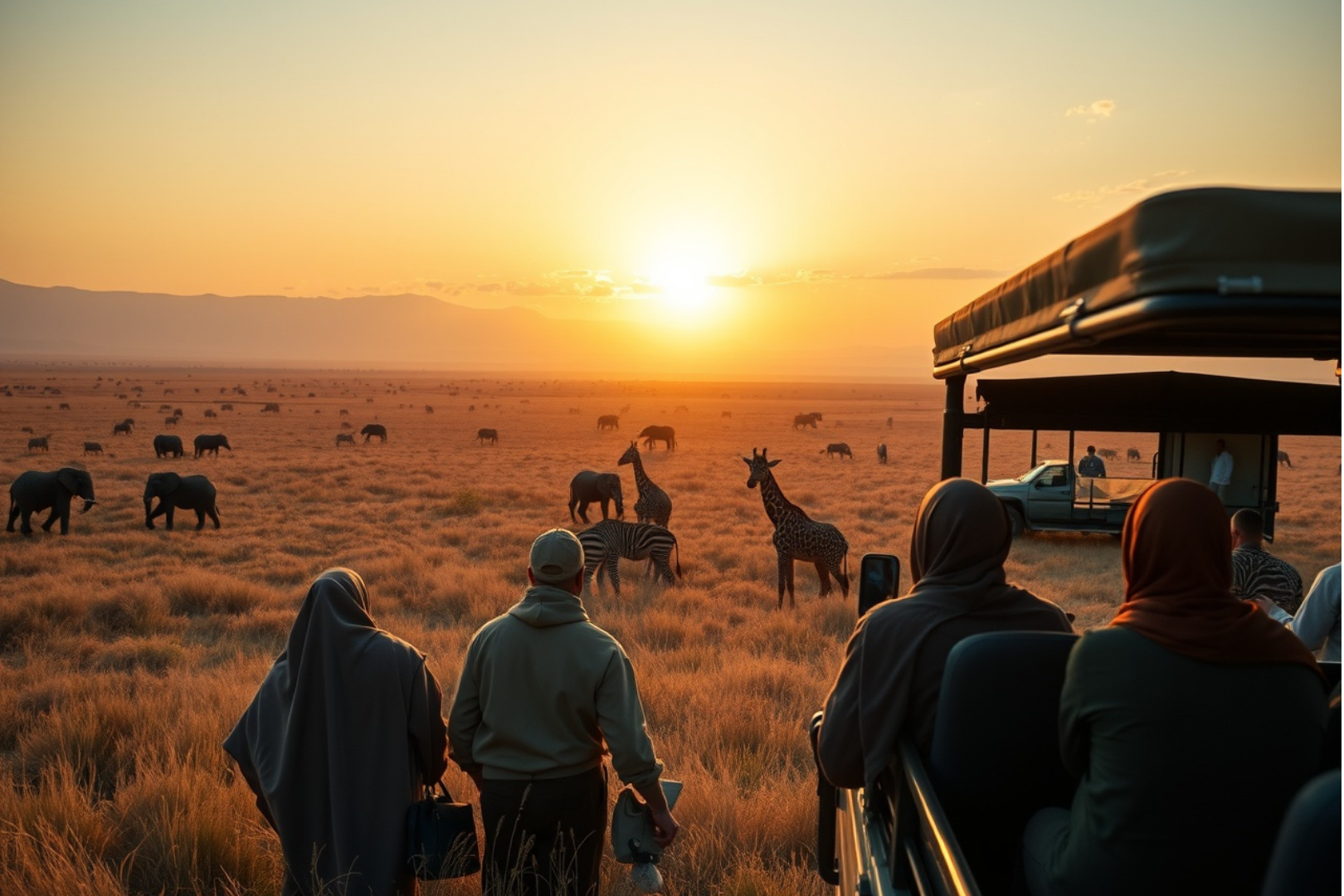
5. Madikwe Game Reserve, South Africa
A Private Safari Experience with Halal Meal Arrangements
Madikwe Game Reserve offers a different experience from Kruger.
Rather than focusing primarily on the scale of a national park, Madikwe is known for private safari lodges and more personalised wildlife experiences.
There are several Madikwe properties that can accommodate Muslim travellers.
Muslim-friendly Accommodation
One of the strongest reasons to consider Madikwe is the availability of specific accommodation arrangements for Muslim guests.
Madikwe Safari Lodge is a Muslim-friendly property and one of the halal safaris in Africa. The meals for Muslim guests can be prepared using meat from a halal-certified butcher.
The guides can be instructed to stop for prayer times during game drives.
Alcohol can also be removed from guest rooms on request.
These arrangements make the destination particularly attractive for Muslim travellers who want a more private safari experience.
Etali Safari Lodge
Etali Safari Lodge in Madikwe is also a Muslim-friendly property and one of the halal safaris in Africa.
The lodge can provide halal meals when requested before arrival, and guides can be instructed to stop for prayer during game drives.
Certain suites also have private plunge pools, providing an additional level of privacy.
Motswari Private Safari Lodge
Another Madikwe option is Motswari Private Safari Lodge.
The property can provide halal meat for Muslim guests. It also offers fish and vegetarian dishes.
The guides can be instructed to stop for prayer times during game drives. Alcohol can be removed from rooms upon request.
A Private Safari Atmosphere
Private safari lodges can be particularly useful for Muslim families and groups.
Instead of following a fixed group schedule, guests may have more opportunities to communicate their preferences to the lodge and safari guide.
This can make it easier to arrange prayer breaks, meals, and other personal requirements.
For couples and families who value privacy, some lodges also offer private pools or private accommodation spaces.
Why choose Madikwe?
Madikwe is a strong choice as one of the halal safaris in Africa for travellers who want a more intimate and personalised safari.
Its Muslim-friendly accommodation options make it particularly interesting for travellers who want halal meals and prayer breaks while staying at a private safari lodge.
How to Plan a Halal-Friendly Safari
Choosing the destination for halal safaris in Africa is only the first step.
A successful halal-friendly safari also depends on careful planning.
1. Confirm Halal Food Before Booking
Do not assume that each of the halal safaris in Africa provides halal food.
Ask the lodge or safari operator exactly what they mean by halal.
For some properties, this may mean meat purchased from a halal-certified supplier.
For others, it may mean that specific ingredients can be sourced and prepared separately.
Communicate halal dietary requirements well in advance because remote lodges may need time to arrange appropriate supplies.
If formal halal certification is important to you, ask the property whether it can provide confirmation of its food-sourcing arrangements.
2. Discuss Prayer Arrangements
Prayer planning is particularly important during safari.
Game drives can last several hours, and some national parks are extremely large.
Tell your safari operator which prayer arrangements you require before the trip begins.
Prayer arrangements can be incorporated into safari itineraries.
3. Ask about Ablution Facilities
Prayer space and ablution facilities are not necessarily the same thing for halal safaris in Africa.
A lodge may provide a quiet place for prayer but not a dedicated wudhu area.
Kruger is particularly notable because SANParks has specifically provided prayer and ablution facilities at selected camps and picnic sites.
4. Consider a Private Safari Vehicle
A private safari vehicle can provide greater flexibility while experiencing halal safaris in Africa.
It allows travellers to discuss departure times, meal breaks, prayer stops, and the overall pace of the safari with their guide.
This can be particularly useful for families and groups.
5. Inform Every Lodge
If your safari includes several lodges, do not assume that one request automatically reaches every property.
Confirm halal food and prayer requirements with each lodge.
This is especially important when travelling across multiple countries or remote regions.
6. Consider Ramadan
Travelling during Ramadan requires additional planning.
Muslim travellers may need to arrange suhoor and iftar around game drives.
A private itinerary in one of these halal safaris in Africa can make this easier because the daily schedule can be adjusted around fasting.
Tell the safari operator about Ramadan requirements before booking so that meals and activities can be organised appropriately.
7. Check Alcohol Policies
Some Muslim travellers prefer accommodation where alcohol is not present in their room.
Some Muslim-friendly properties can remove alcohol from rooms when requested.
This is another requirement that should be communicated before arrival.
Why Halal-Friendly Safaris Matter for African Tourism
The growth of halal safaris in Africa represents a wider opportunity for Africa’s travel industry.
Muslim travellers are not looking only for beautiful wildlife.
They are also looking for destinations where they can travel comfortably while maintaining their dietary and religious practices.
More African lodges, camps, hotels, and resorts are accommodating halal-friendly tourism.
East Africa has a particular advantage for halal safaris in Africa because several countries and regions have long-established Muslim communities and Islamic cultural connections.
Kenya and Tanzania, for example, already have significant Muslim populations and established halal food networks in many areas.
Zanzibar provides an especially strong example of how Islamic culture and tourism can exist alongside nature and coastal travel.
South Africa demonstrates another approach. Instead of relying only on the presence of a Muslim population, destinations can introduce specific visitor facilities.
Kruger’s dedicated prayer and ablution facilities are an example of tourism infrastructure being adapted to meet the needs of Muslim visitors.
Aquila Private Game Reserve near Cape Town provides another example.
Aquila states that it has a dedicated Salah prayer room with wudhu facilities, prayer mats, a Qur’an, and seating for elderly guests.
The property also states that its meals use halal-certified suppliers, that pork is not served on the reserve, and that alcohol is not used in food preparation.
This shows how individual tourism businesses can create a more inclusive experience for Muslim travellers so they can get the best experience of halal safaris in Africa.
The opportunity is not limited to luxury tourism.
Halal-friendly safari products can be designed for families, couples, groups, honeymooners, adventure travellers, and travellers looking for more affordable experiences.
For halal safaris in Africa to grow, the key is transparency.
Travellers should know whether a property provides halal-certified meat, halal-friendly meals, prayer rooms, ablution facilities, alcohol-free rooms, or prayer breaks.
Clear information builds confidence and helps travellers choose the safari that matches their expectations.
Final Thoughts: Time for Halal Safaris in Africa
Africa offers some of the world’s most memorable wildlife experiences. And Muslim travellers now have more opportunities to explore these destinations and halal safaris in Africa comfortably.
The Maasai Mara in Kenya combines iconic wildlife, open savannahs, and the Great Migration with access to Muslim-friendly safari accommodation.
The Serengeti and Ngorongoro in Tanzania offer extraordinary wildlife experiences and can be combined with a visit to Zanzibar.
Murchison Falls in Uganda provides a different type of safari, combining wildlife, the Victoria Nile, waterfalls, and diverse landscapes, while specialist operators can arrange halal-friendly services for Muslim travellers.
Kruger National Park in South Africa stands out for its established visitor infrastructure and dedicated Muslim prayer and ablution facilities at selected locations.
Finally, Madikwe Game Reserve offers a more private safari experience. It has specialist providers identifying lodges that can arrange halal meals, prayer breaks, and other Muslim-friendly services.
These destinations show that Muslim travellers do not necessarily have to choose between a memorable African safari and maintaining their religious practices.
With careful planning, travellers can enjoy halal safaris in Africa comfortably. They can also explore Africa’s wildlife, landscapes, cultures, food, and hospitality while continuing to observe their faith.
The future of halal-friendly tourism and halal safaris in Africa is therefore promising. More and more lodges, safari operators, and tourism destinations are now exploring the needs of Muslim travellers. Africa can now become an even more welcoming destination for Muslim families, couples, groups, and independent travellers.
For travellers, the message is quite simple: great wildernesses along with halal safaris in Africa are ready to be explored. With thoughtful planning, halal safaris in Africa can be both spiritually comfortable and unforgettable.
0 Comments